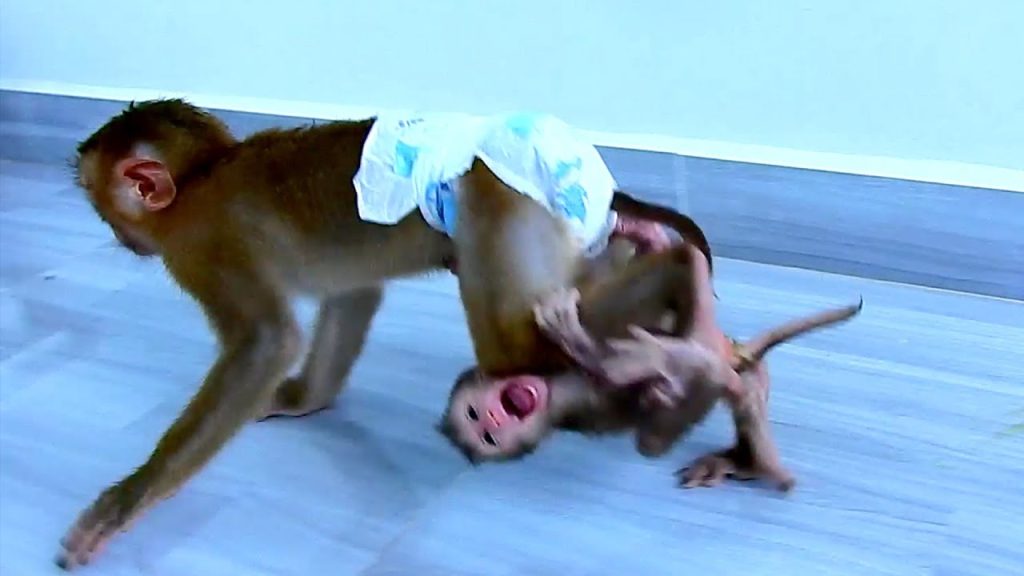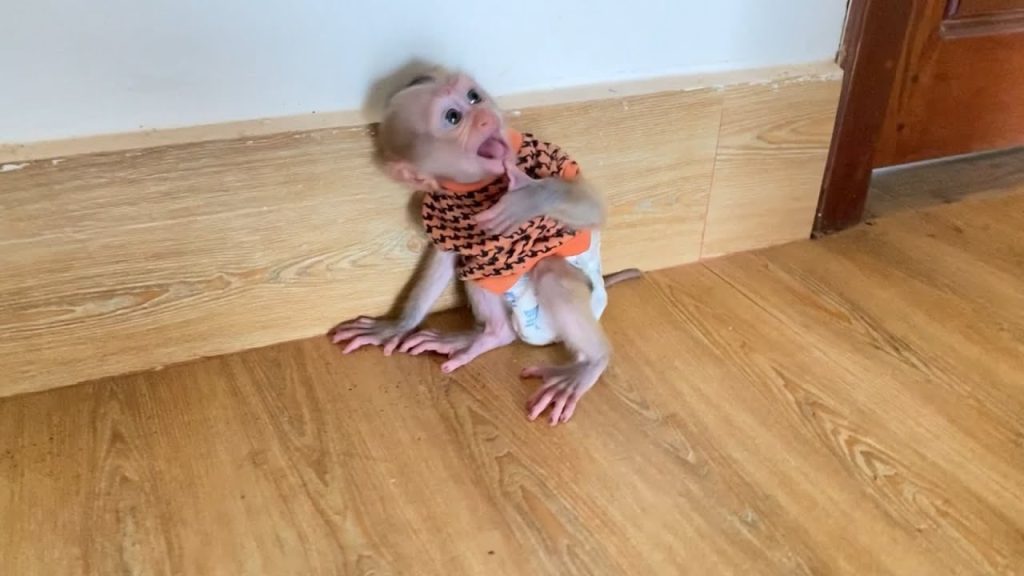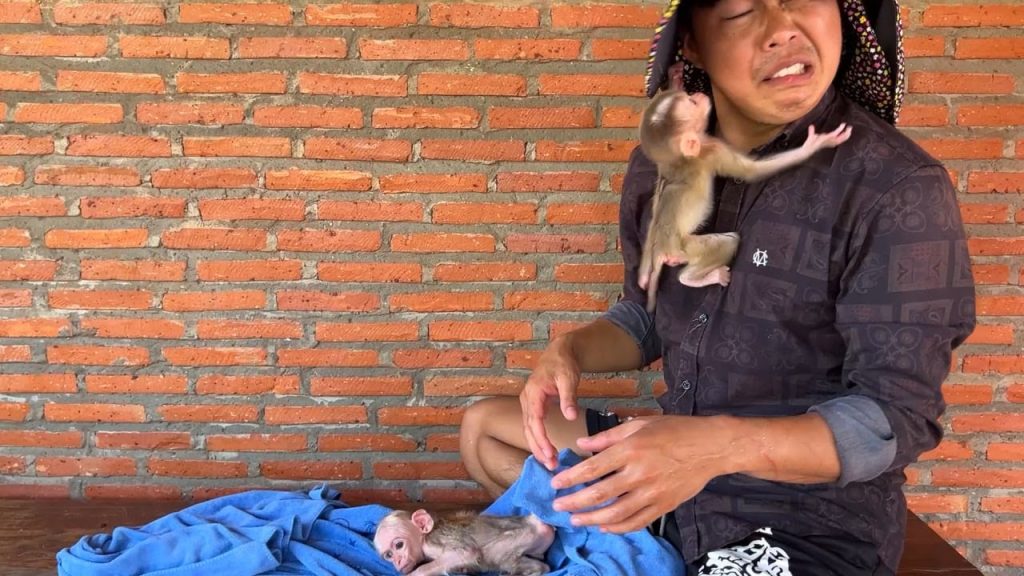
Poor little baby monkey! He was so tiny, so helpless, and so dependent on the people caring for him. Everything around him was still new, and even the smallest change could make him feel confused. That day, something unexpected happened during feeding, and the little baby became extremely upset when he noticed that his bottle didn’t have the familiar base and handle he seemed to expect.
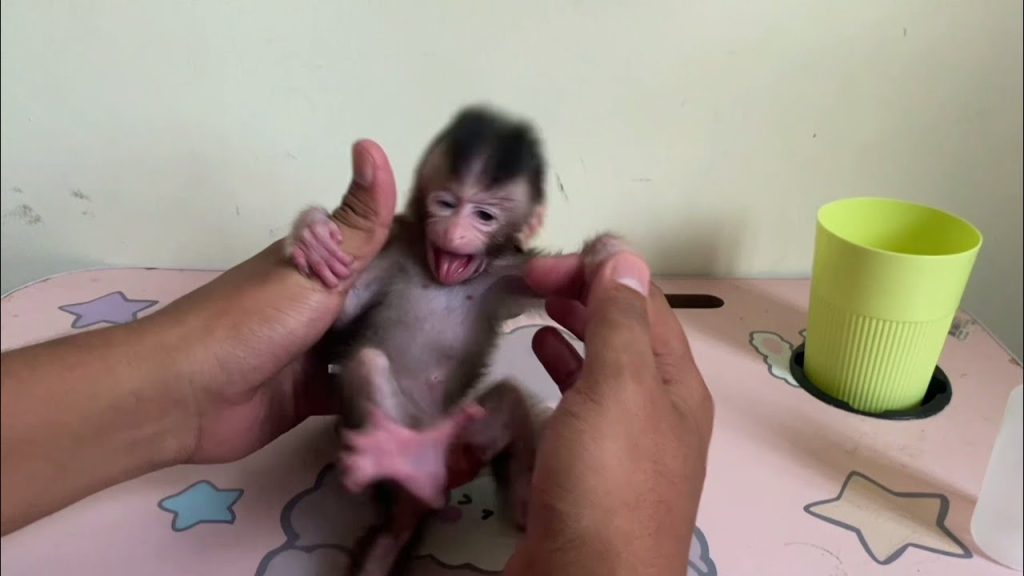
At first, he stared at the bottle with his tiny eyes wide open. He moved his little hands around, trying to find a comfortable way to hold it. But something felt different, and he didn’t seem to know what to do. Suddenly, his little mouth opened, and he began crying loudly.
His cries became louder and louder, filling the room with the sound of a baby who desperately needed comfort. He wiggled his tiny fingers, moved his head from side to side, and looked toward his caregiver as if asking, “What happened to my bottle? Why isn’t it the same?”
The caregiver immediately noticed that the baby was distressed. Instead of ignoring his cries, the caregiver gently supported his tiny body and spoke to him in a calm, reassuring voice. The newborn was still learning how to manage unfamiliar experiences, and he needed patience rather than frustration.
But the little monkey wasn’t ready to calm down just yet!
Every time the bottle moved, he seemed to become more confused. His tiny hands reached forward, then pulled back again. He cried as though the whole world had suddenly become unfamiliar. His little face looked so unhappy that anyone watching might have wished they could explain to him that everything was going to be okay.
The caregiver checked the feeding equipment carefully and made sure the bottle was suitable for the baby’s size and needs. Since newborn monkeys are especially delicate, feeding requires appropriate equipment, careful positioning, and close attention to prevent choking or aspiration. The caregiver never forced the bottle into his mouth and allowed him time to settle.
For a moment, the baby paused his crying. He looked up at the caregiver, blinking his little eyes as if trying to understand what was happening. Then he let out another small cry and reached forward again.
“Oh, sweetheart,” the caregiver gently reassured him. “You’re safe. Let’s take our time.”
The room became quieter as the caregiver continued offering calm, gentle reassurance. The baby gradually stopped struggling and began paying attention to the familiar voice beside him. Although he still seemed unsettled, his tiny body started to relax.
Finally, the little monkey became curious about the bottle again. He looked at it carefully while the caregiver ensured that everything was safe and ready for feeding. The baby was given appropriate support, and the caregiver watched closely for any signs of discomfort.
Little by little, the frightening moment became less overwhelming. His loud cries turned into quieter sounds, and he began to settle in the caregiver’s arms.
It was such a small moment, but it showed how much care a newborn animal needs. Babies cannot explain what frightens them or tell us exactly what they need. They depend on patient caregivers who pay attention to their behavior and respond gently.
And although the missing bottle base and handle might seem like a simple problem to us, the important thing was making sure the little baby felt secure and received his feeding safely.
As he finally rested quietly, his tiny fingers curled against the caregiver’s hand. The same little monkey who had been screaming moments earlier now seemed ready to relax.
Poor little sweetheart! 💔🐒 He couldn’t explain why he was upset, so he cried with all his tiny strength. Sometimes, the smallest babies need the most patience, the gentlest hands, and someone who understands that even a little change can feel enormous in their world. ❤️🍼