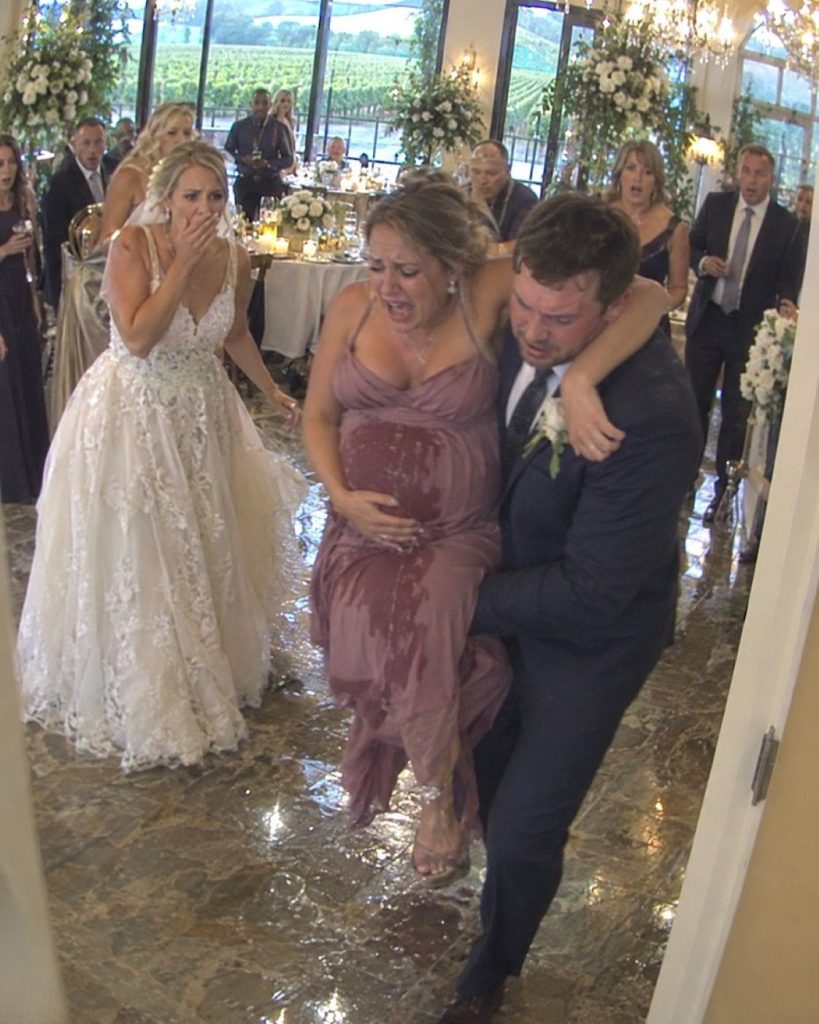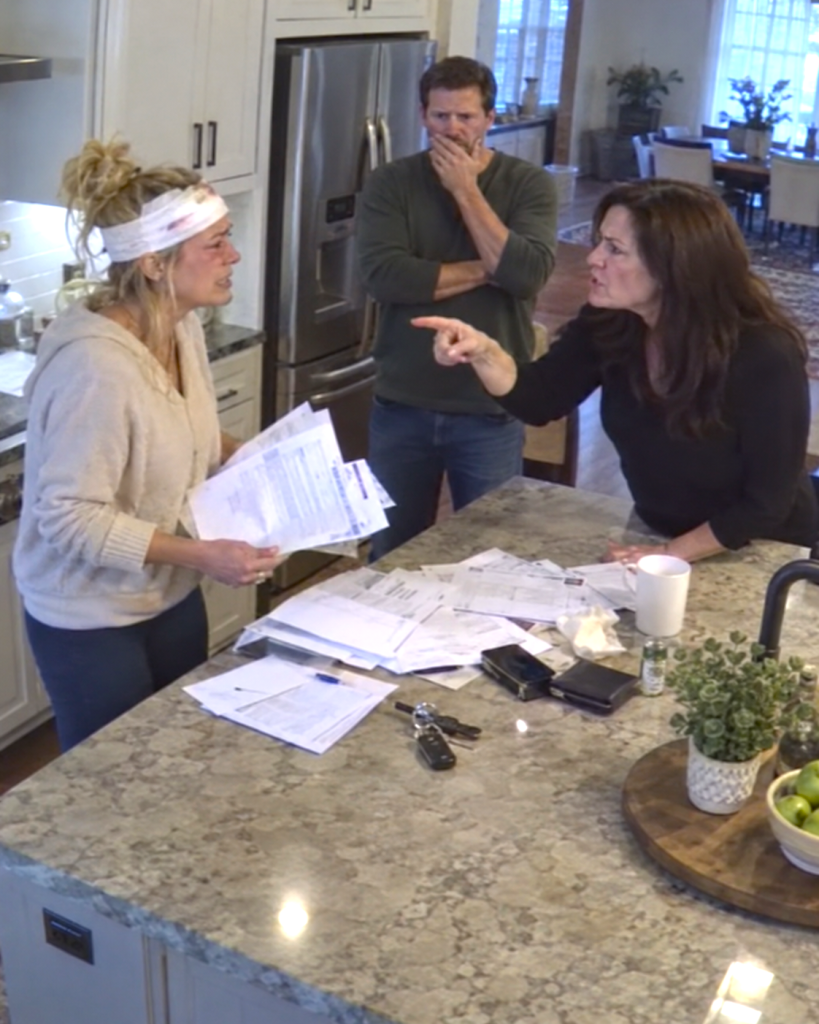
“I’m having brain surgery next week. Can I stay with you for a few days afterward?”
My sister did not hesitate.
“Absolutely not. I’m not bringing hospital germs into my house.”
Then she added, “Book a hotel. You can afford it.”
I sat alone in my Chicago apartment, holding the phone against my ear while the refrigerator hummed behind me.
The woman speaking was my older sister, Melissa Grant.
The same sister whose $4,200 mortgage payment I had covered every month for three years.
The same sister who had spent nearly every dollar on the emergency credit card attached to my account.
The same sister who lived in a four-bedroom house fifteen minutes from Johns Hopkins Hospital, where a neurosurgeon was scheduled to remove a tumor from my brain.
I looked at the surgery folder on my coffee table.
My name was printed across the top.
Rachel Bennett.
Thirty-four years old.
Probable benign meningioma.
Surgical removal recommended due to pressure near the optic nerve.
I had spent the past six weeks pretending the word tumor did not frighten me.
I had worked through headaches.
I had smiled through blurred vision.
I had listened to my mother say Melissa would take care of me because family always takes care of family.
Now Melissa was talking about germs.
“I would only need the guest room for four nights,” I said.
“No.”
“I wouldn’t expect you to take time off.”
“Rachel, stop making this uncomfortable.”
I almost laughed.
“You’re worried I’ll make you uncomfortable?”
“I have two children. I have a home to protect.”
“From me?”
“From whatever you bring back from the hospital.”
Her voice became sharper.
“And honestly, you always turn everything into a crisis.”
I looked down at the surgical consent form.
Someone would cut into my skull in seven days.
Apparently, that qualified as drama.
“Understood,” I said.
Melissa paused.
She had expected pleading.
Maybe tears.
Maybe guilt.
Instead, I gave her one calm word.
“Good,” she said. “And don’t tell Mom I refused. She’ll make it a whole thing.”
“I won’t.”
“Text me your surgery time. I’ll try to visit.”
Try.
As though I had invited her to brunch.
I ended the call.
For several seconds, I sat without moving.
Then I opened my banking app.
The blue light from the screen washed across the dark room.
I found the automatic transfer scheduled for the first of every month.
Recipient: Melissa Grant.
Amount: $4,200.
Memo: Mortgage help.
Thirty-six completed payments.
Total transferred: $151,200.
I pressed Cancel.
The app asked whether I was certain.
I selected Yes.
Then I opened the authorized-user section of my credit account.
Melissa Grant.
Monthly spending limit: $6,000.
Current balance: $5,842.
Purchases included a luxury nail salon, a steakhouse, a home décor store, and a boutique hotel in Annapolis.
Not groceries.
Not medicine.
Not school supplies.
I removed her.
Two clean decisions.
Two confirmation screens.
Two parts of my life returned to me.
I had paid because she was my sister.
I had paid because she said her husband’s business was struggling.
I had paid because our parents had emptied their retirement savings to help with her down payment.
I had paid because she promised it would only be for one year.
I had paid because every month she said, “You’re saving our family.”
But I was not saving our family.
I was financing her comfort.
My phone rang again.
Mom.
“Did you speak to Melissa?” she asked.
“Yes.”
“Is she getting the guest room ready?”
I looked through the window at thousands of lights burning across Chicago.
“Her work schedule is complicated,” I said. “I booked a hotel.”
Mom became quiet.
“What did she say to you?”
“Nothing worth repeating.”
“Rachel.”
“I’m tired, Mom.”
She understood my tone.
“Call us when you land in Baltimore.”
“I will.”
After we hung up, I booked a suite at a hotel near the hospital.
It was quiet.
It had room service.
It had a driver who could take me to my appointments.
It cost less than one month of Melissa’s mortgage.
I paid without guilt.
Then I sent one final email to my financial adviser.
Effective immediately, no payment, loan, transfer, card authorization, guarantee, or financial accommodation may be made for Melissa Grant or Daniel Grant without my written approval.
His response arrived five minutes later.
Understood. One concern: Melissa’s mortgage account may be linked to your name beyond the automatic payment. I recommend we review the original documents immediately.
I read the message twice.
Then I opened the folder where Melissa had sent me copies of her mortgage papers three years earlier.
The final signature page was missing.
My flight landed in Baltimore on Monday afternoon.
I did not tell Melissa the flight number.
I did not ask for a ride.
I took a black car directly to the hotel.
My suite was on the twenty-second floor, overlooking the harbor.
There was a hospital-grade air purifier near the bed, a wide shower with a built-in bench, and enough space for me to recover without apologizing for existing.
I unpacked slowly.
Loose pajamas.
Medication.
Surgery paperwork.
The small silver cross my father had given me when I graduated college.
Then my phone began vibrating.
Melissa: Are you in Baltimore?
Melissa: Why didn’t you send your flight details?
Melissa: I could have picked you up.
Melissa: What hotel are you staying at?
I stared at the messages.
She had refused me a bed.
Now she wanted my location.
I typed one response.
I arrived safely. I need rest.
Her answer came immediately.
Why are you acting weird?
I blocked her.
The silence felt medicinal.
Ten minutes later, my college roommate, Hannah Cole, called by video.
She lived in Baltimore and worked as a nurse practitioner at a children’s hospital.
The moment she saw the hotel room, she frowned.
“Why aren’t you at Melissa’s?”
Part 2 — The Mortgage Was Never What She Told Me
“Why aren’t you at Melissa’s?” Hannah repeated.
I looked away from the camera.
“She doesn’t want hospital germs in her house.”
For a moment, Hannah said nothing.
Then her expression changed.
“Rachel, you’re having brain surgery. What exactly did she say to you?”
I repeated the conversation, word for word.
When I finished, Hannah leaned back in her chair and shook her head.
“Your sister has a four-bedroom house, two guest rooms, and a finished basement. You’re asking for four nights, not four months.”
“I know.”
“And you’ve been paying her mortgage?”
I nodded.
“How much?”
“Forty-two hundred dollars a month.”
Hannah stared at me.
“For how long?”
“Three years.”
She slowly lowered her coffee mug.
“Rachel, that’s over a hundred and fifty thousand dollars.”
“One hundred fifty-one thousand, two hundred.”
I had calculated the number so many times that I no longer needed a calculator.
Hannah’s eyes softened.
“You know you don’t have to protect her anymore, right?”
I wanted to tell her that I understood.
Instead, I started crying.
Not loudly.
Not dramatically.
Just the kind of crying that comes when you have spent years being the dependable person in every room and finally realize that nobody has been dependable for you.
Hannah stayed on the call until I could breathe normally again.
Then she said something I would remember for the rest of my life.
“Tomorrow, I’m taking you to the hospital. After that, we’re going to find out exactly what your sister signed three years ago.”
I glanced at the folder on my desk.
The missing signature page.
My financial adviser’s warning.
For the first time, I wondered whether the money I had given Melissa was only the beginning.
The next morning, I met with my neurosurgical team.
The surgeon, Dr. Andrew Collins, reviewed my scans and explained the procedure again. The tumor was pressing close to my optic nerve, which explained the headaches and intermittent blurred vision.
He was calm, precise, and reassuring without making promises he couldn’t keep.
“We’re prepared for the procedure,” he told me. “Our priority is to remove the tumor safely and protect your vision. You’ll need someone available to help you after discharge.”
“I have a friend,” I said.
Hannah squeezed my hand.
“You have me.”
For the first time in weeks, I felt that I wasn’t facing everything alone.
That afternoon, while Hannah drove me back to the hotel, I called my financial adviser, Michael Reeves.
“Rachel, I’m glad you called,” he said. “I’ve been reviewing the documents you sent me.”
“What did you find?”
“Your monthly payments weren’t recorded as a conventional gift in the paperwork Melissa originally provided. There are references to a family assistance agreement and a possible repayment obligation.”
I gripped the phone.
“Repayment obligation?”
“That’s what we need to establish. I also found a discrepancy between the mortgage balance Melissa reported to you and the figures in the lender correspondence you forwarded last year.”
“How big a discrepancy?”
“Approximately forty-seven thousand dollars.”
I stared through the car window.
“What does that mean?”
“It means we need the original loan documents, the payment history, and any agreement you signed. I don’t want to jump to conclusions before a lawyer reviews everything.”
I appreciated that he didn’t pretend to know more than he did.
“Can you send everything to an attorney?”
“Already arranged. I recommend someone independent of your family.”
“Do it.”
When I hung up, Hannah glanced at me.
“Something else?”
“Apparently, my sister’s mortgage paperwork has a few surprises.”
She tightened her hands around the steering wheel.
“Then let’s find out what they are.”
That evening, my mother called from Chicago.
I had unblocked her number because I didn’t want her worrying about my surgery.
“Rachel, your sister says you’ve been ignoring her.”
“I need rest, Mom.”
“She’s very upset. She says you canceled the money you send her.”
I closed my eyes.
There it was.
Not my surgery.
Not my health.
Not whether I had someone to help me afterward.
The money.
“I canceled the transfer,” I said.
“But why would you do that without warning her?”
“Because it’s my money, Mom.”
Silence.
Then she said, “You know Melissa has children.”
“So do thousands of other people who pay their own mortgages.”
“Rachel!”
I could hear my father speaking in the background.
Mom lowered her voice.
“Your sister says the bank might penalize her if the payment doesn’t arrive.”
“Then she should contact her lender.”
“She says she can’t afford it without you.”
“Then she needs to make a financial plan.”
Mom’s voice trembled with frustration.
“I don’t understand what’s gotten into you. You’ve always helped her.”
“Yes, Mom. I have.”
“Then why stop now?”
I looked at the surgical folder on the desk.
“Because I asked my sister for four nights in a guest room while preparing to have a tumor removed from my brain, and she told me I was bringing germs into her house.”
Mom went quiet.
“I didn’t know she said that.”
“She asked me not to tell you.”
“Oh, Rachel…”
“I don’t need you to fight with her. I don’t need you to punish her. I just need you to stop asking me to finance someone who won’t even let me recover under her roof.”
For several seconds, the only sound was my mother’s breathing.
Finally, she whispered, “Your father and I are coming to Baltimore.”
“No.”
The word came out more firmly than I expected.
“Rachel, you’re having surgery.”
“Hannah will be here. My medical team has everything arranged. If you come, I need you to come for me, not to convince me to restart the payments.”
She didn’t answer.
“I love you, Mom. But I’m not discussing the money again tonight.”
I ended the call before either of us could say something we would regret.
Then I turned off my phone and went to bed.
The next morning, I would be admitted to the hospital.
For the first time in three years, I had nothing to transfer to Melissa.
And for the first time in my life, I was beginning to understand that saying no wasn’t cruelty.
Sometimes, it was survival.
The surgery lasted nearly seven hours.
I remember the anesthesiologist asking me to count backward.
I remember the bright lights above the operating table.
Then nothing.
When I woke, my throat was dry, my head throbbed, and the world seemed to move in slow motion.
Hannah was sitting beside my bed.
Her eyes were red.
“Hey, you,” she whispered.
I tried to speak, but my voice came out weak.
“Did they…?”
She squeezed my hand.
“The surgery is over. Dr. Collins says they removed the tumor. He’s pleased with how it went, and they’re monitoring you closely.”
I closed my eyes.
Relief washed through me so intensely that I started crying again.
Hannah brushed the hair away from my forehead.
“You’re going to have a difficult recovery, but you’re here. That’s what matters right now.”
For the next two days, I concentrated on small victories.
Drinking water.
Sitting up.
Walking a few steps with assistance.
Opening my eyes without the room spinning.
The medical team monitored my vision, pain, and neurological function. Every improvement felt enormous.
Melissa did not call.
She sent one message through my mother.
Tell Rachel I hope she’s okay. Also, she needs to understand that the mortgage payment is due on the first.
I read it twice.
Then I handed the phone to Hannah.
She looked at the screen and let out a disbelieving laugh.
“Unbelievable.”
I didn’t laugh.
Something inside me had gone very quiet.
I wasn’t angry anymore.
I was finished.
On the fourth day after surgery, Dr. Collins approved my discharge with instructions for continued follow-up and a carefully managed recovery.
Hannah brought me back to the hotel, where she had arranged for meals and check-ins with the staff.
I could walk slowly.
I could read for short periods.
My vision was improving, although I still tired easily.
And for the first time in months, I could think without a constant pressure behind my eyes.
That afternoon, Michael called.
“Rachel, the attorney has reviewed the initial documents.”
I sat down carefully.
“And?”
“There’s a serious issue.”
My stomach tightened.
“What kind of issue?”
“Your sister told you she needed help making mortgage payments because Daniel’s business was struggling. But the original paperwork suggests something different.”
He paused.
“Three years ago, Melissa and Daniel applied for a mortgage they could not qualify for on their own. According to the lender’s records, you agreed to act as a guarantor.”
I stared at the wall.
“I never agreed to that.”
“Your name appears on a guarantee document. However, there are inconsistencies in the signature and the supporting correspondence. The attorney believes it needs a formal examination.”
My fingers went cold.
“Are you saying someone forged my signature?”
“I’m saying we cannot assume the signature is authentic. The attorney wants to compare it with verified documents and obtain the original records.”
I remembered the papers Melissa had sent me three years earlier.
She had told me the documents were simply proof that I was helping her with the monthly payments.
She had said the bank wanted a record of the family assistance.
I had trusted her.
I had signed one page acknowledging that I was making voluntary payments to help my sister through a temporary financial crisis.
I had never knowingly guaranteed her mortgage.
“What happens now?” I asked.
“The attorney will contact the lender, request the full file, and determine whether your signature was used without authorization. We will also examine whether the monthly payments were represented accurately.”
I looked at the folder beside my bed.
Three years.
Thirty-six payments.
One hundred fifty-one thousand, two hundred dollars.
And a signature I might never have written.
“Proceed,” I said.
“Are you certain?”
“Yes.”
I took a breath.
“And Michael?”
“Yes?”
“Don’t tell my sister anything until the attorney says we should.”
“Understood.”
When the call ended, I sat in silence.
The truth was beginning to emerge.
And I was terrified of what it might cost me.
The following week, I returned to Chicago for my first major follow-up appointment.
My parents picked me up from the airport.
My mother cried when she saw the surgical scar beneath my hair.
My father hugged me so carefully that I almost broke down.
“I’m sorry,” he whispered.
I looked at him.
“For what?”
“For not asking enough questions.”
I didn’t know what he meant.
He glanced toward Mom.
Then he said, “Melissa told us you had offered to help her with the house. She said you wanted to do it because you didn’t have a family of your own.”
I stared at him.
“I never said that.”
“I know that now.”
My mother wiped her eyes.
“Your sister told us you were happy to help. She said you had so much money that the mortgage was nothing to you.”
I looked out the window.
I had worked for eleven years as a senior technology consultant, building a career through long nights, difficult projects, and sacrifices nobody in my family had ever bothered to count.
I had saved carefully.
I had invested.
I had planned to buy a small house of my own and eventually reduce my working hours.
Instead, I had spent three years paying for a house I did not own.
“Why didn’t either of you ask me?” I whispered.
Neither answered.
That silence hurt more than I expected.
My father finally spoke.
“We thought we were keeping the family together.”
I turned toward him.
“By making me responsible for keeping Melissa comfortable?”
His eyes filled with tears.
“No. We should never have put that on you.”
It was the first time either parent had acknowledged the imbalance.
But an apology, I was learning, did not erase the consequences.
I needed more than an apology now.
I needed the truth.
Two weeks later, the attorney called me into a conference room.
Her name was Rebecca Shaw.
She specialized in financial disputes and document fraud.
A thick folder lay on the table in front of her.
“Rachel, we’ve obtained additional records from the lender. I want to be careful about what we conclude, but the evidence raises several serious questions.”
She opened the folder.
The first document was a copy of the mortgage guarantee.
My name appeared near the bottom.
The signature looked like mine at first glance.
But the capital R was wrong.
The final stroke of the B in Bennett was wrong.
And the date beside the signature was a day when I had been attending a conference in Seattle.
I stared at it.
“I didn’t sign this.”
Rebecca nodded.
“We have copies of verified signatures from that period. A document examiner will compare them. We’ve also requested the original document and the electronic submission records.”
She turned to the next page.
“This is a summary of the mortgage balance and the payments received by the lender.”
I recognized the monthly amounts.
The money I had transferred to Melissa had not always gone directly toward the mortgage.
Some transfers were larger than the required payment.
Others had been made on dates that didn’t match the lender’s due dates.
Rebecca pointed to a line near the bottom.
“According to these records, the account was delinquent on several occasions despite your payments.”
“But Melissa told me the payments were automatic.”
“That is one of the questions we’re investigating.”
She turned another page.
“This is a message from Melissa to the mortgage broker, sent shortly before the loan was finalized.”
I began reading.
Rachel won’t be involved in the property. She is only helping with the monthly cost, and she doesn’t need to know the details as long as the payments keep coming.
My mouth went dry.
Rebecca watched me carefully.
“There are other messages suggesting that your sister represented your financial support as more extensive than you understood. We cannot determine intent from one message alone, but the full record will matter.”
I pushed the page away.
“Why would she do this?”
Rebecca didn’t pretend to know.
“That’s something we may learn during the investigation.”
Then she placed another document on the table.
“This is the most important part. The lender’s records show that your name may have been used to strengthen the original application. If the guarantee is proven unauthorized, you may have grounds to challenge any obligation associated with it. Your attorney will need to handle that process carefully.”
I looked at her.
“Could I lose my savings?”
“We’re working to establish your legal position before making any assumptions. For now, don’t transfer money, sign anything from your sister, or communicate about the disputed documents without speaking to us first.”
I nodded.
Rebecca closed the folder.
“Rachel, I also need to ask you something. Have you ever received money from Melissa in repayment?”
“No.”
“Has she ever provided you with statements showing how your money was used?”
“No.”
“Has she ever given you a written accounting?”
“No.”
Rebecca’s expression hardened.
“Then we have a substantial financial history to reconstruct.”
I walked out of that meeting with a strange feeling.
I had entered the room hoping to discover that my sister had simply lied about being in financial trouble.
I left knowing the lie might have been far more deliberate.
Melissa learned about the investigation from the mortgage lender.
She called me from a number I didn’t recognize.
I almost ignored it.
Then I answered.
“What did you do?” she demanded.
I was sitting on my sofa with a blanket over my legs.
“What are you talking about?”
“The bank called me. They said there’s a dispute about the guarantee.”
“Then you should speak to your attorney.”
“You can’t do this to me, Rachel!”
Her voice cracked.
“You canceled the payments. Now you’re trying to ruin my life.”
I closed my eyes.
“Melissa, I asked to stay with you for four nights.”
“Don’t start with that again.”
“You told me I would bring hospital germs into your house.”
“I was worried about the kids!”
“And I was worried about having brain surgery.”
“You could have stayed at a hotel!”
“I did.”
“Exactly! You can afford it!”
There it was again.
The same assumption that had justified everything.
Because I had money, my pain was inconvenient.
Because I had savings, her emergencies were my responsibility.
Because I had no children, my time, health, and future apparently belonged to her.
I took a slow breath.
“The attorney has the documents. I won’t discuss the investigation with you.”
She went silent for a moment.
Then she changed tactics.
“Rachel, please. Think about my children.”
“I do think about them.”
“Then you’ll understand why I need the mortgage paid.”
“No, Melissa. I understand that your children deserve a stable home. But they also deserve parents who tell the truth.”
Her breathing grew ragged.
“You think you’re better than me because you make more money.”
“No.”
“You’ve always thought that!”
“No, Melissa. I’ve always thought you were my sister.”
For a second, neither of us spoke.
Then she whispered, “You owe me.”
The words struck me harder than any insult.
“Owe you what?”
“For everything I’ve had to put up with because you’re the responsible one. Mom and Dad always compare us. You get praised for your job, your money, your independence. I have to ask for help, and everyone treats me like a failure.”
I stared at the floor.
So that was part of it.
She resented the very qualities she had used to justify taking from me.
“I never asked Mom and Dad to compare us,” I said.
“But you benefited from it!”
“And that gave you permission to use my name on a mortgage guarantee?”
She didn’t answer.
“Did you sign my name?”
“Rachel—”
“Did you?”
“I was going to tell you.”
“When?”
“When things were better!”
“Three years later?”
“You don’t understand how desperate we were!”
I felt my heartbeat quicken.
“Then you should have told me the truth.”
“I knew you’d say no!”
Her admission came so quickly that neither of us moved.
I heard her inhale sharply.
She had said it.
She had finally said the one thing that explained everything.
I would have said no if I had known the truth.
So she had made sure I never had the chance.
I swallowed the lump in my throat.
“Thank you,” I whispered.
“What?”
“Now I understand.”
I ended the call.
My hands were shaking.
I didn’t call her back.
I didn’t send an angry message.
I forwarded the call details to Rebecca and wrote down everything I remembered while it was still fresh.
Then I went to bed.
For the first time, I was no longer trying to convince my sister to understand my pain.
I was protecting myself from the consequences of her choices.
The document examiner’s report arrived six weeks later.
The examiner found significant inconsistencies between the disputed signature and my verified signatures. The original records and submission history raised further questions about how the guarantee had been prepared and submitted.
Rebecca explained that the report supported challenging the document, although the final legal outcome would depend on the evidence and the applicable procedures.
The lender opened a formal review.
The disputed guarantee was not treated as conclusively valid while the investigation proceeded, and my attorney submitted the evidence supporting my position.
Melissa and Daniel hired their own lawyer.
For the first time in three years, they had to deal with their mortgage without assuming I would quietly rescue them.
The financial review also revealed that my transfers had not always matched the mortgage payments reported to me. Some money had been used for other household expenses, and the account had fallen behind more than once.
The exact amount that could be recovered remained uncertain.
But one thing was no longer uncertain.
I had never knowingly agreed to guarantee their mortgage.
And I had never agreed to finance their lives indefinitely.
Three months after my surgery, I received a message from my father.
Melissa wants to meet with you. She says she needs to apologize.
I read it twice.
Then I replied.
I’m willing to meet in a public place, but I won’t discuss the legal case without my attorney.
He agreed.
We met on a Saturday afternoon at a quiet restaurant outside Chicago.
Melissa arrived twenty minutes late.
She looked tired.
Her expensive handbag was gone, replaced by a plain canvas tote. Her hair was pulled back, and the confidence she usually wore like armor had disappeared.
She sat across from me without making eye contact.
For several minutes, she said nothing.
Then she whispered, “I’m sorry.”
I waited.
“I’m sorry I wouldn’t let you stay with me after your surgery.”
That was the apology I had expected.
But she continued.
“I’m sorry I made you feel like you were a burden.”
I folded my hands on the table.
“Thank you.”
She looked up.
“Are you going to forgive me?”
The question was so familiar that I almost smiled.
Even now, she wanted the conclusion before the work.
“I don’t know,” I said honestly.
Her face fell.
“Rachel, I’ve lost so much.”
“I know.”
“The bank is reviewing everything. Daniel’s business is struggling. We’re having to sell things. The kids keep asking why we’re fighting.”
I felt a pang of sympathy for the children.
They had not asked for any of this.
But sympathy was not the same as responsibility.
“What do you want me to do?” I asked.
She looked down at her hands.
“I want you to help us get through this.”
I waited.
She swallowed.
“I know you canceled the payments because you were angry. But if you restarted them just temporarily, we could stabilize things.”
I felt the last fragile piece of hope inside me settle into place.
She still didn’t understand.
Even after the investigation.
Even after the evidence.
Even after three years of taking my money.
She was still asking me to solve the consequences for her.
“Melissa, did you forge my signature?”
Her face went pale.
“My lawyer told me not to discuss the documents.”
“Then don’t.”
I stood.
“But don’t ask me to finance your life while that question remains unanswered.”
She grabbed my wrist.
“Please. I’m your sister.”
I gently pulled away.
“And I was your sister when I was terrified of brain surgery.”
Her eyes filled with tears.
“I was scared.”
“So was I.”
“I didn’t know what to do.”
“You could have told me the truth.”
She shook her head.
“I thought you would help.”
“I might have helped you find a legitimate solution. I might have helped you speak to the bank. I might have helped you make a plan.”
I paused.
“But I would have made that choice myself.”
She began to cry.
For a moment, I wanted to comfort her.
That instinct had been trained into me over decades.
Whenever Melissa cried, I became the person who fixed things.
Whenever she panicked, I became the person who paid.
Whenever she made a mistake, I became the person who absorbed the consequences.
But this time, I let her cry without offering my wallet.
“I hope you find a way forward,” I said. “But I can’t be your solution anymore.”
I walked out of the restaurant.
My heart hurt.
But I did not turn around.
The legal process continued for several months.
My attorney negotiated with the lender, challenged the disputed guarantee, and documented the transfers I had made.
The lender ultimately agreed to release me from any obligation under the disputed guarantee, without requiring me to resume the payments. The resolution did not erase every question about how the loan had been obtained, but it meant my financial future was no longer tied to Melissa’s mortgage.
The financial review also established a documented claim concerning the money I had transferred under false pretenses. Recovery was not immediate, and I did not receive all $151,200 back.
I had to accept that some of the money might never return.
But I had recovered something more important than the balance in my bank account.
My name was no longer attached to a debt I had never knowingly agreed to guarantee.
My credit and financial records could be addressed without relying on Melissa’s promises.
And I had finally stopped confusing love with unlimited financial sacrifice.
Melissa and Daniel were required to work directly with their lender to address their mortgage. They eventually sold the house rather than continue trying to maintain a payment they could not comfortably afford.
The children moved with them to a smaller home.
I felt sorry for them.
I did not celebrate their hardship.
But I also did not pay for their new house.
For the first time, Melissa had to build a life around the money she actually had.
Not the money she could persuade me to provide.
Six months after surgery, I sat in my Chicago apartment with the windows open.
My headaches had become less frequent.
My vision had improved.
I was back at work on a reduced schedule, following my doctor’s recommendations and allowing myself time to recover.
There were still difficult days.
Sometimes I felt exhausted for no obvious reason.
Sometimes I woke in the middle of the night remembering the surgeon’s explanation of the risks.
But I was alive.
I was healing.
And I was no longer living under the constant pressure of someone else’s financial emergency.
One afternoon, my mother visited.
She brought soup, a loaf of bread, and an awkward expression.
“I’ve been thinking about what happened,” she said.
I set two bowls on the kitchen table.
“Okay.”
“Your father and I made a mistake.”
I waited.
“We told you that family takes care of family, but we never asked who was taking care of you.”
Her voice trembled.
“We saw you as the strong one. You had a good job, savings, and no children. We assumed you could handle more.”
I sat down slowly.
“I could handle it financially,” I said. “That doesn’t mean it was fair.”
“I know.”
She reached across the table and held my hand.
“I’m sorry we made you feel like your life mattered less because it looked easier from the outside.”
I swallowed.
For years, I had wanted to hear those words.
Not because they would undo the past, but because they acknowledged that the past had happened.
“Thank you, Mom.”
She wiped her eyes.
“Are you going to speak to Melissa again?”
“Eventually, maybe.”
“Do you hate her?”
I thought about the question.
“No.”
My mother looked surprised.
“I don’t hate her,” I repeated. “But I don’t trust her with my finances, my health, or my future.”
“Can you forgive her?”
“Maybe someday. But forgiveness doesn’t mean giving someone another opportunity to hurt me.”
Mom nodded slowly.
For once, she didn’t argue.
We ate our soup in relative silence.
It wasn’t a perfect reconciliation.
But it was honest.
And honesty was something our family had desperately needed.
A year after my surgery, I received a handwritten letter from Melissa.
I almost put it aside.
Instead, I opened it.
Rachel,
I don’t expect you to forgive me after one letter.
I’ve spent the last year thinking about what happened. At first, I blamed you for stopping the payments. I told myself you were punishing me, that you cared more about money than your own family.
But the truth is that I built my life around the assumption that you would always rescue me.
I knew we couldn’t qualify for the mortgage on our own. I knew you didn’t understand what the guarantee meant. I told myself I would explain everything once things got better.
Then I kept waiting for things to get better.
Every month you paid, I felt relieved. Every month I avoided telling you the truth, I made it harder to tell you the next time.
When you asked to stay with me before surgery, I panicked. I was afraid you would need more than I wanted to give. I thought about the inconvenience instead of the fact that you were afraid.
I told myself you could afford a hotel.
I never asked whether you should have had to.
I am sorry.
I’m not asking you to send money. I’m not asking you to fix anything.
I just wanted you to know that I finally understand what I did.
Melissa.
I read the letter twice.
Then I placed it in a drawer.
I did not call her immediately.
I did not rush to tell her that everything was forgiven.
For once, I allowed an apology to exist without turning it into an obligation.
A few weeks later, I sent her a short reply.
I received your letter. Thank you for acknowledging what happened. I hope you continue working on yourself and building a stable life for your family. I’m not ready to return to the relationship we had before, but I wish you well.
It was not the answer she might have wanted.
It was the truth.
And for the first time, I trusted myself enough to let that be enough.
On the anniversary of my surgery, I took the silver cross my father had given me and placed it beside a framed photograph of myself standing near the Chicago River.
I had taken the picture a few weeks earlier.
My hair had grown back around the scar.
My smile looked different.
Not happier, exactly.
More certain.
That afternoon, Hannah called from Baltimore.
“How are you feeling?”
I looked around my apartment.
The bills were paid.
The emergency fund was growing again.
My savings were mine.
My future was mine.
“I’m good,” I told her.
“Really?”
“Really.”
She smiled.
“Then I guess we should celebrate.”
I laughed.
“Come to Chicago. I’ll take you to dinner.”
“You’re paying?”
I paused dramatically.
“Only if you let me sleep at your house afterward.”
She burst out laughing.
“Deal.”
After we hung up, I stood by the window and watched the city move beneath the afternoon sun.
For three years, I had believed that being a good sister meant saying yes.
Yes to the mortgage.
Yes to the credit card.
Yes to every emergency.
Yes to every excuse.
And when I finally needed something myself, my sister had shown me how little my sacrifices meant to her.
But her refusal had given me something I never expected.
It forced me to see the difference between helping someone and allowing them to take responsibility away from me.
I had lost money.
I had lost trust.
I had lost the comforting illusion that family would always protect me simply because we shared a name.
But I had not lost myself.
I had survived brain surgery.
I had reclaimed my financial independence.
I had challenged a guarantee I never knowingly signed.
And I had learned that loving someone did not require me to sacrifice my health, my security, or my future to keep them comfortable.
My sister once told me to book a hotel because I could afford it.
She was right about one thing.
I could afford it.
What she never understood was that I could also afford to stop paying for her life.
And I could finally afford to choose my own.
THE END