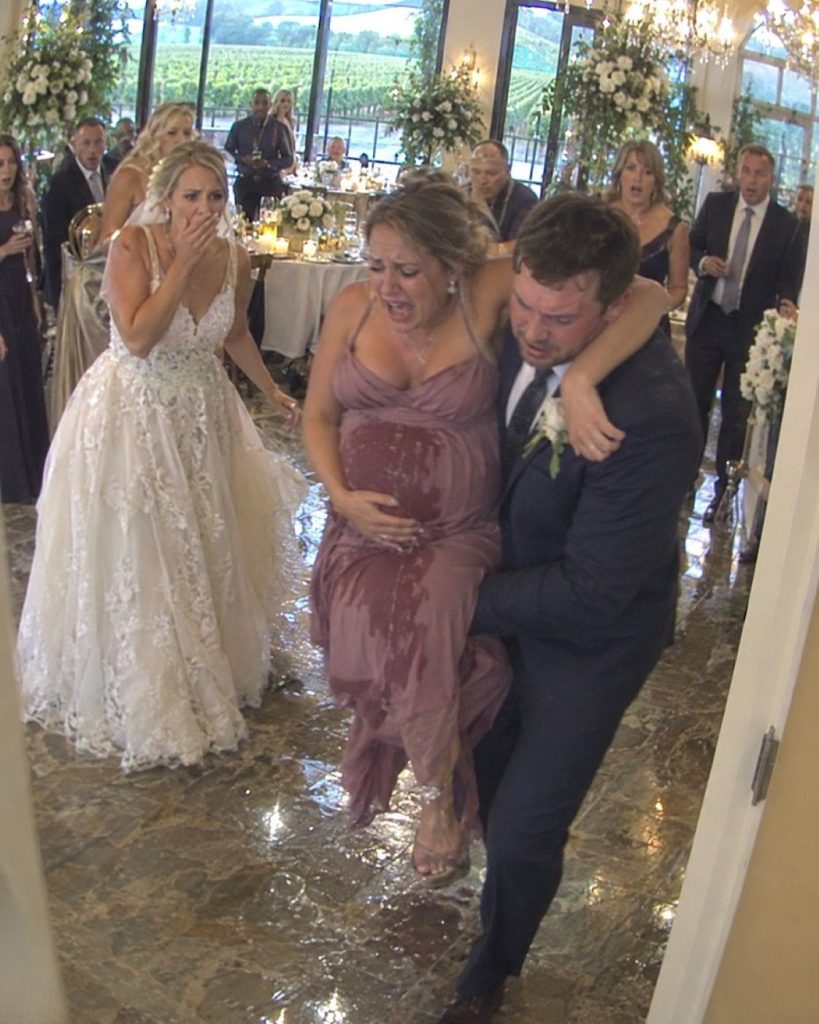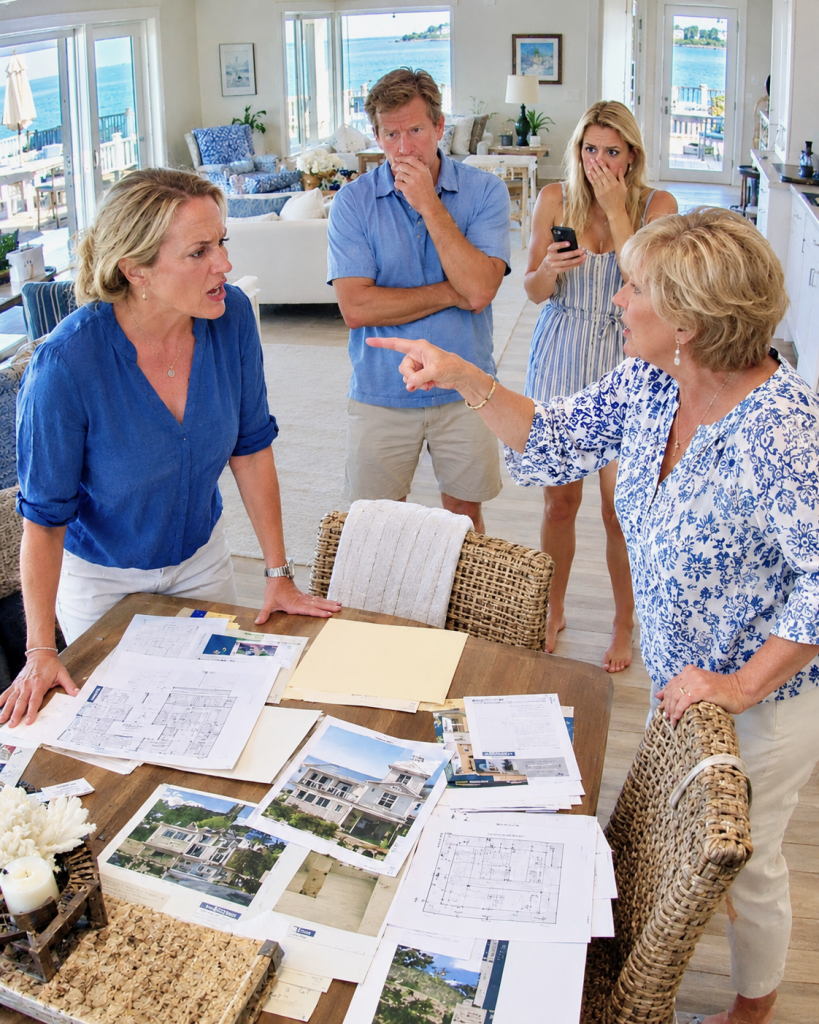
The moment I stepped through my front door, I stopped breathing. My kitchen wall was gone, raw studs and wiring exposed where the oak cabinets I had refinished by hand once stood, and sawdust hung in the air like fog. Sarah, my son’s wife, stood in the wreckage holding a paint swatch and smiled as if I were the visitor. “Carol, we’ve been expecting you.”
Five years earlier, after my husband Gerald died, I had bought that cedar-shingled house on Shoreline Drive in Beaufort, South Carolina, with his life-insurance money. I was sixty-one and hollowed out by grief, and the house gave me something to build when I no longer knew what life was supposed to look like. I repaired the porch, restored the old kitchen cabinets, saved the hundred-year-old heartpine floors, planted a garden, and hung Gerald’s maritime clock beside the back door. It was the first home I had ever chosen entirely for myself.
Three years later, my son David called while I was spending months in Cincinnati helping my sister Marlene through health problems. He said Sarah’s parents, Harold and Diane, had retired into financial trouble and needed somewhere temporary. Since I had been away from the beach house, he suggested they stay there. I said I would think about it, then after two weeks I called back and said no. “It is my home, not an empty vacation property.” David answered too smoothly, “I understand.”
In late March, while waiting outside Marlene’s physical-therapy appointment, I noticed a $4,260 charge to Gerald’s emergency credit card, the one I had added David to years earlier when he needed help. The charge was from Coastal Renovations. Mike, the contractor, cheerfully told me his crew was already a week into demolition at Shoreline Drive: kitchen wall down, cabinets removed, master bedroom started. By midnight I had found more than $9,000 in charges I never authorized. When David finally answered, he admitted Sarah had decided I would “come around” once the house was renovated for her parents.
Then I asked about Gerald’s maritime clock. David went quiet. I told him to stop everything, removed him as an authorized user, froze the card, called a locksmith, rented a car, and prepared to drive ten hours south. Gerald had always told me, “Don’t react, Carol. Respond.” Halfway through Tennessee, Sarah called and insisted the house had been “basically sitting there” and that her parents needed stability. I told her caring for my sister did not make my home vacant. By the time I reached South Carolina, I had stopped crying. I was going home to see what they had done after deciding my no did not count.
Chapter 2
I Returned Home And Found My Grief Demolished Without Permission
The dumpster was sitting in the middle of my garden when I reached Shoreline Drive. Rosemary lay crushed beneath one corner, roses were flattened, and work trucks lined the lawn. Inside, Sarah looked startled to see me. David came toward me with his arms open, but I stepped back. “Show me the bedroom.”
The closet wall was gone. A six-foot section of heartpine flooring had been cut out and replaced with plywood, and Gerald’s clock was missing from its hook. David found it in a cardboard box wrapped loosely in newspaper. A thin crack crossed the old glass face. I held it against my chest and said, “I told you no. You heard me, and you let this happen anyway because telling Sarah no was harder.”
That night I slept in the guest room among boxes of my own belongings while David and Sarah occupied my bedroom. By three in the morning, anger had burned down into clarity. At 7:45, Mike arrived for the next payment. I showed him my deed, my identification, and the card statement proving the charges were mine. His expression changed immediately. “Are you telling me the people who hired us don’t own this property?” I told him exactly that.
Sarah walked in wearing a robe and insisted it was a family matter. Mike refused to continue without the owner’s authorization. When his trucks pulled away, she rounded on me. “Do you realize what you just did? My parents have nowhere to live.” I reminded her I had already said no. She snapped, “We knew you’d say no.” The room went still. “Exactly,” I said. “So you used my money and changed my house because you knew I would refuse.”
I ordered David and Sarah out by the end of the day and rehired Mike directly to reverse what could be reversed. He warned me restoration would be expensive, but I signed a new contract in my name. I also took Gerald’s clock to Ellis, Beaufort’s only old-fashioned clock repairman; he said the mechanism was intact and the cracked glass could be repaired. Later, David sat with me on the porch and admitted he had known the plan was wrong but kept choosing the path of least resistance. That evening, Harold called. He said he and Diane had believed Sarah’s claim that I had agreed to the arrangement and would never have accepted otherwise. His apology sounded honest, but as I looked at Gerald’s empty hook, I still believed panic and entitlement explained the worst of what Sarah had done. I had not yet found the letter hidden in my files.
Chapter 3
The Attorney Letter Revealed Their Renovation Was Never Temporary Either
My daughter Patrice arrived from Atlanta the next afternoon and walked into the ruined kitchen without wasting a word on outrage. “Where do we start?” she asked. We worked beside Mike’s crew, sorting boxes and making decisions while the wall went back up. My oak cabinets were gone for good, so instead of trying to recreate them, I chose dark cherrywood. Most of the removed heartpine, however, had been stacked carefully in the garage by a young worker named Thomas who could not bring himself to throw away hundred-year-old wood.
On the fourth morning, I opened the property-insurance folder from my bedroom filing cabinet and found a letter that did not belong there. A real-estate attorney had written David six weeks earlier about transferring property through a family arrangement. The letter discussed extended occupancy, improvements, use rights, and circumstances that might complicate an owner’s claim. My hands went completely still. Sarah’s plan had not simply been to renovate first and beg forgiveness later. They had consulted counsel before demolition.
I called Barbara, the attorney who had handled my purchase and estate documents. She told me their legal theory was weak because David was not on the deed, I had never authorized the renovation, and I had acted immediately. Still, I asked her to document everything. I wanted to try the family route before litigation, but I would no longer rely on trust alone.
Then I called David. His silence told me he knew exactly which letter I meant. He admitted Sarah had asked him to contact the lawyer and he had convinced himself it was “just information.” As she kept moving forward, he kept finding reasons not to confront what the information was for. “I was wrong,” he said. “I knew I was wrong, and I kept choosing not to face it.”
I told him I loved him and always would, but love would not erase consequences. If he wanted a real relationship with me, he had to begin therapy and understand how he had allowed his wife’s plan to become more important than my consent. To my surprise, he had already made an appointment. He also asked to pay for Gerald’s clock repair, and I agreed. It was not forgiveness. It was one honest action.
Ten days later, Ellis returned the clock with its mechanism intact and the crack repaired so cleanly that it was visible only if you knew where to look. I carried it home and rehung it. The house was healing. Then Sarah called and apologized without bargaining, admitting she had turned problem-solving into permission to take what was not hers. I believed she meant it. I also knew there was another truth waiting somewhere beyond that apology.
Chapter 4
A Second Legal Inquiry Exposed How Far Sarah Considered Going
Near the end of restoration, while I replanted the garden, David called and talked for almost two hours. Therapy had forced him to see how often he managed other people’s emotions rather than face conflict. When he traced that habit back to Gerald’s illness during his teens, I stopped him gently. “Understand your history, but don’t use it to erase a choice you made at forty-one.” He accepted that. He and Sarah had found Harold and Diane a modest Charlotte apartment, paid the first three months themselves, and started couples counseling.
Four days later, with the house restored, Harold arrived alone. He ran a hand over the new cherry cabinets, sat at my kitchen table, and placed his keys between us. “I found the attorney letter,” he said. “And then I found another one.”
The second inquiry asked about circumstances in which an adult child might seek increased legal oversight of an older parent’s finances. Sarah had explored a conservatorship-type arrangement. At sixty-three I was healthy, competent, independent, and nowhere near any legal threshold for losing control of my decisions. What mattered was that she had considered whether my ability to say no could somehow be removed.
Harold had confronted his daughter before coming to me. She claimed it had been one conversation, never pursued, made while she was panicking and searching every possible route. He did not excuse her. “I spent my life avoiding saying the hard thing to Sarah,” he told me. “I’m done doing that.” He also admitted he and Diane had accepted her solutions too easily because they were ashamed of needing help. After he left, Barbara confirmed neither legal theory was realistically viable, but I asked her to document the second inquiry.
Three weeks later, Sarah mailed me a four-page handwritten letter. There was no request at the end. She wrote that she had spent her life believing that if she could fix something, she had the right to fix it, and that solving without consent had turned into taking. She admitted using my generosity, my credit card, and David’s conflict avoidance as leverage. She also addressed the conservatorship inquiry directly: “I don’t ask you to forgive that. I intend to prove over time that I understand what I became.”
I let the letter sit beneath Gerald’s clock for three days before calling my friend Louise. She asked what I thought, not what I planned to do. I told her remorse in one moment and changed behavior over years were different tests. I would not slam the door forever, but I would not pretend it had never been kicked in. The middle, I decided, was time.
Chapter 5
My Rebuilt Home Became Proof That Boundaries Can Preserve Love
Five weeks after restoration, my sister Marlene called. David had confessed everything to her himself, and she had told him that knowing he was wrong was only the beginning. Then she told me she was proud of how I had protected myself without confusing protection with cruelty. That evening I opened Gerald’s old recipe box and made his rosemary-lemon roast chicken in my restored kitchen, making every mistake he would have predicted and laughing as I corrected them.
A week later, David asked whether he, Sarah, Harold, and Diane could visit together. I said yes because accountability had begun to appear in choices, not speeches. They arrived Sunday morning. David hugged me in the yard; Sarah thanked me for letting them come, and I thanked her for the letter. Nothing about the exchange was warm enough to be dishonest.
Inside, they saw the restored heartpine, the cherry cabinets, and Gerald’s clock ticking beside the back door. Diane studied the clock and said, “It’s beautiful.” I answered, “It needed repair, but it came through.” We drank coffee and talked about Harold’s hardware-store job, Diane’s painting class, Marlene’s recovery, and Patrice. When David looked around and said, “Dad would have loved this room,” all five of us softened.
Three days later, a package appeared on my porch. Inside was a framed photograph of my original garden before the dumpster crushed it. Diane had taken it on the first day she arrived, back when Sarah told her I had approved everything. On the back she wrote, I didn’t know then how wrong everything was. I know now. I thought you should have this. I placed the picture beneath Gerald’s repaired clock.
What happened to my home was not a misunderstanding. David and Sarah used my money, ignored my refusal, renovated my property without consent, and consulted attorneys about creating rights they did not have and challenging my independence. Naming that clearly mattered. So did naming what followed: changed locks, frozen credit, legal documentation, repayment, therapy, honest apologies, restored floors, and boundaries nobody was allowed to reinterpret.
I had once believed kindness meant keeping the door open no matter how people entered. At sixty-three, I learned that kindness without limits becomes access, and access without respect becomes entitlement. Love is not proved by what you absorb; sometimes it is proved by what you require from people who claim to love you back. I sat on my porch while the garden grew again, Gerald’s clock kept time, and the house stood familiar but changed behind me. I had come there to rebuild after grief, then rebuilt again after betrayal. This time I knew I was no longer surviving. I was home.
THE END