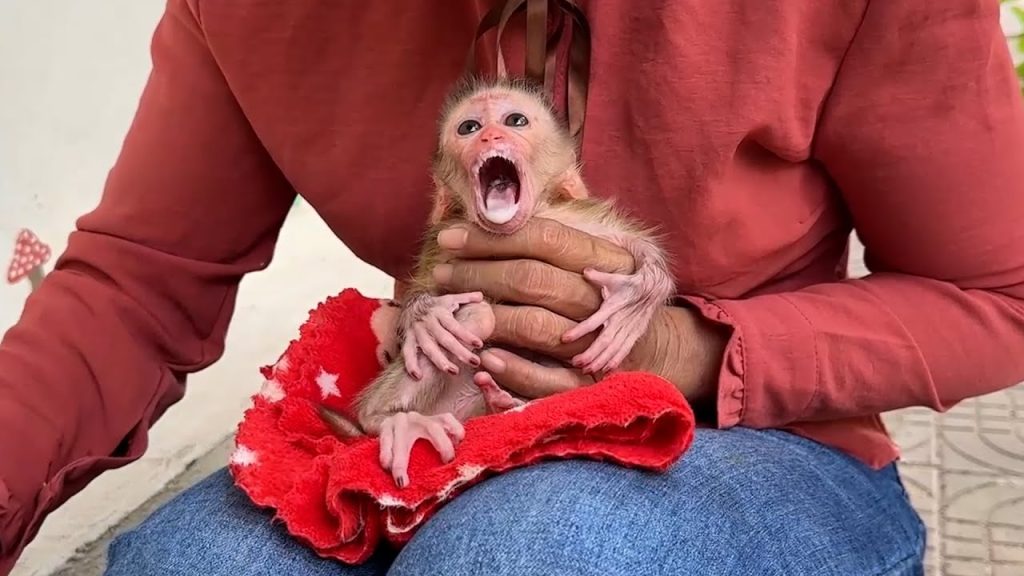
Little ChavChav was enjoying snack time when Mommy brought out a small bowl of yogurt. The baby monkey immediately became excited. He leaned forward, watched the spoon carefully, and made little sounds as if he couldn’t wait to taste it.
“Oh, ChavChav, are you ready for your snack?” Mommy asked with a smile.
The moment Mommy offered an appropriate little spoonful, ChavChav eagerly swallowed it. He seemed to love the taste so much that he wanted another bite right away.
“Slow down, sweetheart,” Mommy reminded him gently.
But ChavChav was impatient. He reached toward the bowl, eager for more yogurt. Mommy stayed close and tried to keep the feeding calm, offering only small amounts suitable for his needs.
Suddenly, ChavChav began coughing.
Mommy’s smile disappeared.
The little monkey looked distressed, and his breathing seemed unusual. Mommy immediately recognized that this could be a choking emergency.
“ChavChav!”
She stopped feeding him at once and moved the bowl away. She didn’t offer water, more yogurt, or anything else to swallow. Instead, she urgently contacted a veterinarian experienced with primates and followed emergency guidance while watching his breathing carefully.
ChavChav made frightened little sounds. Mommy stayed focused, knowing that choking can become life-threatening very quickly.
When help arrived, the trained professional assessed ChavChav and provided the appropriate care. Mommy explained what he had been eating and how quickly the problem had started.
Thankfully, ChavChav received prompt attention.
Mommy stayed nearby while the veterinarian examined him and determined what care he needed next. She didn’t assume he was fine just because the coughing became quieter; she understood that breathing problems can remain serious even after an episode appears to pass.
Afterward, the veterinarian gave Mommy clear instructions about feeding ChavChav safely and deciding whether yogurt was suitable for him at all.
Mommy gently whispered, “Oh, my little boy. You were so excited about your snack that you forgot to slow down.”
ChavChav rested in a safe, quiet place while Mommy followed the professional’s instructions. The bowl stayed out of reach, and there would be no more snacks until the veterinarian said it was safe.
Mommy realized that feeding a young monkey required more than choosing food he liked. The texture, portion size, feeding position, and the baby’s ability to swallow all mattered.
From then on, she promised to supervise every feeding carefully and never let ChavChav grab mouthfuls in a hurry.
The lesson was important: when a baby monkey coughs or appears to choke while eating, stop feeding immediately and seek urgent veterinary help. If breathing is difficult or stops, treat it as an emergency—never force food or liquid into the mouth.