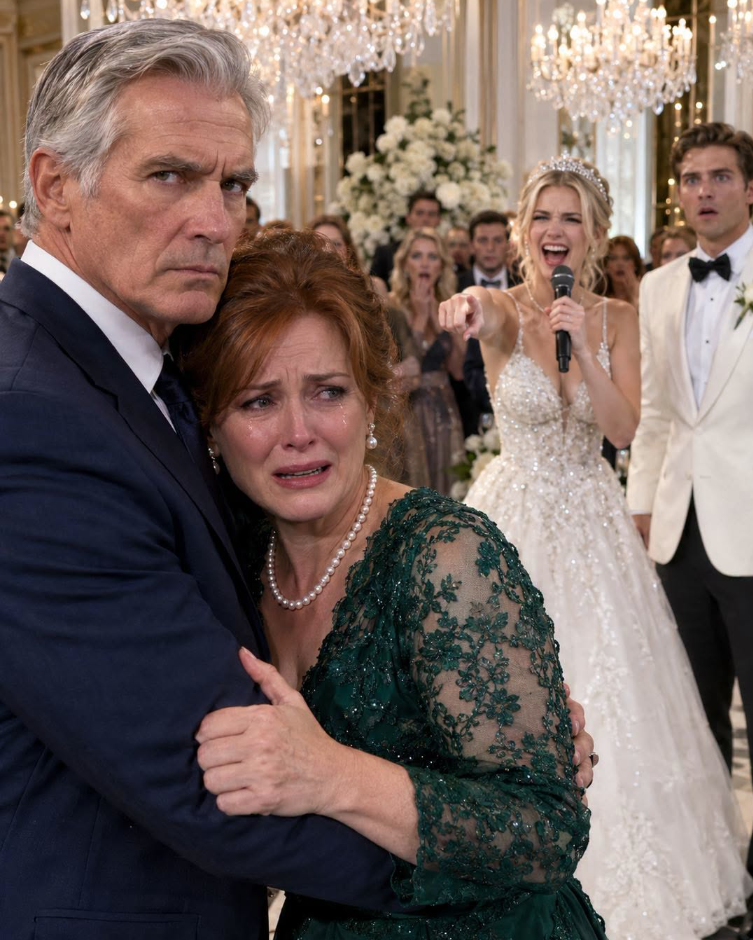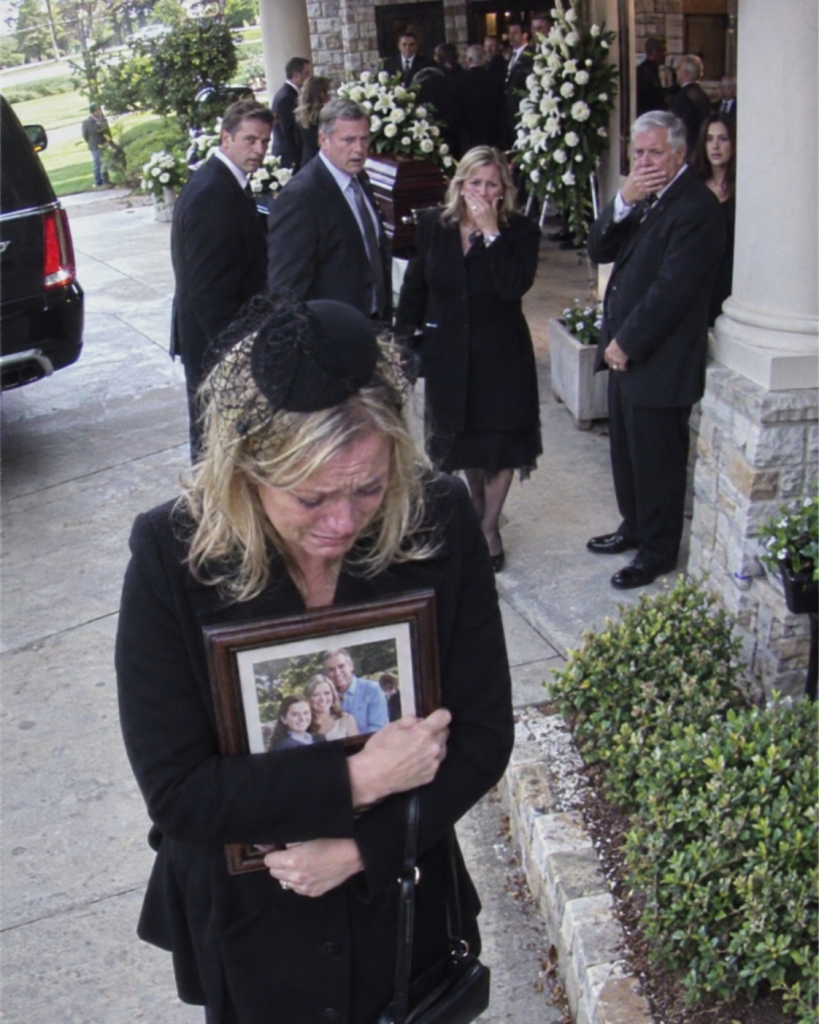
Six months after my husband and 2 children di//ed in a crash, my family skipped the funeral for my sister’s birthday. “Friday is Melissa’s birthday dinner. We can’t come,” my father shrugged. They ignored my grief entirely—until a headline announced I was awarded an $18.7 million settlement. That evening, my greedy parents were pounding on my front door, expecting a share. They have no idea what I’ve quietly prepared to make sure they get absolutely nothing.
Chapter 1: The Birthday and the Ashes
My parents deliberately skipped the funeral of my husband and my two small children because celebrating my younger sister’s birthday was, in their estimation, a higher priority.
Six agonizing months later, after abandoning me to navigate the darkest, most suffocating season of my human existence entirely alone, a single newspaper headline featuring my name next to the sum of $18.7 million miraculously refreshed their memory of my home address.
When I made that initial phone call to my parents from the sterile, fluorescent-lit chapel of the hospital, my cuticles were still packed with the gray ash of the wreckage.
That morning, my husband, Ethan Miller , had been driving our children down Interstate 95 just outside Richmond, Virginia. They were on their way to a weekend cabin trip. I was supposed to follow them that evening after wrapping up a client presentation. I never made the drive. A commercial freight driver, exhausted and over-caffeinated, fell asleep at the wheel, jumped the concrete median, and flattened their SUV before Ethan even had time to tap the brakes.
Lily was seven. Noah was four.
All three of them were wiped from the earth in a fraction of a second.
I survived strictly because I hadn’t been in the passenger seat. That singular, inescapable fact kept slicing through my consciousness with a cruelty so absolute it stole my breath. I was breathing because I had stayed behind to work, while the three radiant souls who transformed my house into a home were reduced to covered bodies in a county morgue.
My father, Thomas , was the first person I dialed.
When the line connected, a swell of clinking wine glasses and booming laughter spilled through the receiver. Over the din, I could hear my sister, Melissa , cheering for someone to bring out her birthday candles.
“Dad,” I croaked. My throat felt like it was lined with crushed glass. “There’s been a collision.”
“What’s going on, Claire?” he asked, his tone clipped and thoroughly distracted.
“Ethan is gone.”
My chest seized. I physically forced my jaw to open so I could expel the rest of the nightmare. “Lily and Noah, too.”
A heavy, cavernous silence swallowed the background noise. Then, the phone fumbled against fabric, and my mother, Evelyn , took the receiver. “What on earth do you mean, gone ?”
“They died this morning,” I whispered, sliding down the chapel wall until the cold tile hit my spine. “The joint funeral is Friday. Please, Mom. I am begging you. I need you here.”
Another muffled exchange. My father retrieved the phone. “Friday?”
“Yes.”
He let out a long, heavy sigh—the exact sigh he used when a contractor handed him an inconvenient scheduling delay. “Claire, Friday evening is your sister’s birthday dinner. That private room has been booked for six weeks.”
I had genuinely believed that identifying my mangled family had already destroyed every internal mechanism capable of feeling pain. I was wrong. My father’s words found a tiny, terrified piece of my soul that was still alive enough to shatter.
“Dad,” I gasped, digging my fingernails into my own thighs. “My husband and my babies are dead.”
“I understand the gravity of this,” he replied, his voice chillingly composed. “But today is your sister’s milestone. We simply cannot make it.”
The line clicked dead before I could humiliate myself by begging a second time.
At the funeral, I stood trembling between three polished mahogany caskets. Ethan’s parents practically had to hold me upright. His mother, Margaret , wept with such violence that she repeatedly gasped for air, while his father clamped a heavy, grounding hand onto my shoulder, terrified I might throw myself into the open earth alongside them.
My side of the church was a barren wasteland.
My parents did not attend. Melissa did not attend. Not a single cousin or aunt from my mother’s bloodline walked through those oak doors, save for one estranged great-aunt who drove six hours after hearing about the crash on the local news.
Three agonizing days later, my phone vibrated. A text from my mother. For one pathetic, foolish heartbeat, I thought she was offering an apology.
Instead, the screen read: Hope you’re managing the arrangements. Melissa felt deeply hurt that you didn’t bother to call her on her actual birthday.
I stared at the glowing pixels until they blurred into a white smear. Something deep within my chest cavity clicked shut. It wasn’t peace. It wasn’t numbness. It was absolute, locked-door finality.
For six months, I existed as a ghost haunting my own life. I ignored their sparse, casual check-ins. They texted me cheerful Thanksgiving selfies and an invitation to Melissa’s engagement party, pantomiming a reality where I was merely “too busy” to attend.
Meanwhile, Ethan’s favorite chipped coffee mug sat untouched beside the sink. Lily’s denim jacket hung frozen on the coat rack. Noah’s light-up sneakers remained crooked beneath the entryway bench because he had never mastered the art of lining them up. Nobody in my blood family ever asked how I was surviving.
Then came a freezing Tuesday morning in January.
My name was plastered across the digital front page of a regional legal journal: Widow of I-95 Crash Victims Awarded $18.7 Million in Settlement; Announces Child Safety Foundation.
The corporate blood money couldn’t buy me one more chaotic breakfast with Ethan. It couldn’t make Noah complain about soggy cereal, or bring Lily’s laughter echoing down the hallway. But it could weaponize their memories.
By noon, every relative who had treated me like a leper for half a year was suddenly blowing up my phone. By dusk, a heavy fist was pounding against my front door.
Chapter 2: The Money They Thought They Deserved
The pounding on my front door began at 6:17 p.m.
Three sharp knocks.
Then five more, harder this time.
“Claire! Open this door!”
My father’s voice.
For six months, I had prayed to hear that voice calling my name. I had imagined him standing on my porch with tears in his eyes, admitting that he had failed me when I needed him most. I had pictured my mother wrapping her arms around me, apologizing for every empty chair at the funeral.
Instead, my father sounded like a man demanding access to property he believed belonged to him.
I stood in the hallway, staring at the door.
Behind me, the living room remained exactly as I had left it that morning. Ethan’s reading glasses rested on the side table. Lily’s framed school photograph sat beside a vase of dried flowers. Noah’s stuffed puppy lay on the couch, one floppy ear bent beneath a cushion.
I had not moved their things.
I had not been able to.
“Claire!” my mother called. “We know you’re in there!”
I took one slow breath and opened the door.
My parents stood beneath the porch light, dressed as if they were attending a charity gala. My mother wore a cream-colored coat and carried a designer handbag. My father had his expensive watch exposed beneath his sleeve.
Melissa stood between them, wearing a fitted black dress and holding her phone.
Not one of them carried flowers.
Not one of them asked how I was sleeping.
My mother pushed past me before I could speak.
“Oh, Claire.” She looked around my hallway, her eyes moving over the furniture and framed photographs. “You really should have called us before making such a major announcement.”
I closed the door.
“Hello to you, too, Mom.”
My father removed his coat and draped it over a chair.
“We saw the settlement announcement,” he said. “Eighteen point seven million dollars. That’s a substantial amount of money.”
“It is.”
Melissa lifted her phone.
“Do you know how many people have already messaged me about it? They keep asking if you’re going to help the family. I had to tell them we hadn’t discussed it yet.”
I looked at her.
“You told people I was going to give you money?”
She shrugged.
“Not exactly. I just said we’d work something out.”
My mother moved toward the living room, then stopped in front of Lily’s photograph.
For one brief second, I thought she might finally feel something.
Instead, she turned back to me.
“Your father and I think this is an opportunity for the family to heal.”
I almost laughed.
Heal.
That was the word she chose for a family that had abandoned me beside three graves.
“Tell me, Mom,” I said quietly. “How exactly does money help you heal from missing your grandchildren’s funeral?”
Her expression tightened.
“We’ve been over this.”
“No. We haven’t.”
My father stepped between us.
“Claire, grief makes people emotional. We understand that you’re still struggling, but you cannot hold a grudge forever.”
I stared at him.
“A grudge?”
“Yes. What happened was unfortunate. We made a scheduling decision. It wasn’t intended to hurt you.”
“A scheduling decision.”
My voice sounded strange even to me.
“My husband and my children died, Dad. You chose a birthday dinner.”
He waved a hand impatiently.
“And we regret that you were upset.”
Not that they had missed the funeral.
Not that they had left me alone.
That I had been upset.
My mother sat on the sofa without asking permission.
“Anyway, we need to discuss the settlement. Your father has been looking at some investment opportunities. With the right planning, we could turn this into something that benefits everyone.”
I looked at Melissa.
She had already begun scrolling through pictures on her phone.
“What kind of opportunities?”
My father straightened.
“We have a few outstanding obligations. The mortgage on our house, some business debts, and Melissa’s upcoming wedding expenses. Your sister deserves to start her marriage without financial stress.”
Melissa finally looked up.
“And before you say anything, I’m not asking for millions. Just enough to make sure I can have the wedding I want.”
I looked at the woman who had celebrated her birthday while my children lay in separate hospital rooms awaiting identification.
“How much is enough?”
She exchanged a glance with our mother.
“Two million would be a good start.”
The room went silent.
Two million dollars.
She said it as casually as if she were asking to borrow my car.
My father cleared his throat.
“We were thinking of dividing the money sensibly. A portion for us, a portion for Melissa, and the rest for you to manage.”
I slowly turned toward him.
“You want to divide my settlement?”
“It’s family money,” he replied.
“No. It’s compensation for the deaths of my husband and children.”
His jaw tightened.
“Don’t use those children to make us feel guilty.”
For a moment, I couldn’t breathe.
My father had always been a cruel man when he thought he had the upper hand. But I had never imagined he could look at me in my own house and say something so monstrous.
My mother’s eyes darted toward the framed photograph on the mantel.
“Claire, nobody is trying to take anything away from you. We’re simply trying to help. You’re alone now. You have no husband, no children to raise, and no reason to hold on to all that money.”
The words landed harder than a slap.
You’re alone now.
As if my family were an inconvenience I had been relieved of.
I glanced toward the hallway where Lily’s bedroom door stood slightly open.
“No reason?” I whispered.
My mother sighed.
“Oh, don’t start crying.”
I didn’t.
Instead, I walked to the kitchen and returned with a thick manila envelope.
I placed it on the coffee table.
My father eyed it suspiciously.
“What’s that?”
“The reason you should have called before coming here.”
He reached for the envelope, but I placed my hand over it.
“Before you open it, I want to make one thing clear. Every dollar of that settlement belongs to me. No one is entitled to it because they share my last name.”
My father gave a dismissive laugh.
“We’ll let the lawyers sort that out.”
“Good idea.”
I removed the documents myself.
The first was a certified copy of my settlement agreement.
The second was a letter from my attorney, confirming that the funds had been placed in a professionally managed trust designed to protect the proceeds and fund a child-safety foundation.
The third document was a copy of the irrevocable charitable trust agreement.
Melissa leaned forward.
“What is all that?”
I looked directly at her.
“The money you came here to claim has already been assigned a purpose.”
My father snatched the charitable trust document from the table.
He scanned the first page.
Then the second.
His face began to redden.
“You can’t be serious.”
“I am.”
“You’re giving away eighteen million dollars?”
“Not all of it. The settlement is structured to cover my future needs, the foundation’s work, and the obligations established by the agreement. The money isn’t a family inheritance.”
My mother grabbed the document from him.
“What foundation?”
“The Lily and Noah Child Safety Foundation.”
Melissa’s mouth fell open.
“You named it after them?”
“Yes.”
“What about us?” she demanded.
I looked at her for a long moment.
“What about you?”
She stood up so abruptly that her phone slid off her lap.
“This is insane! You’re taking money that could help your own family and giving it to strangers!”
I stared at her.
“Strangers?”
My voice cracked for the first time that evening.
“Children who have lost their parents. Families who can’t afford legal help after preventable accidents. Parents who spend months fighting companies that refuse to accept responsibility for the people they’ve killed.”
I swallowed hard.
“Those are the people I want to help.”
My father threw the papers onto the table.
“You’re making an emotional decision because you’re still traumatized.”
“No. I made this decision after six months of watching my children’s rooms remain empty while the people who were supposed to love me pretended nothing had happened.”
My mother stood.
“We are your parents!”
“Then why weren’t you at the funeral?”
Neither of them answered.
“Why didn’t you come when I called you from the hospital?”
Silence.
“Why did you send me a text complaining that Melissa was hurt because I hadn’t wished her a happy birthday three days after I buried my family?”
My mother’s face went pale.
“Claire, I—”
“Why did you invite me to an engagement party without once asking whether I could get through a night without waking up screaming?”
I looked at my sister.
“And why did you tell everyone you were the victim because I didn’t attend?”
Melissa’s eyes filled with angry tears.
“Because you made everything about yourself!”
For a second, the room seemed to tilt.
Then I understood.
They hadn’t come because they loved me.
They hadn’t come because they were sorry.
They had come because someone had printed a number beside my name, and they believed that number gave them access to a woman they had spent six months treating as disposable.
My father shoved the settlement papers back toward me.
“Fine. If you insist on doing this, we’ll challenge your decision. You’re not thinking clearly. We can argue that you’re incapable of managing such a large amount of money in your current condition.”
I felt something cold settle inside me.
“You can try.”
He leaned closer.
“You think having eighteen million dollars makes you powerful? You’re still my daughter.”
I met his eyes.
“And you’re still the man who chose a birthday dinner over his grandchildren’s funeral.”
His face hardened.
“You’ll regret speaking to me that way.”
I picked up the documents and placed them back in the envelope.
“No, Dad. The only thing I regret is believing that if I suffered enough, you would finally care.”
I walked to the front door and opened it.
My mother stared at me as though she couldn’t understand what was happening.
“Are you throwing us out?”
“Yes.”
“After everything we’ve done for you?”
I almost asked her to name one thing.
Instead, I stepped aside.
“Good night.”
My father snatched his coat from the chair.
“This isn’t over.”
I watched him walk onto the porch.
Melissa followed, muttering something about how selfish I had become.
My mother was the last to leave.
At the threshold, she turned back.
“When you finally realize that money can’t replace family, don’t expect us to welcome you back.”
I held the door open.
“Mom, money didn’t replace my family.”
I looked at the three photographs on the mantel.
“You did that all by yourselves.”
Then I closed the door.
My hands began shaking so violently that I had to lean against the wall.
I slid down onto the floor, covered my mouth, and finally allowed myself to cry.
Not because I wanted them back.
Because some small, foolish part of me had still hoped that they might come through that door and choose me.
But they hadn’t.
And now, for the first time in my life, I was going to stop waiting.
At 8:42 p.m., my phone rang.
It was Daniel Brooks, my attorney.
“Claire,” he said, “I received a call from your father’s attorney.”
I closed my eyes.
“Already?”
“He says your father believes he has a claim against the settlement. He also mentioned that your parents intend to challenge the charitable trust.”
I looked at the envelope on the table.
“Let them.”
Daniel paused.
“There’s something else you should know. Your father contacted the settlement administrator this afternoon, before he came to your house. He attempted to obtain information about the disbursement.”
My stomach tightened.
“Did he get anything?”
“No. They referred him to my office. But Claire, I want you to understand something. Your parents aren’t simply upset. They’re actively trying to gain access to information they have no right to.”
I walked to the window.
Across the street, my father’s car was still parked beneath a streetlamp.
“He said this wasn’t over,” I whispered.
Daniel’s voice became firm.
“Then we should make sure he understands exactly what over means.”
I looked at my reflection in the dark glass.
For six months, I had believed that grief was the worst thing that could happen to me.
I was beginning to understand that betrayal could be its own kind of disaster.
But unlike the crash that had taken Ethan, Lily, and Noah, this was something I could face with my eyes open.
“Daniel,” I said, “send them the documents.”
“All of them?”
“Every single one.”
He was silent for a moment.
“Understood.”
“And Daniel?”
“Yes?”
“There’s one more thing I want you to prepare.”
I looked toward the hallway, where my children’s bedrooms waited in the darkness.
“It’s time they learned what I was doing before the settlement ever made the news.”
Chapter 3: The Last Thing My Children Left Behind
The next morning, my father’s attorney sent a formal letter demanding that I suspend all transfers related to the charitable trust.
He claimed that my grief had impaired my judgment and that my parents had a legitimate expectation of benefiting from the settlement because of their relationship to me.
Daniel read the letter aloud over the phone.
When he finished, I asked one question.
“Did he mention the funeral?”
“No.”
“Did he mention the text my mother sent me afterward?”
“No.”
“Did he mention that none of them contacted me for months?”
“No, Claire.”
I looked down at my hands.
“Then he has nothing to say about the family they claim to be protecting.”
Daniel explained that the settlement had been negotiated in my name, that my parents had no automatic entitlement to the money, and that the charitable arrangement would be reviewed under the terms of the governing documents. He also reminded me that any challenge would have to be answered through the appropriate legal process.
I understood.
I had no intention of winning a fight by pretending the law didn’t matter.
I intended to let the documents speak for themselves.
But there was something my parents didn’t know.
Something I had not told anyone outside a small circle of people who had helped me survive the previous six months.
The foundation had not been born from the settlement announcement.
It had begun long before that.
Three weeks after the funeral, I had been sitting in Ethan’s study, surrounded by unopened condolence cards, when I found a small blue notebook beneath his laptop.
The cover was worn, and the corners had been softened by years of use.
I recognized it immediately.
Ethan used it to keep track of ideas he wanted to discuss with me. Most were ordinary things: replacing the kitchen faucet, taking Lily to the science museum, teaching Noah to ride a bicycle without training wheels.
But near the back, I found a page titled:
If We Ever Have the Chance to Help Someone, Start Here.
Underneath, Ethan had written a list of practical ideas.
A fund to help parents obtain independent accident investigations.
Emergency grants for families whose income disappeared after a fatal crash.
Free legal consultations for people confronting powerful transportation companies.
And, in his familiar handwriting, one final sentence:
No child should become a statistic because the adults responsible for keeping people safe decided someone else’s life was worth less than their convenience.
I sat on the floor for nearly an hour, holding that notebook against my chest.
Then I found an old email Ethan had sent me four months before the crash.
He had been researching road-safety charities and small nonprofit organizations. He wanted us to start something after the children grew older, perhaps when Noah began school full-time.
He had even drafted a name.
The Lily and Noah Foundation.
I had never answered the email.
Not because I didn’t care.
Because I had been busy preparing a presentation, answering work calls, and promising myself that there would always be more time.
After the accident, I read the email so many times that I knew every sentence by heart.
The settlement had given me the financial ability to act on his idea.
But it had not created the idea.
Ethan had.
And now I was going to finish what he started.
That was the truth I had wanted my parents to understand.
Instead, they had arrived at my door asking how much they could take.
On Friday morning, my mother sent me a message.
Your father wants to resolve this privately. Meet us at the house on Sunday. We can put this unpleasantness behind us.
I stared at the message.
The house.
She meant the house where I had grown up.
The house where Melissa’s birthday dinners had always taken priority over my school performances, where my achievements were met with polite nods and hers with elaborate celebrations.
I almost deleted the message.
Then I decided to go.
Not to reconcile.
Not to negotiate.
To end the last conversation I would ever have about what they believed they were owed.
On Sunday afternoon, I arrived with Daniel and a folder containing copies of the relevant documents.
My parents had invited two relatives, Aunt Patricia and Uncle Robert, along with Melissa and her fiancé, Jason.
They had arranged coffee, pastries, and a large bowl of fruit on the dining table.
It looked less like a family meeting and more like a small business conference.
My father stood when I entered.
“Claire. Good. Let’s get this settled.”
I took a seat opposite him.
Daniel sat beside me.
My mother glanced at him.
“We don’t need lawyers for a family conversation.”
“Then this should be easy,” I replied.
Melissa crossed her arms.
“I don’t understand why you’re being so dramatic. Nobody wants to take everything from you.”
“Last week, you asked for two million dollars.”
“That was a suggestion!”
“You also told relatives that I had promised to help pay for your wedding.”
She glanced at Aunt Patricia.
“I thought she would help.”
“You told them before you asked me.”
My father raised his hand.
“Enough. We are here to discuss the settlement.”
Daniel opened his briefcase.
“Then let’s discuss the facts.”
He placed the settlement agreement on the table, followed by the trust documents and a summary of the foundation’s intended purpose.
He explained that my parents were not beneficiaries of the settlement and that their objections did not, by themselves, create a right to the funds. Any formal challenge would be handled through the proper legal channels.
My father listened with a tight expression.
When Daniel finished, he leaned back.
“So you expect us to sit here and watch our daughter give away a fortune?”
I answered before Daniel could speak.
“No. I expect you to stop treating my loss like an opportunity.”
My mother dabbed at her eyes with a tissue.
“We lost them, too.”
The room became very still.
For the first time that afternoon, I looked directly at her.
“You lost your grandchildren.”
My voice remained quiet.
“I lost my husband. I lost my daughter. I lost my son. I lost the people I expected to grow old with. I lost the sound of Ethan’s keys in the front door and Lily’s stories about school and Noah shouting for me to come see what he’d built out of blocks.”
My mother lowered her tissue.
“You think I don’t know that?”
“Then tell me their favorite things.”
She blinked.
“What?”
“Tell me what Lily wanted to be when she grew up.”
No answer.
“What did Noah call the stuffed puppy he carried everywhere?”
My father shifted in his chair.
“Claire, this is unnecessary.”
“No. It’s a simple question.”
I turned to Melissa.
“What was Lily’s favorite book? What was Noah afraid of when the lights went out? What did Ethan do every Saturday morning before breakfast?”
Melissa stared at the table.
She had no answers.
Because none of them had been there.
Not for the school projects.
Not for the scraped knees.
Not for the birthday cakes Ethan baked when he wanted the children to wake up smiling.
And certainly not for the funeral.
My voice trembled, but I continued.
“You say you lost them, too. But you never called to ask whether I could bear to enter their bedrooms. You never asked whether I had eaten, whether I was sleeping, whether I needed someone to sit with me because the silence in that house was unbearable.”
I looked at my father.
“You didn’t even ask if I was alive in any meaningful sense.”
My father’s face hardened.
“We didn’t know what to say.”
“You could have said, ‘I’m coming.’”
Nobody moved.
“You could have stood beside me at the funeral. You could have held my hand. You could have let me cry without making it about Melissa’s birthday.”
My mother whispered, “We made a mistake.”
I waited.
For the apology.
For the admission.
For something that sounded like genuine remorse.
Then my father spoke.
“And we’re sorry. But you cannot expect us to spend the rest of our lives paying for one mistake.”
One mistake.
I looked at Daniel.
He didn’t say anything.
He didn’t need to.
I understood that my father was still trying to negotiate the price of forgiveness.
I opened the folder.
“There is one more document I want you to see.”
I slid a printed email across the table.
It was the email Ethan had sent me months before the crash, along with the page from his notebook describing the foundation he had dreamed of creating.
Aunt Patricia picked it up and began to read.
Her expression changed.
My mother reached for the paper.
“What’s this?”
“It’s Ethan’s idea,” I said. “The idea I’m turning into a foundation.”
Melissa skimmed the page.
“So he wanted to give money away?”
“He wanted to help families who had nowhere else to turn.”
My father pushed the papers aside.
“That’s beside the point.”
“No, Dad. That’s the entire point.”
I placed my hand over Ethan’s notebook.
“This money will help families who have lost someone because a company cut corners or a driver was pushed beyond safe limits. It will help people who cannot afford to challenge powerful corporations. It will help parents keep their children safe.”
My eyes burned.
“Ethan wanted to do something meaningful with the life he had. Lily and Noah deserved to grow up in a world where people cared whether they lived or died. I can’t give them that childhood back, but I can honor what they meant to us.”
Uncle Robert cleared his throat.
“That’s a good thing to do, Claire.”
My father shot him an angry look.
Robert didn’t look away.
For once, someone in my family had said something that wasn’t about money.
Then Daniel placed another document on the table.
“This is a copy of the correspondence between Mr. Miller’s office and the settlement administrator.”
My father went rigid.
“What is that?”
“It records an inquiry made on your behalf about the timing and structure of the settlement payment.”
“I was trying to help my daughter.”
“Perhaps,” Daniel replied evenly. “But you were not authorized to access her confidential financial information. We have preserved the correspondence in case it becomes relevant to any future legal proceeding.”
My father looked at me.
“You had your lawyer investigate me?”
“No. You contacted the administrator. They documented it. Daniel informed me of what happened.”
My mother shook her head.
“This is becoming ugly.”
I nodded.
“It became ugly the day I called you from the hospital.”
Nobody answered.
My father finally stood.
“If you go ahead with this foundation, don’t expect us to support you.”
I rose from my chair.
“I didn’t ask you to support me.”
“You’re throwing your own parents away for strangers.”
I looked at him for a long moment.
“No. I’m choosing to help people who need help instead of rewarding people who abandoned me.”
My mother began to cry.
Melissa looked furious.
Jason, who had barely spoken all afternoon, finally turned toward my sister.
“Melissa, did you really tell people Claire was going to pay for our wedding?”
She opened her mouth.
“I thought—”
“You told my parents the same thing,” he interrupted. “You said Claire had agreed to help.”
“I was trying to make sure we could afford the wedding!”
Jason stared at her.
“By spending money that isn’t yours?”
Melissa’s face flushed.
“This is none of your business.”
“It’s our wedding,” he replied. “And I don’t want to begin our marriage by demanding money from a woman who just buried her family.”
For the first time, Melissa had nothing to say.
I picked up my folder.
“This is my final answer. The settlement will be administered according to the legal agreements already in place. The foundation will proceed. If anyone believes they have a legitimate legal claim, Daniel will respond through the appropriate process.”
I looked at my parents.
“I will not discuss the money with you again.”
My father stared at me with a mixture of anger and disbelief.
“You’ll regret this.”
I walked toward the door.
“No, Dad. I regret the six months I spent hoping you would become the parents I needed.”
Then I left.
The weeks that followed were difficult.
My father sent letters through his attorney. My mother called relatives and complained that I had become cold and ungrateful. Melissa canceled several wedding arrangements and blamed me for the financial stress.
But the legal threats never turned into a successful claim against my settlement.
Daniel responded to each demand with the relevant documents. The trust was administered under its governing terms, and the foundation moved forward with professional oversight.
My parents had mistaken my silence for weakness.
They had mistaken my grief for confusion.
And they had mistaken a large settlement for an open invitation.
None of those assumptions survived the paperwork.
I did not celebrate their failure.
There was nothing to celebrate.
I was still a widow. I was still a mother who woke some mornings believing she had heard little feet running down the hall, only to remember the terrible truth a moment later.
No amount of money changed that.
But something changed when the foundation opened its doors.
The first family we helped was from North Carolina.
Their eight-year-old son had been killed in a collision involving a commercial truck. The company involved had denied responsibility, and the parents were struggling to afford independent experts to review the evidence.
They had spent months being told to wait.
Their savings were nearly gone.
When I read their application, I had to put it down and walk outside.
The mother had written a single sentence at the bottom of the page.
We don’t want revenge. We just want someone to take our son’s life seriously.
I knew exactly what she meant.
The foundation approved funding for an independent review and connected the family with qualified legal assistance.
Several weeks later, I received a handwritten letter from the mother.
She thanked us for giving her the chance to ask questions without being forced to choose between pursuing answers and paying her bills.
I placed that letter beside Ethan’s notebook.
Then I went into Lily’s room and sat on the edge of her bed.
“I think you’d like this, sweetheart,” I whispered.
I told her about the family.
I told Noah about the little boy who loved toy trucks and dinosaur pajamas.
And I told Ethan that we had finally started.
For the first time since the crash, my tears didn’t come only from what I had lost.
They also came from knowing that the love we had built together was still capable of reaching someone.
One year after the accident, the foundation held a small memorial gathering in Richmond.
There were no grand speeches or expensive decorations. We planted three young trees in a quiet garden beside the foundation’s office.
One for Ethan.
One for Lily.
One for Noah.
Ethan’s parents stood beside me, holding hands.
Margaret placed a small wooden bird beneath Lily’s tree.
“She would have liked the birds,” she whispered.
I smiled through my tears.
“She would have tried to name every one of them.”
We laughed softly, and the sound hurt in the familiar way grief always did when it briefly made room for happiness.
After the ceremony, Daniel handed me a sealed envelope.
“This arrived from your mother.”
I recognized her handwriting.
For several minutes, I couldn’t bring myself to open it.
Then I unfolded the letter.
Claire,
I know you may never forgive me. I have spent months telling myself that we simply made a bad decision, that the birthday dinner was an unfortunate conflict, and that you would eventually understand.
But I have started to understand something myself.
We were so accustomed to making Melissa the center of everything that when you called us with the worst news of your life, we treated your pain as another inconvenience.
I don’t know how to make that right.
I am sorry we weren’t there.
Mom.
I read it twice.
Then I folded it carefully.
There was no demand for money.
No mention of the settlement.
No request that I call my father or reconcile with Melissa.
It was the first message from my mother that had acknowledged what she had actually done.
Daniel waited beside me.
“Do you want to respond?”
I looked at the three trees.
“Not today.”
He nodded.
I placed the letter in my bag.
Forgiveness, if it ever came, would be my decision. It would not be purchased with money, demanded through family loyalty, or granted because someone had finally realized that cruelty carried consequences.
I could acknowledge my mother’s apology without pretending that the past had disappeared.
I could let go of the need to punish my parents without giving them access to my life.
And I could love the people I had lost without allowing their memories to become weapons in someone else’s hands.
That evening, I returned to my house.
The children’s bedrooms were still there, but I had begun making small changes. Lily’s books were arranged neatly on her shelves. Noah’s toys were stored in labeled boxes so they could be used by children visiting the foundation.
I had not erased them.
I had simply stopped treating every object as something I was forbidden to touch.
On the mantel, I placed a new photograph.
It showed Ethan holding Noah on his shoulders while Lily stood between them, laughing at something outside the frame.
I had taken the picture on a summer afternoon, long before I knew how precious an ordinary day could become.
I stood before it for a long time.
“I miss you,” I whispered.
Then I turned off the living-room light and walked upstairs.
For months, I had believed that surviving meant learning how to live without the people I loved.
Now I understood that survival could mean something more.
It could mean carrying their love into places they would never have the chance to visit.
It could mean helping another mother find answers, another father protect his children, another family survive a tragedy without being crushed by the cost of seeking justice.
My parents had come to my door expecting a fortune.
They had believed that because they were my family, they were entitled to a share of everything I had left.
They were wrong.
The settlement was not a prize.
It was not a lottery ticket.
And it was certainly not a reward for the people who had abandoned me.
It was a responsibility I had chosen to accept.
The money would help strangers.
The foundation would carry my children’s names.
And my family’s failure would never again determine what I did with the love I had left to give.
I could not bring Ethan home.
I could not tuck Lily into bed or hear Noah laughing from the back seat.
But I could make sure their lives meant more than the terrible way they ended.
That was the promise I had made when I signed the papers.
That was the future I had chosen when my parents stood in my living room demanding their share.
And that was the one thing they would never be able to take from me.
The money belonged to the future I was building. My children belonged to the love I would carry forever. And my parents, at last, had to live with the consequences of the choice they had made.