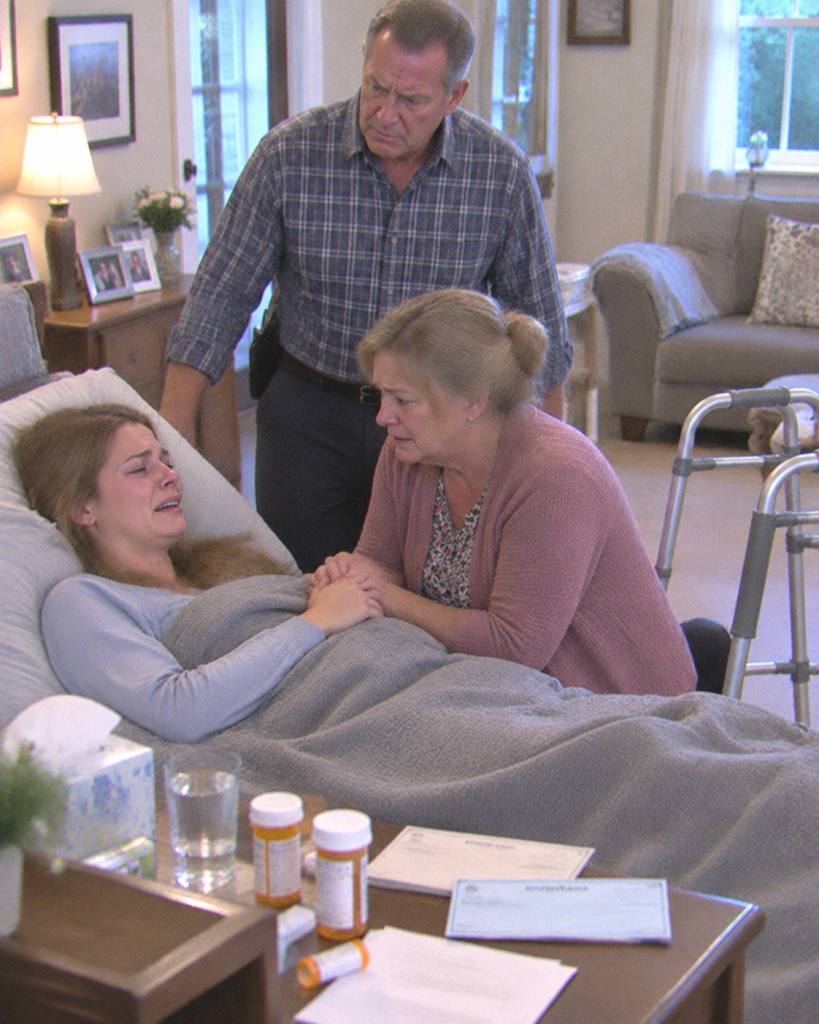
Six days after spinal surgery, I lay flat on a makeshift bed in my living room, unable to stand without help, when I heard my father whisper in the hallway, “We need to put the Spring Street house in Felicia’s name before Joanna’s medical problems become our problem.”
My mother answered, “Felicia is the one with a future.” I stared at the ceiling, too weak even to sit up, listening to my parents discuss protecting the house I had spent four years paying off from me.
I was thirty-one and had worked sixty-hour weeks as a warehouse operations supervisor outside Macon, Georgia. My father, Walter, worked part-time at a hardware store, Mom managed the house, and my older sister Felicia drifted through business ideas that always sounded richer than they were. Because I had the steady paycheck, I became the family emergency fund. I paid more than half my wages toward my parents’ $120,000 mortgage until the home was free and clear. When the final payment posted, Dad squeezed my hand and promised, “We will never forget what you’ve done.”
Then Felicia decided she needed a luxury SUV to look successful in real estate. Her damaged credit required a co-signer, and she came to my apartment crying, promising commissions would cover everything within months. The commissions never came. For nearly four years I paid $480 every month to protect my own credit while she drove the vehicle to showings, restaurants, and networking events. I skipped vacations, drove a sedan with more than 200,000 miles, and kept telling myself family sacrifice came back around when you truly needed it.
My body gave out before my faith in them did. Two years earlier, a warehouse storage rack had failed near Bay Four. I shoved a new employee clear before the structure collapsed, but a heavy crate struck my lower back. The first hospital called it a severe bruise and sent me back to modified duty after ten days. I kept working through worsening pain because my parents depended on me and Felicia’s car payment never stopped. By the time an Atlanta spine specialist ordered a new MRI, two badly herniated discs were compressing nerves and destabilizing my spine. “Without surgery soon,” he said, “some of this damage may become permanent.”
The hospital required a $40,000 guarantee because insurance had pushed the case into third-party liability. I had almost nothing left after years of carrying everyone else. That Saturday, I put the surgical estimate on my parents’ dining table and offered to sign a repayment agreement with interest. Dad protected his retirement savings. Mom called the timing terrible. Felicia suggested surgeons exaggerated urgency and said her money was “tied up.” Nobody offered even five hundred dollars. Four days later, I saw Felicia smiling beside a resort pool on St. Simons Island, wineglass raised, wearing the kind of linen dress she claimed she could not afford. That was when I understood: I had not been their daughter with needs. I had been their income stream with a name.
Chapter 2
My Aunt Risked Her Home When My Parents Wouldn’t Help
Rain hammered my apartment windows the following Tuesday when Aunt Audrey and my cousin Derek arrived without warning. Audrey, Dad’s younger sister, worked as a seamstress; Derek repaired agricultural machinery and still lived with her in the modest house they owned in Bibb County. She crossed the room, placed a cashier’s check for $40,000 on my coffee table, and took both my hands. “You are having the surgery. We’ll argue about the rest later.”
Derek had driven her to their credit union that morning and helped secure a home-equity line against the only house they owned. I started crying so hard I could barely speak. My own parents had refused to risk savings I had protected for them, while relatives they quietly considered less successful had put their roof on the line so I could walk. Derek only shrugged. “Nobody in this family is ending up in a wheelchair because paperwork moved slower than an injury.
Two days later, they drove me eighty-five miles north to the orthopedic center in Atlanta. The three-hour lumbar decompression and fusion stabilized the damaged vertebrae and relieved the pressure on my nerves. Audrey stayed in the waiting room until the surgeon confirmed the procedure had gone well, then sat beside my hospital bed with broth and extra pillows when I woke. Derek drove us home slowly enough that every bump felt negotiated.
Audrey stayed five days, helping me sit upright, preparing simple meals, and keeping my medications organized. My parents did not visit until the end of that first week. They arrived carrying grocery-store flowers and spoke softly as though kindness were something they had remembered to schedule. I was resting behind the thin bedroom partition when Dad’s voice drifted from the hallway.
“We need an attorney,” he told Mom. “If Joanna ends up permanently disabled, her medical debts could become a problem. Put the Spring Street house entirely in Felicia’s name.” Mom agreed immediately. Then she said, “Felicia at least has a career trajectory. She’ll know how to handle property.”
I closed my eyes. The Spring Street house was mortgage-free because I had sacrificed four years of my life to make it so. Now, before my incision had healed, they were planning to secure that gift away from me because they assumed I might become a financial burden. I did not confront them. I let them leave believing I had heard nothing. For the first time, I understood that getting stronger would require more than repairing my spine. I would have to stop financing people who had already begun planning around my disappearance.
Chapter 3
The Settlement Arrived After My Family Had Already Discarded Me
A month after surgery, my attorney Franklin Marsh called while I was practicing short assisted walks between the sofa and kitchen. He had spent nearly a year investigating the warehouse accident, collecting maintenance records, security footage, and engineering reports. The storage-rack manufacturer had known about defective locking pins, and my surgical findings now proved permanent injury and lifelong lifting restrictions. Their insurer settled rather than face a jury.
The gross settlement was $1.2 million. After attorney fees and expert costs, roughly $750,000 landed in my personal account. I stared at the deposit notification without celebrating. The first person I called was Derek. He picked me up, and with my brace still strapped around my waist, we went directly to the credit union and paid off the entire $40,000 home-equity line Audrey had taken out for me.
Then Franklin helped me buy a modern two-bedroom condo in downtown Macon for $220,000 cash. I put the deed solely in Audrey and Derek’s names. They had risked the only home they owned when my immediate family would not risk a fraction of their savings. I wanted them to know they would never again face housing insecurity because they had chosen me when choosing me was expensive.
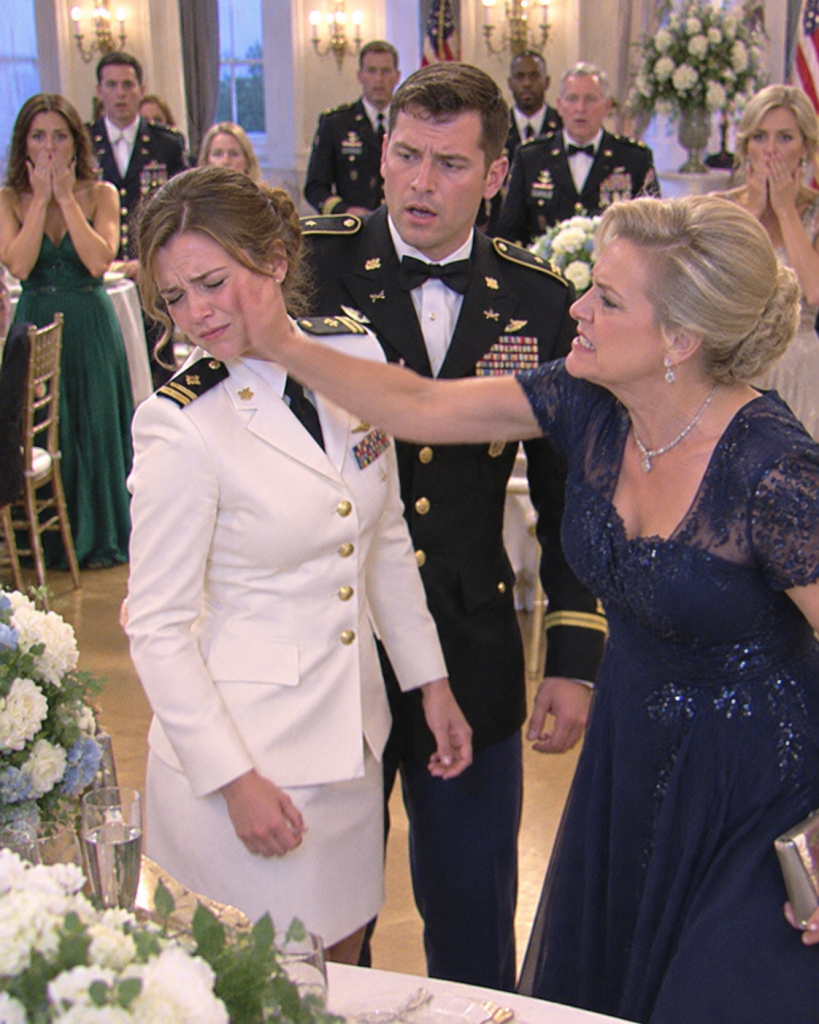
Property records traveled quickly. Felicia monitored county filings for real-estate leads, and within forty-eight hours she arrived at my apartment with Mom and Dad, all three wearing warm smiles and carrying a casserole. They praised my recovery as though they had always expected it. Then Dad leaned forward and proposed a “family wealth plan.” He wanted the remaining settlement placed in a trust controlled by him and Mom because, as he put it, my medical limitations made active investing impractical.
Felicia opened glossy brochures for land developments and said she could double my money in eighteen months. “Family wealth belongs to the family,” she said. I remembered her by the resort pool, telling me she lacked liquid cash for my surgery. Before I answered, Franklin opened my front door. I had called him the moment I saw their car.
He placed the settlement papers on the coffee table and explained that the injury award was protected individual property. Any attempt to pressure, encumber, or obtain those funds without my consent would be met with immediate legal action. Felicia’s smile vanished. Dad muttered about ungrateful children. Mom followed him out in silence.
Felicia glared at me before leaving. “You gave property to them and locked out your own blood.”
I looked toward the door after it closed and thought of Audrey’s cashier’s check sitting on my coffee table in the rain. Blood had already shown me exactly what it meant.
Chapter 4
They Returned Smiling Only After Learning I Had Money Again
On the first business morning of the next month, I opened my banking dashboard and canceled the $480 automatic payment on Felicia’s SUV. Franklin also helped remove my guarantee where legally possible. Then I stopped the $600 monthly allowance I had quietly deposited into my parents’ account. It took less than three minutes to end years of support they had treated as permanent.
The consequences arrived quickly. Felicia’s real-estate deals stalled during a winter slowdown, and without my payment her vehicle account fell delinquent. Within weeks, the luxury SUV that had been central to her professional image was repossessed. Her credit cards tightened or closed, listing debts mounted, and the life she had financed through appearances began collapsing under ordinary bills.
One Friday afternoon she pounded on my door while I was doing physical-therapy exercises. She had arrived in an old borrowed compact car, her designer handbag clutched against her side. “I need fifteen thousand,” she said before sitting down. Her business accounts were at risk, she explained, and the money would restore her credit line, address the repossession balance, and prevent bankruptcy.
Then she invoked childhood. Sisters rescue sisters. Family does not let family fail. I listened until she stopped. “Every dollar I have is tied up in long-term conservative allocations,” I said, repeating almost word for word the financial language she had used when my nerves were being crushed and I needed surgery. Her face changed.
“That was different.”
“Yes,” I said. “I was asking for a loan to keep walking. You were asking what Mom had for dessert.”
Felicia began crying and asked whether I would truly let her business collapse over an amount that meant little compared with my settlement. I told her the settlement was compensation for a damaged spine, not a family lottery. I reminded her that I had paid for her vehicle for years and that she had vacationed at St. Simons days after refusing to help me. “The door to my bank account is closed.”
She left furious.
Two weeks later, I sat with Audrey, Derek, and Franklin while the deed to their condo was confirmed free and clear. I also funded a $300,000 irrevocable trust to support Audrey’s medical gaps, Derek’s advanced mechanics certifications, and long-term quarterly income. Audrey cried quietly. Derek shook my hand with the same calloused grip that had steadied me after surgery.
I finally understood the difference between giving from love and giving from fear. One strengthened everyone involved. The other taught people that my sacrifices had no bottom.
Chapter 5
I Chose Forgiveness Without Ever Reopening My Bank Account Again
Over the following year, Felicia’s business folded and she filed for personal bankruptcy. The luxury image disappeared with the SUV, and she eventually took an hourly cashier job at a grocery store outside Macon. Standing for full shifts, budgeting every paycheck, and living without someone quietly absorbing her mistakes forced her to confront work in a way my support had prevented for years.
Mom and Dad changed more slowly. Without my monthly $600 supplement, their mortgage-free life remained secure but less comfortable. They watched Felicia’s collapse and finally had to live with the fact that the daughter they had written off as a future burden was recovering without asking them for anything. Nine months after our confrontation, Dad mailed me a five-page handwritten letter. He admitted that fear of aging had turned into selfishness and that they had treated my medical crisis as a threat to their assets instead of a daughter’s emergency.
A few weeks later, they came to my new home and asked to talk on the porch. Dad’s shoulders seemed smaller than I remembered. “We abandoned you when you needed us,” he said. “Then when money came, we came back wanting more.” Mom cried and said she was ashamed that she had measured my worth by what I could provide.
I forgave them because I did not want bitterness carrying their weight inside my body. But I gave them one condition: our future relationship would be personal, never financial. No loans. No allowances. No investments. No emergency accounts disguised as family duty. Dad nodded before I finished. Mom said, “That’s fair.”
My spine continued healing. Therapy restored my mobility, though heavy warehouse work was no longer possible. I had financial security, a quieter life, and relatives who had proven that loyalty was not about who shared the closest branch of the family tree. Audrey and Derek never asked for more than I freely chose to give.
Sometimes I still remember that cashier’s check on my coffee table. Forty thousand dollars backed by the only house Audrey and Derek owned, offered without negotiation while the people whose mortgage I had erased protected their savings from me. That piece of paper became my measure of wealth.
Not the $1.2 million settlement.
Not the condo.
Not the trust.
Wealth was knowing who stood beside me when the ground beneath my feet literally gave way. I spent years believing love meant carrying everyone until my body collapsed. Now I knew better. Love could be generous without becoming surrender, and forgiveness could be real without reopening the bank account that had once taught my family to mistake my devotion for obligation.
THE END