I lifted the cardboard box, and the ringing stopped the moment Clara lunged for the cheap phone underneath it. I got there first.
For a second, neither of us moved.
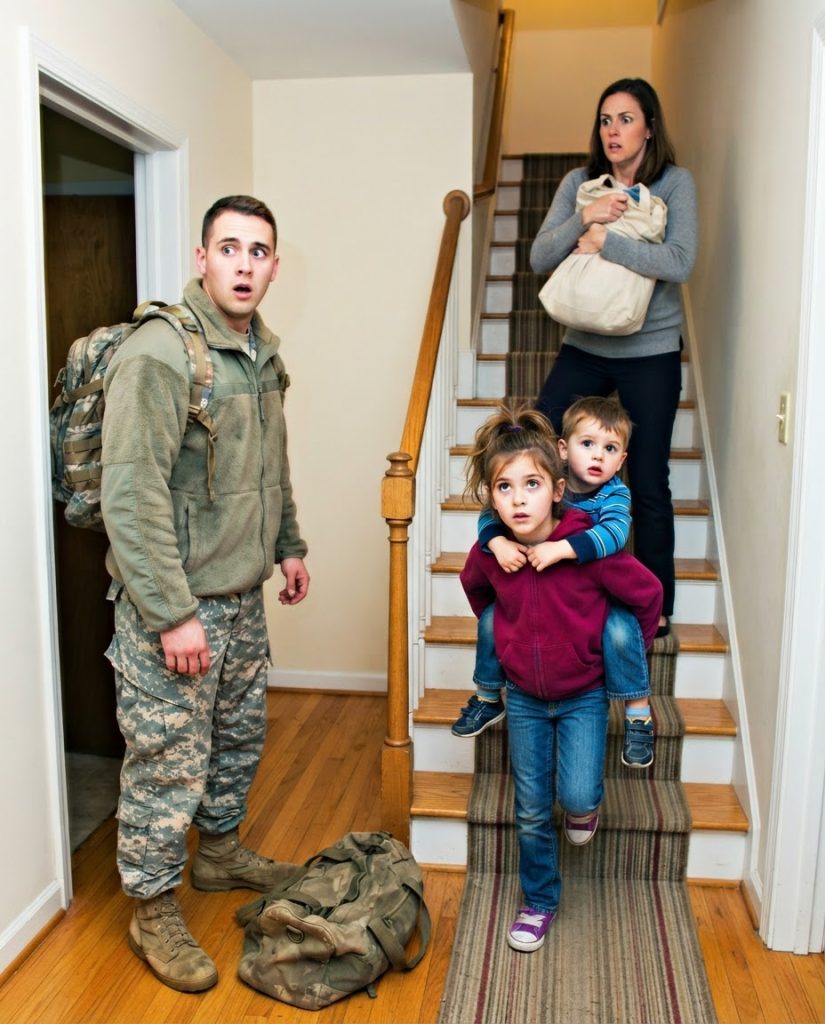
The phone lay on the hallway floor beside the small metal cash box Clara had been trying so desperately to hide. My two-year-old nephew was still pressed against my shoulder, his little arms locked around my neck. Behind me, my eight-year-old niece stood so close that I could feel her trembling through the back of my jacket.
Then she whispered the words that stopped me cold.
“Please don’t leave again.”
I looked down at her.
“I’m not leaving.”
She searched my face as if she needed to decide whether she could believe me.
Fourteen months of transfers. Fourteen months of trusting Clara. Fourteen months of believing that the $1,800 I sent home every month was paying for food, clothing, medical care, and a safe place for my late brother’s children to grow up.
And now my niece was wearing another child’s medical identity.
The phone beside my boot belonged to the emergency number printed on her silver medical tag. That alone would have been enough to make my stomach turn. But the recent calls on the screen made the situation worse.
There were dozens of calls to a clinic I had never heard Clara mention.
Most of them were saved under the unfamiliar girl’s name—the same name engraved on the tag around my niece’s wrist.
I scrolled slowly.
The calls weren’t random. They repeated over weeks and months. Some had lasted only a few seconds. Others had gone on long enough to suggest someone had been discussing an ongoing medical case.
I turned the screen toward Clara.
“Why is a clinic calling this phone about my niece?”
Clara’s face tightened.
“It was paperwork.”
“What paperwork?”
“Insurance.”
“You said the clinic mixed up the tag.”
“It was corrected.”
“Then show me the correction.”
She stared at me.
She had an answer ready for every accusation I had made since walking through that door. The bruise was from a porch swing. The wrong shoes were temporary. The thin sweater was because the weather had changed. The medical tag was a clinic mistake.
But now she had no answer for a document she claimed existed.
My niece was watching her.
Not me.
Her eyes were fixed on Clara with the wary attention of a child who had learned that the wrong sentence could bring consequences.
I crouched down so we were eye to eye.
“Did you go to that clinic?” I asked gently.
She hesitated.
Then she nodded.
“Did they call you by your name?”
Her fingers curled around the hem of her sweater.
Clara stepped forward.
“Don’t question her.”
I stood immediately.
My niece backed into me again.
That tiny movement told me enough.
I put one hand behind me, letting her know she could stay there, while keeping my other arm around my nephew.
“What did they call you?” I asked.
She swallowed.
Then she whispered, “The other name.”
The hallway seemed to shrink around us.
I looked at Clara.
She shook her head.
“She doesn’t understand what she’s saying.”
My niece looked at me.
“She told me not to say my real name there.”
Clara’s expression changed instantly.
Not anger.
Fear.
Real fear.
That was the first moment I stopped wondering whether there had been some terrible misunderstanding and started asking myself what Clara had been trying to conceal.
I reached for the metal cash box.
Clara moved between me and it.
“Don’t.”
“Why?”
“You don’t know what’s in there.”
“I know you hid it.”
“It isn’t what you think.”
“You’ve said that three times.”
“Because it’s true.”
I looked at the box.
It was small enough to carry in one hand. The edges were scratched. The latch was old. There was no label on the lid.
Nothing about it looked important.
But Clara was standing in front of it like it contained the only thing keeping her story together.
My nephew shifted against my shoulder.
I carried him into the living room and set him carefully on the couch. My niece followed, but she wouldn’t sit until I sat first. Even then, she stayed close enough that her knee touched mine.
I looked around the room for the first time since coming home.
The house was nothing like the picture Clara had painted in her messages.
She had told me the kids had new clothes. My niece’s sweater was too small.
She had told me they had good shoes. My niece was wearing adult shoes stuffed with rags.
She had told me the children were healthy. My nephew had been crying from hunger or exhaustion, and my niece had been carrying him up a staircase that was too steep for her size.
She had told me my brother’s children were safe.
I had walked in on Clara kicking a laundry sack into the heels of an eight-year-old girl carrying a toddler.
The numbers in my bank account suddenly felt different.
I had been sending $1,800 every month because I believed I was buying security for two children who had already lost their father.
Now I wondered what I had actually been paying for.
Clara came into the living room and closed the door behind her.
“You’re making this bigger than it is,” she said.
“Then make it smaller.”
“What?”
“Explain it.”
She folded her arms.
“The clinic had a problem with the records.”
“Which clinic?”
She named one.
It wasn’t the clinic listed in the recent calls.
I held up the phone.
“Then why is this number calling the other name?”
She didn’t answer.
I opened the call history again.
There were repeated calls from the same number. I saved it before Clara could stop me.
Then I looked at the cash box.
“What’s inside?”
“Nothing that concerns you.”
I almost laughed.
“My brother is dead. His children are living in my house under another child’s identity. I’ve been sending you money every month for fourteen months. I think everything in that box concerns me.”
Clara’s eyes hardened.
“You weren’t here.”
“I was deployed.”
“You chose to stay away.”
“My orders kept me overseas.”
“You could have come home sooner.”
That accusation landed harder than I expected.
For fourteen months, Clara had controlled the information reaching me. Every update had been carefully packaged. The children were fine. They were eating. They were sleeping. They were in school. They had everything they needed.
I had never questioned her because she was family.
And because my brother was dead.
After his accident on the oil rig, I had been desperate to believe there was one person at home protecting his children while I was thousands of miles away.
Clara knew that.
She had known exactly what I needed to hear.
My niece suddenly spoke from the couch.
“She said we couldn’t tell you.”
Clara turned sharply.
“Enough.”
My niece flinched.
I stepped between them again.
“Don’t talk to her like that.”
Clara’s voice dropped.
“You don’t understand what happens if you interfere.”
“Then tell me.”
She looked at the children.
For a moment, I thought she might finally say everything.
Instead, she walked toward the kitchen.
I followed.
She stopped beside the counter and put both hands against it.
“You think money fixes everything,” she said.
“No. I think money was supposed to buy food and clothes for those kids.”
“You don’t know what I’ve had to do.”
“Then tell me.”
Silence.
She turned toward me.
“I kept them alive.”
My jaw tightened.
“By using another child’s name?”
Her eyes dropped.
That was the first answer she gave me without speaking.
I went back for the cash box.
This time she didn’t block me.
I picked it up.
It was heavier than it looked.
Not dramatically heavy. Just enough to tell me it wasn’t empty.
I set it on the table.
My niece stood in the doorway with my nephew’s hand in hers.
“Stay there,” I told her.
She nodded.
I slid the latch open.
Clara took one step forward.
“Don’t.”
I looked at her.
“If you want me to stop, give me one reason I can believe.”
She couldn’t.
So I opened it.
Inside were envelopes.
Not one or two.
Stacks of them.
Some were medical-looking. Some were bank envelopes. Some had handwritten notes folded around them. There were receipts, appointment cards, photocopies, and several small plastic sleeves.
I didn’t touch the documents at first.
I simply looked.
Then I saw the name.
The same unfamiliar name from my niece’s medical tag appeared on multiple papers.
My stomach dropped.
I pulled one envelope free.
Clara grabbed my wrist.
“Put it down.”
I looked at her hand.
Then at her face.
She let go.
Inside the envelope was a copy of a clinic document. The details were too small to absorb at once, but the name was unmistakable.
It wasn’t my niece’s name.
It was the name on the tag.
I opened another envelope.
The same name.
Another.
The same.
I looked at Clara.
“How long?”
She didn’t answer.
“How long have you been doing this?”
“I didn’t have a choice.”
“Everyone has a choice.”
“You weren’t here.”
“You keep saying that like it gives you permission.”
She began to cry.
I didn’t move toward her.
I couldn’t.
Not while my niece was standing behind me wearing another child’s identity.
I picked up one of the bank envelopes.
The amount printed on the outside matched one of my monthly transfers.
Another envelope had another amount.
Another transfer.
Another month.
The money I had sent for the children had been divided, redirected, and withdrawn in ways I didn’t understand.
I looked at the stack again.
There was enough paper to tell me this wasn’t a single mistake.
It was a system.
And Clara had been maintaining it while I was away.
My niece came closer.
“Is Daddy coming back?” she asked.
I closed my eyes for a second.
Her father wasn’t coming back.
He had died two years earlier.
She already knew that.
But maybe she was asking something else.
Maybe she was asking whether the person who had promised to protect her was finally going to stay.
I knelt in front of her.
“No,” I said quietly. “But I’m here.”
She nodded.
Then she whispered, “She said you would be angry if you knew.”
I looked over my shoulder at Clara.
Clara was staring at the cash box.
Not the children.
Not me.
The cash box.
That told me there was still something inside she was afraid I hadn’t found.
I turned back to the box.
I went through the remaining papers one at a time.
Receipts.
Clinic cards.
Payment records.
A few handwritten notes.
Then my fingers touched something folded beneath the bottom layer.
I pulled it out.
It was a photograph.
I stared at it for several seconds before understanding what I was looking at.
It showed my niece much younger, standing beside a woman I didn’t recognize.
On the back was a date.
The date was before my brother died.
I turned toward Clara.
“Who is she?”
Clara didn’t answer.
My niece looked at the photograph from across the room.
Her face changed.
“She came to the house,” she whispered.
“When?”
“Before Daddy went away.”
I felt the entire story shift again.
This wasn’t just about the fourteen months I had been overseas.
Whatever Clara had been hiding had begun before my brother’s death.
I looked at the photograph again.
Then at the medical tag.
Then at the phone.
The wrong name wasn’t an isolated mistake.
The clinic wasn’t an isolated mistake.
The cash box wasn’t an isolated mistake.
And Clara’s fear wasn’t about me discovering one embarrassing secret.
She was afraid I would connect them.
I stood up.
Clara took a step backward.
“What are you going to do?” she asked.
I looked at the two children.
Then at the phone on the table.
Then at the papers spread across the surface.
“I’m going to find out who that name belongs to.”
Clara’s face went pale.
“And then?”
I picked up the phone.
“Then I’m going to find out why my niece was given her identity.”
My niece reached for my hand.
I took it.
For the first time since I had walked through that screen door, she didn’t look at Clara for permission.
She looked at me.
And held on.
I thought the worst part was discovering that Clara had lied about the children’s care.
I was wrong.
The worst part was realizing the lie had started long before I came home.
And somewhere in those clinic records, payment envelopes, and hidden calls was an answer to a question I had never thought to ask:
Why would anyone need to replace my niece’s identity in the first place?