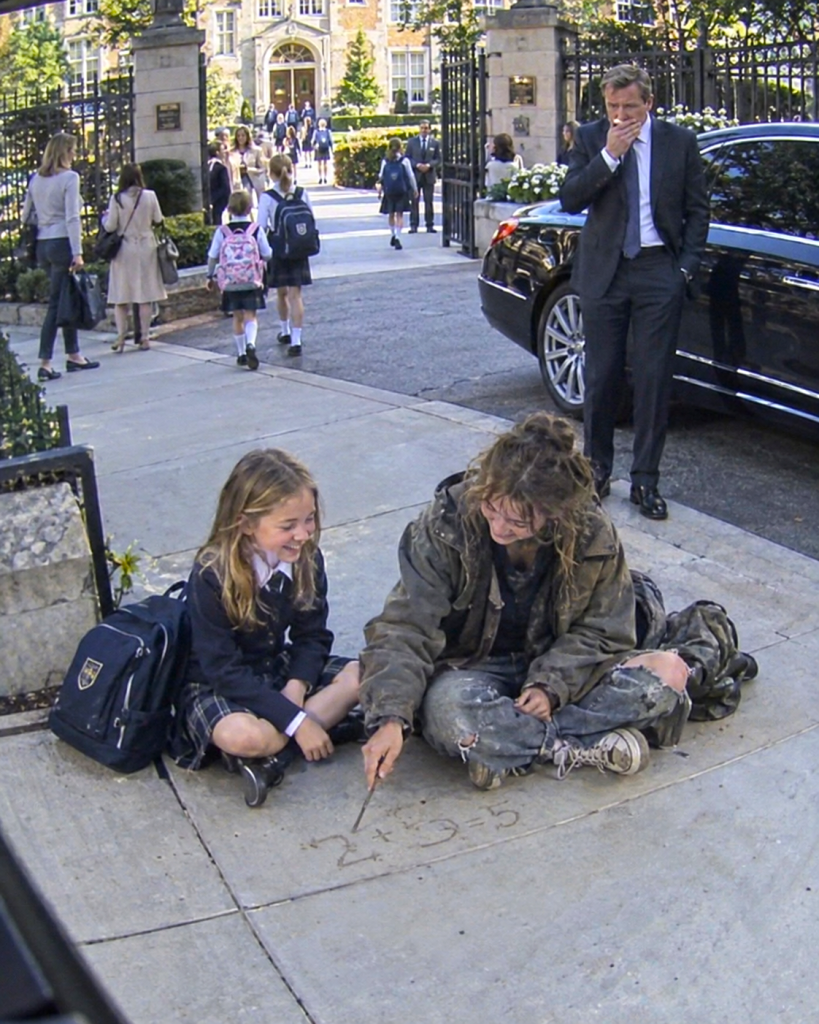
The elderly man studied me for another moment through the lowered window of the Bentley.
Not in the careless way wealthy people sometimes looked at strangers who had fallen into misfortune. His expression held recognition, though I was certain I had never seen him before.
“Are you hurt?” he asked again.
“No.”
It was the first word I had spoken since leaving the estate.
My voice barely sounded like mine.
His gaze moved toward the suitcase beside me, then past me toward the distant rise where the Whitmore property sat behind iron gates and old trees.
“Do you have somewhere to go?”
I should have said yes.
Pride almost made me.
Instead, I looked at the dark boutique window beside me and saw the woman reflected there again—the woman whose husband had packed eleven years into a suitcase and left it outside.
“No,” I admitted.
The man opened the rear door. c
“My daughter runs a small inn two streets from the harbor. It’s warm, respectable, and she has the unfortunate habit of feeding everyone who walks through her door.”
Despite everything, I almost smiled.
“I don’t know you.”
“A sensible objection.” He extended one gloved hand but stayed inside the car, leaving the decision to me. “Graham Bell.”
I froze.
The name stirred something old.
“Bell?”
He looked more closely at me.
Then his brows lifted.
“My goodness.”
“What?”
“You’re Julian Ellison’s daughter.”
For a few seconds, the cold seemed to disappear.
Nobody had called me that in years.
Not Clara Whitmore.
Not Raymond’s wife.
Not the woman who attended foundation dinners in borrowed diamonds and stood beside Margaret Whitmore while photographers asked when we planned to start a family.
Julian Ellison’s daughter.
“How did you know my father?”
Graham Bell removed his glasses and slowly folded them.
“For nearly thirty years.”
I stared at him.
“My father never mentioned you.”
“Oh, he mentioned me mostly when he was annoyed with me, so perhaps he was protecting your opinion.”
This time I did smile.
It came out strangely, as if my face had forgotten how.
Graham shifted across the seat.
“Get in, Clara.”
I hesitated.
Perhaps he saw the fear in my expression, because he added gently, “Or I can call my daughter and have her come here. You needn’t get into a stranger’s car simply because the stranger knew your father.”
That settled it.
I picked up my suitcase.
The driver stepped out to help me, but I kept hold of it.
It felt important.
I had carried it away myself.
I wanted to carry it inside wherever I went next.
Graham’s daughter owned a narrow white inn called Harbor House overlooking a quiet strip of Long Island Sound.
It had eleven guest rooms, creaking wooden floors, blue-painted shutters, and a brass bell on the front desk that looked as though it had survived three generations of impatient travelers.
Grace Bell was fifty-two, soft-spoken, practical, and completely unimpressed by wealth.
When her father explained who I was, she looked at my wet coat and smudged mascara rather than my last name.
“Tea or soup?”
I blinked.
“Excuse me?”
“Tea or soup. You look like you need one.”
“Tea.”
She nodded.
“Good. Dad always chooses soup for people, and half the time they don’t want soup.”
“I heard that,” Graham said.
“You were meant to.”
There was something so ordinary about them that it almost undid me.
Grace gave me room nine on the second floor.
It overlooked the harbor.
The bedroom contained a brass bed, a quilt stitched with tiny sailboats, and a writing desk beneath the window. No marble bathroom. No walk-in closet larger than most Manhattan apartments. No staff waiting discreetly for instructions.
It was the most peaceful room I had entered in years.
When Grace brought tea, I had already placed the divorce papers on the desk.
She noticed them.
She didn’t ask.
That kindness nearly made me cry harder than questions would have.
“Breakfast starts at seven,” she said. “But if you want to sleep past seven, I’ll hide something from Dad.”
“I can hear you,” Graham called from downstairs.
Grace rolled her eyes.
“Old houses have terrible insulation.”
When the door closed, I sat on the bed.
For the first time, there was nobody watching me.
Nobody expecting dignity.
Nobody evaluating whether I was sufficiently composed for the Whitmore name.
I put both hands over my stomach.
“Okay,” I whispered.
The word trembled.
“I don’t know what we’re doing.”
I breathed slowly.
“But I’ll figure it out.”
That night I slept for perhaps two hours.
At five in the morning, I woke with my hand pressed against my abdomen.
No pain.
Nothing alarming.
Only fear.
Pregnancy after years of infertility had taught me that happiness could feel almost identical to terror.
At six-thirty, I called my obstetrician’s office and left a message.
They called back fifteen minutes later.
Because of my history, they wanted me to come in.
I did not call Raymond.
I almost did.
Three times.
His name sat on my screen beneath the little photograph I had taken of him the previous summer on our sailboat.
He had been laughing into the wind, squinting at me.
I remembered that day with painful clarity.
We had not spoken about fertility once.
We had eaten sandwiches on deck.
Raymond had fallen asleep with his head against my leg.
I had run my fingers through his hair and thought, This is enough.
Maybe that had been the tragedy.
There had been days when we were enough.
We simply stopped telling each other.
I turned off the phone.
Graham drove me to the doctor.
He did not ask why.
He sat in the waiting room reading an old issue of National Geographic while I followed a nurse down a hallway smelling faintly of disinfectant and lavender hand soap.
Dr. Helen Marsh had been my physician for six years.
When she entered, she hugged me.
“I heard about the bloodwork.”
I nodded.
“I took four tests at home before I believed it.”
“I would expect nothing less from you.”
“I think one of them is still in my purse.”
Helen laughed softly.
Then her expression became professional again.
“Let’s take a look.”
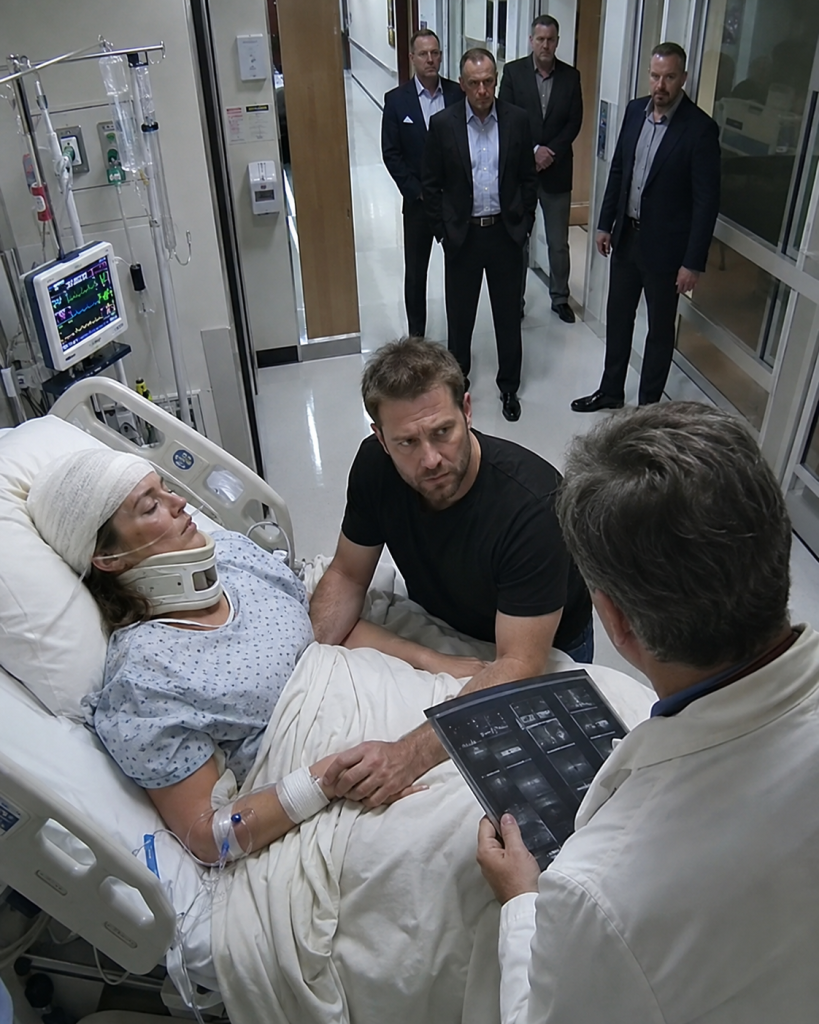
I stared at the ceiling while she prepared the ultrasound.
I had stared at ceilings like that so many times before.
White tiles.
Fluorescent lights.
Machines humming.
Rooms where hope had been translated into numbers.
Follicles.
Hormone levels.
Embryo grades.
Weeks.
Percentages.
Five times I had walked into clinics believing medicine might finally give me what I wanted.
Five times I had walked out carrying disappointment carefully enough that it would not spill everywhere.
Helen grew very quiet.
My heart stopped.
“What?”
She moved the monitor slightly.
“Clara.”
“What is it?”
Her eyes met mine.
“There are three.”
I laughed because the alternative was screaming.
“What?”
“Three gestational sacs.”
She pointed.
I could barely understand what I was seeing.
Three tiny shapes.
Three beginnings.
My fingers gripped the paper beneath me.
“No.”
Helen smiled.
“Yes.”
“But that isn’t possible.”
“I’ve been practicing medicine long enough to be cautious with that sentence.”
“Three?”
“Three.”
I stared at the screen.
The room blurred.
Helen handed me tissues.
“Are they—”
“At this stage, everything looks encouraging. We’ll monitor you closely. A triplet pregnancy requires considerably more care, and I don’t want you thinking too far ahead today.”
Too far ahead.
I had spent eleven years thinking too far ahead.
Imagining nurseries.
Birthdays.
Christmas mornings.
A child running down the hallway at the Greenwich house.
Margaret passing down silver rattles engraved with Whitmore initials.
Raymond teaching someone to sail.
Every imagined child had disappeared eventually.
And now there were three.
I cried silently.
Not because I was unhappy.
Because joy arriving at the wrong moment could hurt almost as much as grief.
Helen waited.
Finally she asked, “Does Raymond know?”
I looked at the three small images.
“No.”
“Are you planning to tell him?”
“Yes.”
The answer surprised me by coming immediately.
Whatever Raymond had done, these children were his.
“But not today.”
Helen nodded.
“That decision belongs to you.”
When I returned to Harbor House, Graham was waiting beside the front desk.
He folded his newspaper.
“All right?”
I held up the ultrasound photograph.
“I’m pregnant.”
His eyes widened.
Then he smiled.
“That sounds considerably better than all right.”
“With triplets.”
Graham sat down.
Grace, who had emerged from the kitchen carrying a bowl of oranges, stopped so abruptly that one rolled onto the floor.
“Triplets?”
I laughed.
And for the first time since seeing my suitcase outside those gates, the laughter did not hurt.
That afternoon Graham told me how he had known my father.
They had met at Yale, though Graham was quick to clarify that neither of them had been particularly impressive at twenty-one.
“Your father believed studying the night before an examination represented excessive caution.”
“That sounds like him.”
“He was brilliant and impossible.”
“That also sounds like him.”
After law school, Graham became an estate attorney. My father went into architectural restoration and real estate development, eventually building a quiet fortune renovating historic coastal properties.
Not billionaire money.
But enough that I had never worried about tuition or rent or medical bills until I married into a family that treated millions the way most people treated pocket change.
Graham had handled portions of my father’s estate.
I remembered the firm now.
Bell, Mercer & Cole.
After Dad died, most of the paperwork had been handled while I was in the middle of my second IVF cycle.
I had signed wherever lawyers told me.
Raymond had offered to take over.
I had been grateful.
That realization embarrassed me now.
At some point, I had stopped knowing exactly where my own life ended and the Whitmore machinery began.
“You still paint?” Graham asked.
“Restore.”
“Yes, yes. Your father corrected me about that too.”
“I haven’t worked professionally in years.”
“Why?”
There was no accusation in the question.
That made answering harder.
“At first because we were traveling so much for Raymond’s work. Then fertility treatments started. And after that…”
I looked through the window.
“I don’t know.”
Graham waited.
“I kept thinking I would go back next year.”
“Next year is a remarkably expensive place to store a life.”
I turned toward him.
“Did my father say that?”
“No. That one’s mine.”
I smiled.
Two days later, I met with a divorce attorney named Maya Desai.
She was in her early forties and wore no jewelry except a plain watch.
She spent nearly an hour reading the papers Raymond’s attorneys had taped to my suitcase.
Then she looked up.
“You understand this document does not mean you had to leave your home that afternoon.”
“I assumed—”
“It was a request accompanied by a proposed agreement. Not a court order.”
Heat moved into my face.
“He put my suitcase outside.”
“Did Raymond personally tell you to leave?”
“No.”
“Did anyone?”
“No.”
“Did you try to enter?”
I thought of Margaret’s smile through the glass.
“No.”
Maya set down her pen.
“Clara, I’m not asking these questions to make you second-guess yourself. Leaving may have been exactly what you needed to do. But I want you to understand something before we continue.”
“What?”
“You still have choices.”
The words landed differently than I expected.
For eleven years, every important decision had seemed to become collective.
Where we lived.
Which doctors I saw.
Which holidays we spent with which branch of the Whitmore family.
How many treatment cycles I should endure.
When hope became unrealistic.
What belonged in our future.
Choices.
I looked down at my hands.
“I don’t want the house.”
“All right.”
“I don’t want some war over money.”
“All right.”
“And I don’t want anybody thinking the pregnancy is a negotiation.”
Maya paused.
“You’re pregnant?”
I nodded.
Her expression softened, though her voice remained steady.
“Does your husband know?”
“No.”
“When do you intend to tell him?”
“After the next scan.”
“That’s reasonable. We’ll discuss how best to handle the legal details when you’re ready.”
I studied her.
“You’re not going to tell me I should announce it immediately because it changes my leverage?”
“No.”
Relief almost made me dizzy.
Maya leaned back.
“Children are not leverage.”
I liked her immediately.
She turned several pages.
“The filing date interests me.”
“Why?”
“Raymond signed the initial complaint on February twenty-third.”
I did the calculation.
February twenty-third.
Three weeks before my suitcase appeared outside the gates.
I knew exactly where I had been that afternoon.
In New York.
At a laboratory having blood drawn because my cycle was late and I had begun experiencing symptoms I had spent years teaching myself not to interpret.
Raymond had called while I was sitting in a café afterward.
I had declined the call.
Not because I was angry.
Because I had been afraid he would hear hope in my voice.
He texted me twenty minutes later.
Dinner tonight?
I had replied:
Long day. Maybe tomorrow?
The memory made something inside me ache.
“What is it?” Maya asked.
“He called me that day.”
“Did you know he was considering divorce?”
“No.”
“Had you discussed separating?”
I shook my head.
“Then communication between you had deteriorated substantially.”
“That’s a polite way of saying it.”
“It’s a lawyer’s disease.”
That evening, Raymond emailed.
Not a text.
An email.
Clara,
I should have spoken to you directly.
What happened at the house should not have happened that way.
I understand if you do not want contact right now. My attorney says communication should go through counsel, but I did not want the last thing I personally said to you to be nothing.
I hope you are somewhere safe.
Raymond
I read it four times.
The first time, I was furious.
The second, I cried.
The third, I noticed something.
He did not ask me to come home.
The fourth time, I realized I had not wanted him to.
That frightened me more than anger.
For three days, I did not answer.
On the fourth, I wrote:
I am safe. Please communicate through Maya Desai for now.
Clara
My finger hovered over Send.
Then I pressed it.
A week later, Grace introduced me to someone from the Greenwich Historical Society who needed help evaluating a damaged nineteenth-century watercolor.
I almost refused.
Then I remembered Graham’s sentence.
Next year is a remarkably expensive place to store a life.
So on a rainy Tuesday morning, I entered a workroom smelling of linen paper, wheat paste, and old wood.
The watercolor lay beneath protective glass.
A faded harbor.
Three boats.
A lighthouse barely visible through fog.
My hands remembered before my mind did.
I put on gloves.
I leaned closer.
For two hours, there was no Raymond.
No divorce.
No Whitmore family.
No pregnancy charts.
There was only pigment, paper, moisture, patience.
When I finally stood upright, my back hurt.
I was smiling.
That night, Grace found me eating toast in the kitchen at eleven.
“You look different.”
“Do I?”
“You look like somebody returned something you thought you’d lost.”
I thought of the watercolor.
“Maybe they did.”
My second ultrasound was scheduled for the following Monday.
The night before, Raymond called.
I stared at his name until the phone stopped ringing.
Then it rang again.
I answered.
Neither of us spoke.
Finally Raymond said, “Hello, Clara.”
His voice almost broke me.
Eleven years lived inside it.
Our first apartment.
The smell of coffee on Sunday mornings.
His hand finding mine beneath restaurant tables.
Airport arguments.
Quiet apologies.
Hospital corridors.
The night after our first failed IVF cycle when he had sat on the bathroom floor with me until sunrise.
“Hello.”
“I won’t keep calling.”
“All right.”
“I just…”
He exhaled.
“I wanted to hear your voice.”
I closed my eyes.
“That’s not fair.”
“I know.”
“Do you?”
“Yes.”
I waited.
Some part of me wanted him to say the younger woman meant nothing.
Another part wanted him to admit she meant everything so I could hate him cleanly.
He gave me neither.
“Her name is Celeste Grant,” he said.
I opened my eyes.
“I didn’t ask.”
“No.”
“Then why are you telling me?”
“Because I know what you saw.”
“You were sitting with another woman in our kitchen while my belongings were outside.”
“I know.”
“And your mother was watching.”
Silence.
“That was unforgivable,” he said.
I gripped the phone.
“No. Don’t use that word just because it sounds appropriately serious.”
“You’re right.”
“Were you having an affair?”
Another silence.
Too long.
“Not physically.”
I laughed once.
It held no humor.
“What does that mean?”
“It means I let someone become too important to me while I was still married.”
My throat tightened.
“At least that’s an answer.”
“I thought you had already left me in every way except paperwork.”
“You could have asked.”
“Yes.”
“You could have walked upstairs and asked your wife.”
“Yes.”
“But you didn’t.”
“No.”
His voice had grown quieter.
“I didn’t.”
For some reason, his refusal to defend himself was harder to hear than excuses would have been.
I looked down at my stomach.
Three lives he knew nothing about.
“Why, Raymond?”
He was silent for so long I thought the call had dropped.
Then he said, “Because somewhere along the way, I became afraid of the answer.”
I ended the call.
The ultrasound the next morning showed three steady heartbeats.
Helen let me listen.
One.
Two.
Three.
The sounds filled the room.
I cried again, though by then I was beginning to suspect pregnancy had simply made tears part of my daily schedule.
Later, I placed the new ultrasound photographs in an envelope.
I wrote Raymond’s name on the front.
Then I put the envelope into the desk drawer.
Not yet.
Two weeks passed.
The historical society asked me to take another restoration project.
Then another.
Maya began working through the financial documents.
Grace started leaving ginger tea outside my room each morning because I could no longer tolerate coffee.
Graham developed the habit of appearing every afternoon at four to ask whether I wanted to walk by the harbor.
My life had become small.
And for the first time in years, small did not feel like failure.
It felt manageable.
One Thursday, Graham arrived carrying a battered leather document case.
“I found something.”
We were sitting in the inn’s library.
Rain tapped against the windows.
“What?”
He placed the case on the table.
“When my former partner retired, our office moved several archived estate files into storage. I had someone retrieve your father’s remaining boxes after you mentioned how little you remembered from the settlement.”
“Is something wrong?”
“No.”
He opened the case.
“Though I owe you an apology.”
“For what?”
“This.”
He removed an envelope.
My name was written across the front.
Clara.
I knew the handwriting instantly.
My father’s.
My breath disappeared.
“What is that?”
“A letter Julian left with me shortly before your wedding.”
“Why didn’t I get it?”
“Because your father gave maddeningly vague instructions.”
That sounded like him too.
Graham’s expression tightened with regret.
“He asked me to hold it unless you ever came to me questioning whether you had made a mistake in choosing the Whitmore family.”
I stared at him.
“And you never thought my father dying qualified as a reason to give it to me?”
“I considered it. But at the time you seemed happy. Your marriage seemed strong. Eventually the file was archived, and then I retired.”
He pushed the envelope toward me.
“I should have remembered sooner.”
My fingers trembled when I picked it up.
The paper had yellowed slightly along the edges.
I broke the seal.
My father’s handwriting covered three pages.
The first was mostly what I expected.
He told me he loved me.
He wrote that marriage was neither rescue nor completion, only a decision made repeatedly by two imperfect people.
He reminded me not to disappear inside another family’s expectations.
Then I reached the second page.
And everything changed.
A week before Raymond asked you to marry him, he came to see me alone.
You never knew this.
He asked my blessing, which I told him was an antiquated ritual and therefore exactly the sort of thing a Whitmore would enjoy.
I laughed through my tears.
Then I kept reading.
We spoke for nearly three hours.
Raymond knew even then that there might be difficulties having children. You had told him about your medical history, and he had done what frightened young men in love sometimes do—he came to an older man asking questions he was too afraid to ask the woman he loved.
I stopped breathing.
Raymond had known.
Not everything.
But enough.
My father continued.
I asked him a question I thought mattered.
“If Clara can never give you children, do you still want this marriage?”
He answered before I finished asking.
“Yes.”
Then he said something I have never forgotten.
“I am marrying Clara. I am not marrying my family’s future.”
My hands began shaking harder.
I read the sentence again.
And again.
The Raymond who had come to my father before proposing had known children might never happen.
He had chosen me anyway.
I turned the page.
There was one final paragraph.
People change under pressure, Clara. Sometimes they become better. Sometimes they become frightened. Sometimes they confuse duty with love and silence with peace.
If you ever find yourself wondering whether you imagined being loved, you did not.
But being loved once is not the same thing as being loved well forever.
Make your choices according to the life in front of you, not the promises behind you.
Love,
Dad
For several minutes, I could not speak.
Graham sat quietly across from me.
Outside, the harbor disappeared behind rain.
I thought of Raymond sitting on our bathroom floor after my first failed cycle.
Raymond cancelling meetings to drive me to appointments.
Raymond gradually attending fewer appointments.
Raymond sleeping in the guest room because I could not bear to be touched after another negative test.
Raymond standing beside Margaret at Christmas while she talked about “the future of the family.”
Raymond signing divorce papers on February twenty-third.
Raymond sitting beside Celeste Grant.
And Raymond, years earlier, sitting across from my father and saying:
I am marrying Clara.
I am not marrying my family’s future.
I folded the letter carefully.
“Graham?”
“Yes?”
I looked at my father’s handwriting.
“If that was true…”
My voice broke.
“…then what happened to us?”
For the first time since leaving the mansion, the question I needed answered was no longer why Raymond had stopped wanting a wife who could not give him children.
It was why a man who had once promised that children never mattered had allowed both of us to believe that they did.
And I suddenly knew that before I signed anything, I needed to hear the answer from him.
PART 3
I did not call Raymond that night.
I almost did.
Instead, I carried my father’s letter upstairs and placed it beside the ultrasound photographs.
Two versions of my life rested inches apart.
One came from a man who had been dead for eight years.
The other showed three children who did not yet know the world waiting for them.
Between those things was Raymond.
For years I had believed the central tragedy of our marriage was infertility.
Then, after seeing my suitcase outside the mansion, I believed the tragedy was betrayal.
My father’s letter suggested something quieter and perhaps sadder.
Maybe the real tragedy had been silence.
The next morning, I called Maya.
“I want to speak to Raymond.”
“Do you want me present?”
“No.”
“Are you certain?”
“Yes.”
She was quiet for a moment.
“All right. Choose somewhere you feel comfortable. And remember that a conversation is not an agreement.”
“I know.”
“Clara?”
“Yes?”
“You do not have to decide your entire future in one meeting.”
I smiled faintly.
“I’m beginning to understand that.”
I asked Raymond to meet me at the historical society restoration studio the following Saturday.
He arrived six minutes early.
I knew because I watched from an upstairs window.
His car stopped beside the curb, but he remained inside for several minutes.
Raymond had always been a man who entered rooms as if he owned enough of the world to be welcome anywhere.
Seeing him hesitate before entering a small historical building unsettled me.
When he finally came upstairs, I barely recognized him.
Not physically.
He still wore the same charcoal coat.
His hair was carefully combed.
His watch probably cost more than Harbor House earned in a year.
But he looked tired.
Not theatrically miserable.
Simply tired.
His eyes moved immediately to my face.
“You look well.”
“I throw up most mornings.”
His expression changed.
I had not meant to tell him that way.
“What?”
I gestured toward a chair.
“Sit down.”
He did.
Between us stood a long restoration table.
I had deliberately chosen it.
I needed something solid separating my old life from whatever came next.
I removed the envelope from my bag.
Raymond stared at his name.
“What is that?”
I slid it across the table.
He opened it.
For several seconds, he did not understand what he was seeing.
Then he went completely still.
His fingers closed around the edges of the ultrasound photographs.
“Clara.”
I said nothing.
His eyes lifted.
“You’re pregnant?”
“Yes.”
His mouth opened.
No words came.
I watched ten different emotions move across his face before he managed to speak.
“How far?”
“Twelve weeks tomorrow.”
He looked back down.
“These…”
“Three.”
His eyes widened.
“Three?”
“Triplets.”
He stood abruptly, then seemed to realize standing served no purpose and sat again.
“Are you all right?”
“Yes.”
“Are they all right?”
“So far.”
He covered his mouth.
I had seen Raymond receive billion-dollar acquisition news with less difficulty.
He lowered his hand.
“Did you know that day?”
“I knew I was pregnant.”
His face changed.
“At the house?”
“Yes.”
He stared at me.
“You were coming home to tell me.”
It was not a question.
“Yes.”
Raymond shut his eyes.
I thought he might apologize.
Instead, he whispered, “Oh, God.”
For once, I did not comfort him.
After a moment, he looked at me again.
“You were standing outside carrying this.”
“Yes.”
“And I was inside.”
“Yes.”
“Clara—”
“I didn’t bring you here so you could punish yourself.”
He stopped.
“I need answers.”
“You deserve them.”
“My father left me a letter.”
Raymond frowned.
I placed it beside him.
“He wrote it before our wedding.”
Raymond recognized the first paragraph before reaching the important part.
His face slowly lost color.
“He told you?”
“Not until now.”
Raymond read the page again.
“I remember that conversation.”
“So do I, apparently, despite not being there.”
His mouth tightened.
“Your father terrified me.”
“That was one of his hobbies.”
A tiny smile appeared and vanished.
I leaned forward.
“You told him children didn’t matter.”
“They didn’t.”
“Then what happened?”
Raymond stared toward the tall windows.
Outside, the bare branches of March were beginning to show the first suggestion of buds.
“Nothing happened all at once.”
“That isn’t an answer.”
“No.”
He folded his hands.
“When we married, I meant every word I said to your father.”
“I believe that.”
He looked surprised.
“Then the treatments started,” he continued. “At first I thought supporting you meant agreeing whenever you wanted to try again.”
“I wanted you to agree.”
“I know.”
“Because every time I asked whether we should stop, you said it was my decision.”
“I thought that was kindness.”
“It felt like you had left me alone with the decision.”
Raymond absorbed that.
“I can see that now.”
“We stopped talking about anything except appointments.”
“I know.”
“No, Raymond. We stopped talking because talking became frightening. Every conversation felt as if one wrong sentence could destroy the other person.”
He rubbed his forehead.
“I started staying at work later.”
“Yes.”
“You started sleeping in the library.”
“Because you snored.”
“You hated my snoring for nine years without moving rooms.”
Despite myself, I laughed.
“So you noticed.”
“I noticed everything.”
“Then why didn’t you say anything?”
His answer came quietly.
“Because I was tired too.”
The words hurt.
But they were real.
I nodded.
“Keep going.”
“After the fourth cycle failed, you told me you couldn’t imagine spending another ten years in the Greenwich house.”
“I remember.”
“I thought you meant with me.”
“I meant with your mother discussing my ovaries over Christmas lunch.”
His eyes closed briefly.
“I know that now.”
“Did Margaret tell you I wanted to leave?”
“No.”
That surprised me.
He continued.
“She told me she thought you were miserable. But I already knew that.”
“So your mother didn’t invent some story?”
“No.”
He looked directly at me.
“I won’t blame my mother for decisions I made.”
Something in my chest loosened.
Not forgiveness.
But respect for the sentence.
Raymond continued.
“I found the brochure from the conservation program in Boston.”
I stared at him.
A memory surfaced.
Six months earlier, I had requested information about a twelve-month fellowship restoring nineteenth-century American paintings.
I had never applied.
“You thought I was leaving?”
“I thought you were planning a life without me.”
“You could have asked.”
“Yes.”
“Why didn’t you?”
“Because by then I had convinced myself I knew the answer.”
He looked down at his hands.
“I was angry.”
“At me?”
“At everything.”
“Be specific.”
“At the doctors. At myself. At the house. At my mother. At every dinner where someone asked us when we were going to have children. At you for pretending those questions didn’t hurt. At myself for pretending they didn’t bother me.”
He swallowed.
“And eventually I was angry that our entire marriage seemed to exist around something we couldn’t have.”
I blinked back tears.
“Then Celeste appeared.”
He nodded.
“She was consulting on the Whitmore Foundation redevelopment project.”
“She’s younger than me.”
“Six years.”
“Margaret liked her.”
“Very much.”
“Of course.”
Raymond did not smile.
“Celeste knew nothing about the treatments at first. She knew me only as someone who talked about architecture and books and work.”
“Someone uncomplicated.”
“Yes.”
“And you liked that.”
“Yes.”
The answer hurt, but I had asked for truth.
He continued.
“I started having lunch with her more often than necessary. Then dinner after meetings.”
“Did you tell her your marriage was over?”
“I told her I believed it was ending.”
“But you hadn’t told me.”
“No.”
I looked away.
“That may be the cruelest part.”
“I know.”
“No physical affair?”
“No.”
“Did you want one?”
He took his time answering.
“Yes.”
The honesty landed like a stone dropped into deep water.
“But I didn’t,” he added. “That doesn’t make what I did harmless.”
“No.”
He nodded.
“I know.”
I looked toward the watercolor on my worktable.
Under magnification, restoration revealed things invisible at ordinary distance.
Tiny cracks.
Old repairs.
Layers of varnish changing the color beneath them.
Marriage, I thought, had been much the same.
From across a ballroom, Raymond and I had looked perfect.
Only close examination showed how much had gone unattended.
“Why was she at the house that day?”
Raymond’s shoulders tightened.
“My mother invited her.”
“And you let her stay.”
“Yes.”
“Knowing I was coming home?”
“I thought you were staying overnight in New York.”
“I changed my plans.”
“I know.”
“You still sat there.”
“Yes.”
“And my suitcase?”
He looked genuinely pained.
“I told the staff to pack essentials because I believed you wouldn’t want to stay at the house after receiving the filing.”
“You believed?”
“I should have asked.”
“Yes.”
“I did not tell anyone to leave it outside the gates.”
“Margaret?”
“I learned afterward that she instructed the house manager to move it there because she thought a clean break was best.”
I stared at him.
“What did you say to her?”
“I told her she had crossed a line.”
“And then?”
“I asked her to leave the property.”
That surprised me.
“Your mother lives in the guest wing.”
“Not anymore.”
For years, I had privately imagined Raymond choosing me over Margaret.
Now that it had finally happened, it felt too late to satisfy anything.
“Where is she?”
“Her apartment in Manhattan.”
I nodded.
Raymond looked at the ultrasound pictures again.
“When were you going to tell me?”
“After today.”
“And what do you want from me?”
The question was so different from what I expected that I hesitated.
“You’re asking me?”
“Yes.”
“You don’t have demands?”
“No.”
“Your mother will.”
“She doesn’t get a vote.”
I studied him.
“Your children are not Whitmore heirs first.”
“They are our children first.”
“My children are not going to grow up listening to conversations about succession.”
“They won’t.”
“They are not going to be photographed for foundation campaigns.”
“Not unless we both agree.”
“They will not become a project for your mother.”
“They won’t.”
His answers came without hesitation.
I wanted to believe him.
Wanting was not the same as trusting.
“And us?” he asked.
I looked down.
“I don’t know.”
He nodded slowly.
“I understand.”
“No, I don’t think you do. Being pregnant doesn’t erase what happened.”
“I know.”
“It doesn’t mean I’m coming home.”
“I know.”
“And I won’t stay married just because we finally got the thing everybody told us our marriage was missing.”
His eyes grew wet.
“I know.”
For several seconds, neither of us spoke.
Then Raymond said, “I don’t want you to come back because you’re pregnant.”
“What do you want?”
“I want the chance to become someone you can trust again.”
“That sounds like asking me not to divorce you.”
“No.”
He looked directly at me.
“Divorce me if that is what you need.”
I was startled into silence.
He continued.
“I spent months deciding things for you because I was afraid to ask questions. I’m done doing that.”
Something shifted in the room.
Not reconciliation.
Not forgiveness.
Space.
For the first time in years, there was room for both of us to tell the truth without immediately turning it into a decision.
Raymond attended the next appointment.
He sat three chairs away from me in the waiting room until I quietly said, “You can sit closer.”
He moved one chair closer.
Not beside me.
Closer.
I almost laughed.
During the ultrasound, three tiny shapes moved across the monitor.
Raymond stared.
“That one moved.”
Helen smiled.
“They all move.”
“It looked like a wave.”
“It was not waving at you.”
“You don’t know that.”
I turned toward him.
It was such an old Raymond sentence that for one dangerous second I remembered falling in love.
He looked at me too.
Neither of us said anything.
After the appointment, he carried my coat but did not attempt to help me put it on.
He was learning.
So was I.
We established rules.
Medical decisions were mine with input from my doctors, though I promised to keep him informed.
No photographers.
No announcements.
No statements from Whitmore Holdings.
No nursery at the mansion.
No conversations with Margaret unless I agreed.
Raymond accepted every condition.
Then he added one of his own.
“I want you to have independent financial advice.”
I raised an eyebrow.
“I already do.”
“Good.”
“You sound surprised.”
“I deserve that.”
“Yes.”
For weeks, our relationship existed almost entirely in calendars.
Tuesday, ultrasound.
Friday, attorney meeting.
Monday, call at seven.
Yet slowly, other things slipped into the spaces.
Raymond brought me a book I had left at the house.
Grace made him tea and charged him nine dollars for it because, as she informed him, “billionaires don’t get complimentary refills.”
He paid twelve.
She returned three dollars.
Graham challenged him to chess.
Raymond lost twice.
The third time, Graham accused him of allowing an old man to win.
“I would never insult you that way,” Raymond said.
“Good. Because I intend to beat you honestly.”
One afternoon I entered the Harbor House library and found them discussing my father.
Raymond held a cup of coffee.
Graham was laughing.
“What?” I asked.
“Your father once tried to repair a roof during a hurricane,” Graham said.
“I know.”
Raymond stared at me.
“You knew?”
“He fell through it.”
Graham nodded.
“Into a bathtub.”
Raymond laughed so hard coffee nearly came through his nose.
I stood in the doorway watching him.
This man had shattered something in me.
That remained true.
He had also once been my closest friend.
That remained true too.
Healing, I discovered, did not require choosing only one truth.
Celeste wrote to me in April.
I almost deleted the email.
Instead I opened it.
It contained no excuses.
She said Raymond had never promised her a future, though she had allowed herself to imagine one.
She admitted she had known he was still married and should have stepped back sooner.
She also said that on the afternoon I came home, she had not known my belongings were outside until she saw me through the window.
I remembered her face.
That half-second of discomfort.
She had looked away first.
Her final sentence surprised me.
I am sorry I helped make a lonely marriage lonelier.
I replied with only four words.
Thank you for saying that.
It was enough.
Margaret waited nearly two months before asking to see me.
The request came through Raymond.
“You can say no,” he told me.
“I know.”
“She says she wants to apologize.”
“Your mother has apologized to people?”
“Not successfully.”
I almost smiled.
“Tell her I’ll meet her.”
Margaret arrived at the historical society at eleven on a Wednesday.
No chauffeur entered with her.
No assistant.
No pearls.
She wore a gray coat and carried her own umbrella.
For some reason, that unsettled me more than seeing her in full Whitmore armor would have.
She stood opposite my worktable.
“You look well.”
I laughed.
“Raymond said exactly that.”
“He gets his conversational gifts from his father.”
We regarded each other.
For eleven years, Margaret had intimidated me without raising her voice.
Now she seemed smaller.
Perhaps she had not changed.
Perhaps I had.
“I’m told there are three babies,” she said.
“Yes.”
Her eyes filled instantly.
She looked away.
I waited.
“I would like to say I’m happy.”
“You are allowed to be happy.”
“That is generous.”
“It isn’t generosity. They’re babies. People are allowed to be happy about babies.”
Her gaze returned to mine.
“But you will not use them to make what happened disappear.”
“No.”
“And neither will Raymond.”
“No.”
Margaret clasped her hands.
“I behaved terribly.”
I said nothing.
“I thought I was protecting him.”
“From me?”
“From a life that seemed to be making both of you miserable.”
“You wanted him to start over with someone who could give him children.”
Her silence answered before she did.
“Yes.”
There it was.
The sentence I had imagined for years.
Yet hearing it aloud did not destroy me.
It simply sounded small.
Sad, even.
“Why?”
Margaret looked toward the window.
“When Raymond’s father became ill, he became obsessed with continuity. The company, the family, everything we had built.”
“Andrew was sick for only nine months.”
“Nine months can become a lifetime when you know the ending.”
Her voice softened.
“After he died, I suppose I kept thinking if Raymond had children, something important would continue.”
I shook my head.
“You made my body responsible for your grief.”
Margaret flinched.
“Yes.”
The answer was almost a whisper.
“I did.”
“And every time a treatment failed, I felt as though I had failed the entire family.”
“I know that now.”
“You knew it then.”
She looked at me.
Then, to her credit, she did not hide.
“Yes.”
I had expected anger.
What came instead was exhaustion.
“I don’t hate you, Margaret.”
Her mouth tightened.
“That may be worse.”
“It isn’t punishment.”
“I know.”
“But forgiveness isn’t the same as returning to the way things were.”
“I understand.”
“Do you?”
“I am trying.”
She took a breath.
“If you allow me to know the children, I will follow your rules.”
“And Raymond’s.”
“And Raymond’s.”
“They will not be raised to believe their value comes from being Whitmores.”
“No.”
“They will hear about my father too.”
“I would like that.”
“You’ll knock before entering our lives.”
Margaret nodded.
“Yes.”
Our lives.
I noticed the phrase after saying it.
So did she.
But neither of us commented.
The divorce remained unresolved.
Maya asked me every few weeks whether I wanted to proceed.
Every few weeks, I said, “Not yet.”
Raymond never asked me to stop it.
Instead, he made smaller decisions.
He rented a house ten minutes from Harbor House.
Not because I requested it.
Because the Greenwich mansion, he said, no longer felt like a place where he wanted to raise children.
He reduced his travel.
He began therapy.
The first time he told me, I nearly dropped my fork.
“You?”
“Yes.”
“Voluntarily?”
“Don’t make it sound miraculous.”
“I’m deciding whether to alert the newspapers.”
He smiled.
Then he said, “I spent years believing providing things was the same as being present.”
The smile faded.
“I would prefer not to teach that to my children.”
My restoration work expanded.
By May, the historical society offered me a permanent consultancy.
I accepted.
Later that afternoon, I sat alone at my workbench after everyone had gone home.
The room smelled of paper and varnish.
Sunlight fell across the harbor watercolor I had restored weeks earlier.
For the first time, I understood what returning to work had actually given me.
Not money.
Not distraction.
Identity.
I had become Clara again.
Not the version who existed before Raymond.
Not the abandoned wife outside the gates.
Someone new built from both.
At twenty-four weeks, the doctors reduced my workload.
At twenty-eight, Raymond began appearing with enough snacks to feed an elementary school.
“You know I’m one person,” I told him.
“Technically you’re four.”
“That is not how grocery portions work.”
“I panicked.”
“I can see that.”
Grace inspected his bags.
“You bought six pounds of apples.”
“Apparently.”
“She doesn’t even like apples right now.”
“I forgot.”
I stared at him.
“I’ve hated apples since February.”
Raymond looked genuinely devastated by this failure.
Grace patted his shoulder.
“Money cannot solve produce.”
Even I laughed.
Those months were not magically happy.
There were arguments.
Once, Raymond referred to the babies as “the Whitmore children,” and I became so quiet he immediately realized what he had done.
Another time, I accused him of consulting Margaret about nursery furniture when he had actually asked Grace.
He was hurt that I assumed the worst.
I was hurt that he expected trust to return quickly.
We sat on the Harbor House porch for nearly an hour without speaking.
Finally Raymond said, “I hate that you don’t trust me.”
“I hate it too.”
“But I caused it.”
“Yes.”
“I still hate it.”
“So do I.”
He looked toward the water.
“Can both things be true?”
“I think most things are.”
He nodded.
That became one of the quiet lessons of that year.
Contradictory things could exist together.
I could love someone and refuse to excuse him.
Raymond could regret hurting me without demanding forgiveness.
Margaret could love her grandchildren while needing boundaries around that love.
A marriage could have contained years of genuine tenderness and still reach a place where it was no longer safe to rely on old promises.
And sometimes forgiveness was not a door that swung open.
It was a path.
You discovered whether you were willing to walk it by taking one ordinary step at a time.
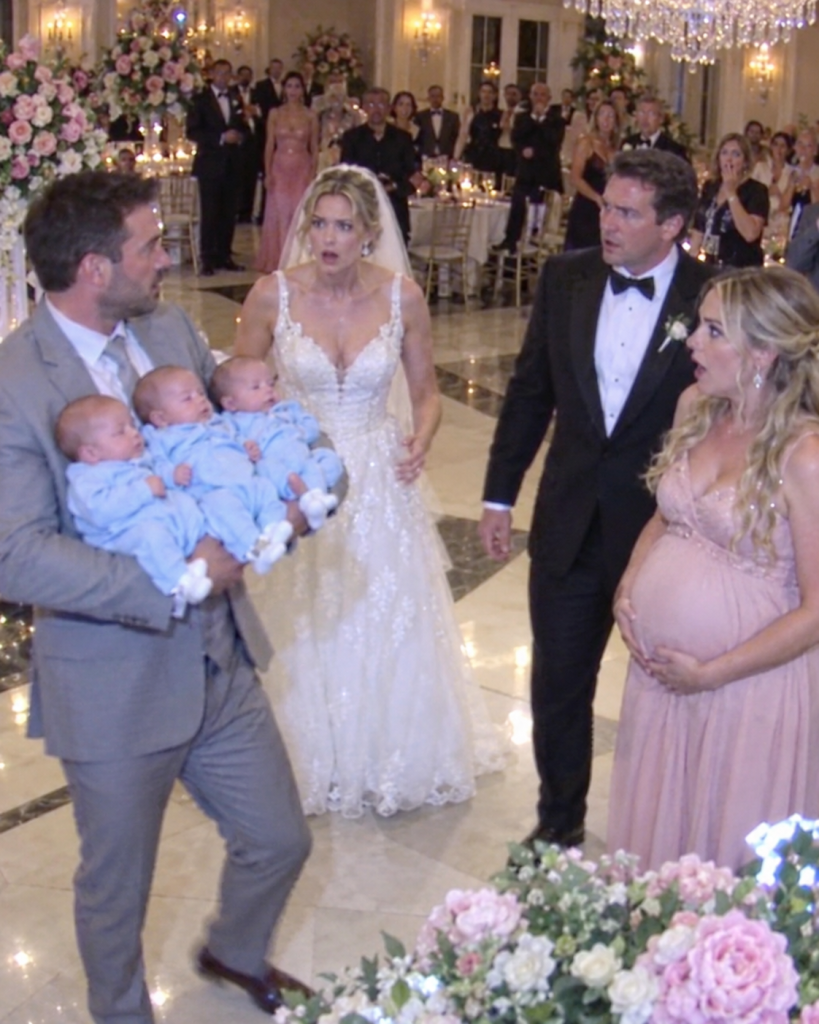
The triplets arrived safely in early autumn under the careful supervision of a medical team that had known us for months.
Two girls and a boy.
Lucy.
Anna.
And Julian.
Raymond cried when I suggested my father’s name.
“You’re certain?”
“Yes.”
“My father would be offended.”
“Your father already has a forty-two-story headquarters named after him.”
“That’s fair.”
The first time Margaret held Julian, she looked down at him for a long while.
Then she looked at Lucy.
Then Anna.
“They’re so small.”
“They’ll grow.”
“I know.”
There was something almost humble in her expression.
No talk of heirs.
No mention of lineage.
She simply sat in a chair holding her grandson while Grace showed her how to support his head properly.
When Lucy began fussing, Margaret handed Julian back without protest.
Small things.
But small things mattered.
Raymond and I did not move in together.
That surprised everyone except us.
He stayed in his rented house.
I moved from Harbor House into a modest home nearby with a sunny upstairs room that became my studio.
Raymond paid his share of everything involving the children, but the house was mine.
Maya insisted on that.
So did I.
The divorce petition remained open but inactive.
Six months passed.
Then nine.
One spring morning, nearly a year after I had walked away from the mansion, Raymond came to my studio while the babies were napping downstairs with Grace.
He carried no flowers.
I had banned apology flowers months earlier.
“They die and then I have to clean them up,” I had explained.
Instead he brought coffee.
Decaffeinated.
Correctly.
“Progress,” I said.
“I’m becoming extraordinary.”
“Let’s not get reckless.”
He sat across from me.
On my worktable lay my father’s letter.
I had brought it out earlier that morning because the anniversary had made me think about him.
Raymond touched the edge of the envelope.
“Do you still read it?”
“Sometimes.”
“He was right.”
“About which part?”
“Being loved once isn’t the same as being loved well forever.”
I looked at him.
“Yes.”
Raymond nodded.
“I loved you when I spoke to him.”
“I know.”
“I loved you when I signed the divorce papers too.”
“That was an interesting way to show it.”
“I said loved. Not loved well.”
Something tightened in my chest.
He continued.
“I think I spent years believing feelings mattered more than behavior.”
I said nothing.
“Therapy has been irritating.”
“I’m delighted.”
“My therapist says sarcasm is avoidance.”
“Your therapist sounds tedious.”
Raymond smiled.
Then he became serious.
“I don’t want our old marriage back.”
The sentence surprised me.
He looked almost afraid after saying it.
I waited.
“I don’t think it was healthy for either of us by the end,” he continued. “And I don’t want to pretend that having the children fixed us.”
“They didn’t.”
“No.”
“What do you want?”
He looked toward the window.
Spring sunlight touched the edge of his face.
“I’d like to take you to dinner.”
I laughed.
“Raymond.”
“One dinner.”
“We’ve had hundreds of dinners.”
“Not like this.”
“Like what?”
“Like two people who don’t assume they know the ending.”
I studied him.
There was no ring in his hand.
No grand speech.
No promise to change my life.
Just a question.
“Dinner?”
“Yes.”
“Somewhere without your mother?”
“Absolutely.”
“Without a private dining room?”
He looked wounded.
“I know normal restaurants.”
“Name one.”
He hesitated.
I laughed again.
“All right.”
His eyes widened slightly.
“All right?”
“One dinner.”
That dinner became another.
Then walks.
Then, months later, weekends.
We argued differently.
We apologized sooner.
Sometimes we failed.
Sometimes one of us went home angry.
But neither of us used silence as an answer anymore.
I eventually withdrew the divorce filing.
Not because Raymond convinced me.
He never asked.
I did it because one afternoon I realized I was no longer waiting for the man I married to return.
I liked the man who had learned how to show up.
And I liked the woman I had become while he was learning.
Two years after the night I left the mansion, we traveled to Bar Harbor with the children.
Lucy and Anna wore matching yellow raincoats.
Julian attempted to eat sand.
Margaret came for three days and stayed at a hotel because, in one of the greater signs of personal growth I had ever witnessed, she had learned that separate accommodations could preserve family harmony.
Graham and Grace joined us for dinner.
At sunset, Raymond and I walked toward the old dock where my father had once taught me to jump into cold water.
The children remained safely onshore with Grace and Graham, delighted by a collection of smooth stones.
I stood at the edge.
Raymond slipped his hands into his pockets.
“This is the place?”
“Yes.”
“Where Julian told you not to beg people to recognize your worth?”
I looked at him.
“I told you that?”
“About a year ago.”
“I don’t remember.”
“You were tired. Anna had been awake all night.”
“That explains it.”
We looked toward the water.
The sun lowered behind the hills.
“I misunderstood Dad for years,” I said.
“How?”
“I thought he meant you should walk away whenever somebody fails to see your worth.”
Raymond waited.
“But I think he meant something else.”
“What?”
“You have to see it yourself first.”
He looked down.
“That seems harder.”
“It is.”
The wind lifted my hair.
Behind us, Julian squealed because Graham had apparently shown him a crab.
I smiled.
Raymond glanced toward the children, then back at me.
“Do you ever wish you had told me that day?”
“That I was pregnant?”
“Yes.”
I thought about it.
The question had haunted me once.
Now the answer felt simple.
“No.”
He nodded.
“Neither do I.”
That surprised me.
“Why?”
“Because if you had told me at the gates, I would have begged you to stay.”
“And?”
“And you probably would have.”
I looked toward him.
He knew me.
Maybe he always had.
“You would have come inside,” he continued. “My mother would have cried. I would have apologized. We would have turned the pregnancy into a reason not to face what was broken.”
I looked back toward the shore.
Lucy was holding both of Margaret’s hands while attempting to step over a piece of driftwood.
“And eventually?”
Raymond shrugged.
“We might have become miserable again.”
The truth no longer frightened me.
“I think so too.”
He moved closer, though not touching me.
“So I’m grateful you walked away.”
I smiled.
“That sounds terrible.”
“I know.”
“But I understand.”
For a moment we simply stood there.
Then Raymond held out his hand.
Not demanding.
Not assuming.
Offering.
I took it.
The mansion in Greenwich still existed.
Eventually Raymond sold it.
Margaret complained for exactly twenty-three minutes before admitting she had never liked the heating system.
The antique fountain went to a museum.
The guesthouse was purchased by a family with four children.
Raymond moved permanently into a house near mine before we eventually decided, carefully and together, to choose one home.
Not his.
Not mine.
Ours.
Graham remained part of our lives.
The triplets called him Grandpa Bell long before anyone formally decided they should.
Grace claimed this was because he bribed them with blueberry pancakes.
He denied everything.
Margaret became Grandma Margaret, though Anna shortened it to “Mimi” and the name stuck despite Margaret’s initial objections.
She never again used the word heir in my presence.
Maybe she never said it at all.
Celeste eventually moved to Chicago.
Years later she sent Raymond a wedding announcement.
I wished her well.
And I meant it.
As for my father’s letter, I framed the final paragraph and hung it in my studio.
Not the sentence about Raymond.
The sentence about me.
Make your choices according to the life in front of you, not the promises behind you.
I had once thought resilience meant enduring.
Enduring needles.
Enduring disappointment.
Enduring silence.
Enduring a marriage because leaving would mean admitting something had failed.
But resilience, I learned, could also mean changing direction.
It could mean accepting help from an elderly stranger because you had nowhere else to go.
It could mean starting work again after eleven years.
It could mean allowing a grandmother to become better without pretending she had always been kind.
It could mean allowing a husband to earn forgiveness instead of giving it simply because he asked.
And sometimes it could mean returning to love without returning to the life that had almost destroyed it.
One evening, years later, I found Raymond sitting on our kitchen floor surrounded by three children and an extraordinary amount of flour.
“What happened?”
He looked up.
“We made bread.”
Lucy shook her head.
“Daddy made a mistake.”
“I followed the recipe.”
Anna held up the cookbook.
“You read the wrong page.”
Julian, now four, pointed proudly toward an object in the oven that appeared capable of damaging property.
“I helped.”
I leaned against the doorway.
Raymond looked at me.
There was flour in his hair.
A smear of something on his shirt.
The kitchen was small compared with the one in Greenwich.
The table had scratches.
The chairs did not match because Grace had given us two and I had found the others at an antiques market.
Nothing about the room would ever appear in an architectural magazine.
I loved it.
Raymond stood.
“Before you say anything, I have already ordered dinner.”
“Good planning.”
“I’ve grown.”
“Marginally.”
He kissed my forehead.
Then Lucy demanded he return because apparently the bread required emergency supervision.
I watched him sit on the floor again.
Years earlier, I had believed the greatest thing Raymond Whitmore could give me was a family.
I had been wrong.
The children were gifts neither of us had been promised.
But they were not what repaired my life.
I repaired my life.
Raymond repaired his part of himself.
Margaret repaired what she could.
We met one another afterward as people rather than roles.
Wife.
Husband.
Mother.
Heir.
Whitmore.
Ellison.
Those names still mattered.
They simply no longer decided who we were allowed to become.
Sometimes, late at night, I remembered the woman reflected in the boutique window with one suitcase beside her.
I wished I could reach backward through time and tell her something.
Not that Raymond would return.
Not that she was carrying triplets.
Not that Margaret would apologize.
Not that everything would work out exactly as she hoped.
None of those things was certain when she stepped away from the gates.
I would tell her something simpler.
Keep walking.
Not because everyone behind you will regret losing you.
Not because some perfect future is waiting around the corner.
Keep walking because there is a version of you ahead who knows how to choose her own life.
One who understands that love without honesty becomes loneliness.
That forgiveness without change becomes repetition.
That family is not created by a name engraved over a gate.
And that sometimes the bravest choice is neither staying nor leaving.
It is refusing to make your next decision from fear.
That woman outside the mansion thought she was carrying one secret.
Then she discovered three tiny heartbeats.
But the most important discovery came later.
My life was never valuable because I could finally give the Whitmores children.
It was never valuable because a billionaire loved me.
It was never valuable because my marriage survived.
My father had understood that long before I did.
You don’t beg people to recognize your worth.
You live until they have no choice but to see it.
And eventually, if you are fortunate, you learn something even better.
You see it yourself.