“What are you standing there for? Get into the kitchen. The family is hungry.”
That was the first thing I heard when I walked into my own house.
It was Friday at 6:48 p.m., and the whole week was still stuck to me like heat rising off a parking lot.
My blouse smelled like printer toner and stale break-room coffee. The backs of my ankles were rubbed raw from my heels, and the Scottsdale sun had followed me from the office garage to my driveway like a hand pressing between my shoulder blades.
All I wanted was to drop my bag, kick off my shoes, and sit for ten quiet minutes in the living room my father had helped me paint.
Instead, I stopped on my own front porch.
Three pickup trucks crowded the curb and boxed in part of my SUV. The front door stood wide open.
Laughter spilled from the backyard, loud and comfortable, the kind of laughter people make when they have already decided they belong.
The house was mine.
Not ours. Not Lucas’s. Mine.
My parents had signed it over to me six months before the wedding because my mother believed in love, but she also believed a woman should never have to beg for a roof over her head.
The deed was in my name. The county recording stamp was on page one. The closing folder was still in my upstairs desk drawer, tabbed in blue because my father organized paperwork like he was preparing for trial.
Behind that folder was a small envelope he had made me promise not to ignore.
On the front, in his neat block handwriting, he had written:
FOR THE DAY SOMEONE FORGETS WHO OWNS THIS HOUSE.
had laughed when he gave it to me.
That night, it did not feel funny.
I walked inside slowly.
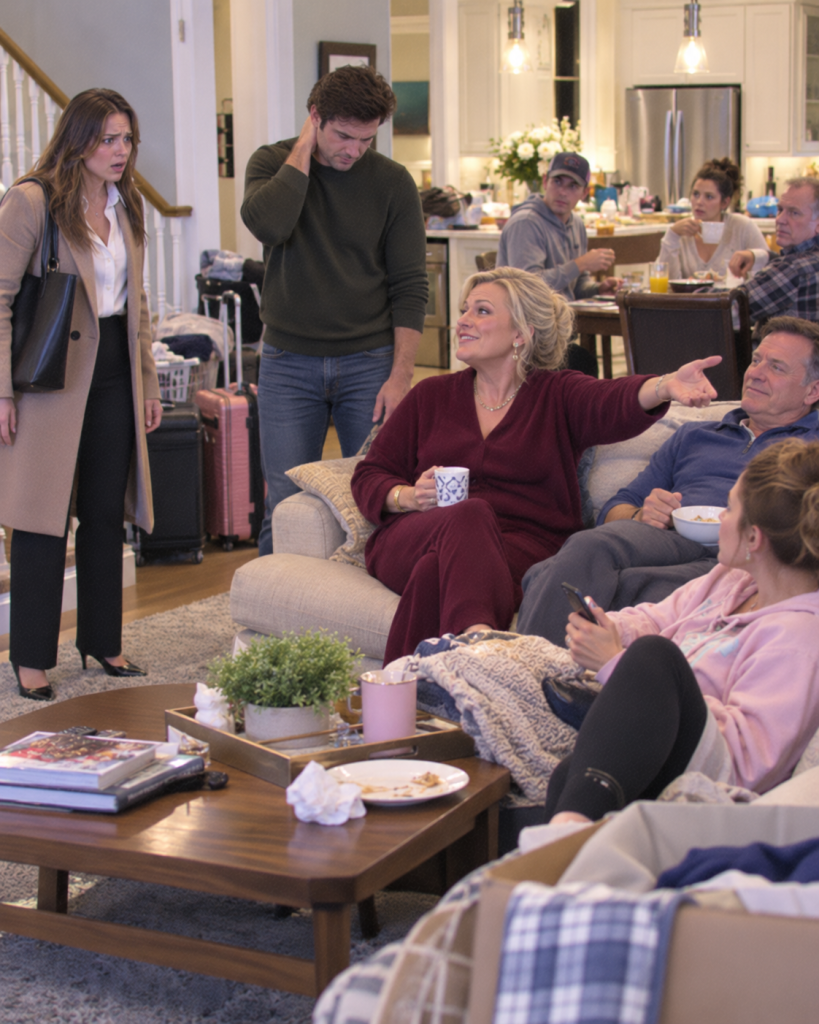
Lucas’s relatives were everywhere.
Two uncles had taken over my couch. Cousins leaned along the hallway wall. Children ran past the laundry room in socks, sliding across the hardwood like the place was a weekend rental.
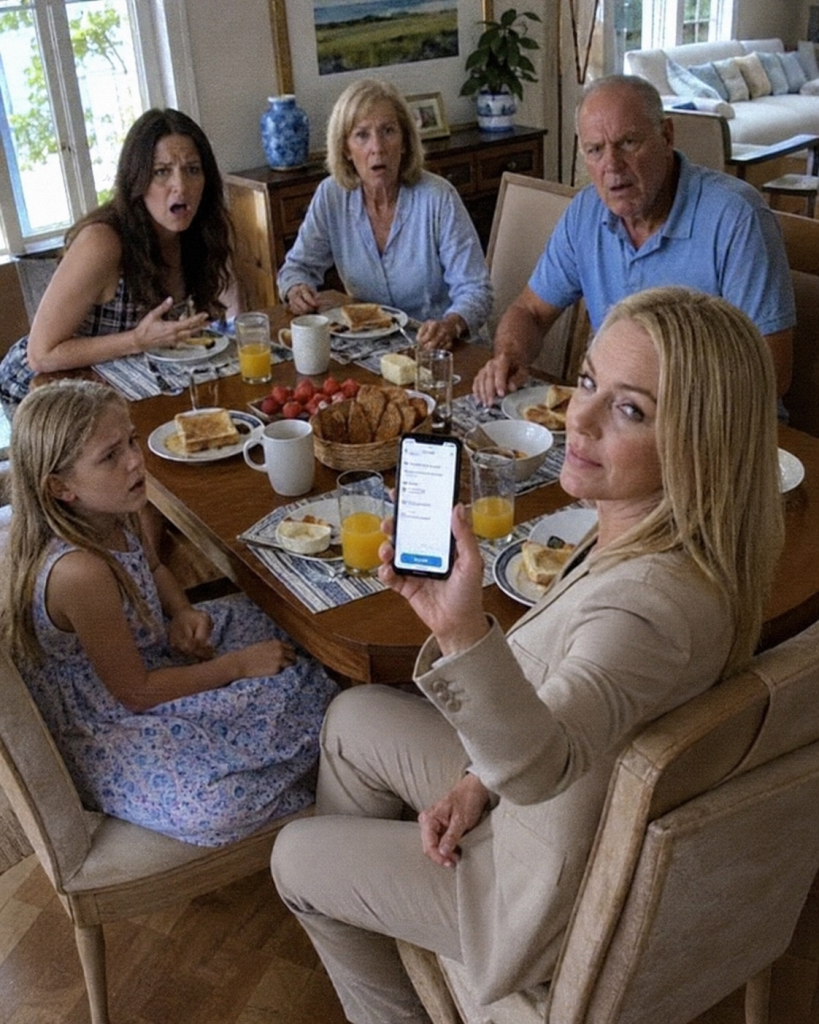
Women I barely knew were opening my cabinets, moving my pans, setting foil-covered dishes on my dining table.
One of my good mugs sat near the sink with a fresh chip in the rim.
Beatrice, Lucas’s mother, sat in the main armchair.
My armchair.
She had one ankle crossed over the other and her purse tucked beside her like she had claimed that too.
She did not look startled.
She did not look embarrassed.
She looked comfortable.
“Come on, Felicity,” she said, like I had shown up late to someone else’s dinner. “Go warm up the tortillas and check the rice. Don’t keep everyone waiting.”
I looked at Lucas.
He was leaning against the wall near the hallway, staring down at his phone.
He glanced up for half a second, then looked right back down.
He said nothing.
That was the first real answer I got.
Betrayal does not always kick the door open.
Sometimes it leans against your wall with a phone in its hand and waits to see how much disrespect you will swallow.
It had started with a key.
Two weeks earlier, Lucas asked for a copy while we were standing in my kitchen after dinner.
He smiled that easy smile that used to make me forgive small things too fast.
“Give me one, sweetheart,” he said. “Just in case. It’ll practically be our house soon.”
I was thirty-one, engaged, tired from work, and still foolish enough to think trust meant the same thing to both of us.
I took the spare key from the ceramic bowl by the entry table and placed it in his palm.
I did not know he had handed it to his mother.
I did not know he had been telling his relatives, “This is the house I bought for when I get married.”
Not Felicity’s house.
Not the house her parents gave her.
The house I bought.
A lie told confidently enough at enough family gatherings starts sounding like paperwork to people who want it to be true.
I moved through the living room, taking inventory without meaning to.
My couch.
My lamps.
The little painting my best friend gave me after my promotion.
The framed photo of my parents on the bookshelf.
The brass key hook by the door, now empty where the spare used to hang.
Everything was still in its place except me.
One of Lucas’s aunts came toward me with a sweet smile that felt rehearsed.
“Oh, what a beautiful house your fiancé got,” she said. “You really hit the jackpot, dear.”
I did not answer her.
I set my work bag beside the entry table, walked to the chair across from Beatrice, and sat down.
The room shifted.
A fork paused over a paper plate.
A child stopped near the stairs with one hand on the banister.
Someone in the kitchen turned off the faucet, and the sudden silence made the refrigerator hum sound too loud.
Lucas’s thumb stopped moving over his phone screen.
Nobody asked why I sat down.
They already knew.
Beatrice frowned first.
“Aren’t you going to the kitchen?”
“First,” I said, keeping my voice even, “I’d like to know why there are this many people in my house without telling me.”
Someone gave a small awkward laugh.
Beatrice smiled like I had mispronounced something.
“Your house? Honey, you’re getting married soon. Stop talking like you’re single. This is going to be a family home.”
Lucas finally put his phone away.
“Felicity,” he said, low and annoyed, “don’t start. They just came to see the place.”
“And did you tell them whose place it is?”
His eyes went to his mother before they came back to me.
That was answer number two.
“There’s no point making a big drama out of it,” he said.
I almost laughed.
Men like Lucas always call it drama when a woman reads the room out loud.
For one ugly second, I pictured myself grabbing my keys, pointing to the open door, and screaming until every last person understood the difference between family and trespassing.
But I did not scream.
I looked at Beatrice.
She looked back like she was waiting for me to remember my place.
Then one of Lucas’s uncles called from the hallway, “The upstairs bedroom will be perfect for us whenever we come on weekends.”
A woman near the dining table said, “The kids can take the smaller room. They won’t mind.”
Beatrice nodded, pleased.
“This house is much too big for just the two of them.”
The air changed after that.
They had not come to visit.
They had come to divide up my life.
I stood slowly.
Not to serve them.
Not to explain myself.
I stood because the deed was upstairs, and so was the envelope my father had left behind.
Lucas noticed the direction of my eyes.
For the first time all night, his face changed.
Beatrice leaned forward in my armchair and said, “Where do you think you’re going?”
I put one hand on the stair rail.
Behind me, the whole room went quiet.
Then Beatrice said, almost laughing, “She’ll stop acting so high and mighty once she’s living with us.”
And that was when I turned around, looked straight at Lucas, and said—
“Then you should all be very careful what you say next.”
Lucas blinked like he had expected tears, not a warning.
Beatrice’s smile thinned, but she kept her chin lifted from my armchair as if posture could turn theft into tradition.
I walked up the stairs with every person in that house listening to my shoes hit the hardwood.
Lucas followed two steps behind me, suddenly whispering my name like it belonged to him.
“Felicity, come on. Don’t embarrass me in front of my family.”
That sentence almost made me stop.
Not because it hurt, but because it finally explained everything.
He was not embarrassed by what they had done.
He was embarrassed that I might say it out loud.
In my office, I opened the blue-tabbed folder and pulled out the deed transfer, the county recording page, and the envelope my father had left behind.
Then I saw something I had forgotten was tucked underneath it.
A second sealed note.
This one had Lucas’s name written across the front.
When I came back downstairs, Lucas saw it before his mother did.
His face drained so fast one of his cousins actually stepped away from him.
“What is that?” Beatrice snapped.
Lucas did not answer.
He just stared at the envelope like it had started breathing in my hand.
I placed the deed on the coffee table between Beatrice’s purse and the chipped mug, then laid the envelope on top of it.
The room was so quiet I could hear the paper edge scrape against the wood.
And when I turned it over, Beatrice finally stopped smiling because my father had written one more sentence on the back…
PART 2
And when I turned it over, Beatrice finally stopped smiling because my father had written one more sentence on the back:
“Lucas knows this house was never his. Ask him why he needed the key.”
For three seconds, nobody moved.
Then Lucas whispered, “That’s not what it looks like.”
I looked at him.
“Then tell me what it looks like.”
He opened his mouth.
Nothing came out.
Beatrice snatched the envelope from the table.
“What kind of ridiculous game is this?”
I took it back before she could tear it.
“It isn’t a game.”
I unfolded the letter inside.
My father’s handwriting filled the page.
“Felicity,
If you’re reading this, something has happened that made you question whether you were too trusting.
You weren’t.
Trusting someone is not the mistake.
Ignoring what they do with that trust is.
The house was transferred to you without conditions. Lucas has no ownership interest in it, now or after the wedding. Marriage does not change that.
Six months ago, when we signed the deed, I specifically told him this.
He asked me whether there would be any way for him to become a co-owner after the wedding.
I told him no.
He laughed and said he understood.
If he ever tells you otherwise, remember this letter.
And remember something else.
A person who respects you will never need to pretend your property belongs to them.
Love,
Dad.”
I lowered the page.
Lucas was staring at the floor.
Beatrice looked at him.
“What is he talking about?”
Lucas rubbed the back of his neck.
“Mom, I was going to explain.”
“When?”
He looked at me.
“After the wedding.”
A bitter laugh escaped me.
“After the wedding?”
He stepped toward me.
“Felicity, listen. I didn’t mean for this to get out of hand.”
“Get out of hand?”
I pointed toward the crowded living room.
“You gave my key to your mother.”
“She needed somewhere to stay.”
“You told your family you bought my house.”
“I was going to make it ours.”
“You told them which bedrooms they could use.”
“I thought once we were married—”
“You thought?”
My voice finally cracked.
“You thought marriage gave you ownership?”
Lucas went silent.
Beatrice suddenly stood.
“This is ridiculous. He’s your fiancé. We’re family.”
“No.”
The word came out quieter than I expected.
Everyone looked at me.
“You are his family.”
I pointed toward the front door.
“This is my house.”
Beatrice’s face hardened.
“You’re really going to throw his mother out?”
“I didn’t invite you in.”
“You’re marrying my son!”
“And that doesn’t give you a key to my house.”
The room erupted.
His aunt started whispering.
One of his uncles shook his head.
Someone said I was being disrespectful.
Someone else said I should calm down.
Lucas raised his hands.
“Everybody, just stop.”
I looked at him.
“That’s the first useful thing you’ve said tonight.”
He swallowed.
Then he stepped closer.
“Felicity, please. Can we talk privately?”
“No.”
His face tightened.
“Why not?”
“Because you had two weeks to talk to me.”
I held up the spare key.
“You had two weeks to tell me where this went.”
He stared at it.
Then I noticed something.
His expression wasn’t angry anymore.
It was afraid.
I turned the key over in my fingers.
“What else did you do?”
“Nothing.”
The answer came too quickly.
I stared at him.
He looked away.
That was when I remembered the envelope.
Not the one my father had written.
The second one.
The one with Lucas’s name on it.
I picked it up.
Lucas stepped backward.
“Felicity.”
“What is this?”
“Don’t open that.”
The room became completely silent.
I looked at him.
Then at the envelope.
Then back at him.
“Why?”
He didn’t answer.
So I opened it.
Inside was a single sheet of paper.
And beneath it was a printed email.
The paper was from a real-estate attorney.
My father’s attorney.
The email was dated three weeks before Lucas asked for my spare key.
I read the first line.
Then the second.
By the third, my hands had stopped shaking.
The email said Lucas had contacted the attorney asking what legal steps he would need to take to establish an ownership claim over the property after marriage.
He had also asked whether my parents could be pressured into adding his name to the deed.
The attorney had refused to advise him without my written consent.
Then came the sentence that made my stomach turn.
Lucas had asked whether there was any way to make the house appear to be a marital asset without changing the deed.
I looked up.
Lucas’s face was white.
“You planned this.”
“No.”
“You contacted my father’s attorney.”
“I was just asking questions.”
“You asked how to make my house look like yours.”
“I was going to marry you!”
“That doesn’t answer me.”
He said nothing.
Beatrice stepped forward.
“Enough. This is between you and my son.”
“No,” I said.
I held up the paper.
“This became my business when you walked into my house with my key.”
Beatrice’s mouth tightened.
“You think a piece of paper makes you powerful?”
“No.”
I looked around the room.
“I think the truth does.”
Then I walked to the front door and opened it.
Nobody moved.
So I said the only thing left to say.
“Everyone who does not live here needs to leave.”
One by one, the laughter disappeared.
People collected coats.
Children were called away from the stairs.
The uncles stopped arguing about bedrooms.
The women who had been opening my cabinets quietly put things back.
Beatrice was the last to move.
She stopped beside me.
“You’ll regret humiliating this family.”
I met her eyes.
“You humiliated yourselves.”
She stepped outside.
Lucas stayed.
He looked at me like the woman he thought he knew had disappeared.
“Felicity…”
I shook my head.
“Don’t.”
He looked toward the driveway.
Then back at me.
“You’re really ending this?”
I thought about the key.
The bedroom conversations.
The lie.
The attorney’s email.
The fact that he had looked me in the eyes for weeks and planned a future around something that wasn’t his.
“Yes.”
He flinched.
“Because of one mistake?”
I almost smiled.
“No, Lucas.”
I held up the letter.
“Because this wasn’t one mistake.”
Then I closed the door.
And for the first time that night, my house was quiet again.
But I wasn’t finished.
Because the next morning, I found out exactly how far Lucas had already gone.
PART 3
At 8:12 the next morning, someone knocked on my door.
I expected Lucas.
Instead, it was a woman in a navy suit carrying a leather folder.
“Felicity Hart?”
“Yes.”
“My name is Karen Mills. I’m the attorney who handled your property transfer.”
My stomach tightened.
“Is something wrong?”
She glanced toward the driveway.
“May I come in?”
I stepped aside.
She entered and placed the folder on my dining table.
“I received a message from your father late last night.”
I stared at her.
“My father?”
She gave me a sad smile.
“He asked me to keep something ready in case you ever needed it.”
She opened the folder.
Inside were copies of the deed, the original closing documents, and several pages I had never seen before.
“There is one more thing you need to know.”
I sat down.
Karen slid a document toward me.
It was a statement my father had signed before the property transfer.
At the bottom was his signature.
And underneath it was Lucas’s.
I looked at her.
“What is this?”
“Your father required Lucas to sign an acknowledgment before the transfer was completed.”
I read the first paragraph.
Lucas acknowledged that the property belonged solely to me.
He acknowledged that he had no present or future ownership interest unless I voluntarily granted one in writing.
And he acknowledged that marriage would not automatically change ownership.
I looked at the signature again.
He had known.
He had always known.
Karen continued.
“Your father also asked me to tell you something if this situation ever occurred.”
“What?”
She closed the folder.
“He said, ‘My daughter doesn’t need to prove she deserves her own home.’”
I looked down.
For the first time since the night before, my eyes burned.
My father had known me better than I knew myself.
Karen handed me another envelope.
“This was delivered to my office yesterday.”
My name was written across the front.
I opened it.
Inside was a short note.
“Felicity,
If Lucas ever uses the word family to make you feel guilty for protecting what is yours, remember this:
Family is not a permission slip.
Love is not a deed.
And guilt is not ownership.
You don’t owe anyone access to your home just because they share your last name, your blood, or your future plans.
Choose peace.
Dad.”
I pressed the note against my chest.
Then my phone rang.
Lucas.
I let it ring.
It stopped.
A minute later, another call.
Then another.
Then a message.
I finally opened it.
“Please. I made a mistake. Let me fix this.”
I stared at the screen.
Another message appeared.
“My mom didn’t mean anything by it.”
Then:
“Please don’t destroy our wedding over this.”
I typed one sentence.
“You destroyed the wedding when you decided my house belonged to you.”
I didn’t send it.
I deleted the draft.
Because I realized something.
I didn’t owe him an explanation anymore.
Karen gathered the papers.
“Would you like me to send him formal notice that he has no permission to access the property?”
I looked at the spare key on the table.
“Yes.”
She nodded.
“And one more thing.”
She paused at the door.
“What?”
“If he has a copy of your key, change the locks today.”
I did.
By noon, the locks were changed.
By two, the security company had updated the access code.
By four, Lucas’s name had been removed from every account associated with the house.
And at 5:17 p.m., I received one final message.
It wasn’t from Lucas.
It was from Beatrice.
“You will regret choosing a building over a family.”
I stared at the words for a long time.
Then I looked around the living room.
My couch.
My lamps.
The painting my best friend gave me.
The framed photo of my parents.
The chair where Beatrice had sat like she owned the place.
This wasn’t a building.
It was the first place my parents had ever given me and said:
This is yours.
I finally understood what my father had been trying to teach me.
Protecting your boundaries does not mean you don’t love people.
Sometimes it means you finally love yourself enough to stop letting them cross those boundaries.
Three weeks later, the wedding was canceled.
There was no dramatic announcement.
No screaming match.
No public revenge.
Just a quiet phone call to the venue.
A canceled reservation.
A returned dress.
And a ring placed inside a small box in the back of my desk drawer.
Lucas eventually moved out of his mother’s house and sent me one last letter.
He apologized.
He said he had convinced himself that because we were getting married, everything would become ours.
He admitted that his mother had pushed him.
He admitted that he wanted to impress his family.
And he admitted that somewhere along the way, he stopped thinking about what I wanted.
I never answered.
Months later, I repainted the living room.
My father helped me choose the color.
When he finished, he stood in the doorway with a paintbrush in his hand and looked around.
“You know,” he said, “I always liked this room.”
“So did I.”
He smiled.
Then he pointed toward the little blue folder on my desk.
“Keep that.”
I laughed.
“I will.”
He looked at me seriously.
“Not because you’re expecting someone to take your house.”
“Then why?”
“Because sometimes people don’t try to take your house.”
He paused.
“They try to convince you that it was never yours.”
I looked around the room.
For the first time, there was no one dividing up bedrooms.
No one deciding who belonged where.
No one holding a key they weren’t supposed to have.
Just sunlight across the floor.
My father’s painting.
My mother’s photograph.
And the quiet certainty that the woman who had walked through that front door on Friday night was not the same woman standing there now.
I had entered my own house believing I had come home.
By the time the weekend was over, I understood something much bigger.
Home isn’t just the place where you live.
It’s the place where your boundaries are respected.
And anyone who needs you to surrender those boundaries to prove you love them was never asking for love in the first place.
They were asking for control.
And this time, I didn’t hand them the key.