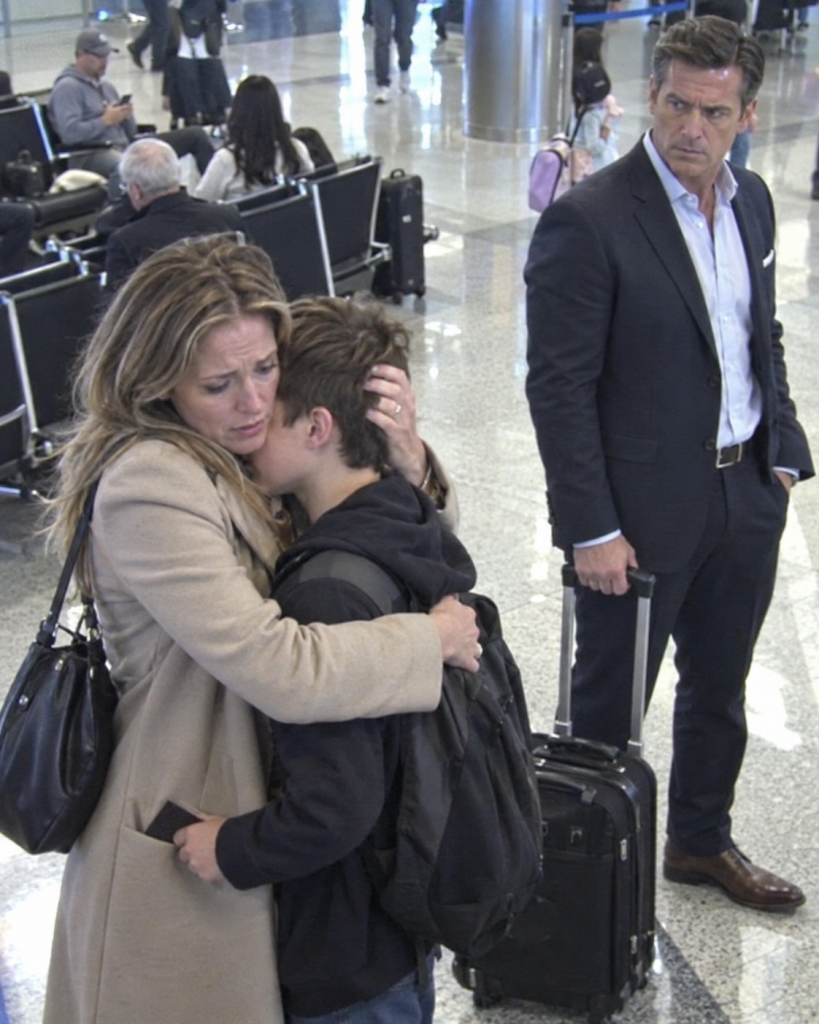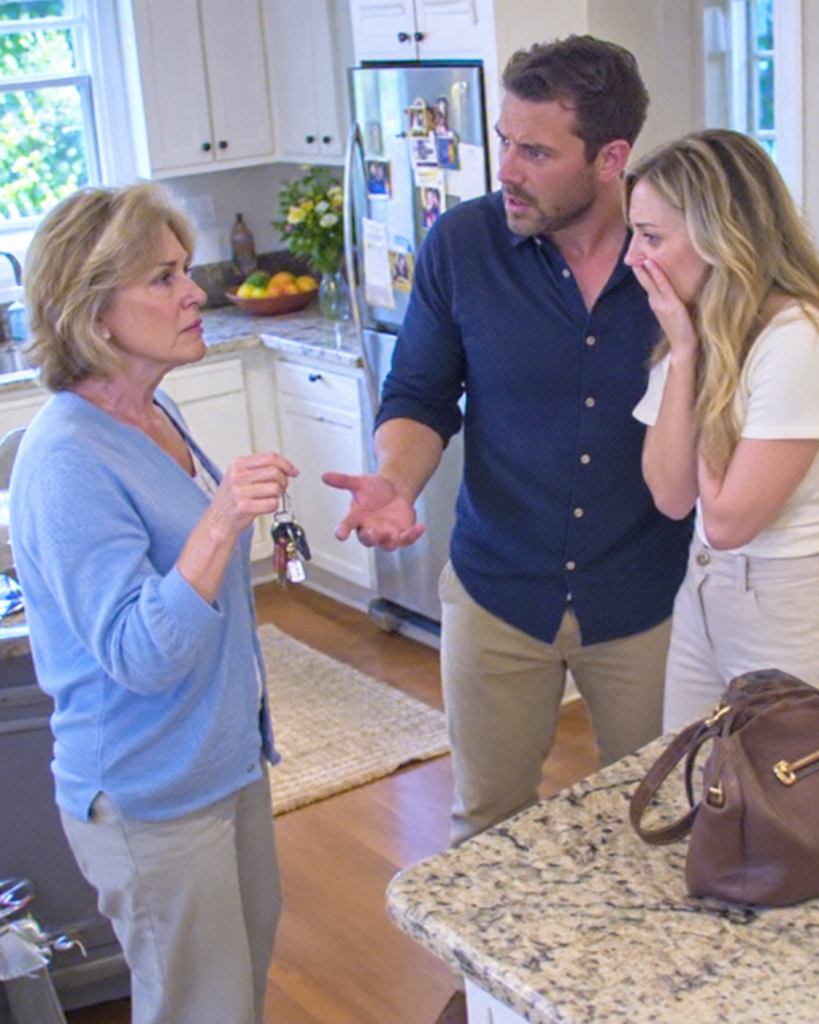
I sent my son $550 every single week just so he and his wife could live comfortably.
That—that was the phrase David used three years ago when he first asked for help. He claimed Sarah needed to stay home with their two kids and the mortgage was stretching them thin.
I was a widow living quietly on my late husband’s pension and my own savings. I didn’t need much, so I gave it to them.
Every Friday morning, $550 left my account and went into theirs. It became an unwritten law of our family.
Yesterday was my 65th birthday. I didn’t ask for a party or a gift. I only asked them to come over for dinner.
I spent the entire afternoon making David’s favorite pot roast, roasting root vegetables, and baking a small vanilla cake from scratch.
I set the table for 4, putting out the good plates I rarely used anymore.
By 6:30 p.m., the food was hot and ready.
By 7:30 p.m., the roast was drying out in the warming drawer.
At 800 p.m., I finally picked up my phone and dialed David’s number. He answered on the third ring.
I could hear a television blaring in the background and Sarah laughing about something.
“David,” I began quietly. “Are you on your way? The food is getting cold.”
He sighed loudly. The kind of heavy, exhausted breath you use for a telemarketer.
“Look, Mom, we’re not coming. Sarah made other plans for us tonight. You know how busy we are.”
“It’s my birthday, David. We agreed on this a month ago.”
“Well, things change.”
He snapped, his voice turning sharp.
“Honestly, Sarah says we don’t count you as family anyway. You’re just always nagging us about something. We’ll call you next week.”
He hung up.
I stood in my kitchen staring at the black screen of my phone.
I didn’t cry. I didn’t feel the urge to scream.
Instead, a strange, absolute silence settled over my mind.
For 3 years, I had bought my place in their lives.
Tonight, the subscription expired.
I carefully packed the pot roast into glass containers, placed them in the fridge, and walked over to my laptop.
I sat at my dining table, the screen of my laptop glowing in the dim room.
I logged into my bank account.
The recurring weekly transfer of $550 was scheduled for the next morning.
I clicked on it, hovered my mouse over the cancel series button, and pressed down.
Just like that, the financial IV drip was disconnected.
But I didn’t stop there.
I opened another tab and logged into my cellular provider.
Two years ago, David complained about their phone bills, so I had added his and Sarah’s lines to my unlimited plan.
I selected both of their numbers and clicked suspend service.
Next, I went to my streaming accounts, Netflix, Hulu, HBO.
I changed every single password and clicked sign out of all devices.
I closed the laptop, made myself a cup of chamomile tea, and sat on the couch.
Exa exactly 40 minutes later, my son went crazy.
My home phone, which I rarely used, started ringing off the hook.
I watched the caller ID flashed David’s name over and over.
When I didn’t answer, the answering machine clicked on.
“Mom, pickup,” David yelled through the small speaker. “My phone just lost service and Sarah got an alert from the bank that the Friday transfer failed. What are you doing? Fix this right now.”
He sounded terrified, but mostly he sounded furious.
There was no apology for the birthday dinner.
There was no concern for my feelings.
He was only panicking because the well had suddenly dried up.
I picked up the remote, muted the volume on the answering machine, and took a slow sip of my tea.
Tomorrow, they would undoubtedly show up at my door.
I knew Sarah wouldn’t let this go.
But for the first time in years, I wasn’t anxious about facing her.
I went to bed early and slept incredibly well.
The doorbell rang at 8:15 the next morning.
I was already dressed, standing at the kitchen island with my morning coffee.
I unlocked the front door and pulled it open.
David and Sarah stood on my porch.
Sarah wore a brand new designer trench coat I recognized from a magazine, clutching a leather purse that easily cost more than my weekly transfer.
David looked frantic.
“What is going on with the bank?”
“Mom,” David demanded, pushing past me into the hallway. “And our phones. Did you get hacked?”
“No,” I replied smoothly, closing the door. “I canled them.”
Sarah’s eyes narrowed.
“You did what? Why?”
“Because,” I walked back to my coffee, “I am no longer funding your lifestyle. I’m restructuring my finances for my retirement.”
“You can’t just cut us off without warning,” Sarah yelled, her hands on her hips. “We have kids. We depend on that money. This is incredibly selfish of you, Monica.”
I looked her up and down, taking in the coat, the manicured nails, the expensive boots.
“You’ll figure it out. You’re adults.”
David pulled his keys out of his pocket, pacing the floor.
“Mom, you have to turn the phones back on. I need it for work.”
I watched his hand.
On his key ring was a heavy brass key, the spare to my house.
I stepped forward, reached out, and calmly slid the brass key off his metal ring.
He froze completely, caught off guard.
“What are you doing?” he stammered.
“I’m taking back my property,” I answered, dropping the key into my apron pocket. “Since you don’t count me as family, you certainly don’t need free access to my home. Now, both of you need to leave. I have a gardening club meeting at 10:00.”
Sarah glared at me, her face flushed with anger.
“If you do this, you’re never seeing your grandkids again.”
“That is your choice,” I stated flatly, pointing to the door. “Goodbye.”
The weekend passed in total silence.
I didn’t receive any more calls, mostly because their cell phones were still disconnected and they hadn’t bothered to get a new plan yet.
I spent Saturday morning in my backyard pruning the rose bushes.
My neighbor Helen leaned over the wooden fence holding a pair of shears.
“You look different, Monica,” Helen observed, snipping a dead leaf. “Lighter somehow.”
“I dropped about 300 lb of dead weight.”
I smiled, trimming a thorny branch.
By Tuesday, I received an email from David.
He had clearly used his office computer.
The message was brief and dripping with guilt.
“Timmy and Lily keep asking why Grandma hates them. They want to come over. Also, the transmission on Sarah’s car’s car is slipping. We desperately need $300 to fix it so she can take the kids to school. Please, Mom.”
I read the email twice.
A year ago, the mention of my grandchildren would have had me reaching for my checkbook immediately.
Sarah knew exactly what she was doing.
She always used the kids as a shield, deploying them whenever she needed something.
I replied to the email with a single sentence.
“I’m sorry to hear about the car. The city bus schedule is available online.”
10 minutes later, my phone vibrated with a text from an unknown number.
It was Sarah using a prepaid phone.
“You are a monster. Don’t expect us to beg.”
I didn’t reply.
I blocked the number, set my phone on the counter, and went back out to the garden.
I missed Timmy and Lily terribly, but I knew that if I caved now, the cycle would never end.
I had to starve the manipulation.
If I held firm, they would eventually realize they had no leverage left.
On Thursday morning, a silver SUV pulled up to my driveway.
I watched through the living room window as Sarah marched up the walkway, pulling 5-year-old Timmy and 3-year-old Lily by their hands.
She didn’t ring the bell.
She just opened the screen door, pushed the kids inside my porch, and yelled, “I have appointments today. Watch them.”
Before I could even unlock the main door, she was sprinting back to her car.
She sped off, leaving my grandchildren standing on the welcome mat with their backpacks.
I opened the door and brought them inside.
We actually had a wonderful morning.
I made pancakes.
We built a fort in the living room and I read them stories.
But my mind was working.
Sarah thought she could still force me into the role of the obedient, free babysitter.
She thought the old rules still applied.
At 400 p.m., the SUV pulled back into the driveway.
Sarah strolled up to the door, a fresh blowout in her hair and a shopping bag over her shoulder.
Her appointments had clearly been a spa day.
I stepped out onto the porch, closing the door behind me so the kids wouldn’t hear.
I handed her a folded piece of paper.
“What is this?” she frowned, unfolding it.
“An invoice,” I answered. “7 hours of emergency child care at $25 an hour, plus $15 for lunch and snacks. Total is $190, payable immediately.”
Sarah burst out laughing.
“You’re joking. You’re billing me for watching your own grandchildren.”
“You dropped them off without asking. My time is not free anymore. If you do not pay this by tomorrow, the next time you leave them on my porch and drive away, I will call child protective services for abandonment.”
The smile vanished from her face.
She stared at me, realizing I was absolutely serious.
She grabbed the kids, shoved them toward the car, and drove away without another word.
That evening, David called me from a new number.
He was furious about the invoice.
But underneath the anger, I heard something else.
Panic.
“We are two months behind on rent, Mom,” he shouted over the phone. “Sarah is stressed out of her mind. Are you trying to make us homeless?”
“I gave you over $2,000 a month for 3 years, David,” I replied evenly. “If you are behind on rent, it is not because of my lack of support. It’s because of your spending.”
He muttered an excuse about the cost of groceries and hung up.
The next day, curiosity got the better of me.
I had to know where all my money had gone.
I drove across town to their neighborhood.
It was a nice suburb far above what David’s middle management salary could afford alone.
As I turned onto their street, I slowed my car to a crawl.
There, sitting proudly in their wide driveway, was a brand new fiberglass speedboat hooked up to a heavyduty trailer.
It still had the dealership stickers on the windshield.
I parked down the street and just stared at it.
That boat was my weekly $550.
That boat was the money I hadn’t spent on a vacation for myself in 10 years.
They weren’t struggling to buy groceries or pay the rent.
They were redirecting their bills so they could play rich.
A cold clarity washed over me.
Any lingering guilt I felt about cutting them off evaporated instantly.
I put the car in drive and headed home.
I didn’t need to confront them about the boat.
Knowing was enough.
It reinforced my boundaries.
They had made their choices, and now they were going to have to figure out how to pay for them without my wallet.
A few days later, I needed to fix a loose hinge on my back gate.
I went into my garage to look for my late husband Arthur’s heavyduty drill.
Arthur had been a master carpenter, and before he passed, he gifted David his massive rolling tool chest, thousands of dollars worth of professional equipment.
I only kept a small emergency kit, but I knew David had the exact drill I needed.
I drove to David’s house while I knew Sarah was at a local yoga class.
David opened the door looking exhausted.
He didn’t invite me in.
“I need to borrow your dad’s yellow power drill,” I told him.
David rubbed the back of his neck, looking everywhere but at my face.
“Uh, I don’t have it, Mom.”
“Did you lend it to a neighbor?”
“No.”
He swallowed hard.
“I sold the tool chest about a month ago.”
I stared at him.
“You sold your father’s tools, the ones he spent 30 years collecting, the ones he explicitly wanted you to have.”
“We needed the cash. Okay,” David defended himself, raising his voice. “Sarah wanted to join the local country club for the kids networking, and the initiation fee was huge. It’s just metal and plastic, Mom. Don’t make a big deal out of it.”
I didn’t yell.
I didn’t slap him.
I just nodded slowly, taking in the full measure of the man my son had become.
He would trade his father’s legacy for a country club membership.
“I understand,” I said quietly.
I turned around, walked to my car, and drove away.
By the time I reached my driveway, I had made a decision.
For years, I had held on to our small family cabin up by the lake, intending to pass it down to David.
Sarah treated it like her personal summer home.
Not anymore.
The next morning, I packed an overnight bag, filled my trunk with heavy duty garbage bags, and drove 3 hours north to the lake cabin.
The property was entirely in my name, paid off years ago by Arthur and me.
David and Sarah usually took it over for the entire month of June.
When I unlocked the front door, the place was a mess.
Sarah had left it exactly as it was at the end of last summer.
Dust coated the floors.
The pantry was full of stale, halfeaten cereal boxes.
But more importantly, the closets were packed with their things.
Sarah’s expensive summer dresses, David’s fishing gear, inflatable water toys, and cases of wine they had shipped up here.
I opened the garbage bags and got to work.
I didn’t damage anything, but I didn’t fold anything either.
I stuffed Sarah’s clothes, David’s tackle boxes, and every single item that belonged to them into the heavy black bags.
I dragged 14 bags out onto the covered back porch.
Next, I opened my phone and called a local locksmith.
By 210 p.m., he had replaced the dead bolts on the front door, the back door, and the shed.
I tested the shiny new brass keys, putting them safely on my ring.
Before leaving, I called a local real estate agent I had known for years.
Within an hour, she came over, took some photos, and we signed a short-term rental agreement.
A retired couple from Ohio wanted to rent the place for the entire summer.
The cash would easily cover the property taxes for the next 5 years.
I locked the new deadbolt, got in my car, and drove home with a smile on my face.
Memorial Day weekend arrived 2 weeks later.
This was the traditional kickoff to Sarah’s lake season.
I was sitting on my patio with Helen sharing a picture of lemonade when my phone started vibrating furiously on the glass table.
It was David.
I let it ring.
He called back immediately.
I finally picked it up.
“Mom,” he shouted, the background noise full of overlapping voices. “What is wrong with the lock on the cabin? My key won’t turn. And why are all our things in garbage bags on the porch?”
“Because you don’t live there, David,” I answered smoothly, pouring myself another glass of lemonade.
“Sarah invited 10 of her friends up here for a barbecue,” he panicked. “They’re all sitting in their cars waiting to get in. Did you change the locks? You have to tell me where the spare key is hidden right now.”
“There is no spare key for you,” I stated. “The cabin is my property. Since you sold your father’s tools for a country club membership, I decided to rent the cabin out to a lovely retired couple. They arrived tomorrow. I packed your belongings so you wouldn’t leave a mess for my tenants.”
I could hear Sarah screaming in the background.
“She did what? Break a window.”
“If you break a window,” I added calmly, “the neighbors will call the sheriff and you will be arrested for breaking and entering. Load your trash bags into your cars and go home, David. And don’t call me again until you learn how to speak to me with respect.”
I ended the call and turned off my phone.
Helen raised her glass to me, and we clinkedked them together in the afternoon sun.
It has been six months since Memorial Day.
The fallout was predictable, but it didn’t touch me.
Without my weekly $550, David and Sarah were forced to sell the boat at a massive loss just to cover their back rent.
Sarah had to cancel her country club membership and actually get a part-time job to help pay their bills.
The illusion of their wealthy lifestyle shattered, and they had to face the reality of living within their actual means.
David tried to come over in September to apologize.
He stood on my porch looking humbled, holding a cheap bouquet of supermarket flowers.
I accepted the flowers, but I didn’t invite him inside.
He asked if things could go back to normal.
I told him they already had.
My normal was peaceful.
I set strict boundaries.
I told him I would never give them another dime.
I told him that if they wanted me in their lives, it would be as a mother and a grandmother, not an ATM.
I now see Timmy and Lily twice a month.
I drive to a local park, buy them ice cream, and play with them for 2 hours.
Sarah sits on a bench far away, glaring at her phone, but she doesn’t dare say a word to me.
She knows I hold the keys to my own life now, and she has zero power over me.
I don’t harbor any deep rage anymore.
I just observe them from a safe distance.
I use the rental income from the cabin to book a twoe cruise for myself and Helen next spring.
I sleep deeply every night.
My house is quiet and my bank account is full.
They told me I didn’t count as family.
They were right.
I’m not their family anymore.
I am just a woman who finally woke up and closed her wallet.
Looking back, the hardest part wasn’t cutting off the money.
It was letting go of the illusion that if I just gave a little more, they would finally respect me.
I learned that you can’t buy genuine love and you shouldn’t have to pay a subscription fee to be treated like family.
Setting boundaries doesn’t make you a bad mother or a selfish person.
It just means you know your worth.
Sometimes the most powerful thing you can do is simply step back, close your wallet, and let people face the reality of their own choices.
You teach people how to treat you by what you tolerate.
And I just decided I was done tolerating disrespect.
If my story resonated with you or if you’ve ever had to make a quiet but tough choice to protect your own peace, I’d love to hear your thoughts in the comments below.
We all need a reminder sometimes that it’s okay to put ourselves first.
Please hit that like button and subscribe to the channel for more real life stories about finding strength, setting boundaries, and taking back control.