It was Friday evening.
The first chill of early autumn had settled over the city, but inside the house, the atmosphere was suffocating.
The person everyone called whenever a bill was too large, a credit card was maxed out, an investment failed, or my family needed to maintain an appearance of wealth they had not truly been able to afford since the late nineties.
I had quietly paid for their lifestyle without asking too many questions.
My sister’s rent.
My parents’ property taxes.
Their country-club fees.
Their vacations.
Their cars.
Their credit-card balances.
Whenever something went wrong, I fixed it.
I told myself that was what family did.
My wife, Clara, was seven months pregnant with our first child, a little girl.
For several weeks, she had been dealing with severe pelvic girdle pain that made even ordinary movements exhausting. Walking across a room could become a negotiation between her mind and her aching body.
That evening, she entered the dining room slowly, one hand supporting the small of her back and the other resting beneath her swollen stomach.
She looked pale from exhaustion.
Instead of taking her usual place, she carefully approached the closest empty chair beside the head of the table.
She lowered herself onto it with a quiet wince.
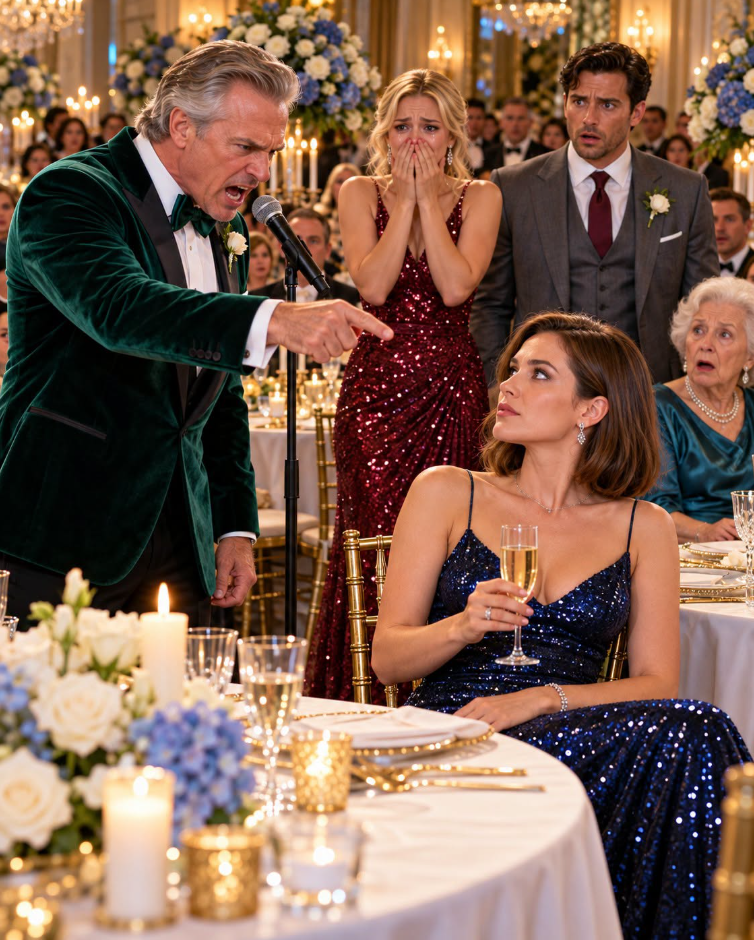
“Don’t sit there. That’s my spot,” my thirty-year-old sister, Vanessa, snapped from the kitchen entrance.
Vanessa had built her entire identity around looking wealthy.
The designer handbags hanging from her arm were often charged to accounts I paid.
The expensive restaurants were covered by cards connected to me.
And the polished image she presented to her friends depended heavily on the financial support she pretended not to need.
She had always treated Clara differently.
My wife was a brilliant pediatric nurse, but she had no interest in country-club gossip or showing off expensive possessions.
Vanessa seemed to interpret that as weakness.
Clara immediately looked up.
“Oh, Vanessa, I’m so sorry. I didn’t see your purse. My back is just locking up. Give me one second. I’ll move…”
She placed both hands against the chair’s armrests and tried to lift herself.
She couldn’t.
The pain made her pause.
Before Clara could fully rise, Vanessa walked toward the table.
She didn’t wait.
She didn’t help.
She didn’t even ask Clara to move.
Instead, Vanessa reached for a crystal goblet filled with ice water.
She picked it up.
Then she deliberately threw the contents across the table.
The cold water and ice struck Clara across the chest.
Her maternity dress became soaked instantly.
Water streamed down over her stomach.
Clara gasped.
The sound was sharp and frightened.
Her hands immediately covered her belly protectively.
Her chair scraped backward as she stumbled against the wall.
Ice scattered across the Persian rug.
For several seconds, I couldn’t move.
My brain refused to accept what my eyes had just witnessed.
Then I looked at my mother.
Eleanor.
I expected her to be horrified.
I expected her to rush toward Clara.
I expected her to demand that Vanessa apologize.
Instead, my mother calmly wiped her mouth with a linen napkin.
She took another sip of wine.
Then she rolled her eyes.
“Stop being so dramatic, Clara,” she sighed, her voice dripping with aristocratic venom. “Pregnancy makes you so clumsy, dear. You really need to watch your elbows. Try not to ruin the upholstery on those chairs. They’re imported.”
My father, Richard, was sitting at the head of the table, carving lamb.
He laughed.
Not an uncomfortable laugh.
Not a nervous laugh.
A loud, deliberate laugh.
“If she can’t handle a little spill, she should go eat in the kitchen with the caterers,” Richard scoffed, pointing the carving knife toward the hallway. “Tell her to walk home if she’s going to stand there and cry, Arthur. I won’t have her ruining our pre-vacation mood. We have a big day tomorrow.”
Something inside me went completely silent.
I looked at my parents.
Then Vanessa.
Then Clara.
My wife was standing against the wall, soaked, shivering, and trying desperately not to cry.
And the three people who were supposed to be her family were laughing.
I had spent ten years protecting these people.
I had financed their lives.
I had excused their behavior.
I had convinced myself that their demands were simply the price of keeping the family together.
But standing there, watching Clara instinctively protect our unborn daughter, I finally understood what all those years had really been.
I had not been keeping a family together.
I had been funding people who had learned that there were no consequences for hurting me.
The obedient son I had spent my adult life becoming disappeared in that room.
What replaced him was something much quieter.
Clarity.
I didn’t yell.
I didn’t knock over the table.
I didn’t confront my father.
I simply walked toward Clara.
I picked up her purse.
Then I removed my heavy, custom-tailored suit jacket and wrapped it around her wet shoulders.
I pulled the lapels tightly around her.
Then I took her trembling hand.
“We’re leaving,” I whispered softly to her.
Clara looked at me.
Her eyes were full of tears.
She nodded.
We walked toward the front door.
Behind us, Vanessa laughed.
“Seriously? You’re leaving over water?”
I stopped.
I didn’t turn around.
“Arthur,” my father called.
I kept walking.
Then my mother said something that made Clara’s hand tighten around mine.
“Don’t ruin tomorrow because your wife is emotional.”
I finally turned.
I looked at all three of them.
“No,” I said quietly. “Tomorrow is already ruined.”
Then I walked out.
The front door closed behind us.
Outside, Clara stood beneath the porch light while I helped her into the car.
She was still shaking.
I turned on the heater.
“Are you okay?”
She nodded.
“I think so.”
“Do you want to go to the hospital?”
She hesitated.
“I don’t think I need to.”
I reached for her hand.
“Then we’re going home.”
She looked at me.
“Our home?”
I understood what she was really asking.
Was I finally choosing her?
“Yes,” I said.
“Our home.”
As I drove away, my phone began vibrating repeatedly.
Vanessa.
Mom.
Dad.
I ignored every call.
Then I pulled into a quiet side street and stopped.
I opened my phone.
For years, my family’s vacations had been connected to my accounts.
The cruise.
The flights.
The resort.
The private transfers.
Everything.
I opened the concierge service I used for the trip.
A representative answered immediately.
“Good evening, Mr. Arthur.”
“I need to cancel tomorrow’s arrangements.”
There was a pause.
“All arrangements?”
“All of them.”
“The flights, cruise accommodations, transportation, excursions?”
“Yes.”
“Would you like us to request refunds?”
I looked through the windshield.
“No.”
The word came easily.
“No refunds needed.”
The representative was silent for a moment.
“Understood.”
I ended the call.
Then I canceled every recurring payment connected to my parents and sister that I had maintained out of habit.
Vanessa’s apartment.
The country club.
The supplementary cards.
The luxury car payment I had been covering.
The household account my parents used for expenses.
I didn’t make a dramatic announcement.
I simply stopped.
When we arrived home, Clara sat on the couch.
I brought her dry clothes and made her tea.
She watched me quietly.
“You really canceled everything?”
“Yes.”
“Arthur…”
“I should have done it years ago.”
She looked down.
“I don’t want you to do this because you’re angry.”
“I’m not doing it because of the water.”
She looked at me.
“I’m doing it because of everything that happened before the water.”
That was the truth.
The water was simply the moment I could no longer pretend.
For the next hour, we sat together.
I told Clara about every account I had been paying.
She had known about some of them.
Not all.
She had always worried that my family’s demands were exhausting me.
I had always told her it was temporary.
I finally admitted that I had been afraid.
Afraid that if I stopped providing, they would stop loving me.
Clara reached for my hand.
“Arthur, people who love you don’t require you to bankrupt yourself to prove it.”
I didn’t answer.
Because I knew she was right.
That night, I barely slept.
Saturday morning arrived.
At eight, my phone exploded with messages.
Mom:
“What did you do?”
Dad:
“Call me immediately.”
Vanessa:
“My rent was declined.”
Then:
“You canceled my cards?”
Then:
“You’re unbelievable.”
Then:
“Fix this.”
I didn’t respond.
At nine, Dad called.
I answered.
“Arthur, this is ridiculous.”
“What is?”
“You know exactly what I’m talking about.”
“No, Dad. I want you to say it.”
“You canceled the anniversary trip.”
“Yes.”
“After everything we’ve done for you.”
I almost laughed.
“What have you done for me?”
Silence.
“You’re our son.”
“And you’re my parents.”
“That means you owe us.”
I stared at the kitchen window.
“No. It means we should care about each other.”
“You’re throwing away thirty-five years of family history.”
“No. I’m finally stopping myself from paying for it.”
He hung up.
A few minutes later, Vanessa called.
I let it go to voicemail.
Then another message arrived.
“You’re really going to embarrass us like this?”
I replied with one sentence.
“I didn’t embarrass you. I stopped financing you.”
She never answered.
Saturday passed quietly.
Clara rested.
I worked from home.
And for the first time in years, I didn’t receive a single request to solve someone else’s financial problem.
Then Sunday came.
At approximately eleven in the morning, my mother appeared outside our house.
She wasn’t alone.
My father and Vanessa were with her.
They stood at the front gate.
I watched them through the security camera.
My mother pressed the intercom.
“Arthur, open the gate.”
I didn’t.
She pressed it again.
“Arthur!”
I walked outside.
Clara remained inside, resting.
“What do you want?”
My father stepped forward.
“We want to talk.”
“You’ve had two days.”
“We’re family.”
“You made that clear.”
My mother folded her arms.
“You cannot abandon us because Vanessa made one mistake.”
“One mistake?”
“She spilled water.”
“She threw it.”
“Whatever happened, it wasn’t serious.”
I looked at her.
“She was seven months pregnant.”
“She wasn’t hurt.”
“You don’t know that.”
“She said she was fine.”
“Because Clara has spent years trying not to make your family uncomfortable.”
My mother looked annoyed.
“Your wife has always been too sensitive.”
That sentence finally ended the conversation.
I looked at my father.
“Take them home.”
My father stared at me.
“Are you threatening us?”
“No.”
I shook my head.
“I’m setting a boundary.”
I turned away.
Behind me, Vanessa shouted:
“You’ll regret this!”
I stopped.
Then I looked back.
“No, Vanessa.”
“I regret what I tolerated.”
I went inside.
Monday morning was when the consequences finally became unavoidable.
My parents and Vanessa had apparently decided to go to JFK anyway.
They arrived expecting the first-class tickets and VIP arrangements I had originally purchased to remain available.
They didn’t.
The airline reservation system showed the bookings had been canceled.
The cruise operator had no active reservations under their names.
The black-car service had been canceled.
The resort accommodations had been canceled.
And because they had apparently decided not to confirm anything themselves, they had no backup arrangements.
Then came the part that later became the family story everyone whispered about.
Vanessa tried to show security personnel an old confirmation email.
The problem was that the booking numbers were no longer active.
Security checked the system.
Nothing.
My father insisted there had been a mistake.
My mother demanded a manager.
Vanessa started filming.
But there was nothing to board.
The reservations didn’t exist anymore.
They weren’t being denied because of some mysterious conspiracy.
They simply had no valid bookings.
Eventually, airport security escorted them away from the restricted area after repeated attempts to enter with invalid documentation.
That’s when the panic truly began.
My phone started ringing again.
This time, Dad sounded different.
“Arthur.”
I said nothing.
“We need to talk.”
“You’ve already said that.”
“The airport situation was humiliating.”
“I didn’t send you there.”
“You canceled everything.”
“Yes.”
“You knew we would be there.”
“Yes.”
“You could have warned us.”
I looked at Clara sitting beside me.
“I warned you for ten years.”
He went silent.
Then he said:
“Please.”
It was the first time I had ever heard my father say that word to me.
I closed my eyes.
“I’ll help you get home.”
There was a pause.
“But that’s all.”
My father accepted.
I paid for ordinary return transportation.
Not first class.
Not luxury.
Just enough to get them home safely.
That distinction mattered to me.
I wasn’t trying to punish them.
I was simply no longer willing to fund their lifestyle.
The following weeks were difficult.
My family accused me of cruelty.
Relatives called.
Some said I should forgive.
Others asked what had actually happened.
I told the truth.
Vanessa threw water on my pregnant wife.
My mother mocked her.
My father told her to eat in the kitchen.
And when I objected, they acted as though I was the unreasonable one.
Eventually, the story reached people outside the family.
Several relatives admitted they had assumed I was voluntarily paying for everything.
They had never realized how much of the family’s lifestyle depended on me.
One aunt called me privately.
“I owe you an apology,” she said.
“For what?”
“For criticizing you whenever you refused to attend family events. I thought you were being difficult.”
I sighed.
“I should have told you.”
“You shouldn’t have had to.”
That conversation stayed with me.
Because she was right.
I had spent years hiding the truth to protect people who never protected me.
Three months later, Vanessa moved into a smaller apartment.
My parents sold their second car.
They left the country club.
The changes were difficult for them.
But they survived.
And strangely, once they could no longer call me every time something went wrong, they began learning how to solve their own problems.
My relationship with them never returned to what it had been.
But neither did I.
Clara’s pregnancy progressed.
Her pain remained difficult, but with proper support and medical care, she continued preparing for our daughter’s arrival.
We bought a crib.
We painted the nursery.
We folded tiny clothes into drawers.
And every time I looked at that room, I thought about the moment Clara had protected her stomach while my family laughed.
I promised myself that our daughter would never grow up believing love meant tolerating disrespect.
One evening, Clara and I sat in the nursery.
She placed my hand against her stomach.
Our daughter moved beneath her skin.
I smiled.
“She kicked.”
“She always does when you talk.”
I laughed softly.
“Maybe she already knows I’m her father.”
Clara leaned against my shoulder.
“What are you thinking?”
I looked around the room.
“That I almost lost sight of what matters.”
She smiled.
“You found it.”
Several weeks later, our daughter was born.
Her name was Lily.
When I held her for the first time, I understood something I had never fully understood before.
Family wasn’t determined by blood alone.
It was determined by how people treated one another when nobody was watching.
My parents eventually met Lily.
Not at their old house.
Not at some extravagant dinner.
They came to our home after asking permission.
My mother held her carefully.
She cried.
“I’ve missed so much,” she whispered.
I didn’t tell her that she had.
I didn’t need to.
She knew.
My father stood beside her.
“I was wrong,” he said.
I looked at him.
He swallowed.
“I should have stopped Vanessa.”
“Yes.”
“And I should have defended Clara.”
“Yes.”
He nodded.
“I don’t expect you to forget.”
“I won’t.”
He looked disappointed.
But I continued.
“You can earn something different.”
He looked at me.
“What’s that?”
“Trust.”
He nodded slowly.
For once, he didn’t argue.
Vanessa took longer.
She sent Clara an apology.
Not a long explanation.
Not an excuse.
Just an apology.
Clara showed it to me.
“Do you want me to answer?”
I looked at the message.
“No.”
Clara raised an eyebrow.
“You don’t have to.”
A few months later, Vanessa sent another.
This time, she asked if she could meet us.
Clara and I agreed.
She arrived without designer bags.
Without makeup designed for an audience.
Without the attitude she had always carried.
She stood at our door holding a small gift for Lily.
“I know I don’t deserve forgiveness,” she said.
I didn’t answer.
She looked at Clara.
“I was jealous of you.”
Clara remained quiet.
“I thought Arthur’s attention belonged to me because he had always taken care of me.”
I finally spoke.
“That wasn’t your fault alone.”
Vanessa looked surprised.
“But it became your responsibility when you chose to hurt Clara.”
She nodded.
“I know.”
She left the gift and walked away.
We didn’t suddenly become close.
But something had changed.
There was no pretending anymore.
And that was enough.
A year after the dinner, Clara and I hosted a small birthday celebration for Lily.
No enormous guest list.
No luxury display.
No expensive decorations.
Just people who genuinely loved our daughter.
My parents came.
Vanessa came.
My father stood near the cake and watched Lily laugh.
At one point, he looked at me.
“You really don’t miss the old life?”
I looked around.
Clara was holding Lily.
My daughter was laughing.
The house was peaceful.
“No.”
He smiled sadly.
“You used to work so hard to give everyone everything.”
“I still work hard.”
“But now?”
“Now I know who I’m working for.”
He nodded.
That was the end of the conversation.
Later that evening, after everyone had left, Clara and I stood in the kitchen.
She leaned against the counter.
“Do you ever think about that dinner?”
“All the time.”
“What do you remember most?”
I thought about it.
Not the water.
Not the ice.
Not the shouting.
Not the canceled cruise.
Not the airport.
I remembered Clara standing against the wall with both hands protecting our daughter.
And I remembered how quickly I understood that silence wasn’t loyalty.
Sometimes silence was simply permission.
I walked over and kissed Clara’s forehead.
“I remember the moment I realized that protecting my family doesn’t mean protecting people who hurt them.”
She smiled.
“And what does it mean?”
I looked toward the nursery.
“It means making sure the people I love never have to wonder whether I’ll stand beside them.”
That night, after Clara went upstairs, I remained downstairs for a few minutes.
I looked at the dining room table.
The same table where everything had changed.
The same place where Vanessa had once told my pregnant wife not to sit.
The same place where my mother had laughed.
The same place where my father had told her to eat in the kitchen.
I remembered how much I had spent trying to keep that family comfortable.
And how little it had cost them to make Clara uncomfortable.
I realized then that the $150,000 cruise had never really been the point.
Neither were the first-class flights.
Neither were the VIP suites.
Neither was the luxury lifestyle.
The real issue was what my family had believed they were entitled to.
My money.
My time.
My silence.
My loyalty.
My wife’s dignity.
And eventually, even my child’s place in the family.
They had mistaken generosity for obligation.
They were wrong.
I turned off the dining-room light.
Upstairs, I heard Clara laughing softly with Lily.
I smiled.
For the first time in ten years, I wasn’t trying to keep everyone happy.
I was simply making sure the people who mattered most were safe, loved, and respected.
And that was worth far more than any first-class ticket, private suite, or $150,000 vacation ever could be.
Because the night Vanessa threw that glass of water, I didn’t lose my family.
I finally learned which people had actually earned the right to call themselves one.