For one terrible second, I forgot how to breathe.
The words hung between us in the dark bedroom, thin and impossible.
Your mother brought the doctor.
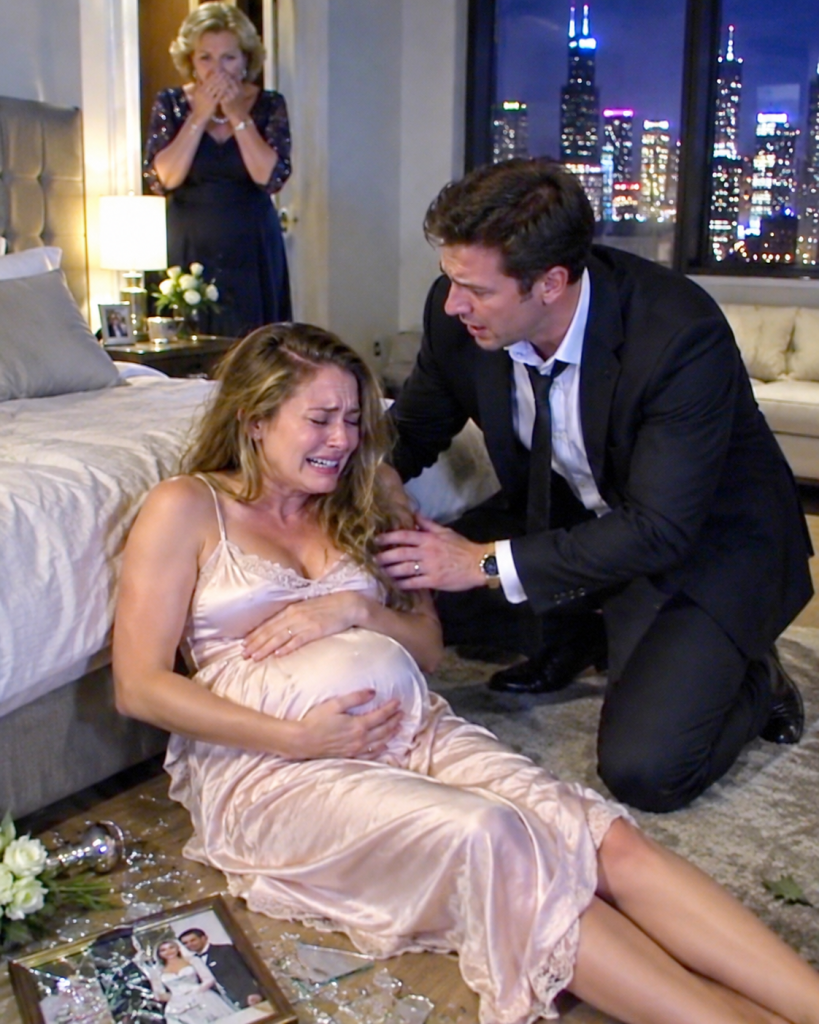
Lily’s lips trembled after she said it. Her hand stayed locked over the swell of our baby, as if she were trying to hold him inside by force of love alone. Her eyes kept drifting toward the doorway, not toward me, as if she expected my mother to step out of the hallway and finish whatever she had started.
PART 3 — The Doctor Wearing My Father’s Ring
Dr. Victor Hale stepped into the hallway as if he belonged inside my nightmare.
His white coat was buttoned neatly. His hair was silver at the temples. His eyes were calm, almost bored.
But on his right hand, catching the fluorescent hospital light, was my father’s missing signet ring.
The same ring that had been absent from my father’s casket three years ago.
The same ring my mother claimed had been “lost by the funeral home.”
My chest hollowed.
“Where did you get that?” I asked.
Hale glanced down, then curled his fingers into a fist.
Margaret moved first.
“Victor,” she said sharply. “Go back.”
That was when I knew.
Not suspected.
Knew.
Hale looked past me toward the operating doors, where Lily’s monitor was still screaming.
“I was called for a consult,” he said. “Your wife is in distress.”
I stepped into his path.
“You are not touching her.”
His expression didn’t change, but something cold flickered beneath it.
“Adam, this is not the time for emotion.”
“No,” I whispered. “This is the first time in my life I’m seeing clearly.”
The officer beside me shifted. “Doctor, we need you to remain here.”
Hale smiled faintly. “A pregnant woman is hemorrhaging behind those doors. Are you going to stop a specialist from helping her?”
For half a second, fear nearly made me move.
Then a woman’s voice cut through the hallway.
“He is not on my team.”
A doctor in blue scrubs strode toward us, her mask hanging loose at her throat. Her badge read Dr. Elena Morris, Obstetrics.
She looked at Hale with open disgust.
“Security,” she said. “Remove him from this floor.”
Hale’s face tightened.
Margaret grabbed my sleeve. “Adam, don’t be stupid. Lily needs—”
I ripped away from her.
“Lily needed me before you broke into my home.”
Her eyes sharpened, and for the first time, the wounded mother disappeared.
Underneath was something harder.
Something that had been wearing pearls my entire life.
Dr. Morris pointed at me. “You. Husband?”
I nodded.
“She’s asking for you.”
I ran.
The operating room was too bright, too white, too loud. Lily lay beneath layers of surgical drapes, her face turned toward me, lips pale, lashes wet.
I took her hand.
“I’m here,” I said, though I hated myself for how late that was.
Her fingers closed weakly around mine.
“Adam,” she breathed. “He wanted to make it look natural.”
“I know.”
“No,” she whispered. “You don’t.”
Dr. Morris spoke from beyond the curtain. “We have to deliver now.”
The room moved around us in urgent, practiced motion.
Lily’s eyes found mine.
“Promise me,” she said.
“Anything.”
“If he cries… don’t let them say he didn’t.”
I didn’t understand until seconds later.
Until the smallest sound in the world tore through that room.
A cry.
Thin.
Furious.
Alive.
My knees almost gave out.
Dr. Morris lifted our son for one shining second before the neonatal team took him.
“He’s breathing,” she said clearly. “Time of birth, 11:42 p.m.”
I sobbed once, silently, my forehead pressed to Lily’s hand.
Then someone behind the curtain said, “Wait.”
The room changed.
A nurse looked up sharply.
Dr. Morris’s voice turned stunned.
“There’s another heartbeat.”
Lily’s eyes opened wider.
“What?”
Another minute passed. Maybe two. Maybe a lifetime.
Then a second cry rose into the air.
Smaller than the first.
But there.
A daughter.
Dr. Morris laughed once under her breath, like even she could not believe it.
“Twin B, female. Time of birth, 11:44 p.m.”
Lily stared at me, tears slipping into her hair.
“We didn’t know,” she whispered.
I leaned over her, shaking.
“Margaret didn’t know either.”
And for the first time that night, through fear and blood and betrayal, something bright entered the room.
My children had survived the woman who wanted them erased.
PART 4 — The Children Who Had to Breathe
They placed my son and daughter in the NICU under warm lights, their tiny chests rising and falling beneath clear plastic.
The nurse asked for names.
I looked through the glass at them, both impossibly small, both fighting with the stubbornness of people who had already survived a war before their first sunrise.
“Noah,” I said, touching the glass above my son.
Lily, barely awake in recovery, whispered the second name.
“Grace.”
So they became Noah Thomas Carter and Grace Lily Carter.
A flood of paperwork followed.
Birth certificates.
Medical forms.
Police statements.
Trust documents.
The firstborn clause.
My attorney, Daniel Reeves, arrived with his tie crooked and his face pale. He had been my father’s junior counsel once, before Margaret drove him out.
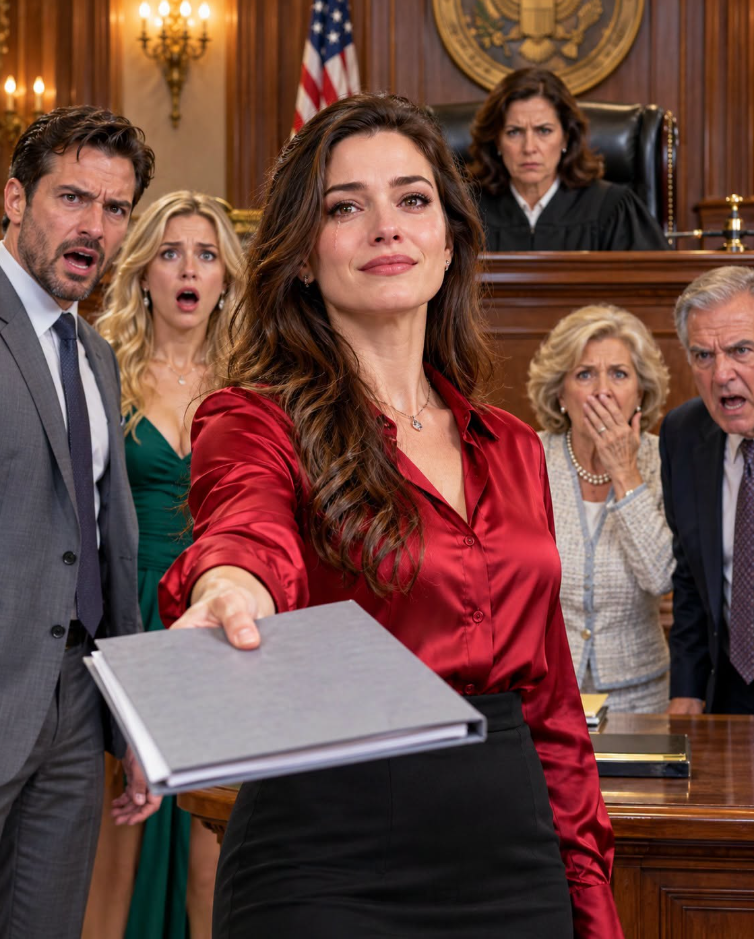
He read the page Lily had hidden in her folder again and again.
“If Adam’s firstborn child is born alive, Margaret Carter loses all control of the family estate.”
He looked up.
“Noah’s cry was witnessed by six medical professionals.”
The words should have brought relief.
Instead, they brought war.
Margaret had not left.
She stood at the far end of the hallway, flanked by two attorneys now, her cream coat unbuttoned, her pearls glowing under the hospital lights like small white teeth.
When she saw me coming, she lifted her chin.
“You don’t understand what you’re doing.”
“I’m saving my family.”
She smiled without warmth.
“Lily is not your family. She is a girl who married into a name she never deserved.”
“She is the mother of my children.”
Margaret’s eyes flicked toward the NICU.
For a moment, her face broke.
Not with tenderness.
With calculation.
“Children,” she said softly. “How inconvenient.”
I stepped closer.
“Why did Dad write that clause?”
Her mouth tightened.
“Your father was sick.”
“My father was dead.”
She did not answer.
That silence was a door cracking open.
Daniel joined me, holding another page from Lily’s emergency folder.
“This was removed from the packet before Lily reached surgery,” he said quietly. “There are indentations on the paper beneath it. Something was on top.”
“What?”
“A photograph, maybe. Or an envelope.”
Lily remembered before dawn.
She woke with tubes in her arm and terror in her eyes.
“The blue envelope,” she whispered.
I leaned close. “What was in it?”
Her lips trembled.
“A room number.”
“Where?”
She turned her face toward me.
“St. Catherine’s.”
The name hit like a blade.
I thought of the vial beneath our bed.
Hale’s hospital.
The place Lily told me not to take her.
“What room?”
“Seven eighteen.”
My skin chilled.
Lily swallowed painfully. “Adam, I went there two weeks ago. I followed the payments.”
“What payments?”
“Your father’s estate account. There were monthly transfers buried under medical equipment charges. Same amount. Same date. Always to a private ward at St. Catherine’s.”
I stared at her.
“My father’s estate?”
She nodded, tears spilling.
“I thought Margaret was stealing. I wanted proof before telling you because I knew you’d ask her first.” Her voice cracked. “Then I found him.”
The monitor beside her clicked steadily.
I could barely breathe.
“Found who?”
Lily’s eyes held mine.
“Your father.”
The room went silent.
Somewhere outside, a baby cried.
Lily whispered, “Adam… Thomas Carter is alive.”
PART 5 — Room 718 at St. Catherine’s
I had buried my father on a rainy Thursday.
I remembered the mud on my shoes.
The closed casket.
Margaret’s gloved hand gripping my shoulder while she told me to be strong.
I remembered grieving a man who had smelled of cedar and old books, a man who used to carry me through the snow on his back and call me “my brave boy.”
Now Lily was telling me he had been breathing inside a locked ward while I mourned him.
Detective Alvarez drove me to St. Catherine’s before sunrise.
Daniel followed in his own car.
I watched Chicago blur outside the window, gray and wet, and all I could hear was my mother’s voice.
Women have secrets, Adam.
She had been right.
But she had never warned me that the darkest secrets belonged to her.
St. Catherine’s looked holy from the outside, all stone walls and stained glass. Inside, it smelled of disinfectant and money.
We went straight to the seventh floor.
The elevator opened into a private wing with no nurses at the desk.
No visitors.
No sound.
Alvarez showed her badge to the only orderly present.
“Room 718.”
His face changed.
“Someone called ahead,” he said.
My pulse slammed.
“Who?”
He swallowed. “Mrs. Carter.”
I ran before anyone could stop me.
Room 718 was at the end of the hall.
The door was open.
The bed was empty.
For one terrible second, the world vanished beneath my feet.
Then I saw the IV pole still rocking.
A blanket on the floor.
A smear of fresh antiseptic across the metal rail.
Alvarez cursed and called it in.
I turned in a circle, trying not to panic.
Then I heard it.
A faint tapping.
Not from the room.
From the bathroom.
I pushed the door open.
An old man sat slumped in a wheelchair, covered with a hospital sheet. His face was thinner than memory, his hair white, his body frail.
But the eyes were the same.
Blue-gray.
Steady.
Alive.
My father looked at me.
And blinked once.
My throat closed.
“Dad?”
His mouth trembled. No sound came out.
I dropped to my knees in front of him.
For three years, every word I had wanted to say crashed into me at once.
I’m sorry.
I missed you.
I believed her.
I left you here.
His hand twitched on the armrest. His fingers moved slowly, painfully, toward mine.
I took them.
They were warm.
The dead do not have warm hands.
Behind me, Daniel whispered, “My God.”
Alvarez found a medical chart tucked behind the toilet tank.
Patient name: Arthur Gray.
Diagnosis: post-stroke aphasia, heavy sedation schedule.
Primary physician: Dr. Victor Hale.
Legal guardian: Margaret Carter.
I read the page until the letters blurred.
My father was not dead.
He had been hidden.
Silenced.
Medicated.
And my mother had built an empire on his grave.
Dad’s fingers tightened weakly around mine.
He began tapping.
Three taps.
Pause.
Three taps.
Pause.
Daniel leaned down, listening.
“It’s Morse code,” he said.
My father’s eyes filled with tears.
Daniel translated slowly.
“S… A… F… E.”
“Safe?” I asked.
Dad blinked twice.
No.
He tapped again.
Daniel’s face went pale.
“Safe… behind… lion.”
I knew immediately.
The bronze lion in my father’s study.
The one Margaret hated because it had belonged to his grandfather.
The one she once told me was ugly enough to melt.
My father had hidden something.
Alvarez called for backup to secure him.
But before she finished, the overhead speakers crackled.
A calm female voice announced, “Code Silver, seventh floor.”
A hospital security alert.
Then the elevator dinged.
Margaret stepped out with Dr. Hale beside her.
Hale no longer wore the signet ring.
Margaret looked at my father in the wheelchair.
Then at me.
For the first time in my life, I saw fear in my mother’s eyes.
Not sadness.
Not guilt.
Fear.
“You should have let him stay dead,” she said.
PART 6 — The Dead Man Who Opened His Eyes
Detective Alvarez drew her weapon.
“Margaret Carter, stop where you are.”
Margaret did stop.
But she smiled.
“My husband is a very ill man. My son is emotional. His wife has just given birth under traumatic circumstances. I suggest everyone breathe before making accusations that will embarrass this hospital.”
Hale lifted a document.
“I have guardianship authority.”
Daniel snatched it from his hand and scanned the page.
“This was signed after Thomas Carter’s legal death.”
Hale’s jaw tightened.
Daniel looked at Alvarez.
“It’s either fraud or a miracle.”
Margaret’s smile thinned.
My father made a sound then.
Not a word.
A torn, rusty breath.
Every head turned.
He was staring at Margaret.
His fingers clawed at the sheet.
His mouth worked.
For one moment, the entire wing seemed to lean toward him.
Then my father forced out one word.
“Liar.”
It was barely human.
Barely sound.
But it was enough.
Margaret went white.
Hale moved suddenly, reaching into his coat.
Alvarez was faster.
“Hands!”
A small syringe clattered from Hale’s fingers onto the floor.
The sound was tiny.
The meaning was enormous.
Alvarez kicked it away and cuffed him against the wall.
Hale finally lost his calm.
“You have no idea what she made me do,” he snapped.
Margaret’s eyes sliced toward him.
“Victor.”
He laughed once, bitterly.
“No. I gave up my career, my name, my life for your promises.”
My stomach turned.
Promises.
My mother and my father’s doctor.
A private ward.
A false death.
A stolen ring.
A drug beneath my bed.
Hale looked at me with sudden hatred.
“She said Thomas would ruin everything. She said the estate belonged to her. Then your wife came snooping around with that belly and those questions.”
Margaret said nothing.
Nothing at all.
That silence was worse than denial.
Alvarez read Margaret her rights while another officer secured Hale.
I expected my mother to scream.
She didn’t.
She looked only at me.
“You were always too much like him,” she said. “Soft where you needed to be sharp.”
I held my father’s hand and thought of Lily bleeding in the dark.
Of Noah’s first cry.
Of Grace’s second.
“No,” I said. “I was too much like you. For sixty seconds, I doubted my wife because you taught me to.”
That struck her harder than any accusation.
Back at the Carter mansion, police opened the study under Daniel’s supervision.
The bronze lion sat on the shelf, green-black with age.
Behind it was a steel panel.
Inside the panel was a small fireproof safe.
My father, barely strong enough to sit upright, gave us the code by tapping it into my palm.
Lily’s birthday.
I almost broke when I realized why.
He had trusted her before I did.
Inside the safe were three things.
A video drive.
A signed trust amendment.
And my father’s signet ring.
The real one.
The ring Hale had worn was a duplicate.
A trophy.
A message.
A lie.
Daniel played the video on my father’s old laptop.
Thomas Carter appeared on the screen, healthier, younger, sitting in the same study.
“If you are watching this,” he said, “then Margaret has succeeded in making the world believe I am gone.”
My legs weakened.
His recorded eyes seemed to look straight through me.
“Adam, my son, I am sorry. I stayed too long in a marriage built on fear. I thought I could protect you by enduring her. I was wrong.”
Lily, pale in her hospital bed on a video call, covered her mouth.
My father continued.
“If your child is born alive, Margaret’s control ends immediately. I wrote it that way because new life has a way of forcing old rot into the light.”
Then he smiled faintly.
“And if Lily is the one who finds this, believe her.”
The room blurred.
Lily whispered through the phone, “Adam.”
I couldn’t answer.
All I could do was bow my head while the truth finally entered my life whole.
My wife had been fighting for my family while I was letting my mother teach me how to suspect her.
PART 7 — Margaret Carter’s Last Lie
Margaret did not surrender easily.
People like her never do.
By noon, her attorneys filed motions claiming Thomas Carter was mentally incompetent, Lily was unstable, the twins’ birth was medically questionable, and I had been manipulated by grief.
By sunset, every news station in Chicago had a version of the story.
Some called it the Carter resurrection.
Others called it the mansion conspiracy.
But in the hospital room where Lily recovered, none of that mattered.
Noah and Grace were still in the NICU.
My father was two floors below, guarded by police.
And Lily would not let go of my hand.
“You believed me,” she said.
I looked down.
“Too late.”
“But you did.”
I shook my head. “For a minute, I didn’t.”
Her thumb moved across my knuckles.
“A minute can ruin a life,” she said softly. “But so can what you do after it.”
I did not deserve the mercy in her voice.
But I held onto it like a drowning man.
The emergency guardianship hearing happened three days later in a hospital conference room because my father could not yet travel.
Margaret arrived in black.
No pearls.
No cream coat.
Just black from throat to wrist, as though she had dressed for someone’s funeral and not yet decided whose.
She looked at the twins’ incubators through the glass before entering.
For one moment, her face softened.
Then Grace moved, one tiny hand opening against the blanket.
Margaret turned away.
Inside the conference room, her attorney argued beautifully.
He spoke of confusion, trauma, medication, family disputes, forged documents.
He made poison sound like paperwork.
Then Daniel stood.
He did not shout.
He did not perform.
He placed the evidence on the table one piece at a time.
The prescription vial.
The falsified death certificate.
The private ward payments.
The video.
The safe documents.
The syringe from Hale’s coat.
The medical chart for Arthur Gray.
And finally, the recording from our apartment security system.
I had forgotten about it.
The little camera by the entry shelf, installed after a package theft months earlier.
It had captured no image from the bedroom.
But it had captured sound from the hallway.
Margaret’s voice filled the room.
Calm.
Elegant.
Cruel.
“You should have taken my offer, Lily.”
Lily’s voice, weak but steady: “This baby is Adam’s.”
Margaret: “That baby is a key. And I will not let a key open a door I locked three years ago.”
Then Hale’s voice: “Hold her still.”
I closed my eyes.
Lily did not.
She watched Margaret across the table.
For the first time, my wife did not look afraid of her.
The judge’s expression hardened.
Margaret’s attorney stopped taking notes.
Then my father asked to speak.
A nurse helped lift him slightly in his chair.
The room went still.
His voice came slowly, each word dragged from a damaged place.
But each one landed like stone.
“Margaret… wanted… empire.”
Margaret stared at him.
He looked back.
Not with rage.
Not even hatred.
With the exhaustion of a man who had finally reached the end of pretending.
“She… buried… me… breathing.”
Margaret flinched.
That was the moment she lost.
Not legally.
Not publicly.
Something deeper.
The story she had told herself collapsed in her eyes.
The judge granted emergency control of the estate to an independent trustee pending criminal trial. Margaret’s assets were frozen. Hale was remanded. My father’s legal death was suspended.
And the Carter empire, which had always seemed carved from marble, began to crack like thin ice.
As officers escorted Margaret out, she stopped beside me.
For a second, I smelled her perfume, the same soft floral scent from my childhood.
“You’ll regret choosing them,” she said.
I looked through the glass at Noah and Grace.
Then at Lily.
Then at my father.
“No,” I said. “I regret not choosing them sooner.”
Margaret’s face emptied.
And then she was gone.
PART 8 — The Cry That Ended the Carter Curse
Six months later, I brought Lily home again.
Not to the apartment.
We never went back there except once, with movers and police present, while sunlight poured across the place where I had found her bleeding.
The wedding photo had been repaired.
Not perfectly.
A thin crack still ran across the silver frame.
Lily kept it anyway.
“Some things don’t need to look untouched,” she said. “They just need to survive.”
We moved into my father’s old lake house north of the city, the only place Margaret had always disliked because it was too quiet for performance.
Noah came home first.
Grace followed two weeks later, smaller but louder, as if offended anyone had doubted her.
At night, Lily and I took turns walking the floor with them.
Sometimes I would find her standing by the window, one baby against her shoulder, watching the trees move in the dark.
The first time I woke and she wasn’t beside me, panic tore through me.
I ran downstairs.
She was in the rocking chair, Grace sleeping against her chest, Noah curled in the bassinet nearby.
“I’m here,” she whispered before I could speak.
I fell to my knees in front of her and pressed my forehead to her lap.
“I know,” I said. “I know.”
My father recovered slowly.
Some words returned.
Some never did.
But he held Noah and Grace with the reverence of a man touching proof that the world had not ended after all.
One spring morning, he asked me to wheel him to the dock.
The lake was silver under the sunrise.
For a long time, he said nothing.
Then he reached into his coat and handed me the real signet ring.
“I don’t want it,” I said.
His mouth curved.
“Good.”
I stared at him.
He nodded toward the water.
“Then… make it… mean… something else.”
So I did.
The Carter estate was dismantled piece by piece.
The companies stayed open, but Margaret’s private empire vanished. The hidden money went into a foundation Lily named The First Breath Fund, paying emergency medical bills for pregnant women with nowhere safe to turn.
Daniel said it was the largest transfer of private family wealth he had ever seen without a fight from the heir.
But I wasn’t giving anything away.
I was returning what fear had stolen.
Margaret’s trial took nearly a year.
Hale testified against her.
Margaret never testified at all.
She sat at the defense table like a queen forced to watch her crown melt.
When the verdict came, Lily held my hand.
Guilty.
On every count that mattered.
Margaret did not look at me when they led her away.
She looked at Lily.
And Lily, with Noah asleep in her arms and Grace tugging at my collar, did not lower her eyes.
That was the last time we saw Margaret Carter.
The ending people expected was revenge.
They wanted shouting.
A ruined mansion.
A son spitting on his mother’s name.
But life gave us something stranger.
Something softer.
On the twins’ first birthday, my father stood.
Only for seven seconds.
Only with both hands gripping the table.
But he stood.
Noah slapped frosting across his high chair.
Grace screamed with delight.
Lily burst into tears.
And my father, shaking but upright, looked at all of us and said the clearest sentence he had spoken since we found him.
“Now we are home.”
I thought that was the surprise.
I was wrong.
That night, after the guests left and the lake house settled into quiet, Lily handed me a small wrapped box.
Inside was the repaired wedding photo.
Behind it, tucked into the frame, was a new picture.
Noah and Grace in my father’s lap.
Lily beside them.
Me behind her, my hand on her shoulder.
A family I had almost failed before I even understood it was under attack.
On the back, Lily had written:
The night you came home early, everything broke.
But broken things let the truth in.
I couldn’t speak.
She touched my face.
“I need to tell you something,” she said.
Fear sparked out of old habit.
She smiled through tears.
“Not that kind of secret.”
Then she placed my hand over her stomach.
For a moment, I did not understand.
Then I did.
My heart stopped.
Started again.
“Lily…”
She nodded.
“One baby this time,” she said. “Dr. Morris checked twice.”
I laughed, and it came out broken.
Noah stirred in his crib.
Grace sighed in her sleep.
My father’s old house creaked gently around us, warm with breathing.
I thought of the dark apartment.
The backward nightgown.
The blood on our wedding photo.
My mother’s voice whispering suspicion into my bones.
Then I looked at my wife, alive in front of me, her eyes bright with the impossible future.
And I understood something I had not known when the story began.
A family is not saved by blood.
Not by money.
Not by names carved into stone.
A family is saved in the moment someone chooses trust over fear.
I had come home early expecting to surprise my wife.
Instead, I found the truth waiting in the dark.
And in the end, the child Margaret tried to stop became two.
Then three.
And every cry that filled our house after that sounded like a door unlocking.
Not the door to an empire.
The door to a life finally free.