PART 1: THE BOX MY DAUGHTER LEFT BEHIND
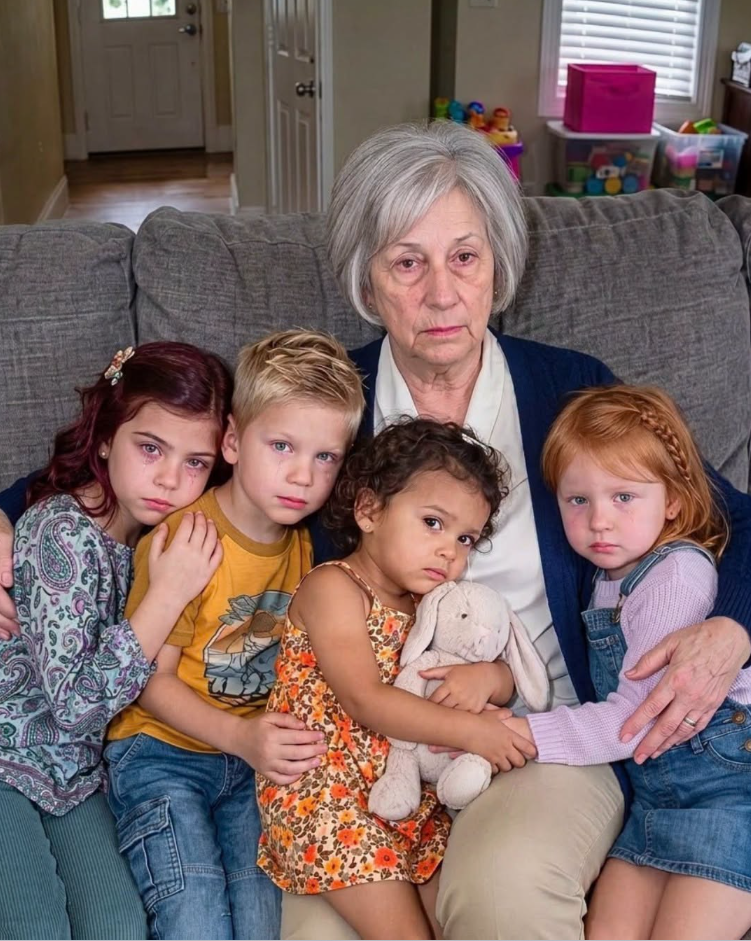
My name is Carolyn, and at seventy-one, I believed the most difficult years of my life were behind me. Then my daughter Darla and her husband boarded a plane for a work trip, leaving their four children with me for the weekend, and the aircraft crashed before they could return.
It was the kind of lie people tell when the truth is too painful for a child to absorb all at once. I hated saying it, but watching Rosie break hurt even more.
The first weeks were unbearable. Lily hardly ate, Ben started wetting the bed again, and all four children cried through the nights while I moved from room to room comforting them despite having no comfort left for myself.
My pension could not support five people, so I went back to work. At seventy-one, I found a job at a diner on Route 9, wiping tables and taking orders during the day, then knitting scarves and hats at night to sell at weekend markets.
Gradually, we established a routine. I took the older children to school, brought Rosie to daycare, worked until early afternoon, picked everyone up, prepared dinner, helped with homework, and read bedtime stories until exhaustion finally quieted the house.
Six months went by like that.
Then one morning, after dropping the children off, I realized I had forgotten my purse at home. When I pulled into the driveway, a delivery truck was waiting outside, and three men were struggling to carry a package nearly as large as a refrigerator.
“Are you Carolyn?”
“Yes.”
“We have a delivery for you. It’s very large and very heavy.”
The package was covered in brown paper, with only four words written on the label.
“To My Mom.”
I recognized the handwriting instantly.
Darla’s.
My hands were already shaking before I opened it.
Inside, resting above everything else, was a sealed envelope with my name written across it. The letter had been dated three weeks before Darla died.
“Mom, I know you’re probably confused right now. But if this box has been delivered to you, it means I’m no longer alive.”
I stopped reading for several minutes. Seeing those words in my daughter’s handwriting made her death feel painfully fresh. Eventually, I forced myself to continue.
“There are things you never knew about me. I have to tell you the truth. You’ll understand everything once you open the package.”
Beneath the letter were dozens of smaller boxes, each carefully marked for a future milestone. One was labeled for Lily’s tenth birthday, another for Ben’s first day of middle school, another for Molly learning to ride a bike, and another for Rosie’s fifth birthday.
There were presents for birthdays, graduations, first dances, and moments my daughter already knew she would never live to witness.
At the very bottom was another envelope.
“Mom, I’m sorry I didn’t tell you sooner. I wanted to protect something. Please visit this address. He’ll explain everything.”
I stared at the unfamiliar address for a long time.
Until that morning, I had believed the plane crash had taken my daughter without warning.
Now I was beginning to realize that Darla had been preparing for her death long before she ever boarded that plane.
PART 2: THE SECRET MY DAUGHTER TOOK TO HER GRAVE
The address in Darla’s letter took me two hours away to a modest house on a quiet street. A man in his late thirties answered the door, and when I introduced myself as Darla’s mother, his expression shifted from confusion to recognition.
“My name is Carolyn. I received a package from my daughter with this address inside.”
“Carolyn? Yes. Please come in. I’ve been expecting you.”
His name was William, and he told me he had been Darla’s doctor. I expected him to explain something about the children or the strange collection of milestone gifts, but what he told me instead made the room suddenly feel too small.
“Your daughter was diagnosed with stage four cancer about a year ago. It was aggressive. She was told she had less than a year.”
I stared at him in disbelief. Darla had never told me she was sick. She had continued raising four children, planning birthdays, making calls, and living as though she still had time.
“Why didn’t she tell me?”
“She wanted to. But she said you had already survived too much. She didn’t want you watching her disappear.”
William explained that Darla had spent months purchasing gifts for every milestone she expected to miss. She had arranged for the enormous package to arrive shortly before Lily’s birthday because she believed I would be the one person who could give those pieces of her back to the children at the right moments.
Then he handed me a small box containing a delicate gold locket. When I opened it, I found a photograph of the four children wrapped around me during a summer trip to the lake, a picture Darla had taken herself and chosen as something she wanted me to keep after she was gone.
I finally broke down. After several minutes, I asked the question that had troubled me since opening her letter.
“Did her husband know?”
William hesitated.
“No. Darla never told him about the cancer. She was planning to divorce him when they returned from the trip.”
That answer opened another wound.
“Why?”
William shook his head.
“That part wasn’t mine to tell.”
I drove home with the locket against my chest and countless questions following me. If Darla had planned to leave her husband, why had she boarded a plane with him, and why had she trusted me with the package instead of the father of her children?
At the bottom of her letter, I noticed a sentence I had missed the first time.
“It’s better for some truths to remain buried. Take care of the kids, Mom.”
That night, I barely slept. The following evening, while tucking Molly into bed, her drawing book slipped from her hands and fell open. Inside was a picture of four children, two adults labeled Mommy and Daddy, and another woman standing beside them.
Above that woman, Molly had written two words.
Mommy 2.
“Sweetheart, who is Mommy 2?” Molly answered as casually as though I had asked her about a cartoon character.
“That’s the lady who used to come over when Mommy was at work.”
“What lady?”
“The one Daddy would hug.”
My stomach tightened.
“Did Mommy know?”
“I don’t know. But one day Mommy yelled, and the lady didn’t come back anymore.”
Over the next two days, I quietly asked around. A neighbor remembered a woman named Jessica who had spent considerable time at Darla’s house. When I finally found her, she admitted the truth.
“It started after I’d been working for them for about a year. It lasted six months. Darla found us together and fired me.”
“Did he love you?”
Jessica looked away.
“I don’t know. I think he was lonely.”
“He had a wife and four children. He wasn’t lonely. He was selfish.”
I left before she could say anything else. Finally, part of Darla’s secret made sense: she had been dying while discovering that the man she married was betraying her, and instead of telling her children, she chose to protect the way they remembered their father.
I decided to respect that choice. But I still couldn’t understand why Darla had written that some truths were better buried. I would soon discover that the affair was only the smallest part of what she had been hiding.
PART 3: THE TRUTH HIDDEN IN BOX 402
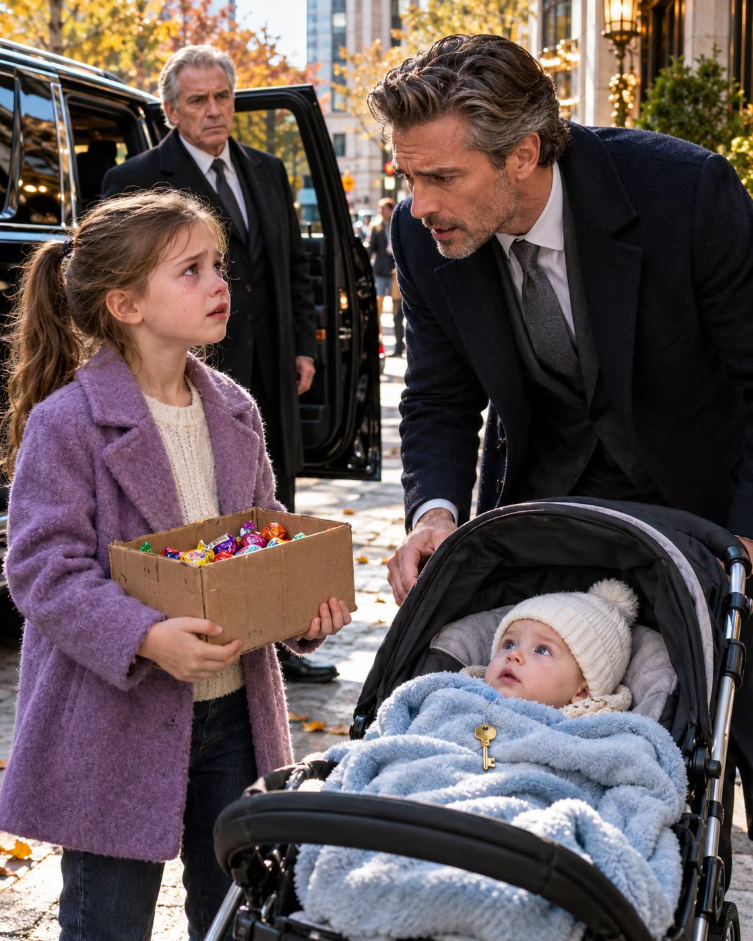
A week after Lily’s tenth birthday, I went back to the enormous shipping crate and noticed something taped beneath the bottom panel. Inside a small velvet pouch were a gold key and a note written in Darla’s handwriting.
“Bank of Ohio. Box 402. For the rainy day that never ends.”
I drove to the bank the next morning, my heart pounding harder than it should have at seventy-one. When the attendant placed the metal safe-deposit drawer before me, I found insurance policies, financial records, and a thick black USB drive beneath the folders.
I waited until all four children were asleep before connecting it to my laptop. The first file showed Darla sitting inside a car, visibly thinner than I remembered, with exhaustion etched across her face from the cancer she had kept hidden.
“Mom, if you’re watching this, it means I didn’t make it to the hearing. I stayed for the kids as long as I could, but I found out what David was doing. It wasn’t just Jessica. It wasn’t just an affair.”
I leaned closer as Darla explained that her husband had been draining the children’s college funds. He had accumulated enormous gambling and investment debts, and she believed he was preparing to transfer whatever money remained into an offshore account.
“That business trip we’re supposed to take? There is no meeting. He doesn’t know I know. I’m going with him because I need to stop him before he takes the last of the money.”
My stomach twisted. That was the trip they never came home from.
Darla paused before adding something that turned my grief into fear.
“If something happens, if the accident he’s been hinting at actually happens, look at the second file. Don’t let him win, even from the grave.”
The second file contained a secret life-insurance policy Darla had purchased about a year earlier. She had named me as the primary beneficiary and the children as successors, protecting two million dollars from David’s control.
Another clause changed everything.
If Darla’s death resulted from criminal activity, the policy would pay triple.
I immediately thought about the official explanation for the plane crash: mechanical failure followed by an engine fire. Until that moment, I had never questioned it.
Now I could hear Darla’s warning again.
“The accident he’s been hinting at.”
For the next forty-eight hours, I barely slept and made call after call. William eventually admitted that Darla had been afraid of her husband for months.
“She thought he might sabotage their car or do something desperate after discovering she moved the remaining assets into a trust you controlled.”
“Why didn’t you stop her from getting on that plane?”
“I tried. She believed she could confront him before he moved the money.”
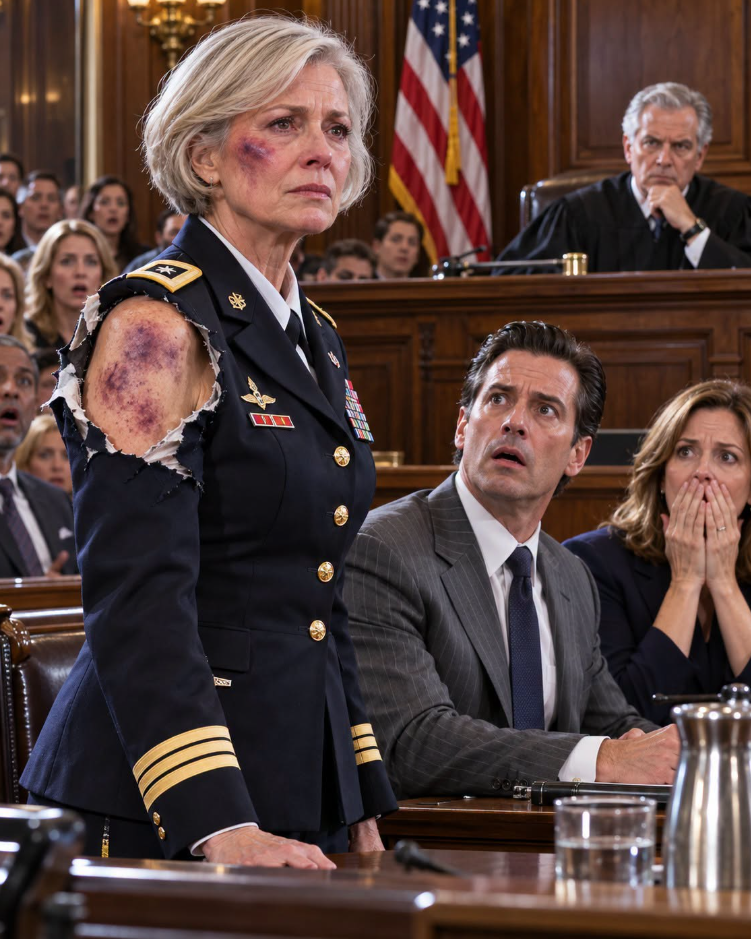
I took Darla’s video and financial records to the investigators handling the crash. At first, they treated me like a grieving grandmother searching for an explanation that might make an unbearable loss easier to understand.
I refused to leave.
“Re-examine the cockpit voice recorder. Listen to everything before the fire.”
Three weeks later, an investigator called me back.
His voice had completely changed.
“Mrs. Miller, we performed a filtered review of the final minutes. There appears to have been a struggle in the cabin before the fire.”
Then he told me investigators had discovered evidence suggesting a small incendiary device had been triggered in the luggage hold.
The crash might not have been mechanical at all.
Over the next moments, the terrible possibility became impossible to ignore.
David had not simply betrayed my daughter.
He may have boarded that plane already knowing it would never reach its destination.
PART 4: THE TRUTH I CHOSE TO BURY
Three weeks after I demanded that investigators reopen the evidence, the call finally came. The investigator who had once treated me like an overwhelmed grandmother now spoke carefully, as though every word carried enormous weight.
“Mrs. Miller, we performed a filtered playback of the final four minutes of the flight. There was a struggle in the cabin, and a flight attendant reported someone attempting to reach the cockpit.”
I tightened my grip around the phone.
“What caused the fire?”
“A small incendiary device appears to have been triggered in the luggage hold. It was designed to create a slow-burning fire, but the aircraft could not reach an airfield in time.”
I sat down because my legs suddenly refused to support me. The crash that had taken my daughter, her husband, and more than a hundred other people had not been a random mechanical tragedy after all.
Investigators believed David had been desperate because of his enormous debts and the money Darla had quietly moved beyond his control. Their theory was that he expected to survive a controlled emergency or otherwise profit financially from the disaster, never realizing that Darla had already changed the beneficiaries and secured the remaining assets for her children.
He had gambled with an airplane full of lives.
And he had lost everything. That night, I sat by myself in the living room, wearing the gold locket Darla had left behind. Upstairs, the four children slept peacefully while I carried a truth capable of destroying the memory they held of their father.
If the complete findings became public, Lily, Ben, Molly, and Rosie would no longer simply be children who had lost their parents in a tragic crash. They would grow up beneath the shadow of what their father had done.
Yet concealing everything created another problem. Darla’s insurance policy included the criminal-act provision, meaning the children could receive substantially more if investigators formally determined that the crash had resulted from deliberate wrongdoing. That money could pay for Ben’s specialized therapy, Lily’s education, and the future Darla had fought so hard to preserve.
I glanced across the room at the enormous crate.
There were still boxes marked for birthdays, graduations, and milestones that were years away.
Suddenly, I understood Darla’s final request in an entirely different way.
“It’s better for some truths to remain buried. Take care of the kids, Mom.”
She had not been asking me to protect David’s reputation.
She had been asking me to protect her children.
I met with the investigators and the insurance company, and together we found a way to separate the legal truth from the children’s public lives. The official non-public findings recorded evidence of human interference, allowing Darla’s policy to be paid into the protected trust while the most damaging details remained sealed.
The children never saw those reports.
They received therapy, stable schooling, and the financial security their mother had worked so hard to preserve before she died.
Months later, I sat on the porch, watching the life that money had helped protect. Lily practiced violin inside, Ben attended a specialized summer program where he was finally beginning to smile again, and Molly and Rosie played together in the sandbox I had built behind the house.
They believed their father had died in a terrible accident. They believed their mother had somehow known to leave them gifts for the future.
I was the only person in that house carrying the complete truth.
At seventy-one, I had become more than their grandmother and guardian. I had become the keeper of a secret large enough to poison four childhoods if I ever allowed it through the door.
Darla had entrusted me with one final responsibility.
So I buried the truth deeply enough to let her children grow above it. Twelve years passed after the enormous package arrived at my doorstep. I was eighty-three now, walking with a cane through a house Darla’s careful planning had helped secure, while the four children I once feared I could never raise had grown into young adults.
Lily was twenty-one and studying law, carrying the same sharp instinct for justice her mother had possessed. Ben was nineteen and studying architecture, while Molly and Rosie, now seventeen and sixteen, filled the house with school plans, sports trophies, and arguments over borrowed clothes.
Only one package remained.
It had sat untouched in the back of my closet for more than a decade. On the outside, Darla had written one final instruction.
“To My Children: When the Last One Is Grown.”
We gathered around the box in the living room. Rosie, who looked more like Darla with every passing year, glanced at me before Lily opened it.
“Are you ready, Grandma?”
“I’ve been ready for a long time.”
Inside was a tablet and a thick leather-bound book. Lily switched on the tablet, and suddenly Darla appeared on the screen, sitting in a sunlit garden and looking healthier than she had in the secret recording I had watched all those years ago.
“If you’re watching this, it means Grandma did it. She raised you. She protected you. She gave you the childhood I was so afraid would be stolen.”
The four of them leaned closer together as their mother spoke. She never mentioned their father’s debts, the affair, the flight, or the terrible truth I had spent twelve years protecting them from.
Instead, she spoke about them.
She talked about Lily’s sense of justice, Ben’s kindness, Molly’s courage, and Rosie’s joy. Somehow, she had seen pieces of the adults they would become while they were still small enough to fall asleep in her arms.
“I want you to know that the life you’ve had, the safety, the education, the peace, was a gift from two women who loved you more than their own lives. One who had to leave, and one who chose to stay.”
When the video ended, nobody spoke for several moments. Then Lily reached for the leather book and slowly turned through its pages.
“It’s a record.”
She looked at me in confusion.
“These are letters from Grandma to Mom.”
For twelve years, after the children went to bed, I had written to Darla. I told her about Lily’s first dance, Ben’s first goal, Molly’s school performances, Rosie’s endless questions, and how difficult it was to chase children around a house when I was already well into my seventies.
I also told her that I had kept my promise.
“You talked to her all these years?”
Ben’s voice cracked when he asked.
“I needed her to know her babies were okay.”
Lily walked over and knelt beside my chair, taking my aging hands between hers.
“At the law firm, people talk about legacy like it’s money or a building with someone’s name on it. But that isn’t really what it means, is it?”
I shook my head.
“Legacy is the truth you choose to live, not the one you’re forced to endure.”
That evening, the five of us sat together on the porch, just as we had done countless times before. The truth about their father remained inside me, but as I looked at four strong young people who had grown up without carrying his darkness, I no longer experienced the secret only as a burden.
For years, I had imagined myself carrying a stone.
Now I understood it had also been an anchor.
It had kept our family steady long enough for the children to reach shore.
I closed my eyes as the evening breeze moved across my face. At seventy-one, I had believed my life was nearly finished, yet that was when the hardest and most important chapter of it had begun.
I had become a mother again when my daughter could no longer be one. I had protected her children, guarded their future, and opened every gift she had left at exactly the moment she intended.
For the first time in twelve years, I felt as though Darla was standing beside me.
And in the quiet, I could almost hear her voice.
“Well done, Mom. You can rest now.”