The Letter After the Funeral
After the crash, when I was four, my parents died, and I lost the use of my legs. The state wanted to place me in foster care. But my uncle Ray stepped forward.
“I’m taking her,” he told the social workers. “She’s my niece. I won’t hand her to strangers.”
You have to understand—Ray wasn’t just my guardian. For twenty-two years, he was everything to me.
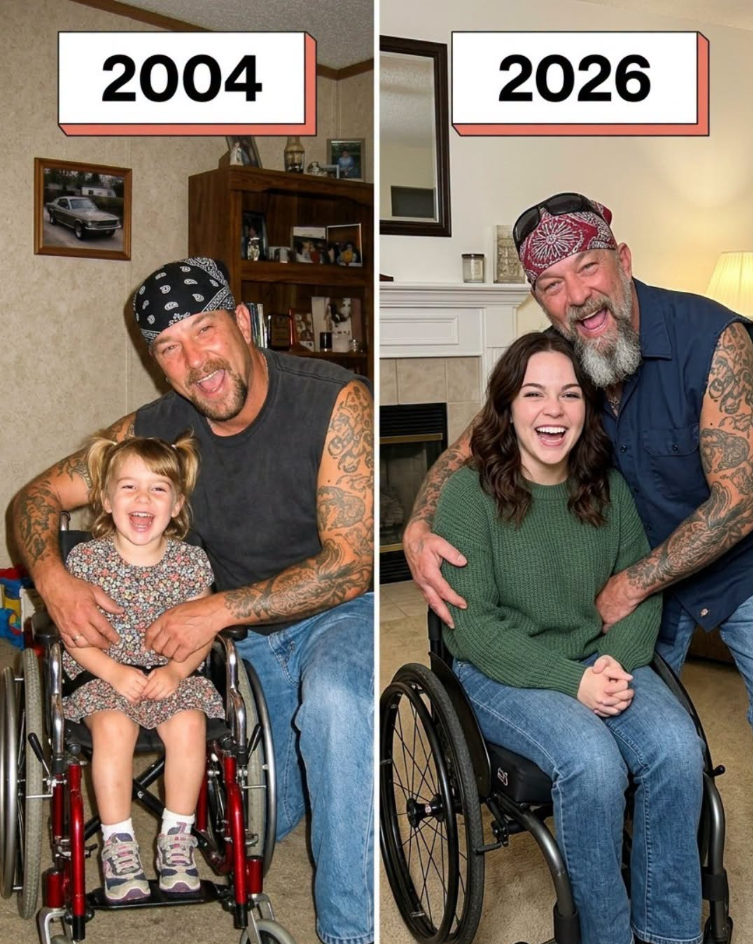
He learned makeup tutorials on YouTube so I could feel beautiful. He pushed my wheelchair through every fair and festival in town, buying me cotton candy and finding accessible rides. When kids stared, he’d stare right back until they looked away.
“You’re perfect exactly as you are,” he’d say whenever I felt different.
Then he got sick.
At first, it was small things like forgetting his keys or needing to pause on the stairs to catch his breath.
Then came the doctors talking quietly in the hallways, the paperwork, and finally hospice care.
And then, just like that, he was gone.
Three days after we lowered his casket, our neighbor came in with red eyes and shaking hands.
“Ray made me promise,” she said, her voice cracking as she pressed an envelope against my palm. “He said to wait until after. He said you’d understand why.”
I ripped it open right there in the doorway.
Hannah, I’VE BEEN LYING TO YOU YOUR WHOLE LIFE. The accident that took your parents — you think you know what happened. But there’s more to the story, and you deserve the truth before I’m gone.
I nearly fell out of my chair before I even got to the second line.
Mrs. Pell—the neighbor who used to bring soup when Ray’s cough got bad—caught the envelope when it slipped. She didn’t try to read it. She only whispered, “He sat at that kitchen table for three nights writing it. He made me swear I wouldn’t give it to you while he was still breathing. He said if you looked at him after you knew, he wouldn’t survive the look.”
I asked her to come inside. My hands were shaking so hard I could barely lock the wheels.
I read the rest aloud, because silence made the words feel like they might vanish.
I have been lying to you your whole life.
The accident that took your parents—you think you know what happened. You think a truck crossed the center line on Route 9 in the rain. That is the story I told the police in the parts that mattered, and the story I told a four-year-old who woke up in a hospital and asked where Mommy and Daddy were.
I was driving.
It was my car. It was my idea to take the back road because the highway was jammed. I looked down to change the radio. Three seconds. Maybe four. When I looked up, the curve was already there. I overcorrected. We went into the guardrail and then into the trees.
Your mother died at the scene. Your father died on the way to the hospital. You lived, and your legs did not work the way they had that morning when you ran to the door in those yellow rain boots.
I walked away with a broken collarbone and a sentence I have been serving ever since.
I told you I was your uncle because that was true enough to put on paper. I am your father’s brother. I told the social workers I would take you because I could not let the last person I loved disappear into a system that would never know how you take your toast or which stuffed animal you needed to sleep. I told you the other driver was at fault because I could not put the truth into a child’s mouth and then ask her to let me braid her hair.
Every fair. Every YouTube tutorial. Every time I stared down a kid who looked at your chair too long—I was not only loving you. I was paying a debt I can never finish.
You deserved a father who kept his eyes on the road. You got me instead. I hope the years were still worth something.
If you hate me now, I will understand. I hated myself first.
I love you. I have always been your family. I was just never brave enough to be your truth.
—Ray
The paper was spotted in places, as if he had stopped and started, as if even dying had not made the sentences easier.
Mrs. Pell was crying without sound. I was not crying yet. Grief had already used up that part of me at the funeral. What I felt was a kind of dropping, like the floor under the chair had become a long elevator shaft.
“He kept the report,” she said. “In the box on the closet shelf. He said if you wanted proof, it was there. He also said you didn’t have to open it. He said love shouldn’t require an exhibit.”
I wheeled into his room.
It still smelled like his soap and the lemon oil he used on the dresser. The box was where she said it would be, under two folded flannel shirts I had bought him last Christmas. Inside: a faded police file, a newspaper clipping with the names blacked out in one copy and left visible in another, a photograph of me at five on his shoulders at the county fair, and a second letter he had never sent.
The official report did not contradict him. Driver: Raymond Cole. Conditions: rain, night, excessive speed for the curve. No alcohol. No other vehicle. A moment of inattention.
Twenty-two years of cotton candy and accessible ramps and you’re perfect exactly as you are had been built on top of four seconds he could not take back.
I sat there until the light in the window changed.
I thought of the man who learned winged eyeliner from a teenager on the internet because I had a dance I wanted to feel pretty for. I thought of the man who slept in hospital chairs during every surgery I had as a kid. I thought of the man who told a social worker, She’s my niece. I won’t hand her to strangers, when the easier thing would have been to disappear into his guilt and let the state do the rest.
The lie was real.
The love was also real.
They did not cancel each other. That was the part no story prepares you for. You want the villain or the saint. You get a man who wrecked a car and then spent the rest of his life refusing to wreck a child.
I called Mrs. Pell back in.
“He asked me to understand why,” I said. “I don’t, not all of it. I understand that he was terrified I would look at him and only see the crash. So he gave me an uncle instead of a confession.”
“What are you going to do?” she asked.
“I’m going to be angry,” I said. “I’m going to be grateful. I’m going to do both in the same hour, probably for years. And I’m not going to pretend the second thing erases the first.”
That night I slept in his recliner because the bedroom still felt like his. In the morning I took the photograph from the fair and set it on the table beside the letter. A little girl in a wheelchair, sugar on her mouth. A man behind her who had already decided that atonement would look like showing up, every day, without asking to be forgiven out loud.
People will want a cleaner ending. They will want me to say I forgive him completely, or that I never will. The truth is slower than that.
He lied about the worst night of my life.
He told the truth about the rest of it: that I was worth staying for, that my body was not a tragedy, that family is sometimes the person who does not walk away when walking away would be easier.
I am twenty-six. My legs still don’t work. My uncle—my father’s brother, the driver, the man who raised me—is gone.
What he left me is not only a letter.
He left me the knowledge that love can be imperfect and still be the thing that saves you, and that courage is not only surviving a crash.
Sometimes courage is reading the sentence you were never meant to read while you were still small, and deciding, anyway, to stand up inside a life you did not choose—
even when standing is something you do from a chair.
He thought he was protecting me.
For a long time I thought he was only raising me.
In the end I understood what the photographs never needed a caption to say: some of the strongest people are not the ones who appear unbroken. They are the ones who stay. They are the ones who learn a makeup tutorial with clumsy hands. They are the ones who push a chair through a crowd and dare the world to look away.
And sometimes they are the ones who tell the truth too late—
and still leave behind enough love that the person in the chair can keep going without them.
Note: This story is a work of fiction inspired by real events. Names, characters, and details have been altered. Any resemblance is coincidental. The author and publisher disclaim accuracy, liability, and responsibility for interpretations or reliance. All images are for illustration purposes only.