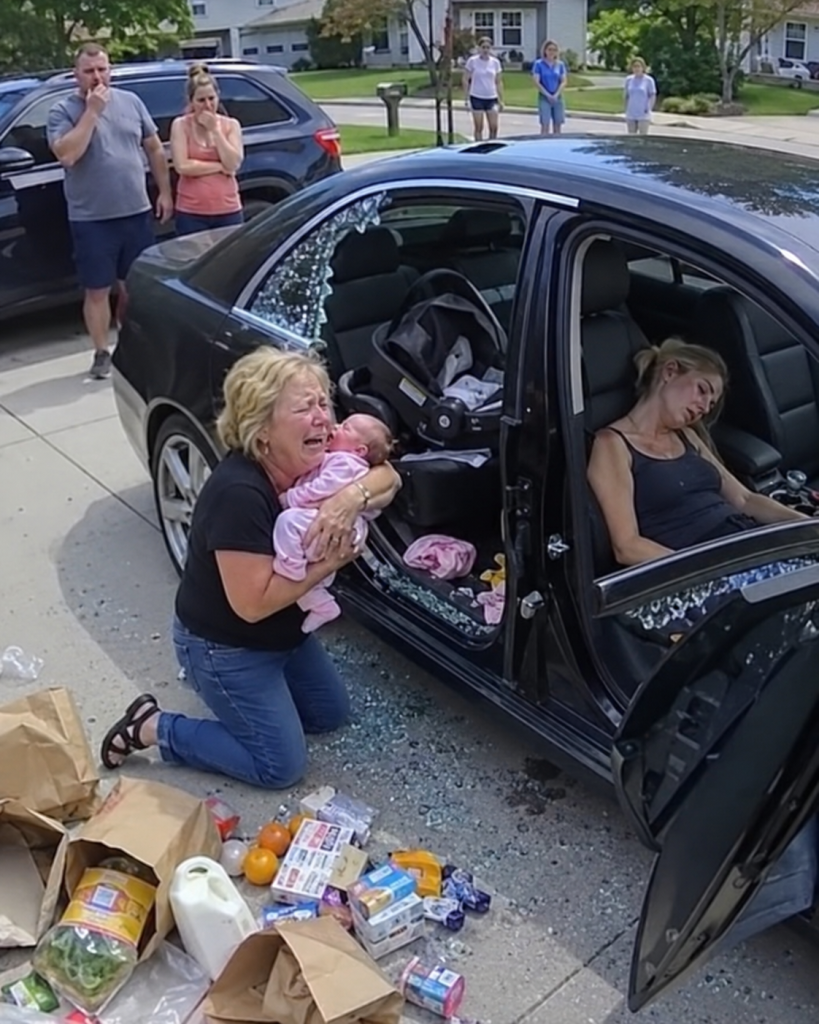
The night my father snapped his belt at my three-year-old daughter, she slipped backward and struck her head against the kitchen tile so hard the entire birthday party went silent. While my husband called 911 and I tried to keep Ava conscious, my mother looked at the blood covering my hands and said, “She deserved it.”
What my family didn’t understand was that I was no longer the frightened daughter they had spent years controlling.
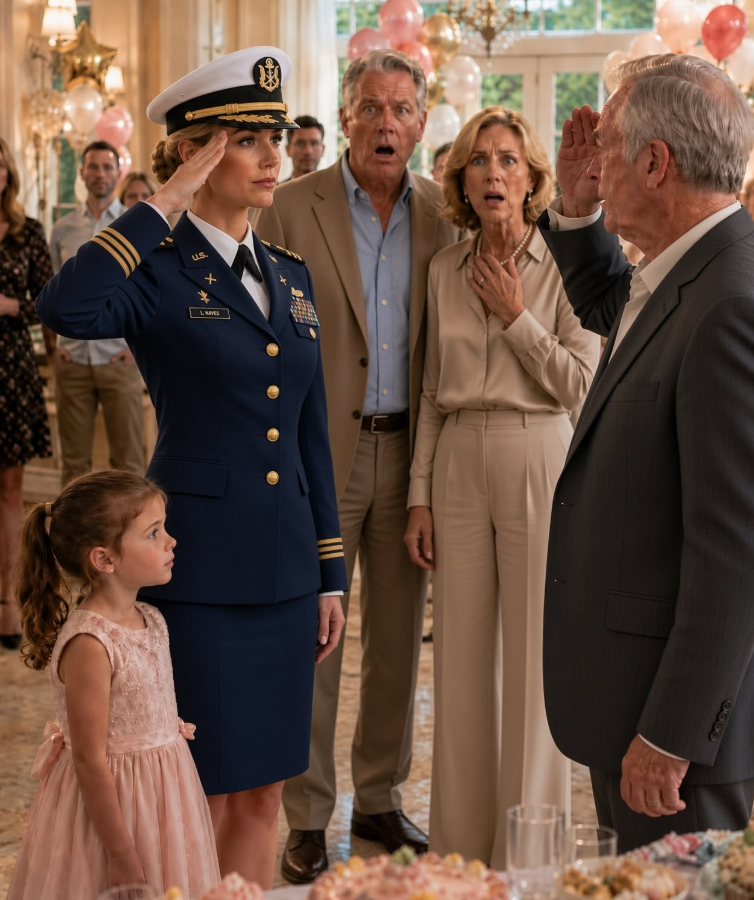
My name is Colonel Katherine Coleman, United States Army.
I had served nearly eighteen years, deployed overseas four times, commanded soldiers in places where decisions had to be made in seconds, and learned how to remain calm while everything around me fell apart.
But nothing prepared me for the sight of my little girl lying unconscious on my parents’ kitchen floor.
Nothing.
“Ava, sweetheart, open your eyes.”
My voice sounded steady.
My hands were not.
Blood soaked through the white dish towel pressed against the back of her head. Her eyelashes rested against cheeks that had gone frighteningly pale, and one small hand lay open beside her as though she had simply fallen asleep.
Behind me, my father still held the belt.
That image would remain burned into my mind forever.
Not the ambulance.
Not the hospital lights.
Not even the blood.
My father standing there with that belt in his hand while my daughter lay motionless at his feet.
“She needs to learn,” he said.
For a moment, I genuinely thought I had misheard him.
I turned slowly.
Robert Coleman had just turned sixty. He was broad-shouldered despite his age, silver beginning to creep through his dark hair, his face flushed from whiskey and anger.
My sister Emily stood beside him with her arms crossed.
“Someone had to teach her respect,” she muttered.
Then my mother came through the doorway.
Margaret looked first at Ava.
Then at the blood.
Then at me.
And without the slightest hesitation, she said, “She deserved it.”
Something inside me stopped shaking.
Not because I became less afraid.
Because fear turned into something colder.
Something clearer.
The old Katherine would have begged them to understand.
The old Katherine would have tried to calm everyone down.
The old Katherine would have apologized simply to make the shouting stop.
That girl had spent years learning how to anticipate her father’s temper. She knew which floorboards creaked, how quietly to close a cabinet, how long to hold eye contact before it became “disrespectful.”
But that girl was gone.
Sirens screamed somewhere outside.
My husband Michael appeared in the kitchen doorway with his phone pressed to his ear.
“They’re here.”
My father finally seemed to realize the situation had escaped his control.
“Katherine,” he said sharply, “don’t make this bigger than it is.”
I stared at him.
“My daughter is unconscious.”
“It was an accident.”
“You threatened her with a belt.”
“I’m her grandfather.”
“That gives you no authority over my child.”
His jaw tightened.
“You still speak to me with respect in my house.”
The words were so familiar that for one terrible second, I was fourteen again.
Standing barefoot in a hallway.
My father towering over me.
My mother saying nothing.
Then paramedics rushed inside.
Everything became movement.
Gloves.
Equipment.
Questions.
A cervical collar.
Michael squeezed my shoulder while one paramedic carefully examined Ava.
“Mom, what’s her name?”
“Ava.”
“How old?”
“Three.”
“Any medical conditions?”
“No.”
“Did she lose consciousness immediately?”
“Yes.”
“How long?”
“She hasn’t fully regained consciousness.”
The paramedic looked at his partner.
That glance nearly destroyed me.
They lifted Ava onto the stretcher.
Michael followed them toward the ambulance, but a police officer stepped between me and the door.
“Ma’am, did you witness what happened?”
My mother immediately moved forward.
“Officer, this is a family misunderstanding.”
“No.”
The word came out harder than I intended.
Everyone looked at me.
“This is not a family misunderstanding.”
I reached into my jacket and handed the officer my military identification.
His eyes flicked over it.
“Colonel.”
The room changed.
It shouldn’t have.
My rank did not make my daughter’s blood more important.
But my family stared at me differently.
For years, they had reduced everything I accomplished to a joke.
My deployments were “little trips.”
My promotions were “government paperwork.”
My command was “playing soldier.”
Robert loved telling relatives that I had joined the Army because I “couldn’t survive in the real world.”
Now an officer stood in his kitchen calling me Colonel.
And for the first time that night, my father looked uncertain.
Then a voice came from behind the crowd.
“Katherine.”
I turned.
Thomas Hale, one of my father’s oldest friends, stood near the dining room.
He had been at every birthday I could remember. Quiet man. Gray hair. Retired accountant. Someone I had always known as Uncle Thomas even though we weren’t related.
His face was pale.
“Katherine, before you leave… there’s something you need to know.”
My father snapped his head toward him.
“Thomas.”
Thomas ignored him.
Robert took one step forward.
“Thomas, shut your mouth.”
The entire room froze.
Thomas looked at my father.
Then at me.
And suddenly I understood something far more frightening than the police standing inside my parents’ kitchen.
My father wasn’t afraid of being arrested.
He was terrified Thomas was finally going to tell me the secret my family had buried for years.
But before Thomas could speak, the paramedic shouted from outside.
“Mrs. Bennett! We need to leave now!”
Ava.
Nothing else mattered.
I pointed at Thomas.
“Don’t go anywhere.”
Then I ran.
The ambulance doors closed behind me.
Michael sat beside Ava’s stretcher, one hand gripping hers.
The monitor beeped steadily.
I stared at every number on the screen even though I knew enough medicine to understand those numbers could change in seconds.
Ava’s eyelids fluttered.
“Ava?”
Her lips moved.
“Mommy?”
My entire body folded toward her.
“I’m here, baby.”
“Head hurts.”
“I know.”
“Grandpa mad?”
My heart broke.
Even half-conscious, she was worried about his anger.
“No,” I whispered. “You didn’t do anything wrong.”
Her eyes opened slightly.
“Because soda?”
“No.”
“Didn’t mean take it.”
“I know.”
“I was thirsty.”
Michael turned his face toward the ambulance wall.
I saw his shoulders shake.
I kissed Ava’s fingertips.
“Listen to me. You never deserve to be scared because you’re thirsty. You never deserve to be threatened because you made a mistake. Ever.”
Her eyes closed again.
The hospital became a blur of fluorescent lights and controlled urgency.
CT scan.
Neurological checks.
Stitches.
Questions.
More waiting.
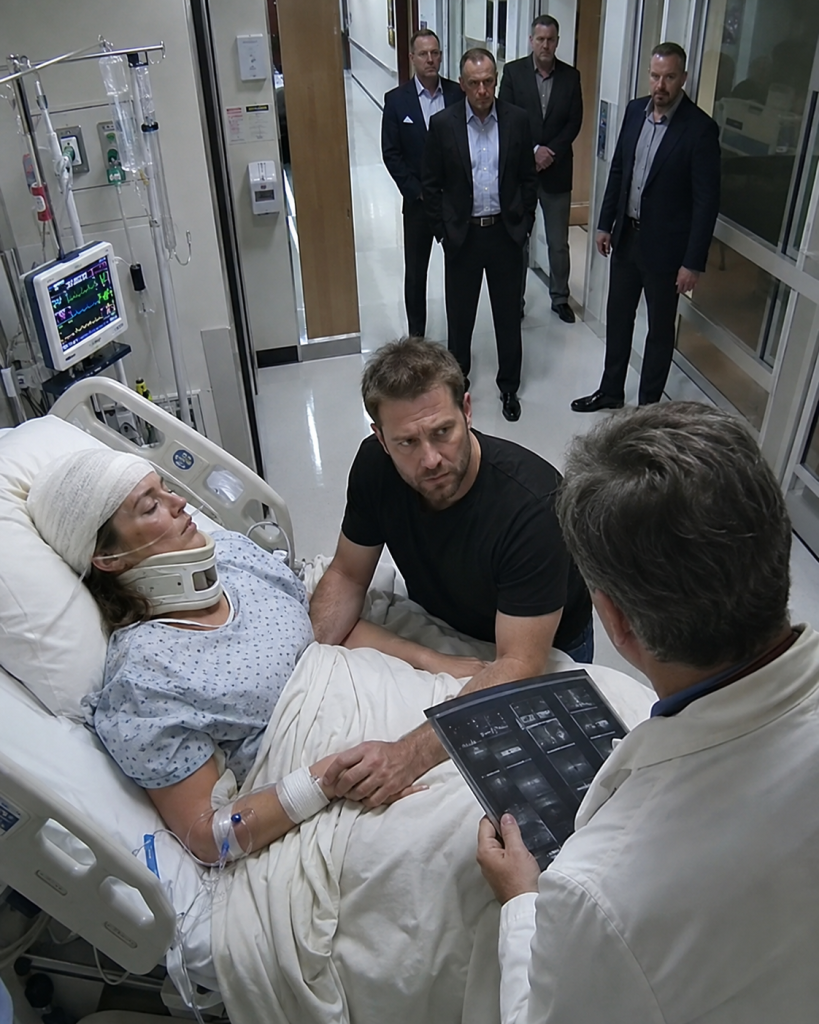
Ava had suffered a concussion and a deep scalp laceration, but the scan showed no skull fracture or intracranial bleeding.
The doctor explained that they wanted to observe her overnight.
I heard the words.
I understood them.
But the only sentence that truly registered was:
“She’s going to be okay.”
Michael held me while I cried for the first time.
Not quietly.
Not gracefully.
I buried my face against his chest and sobbed until my ribs hurt.
“She’s okay,” he repeated.
“She could have died.”
“But she didn’t.”
“She could have.”
“I know.”
I pulled back.
“I made her stay.”
“What?”
“She asked to go home.”
“Katherine.”
“She asked me, Michael. She said she wanted to leave, and I told her we’d stay until the cake.”
“You didn’t know.”
“I knew my family.”
His eyes hardened.
“So did I.”
There was no accusation in his voice.
That made it worse.
Because Michael had warned me.
Not dramatically.
Not possessively.
He had simply said, “Every time you see them, you spend three days recovering.”
I had laughed it off.
Family was complicated, I told him.
People change.
My parents were getting older.
Ava deserved grandparents.
I had mistaken access for love.
My phone vibrated.
Unknown number.
I answered.
“Colonel Bennett?”
“Yes.”
“This is Officer Reynolds. I’m at your parents’ residence. Your father is claiming he never intended to strike your daughter.”
“He removed his belt and snapped it toward her.”
“Several witnesses confirm that.”
“Several?”
“Yes.”
I closed my eyes.
“Is Thomas Hale still there?”
A pause.
“Yes, ma’am.”
“He tried to tell me something.”
Another pause.
Longer this time.
“You should probably speak with him.”
Something in the officer’s voice changed the temperature in the room.
“What happened?”
“I think you should hear it directly.”
“Officer.”
“I can tell you this much. Mr. Hale gave us documents.”
“What documents?”
“He says they concern you.”
I looked through the glass wall of Ava’s room.
Michael was sitting beside her bed.
My little girl had a white bandage wrapped around her head.
“What kind of documents?”
“Birth records.”
My stomach tightened.
“What?”
“He also gave us financial records.”
I sat down slowly.
“And something else.”
“What?”
“A letter.”
The room seemed to tilt.
“From whom?”
Officer Reynolds hesitated.
“Your biological father.”
For several seconds, I forgot how to breathe.
“That doesn’t make sense.”
“I understand.”
“Robert Coleman is my father.”
“Mr. Hale says he isn’t.”
I stood so suddenly the chair scraped backward.
“You’re telling me some man at my father’s birthday party suddenly decided I have another father?”
“No, ma’am.”
“What exactly is he saying?”
“He says your family has known for thirty-five years.”
My fingers went numb.
The hospital corridor disappeared around me.
I saw fragments of childhood instead.
Robert refusing to attend school events.
Margaret insisting I had “his temper.”
Emily calling me the outsider whenever we fought.
My father saying, “I gave you everything, so you owe me obedience.”
A memory surfaced so sharply it hurt.
I was seventeen.
I had just told Robert I wanted to join ROTC.
He had slammed his fist on the table.
“You will not wear that uniform.”
“Why?”
“Because I said so.”
“What’s wrong with the Army?”
His face had turned almost gray.
“You stay away from military people.”
At the time, I thought it was control.
Maybe it had been fear.
“Where is Thomas?” I asked.
“Still with us.”
“I want to see him.”
Michael refused to leave Ava alone, so Thomas came to the hospital.
He arrived shortly after midnight carrying a battered leather briefcase.
I met him in an empty family consultation room.
He looked twenty years older than he had at the party.
“You waited thirty-five years?” I asked.
He flinched.
“Katherine…”
“Don’t call me that like you’re family.”
His eyes dropped.
“That’s fair.”
“What is happening?”
Thomas placed the briefcase on the table.
“Robert wasn’t always the man you know.”
“I’m not interested in hearing excuses for him.”
“This isn’t an excuse.”
“Then talk.”
Thomas opened the briefcase.
Inside were folders.
Old photographs.
Bank statements.
A yellowed envelope.
And a photograph of a man wearing an Army uniform.
I stopped breathing.
The man was perhaps thirty.
Dark hair.
Straight posture.
Calm eyes.
My eyes.
Not similar.
Not vaguely familiar.
Mine.
“His name was Captain Jonathan Mercer,” Thomas said.
I stared at the picture.
“No.”
“He was your biological father.”
“No.”
“Your mother met him before she married Robert.”
“She married Robert before I was born.”
“Yes.”
The word struck like a slap.
I looked at Thomas.
“Did Robert know?”
“Yes.”
“Did Jonathan know?”
Thomas’s mouth tightened.
“Yes.”
“Then why wasn’t he in my life?”
That was when Thomas looked ashamed.
“Because Robert made sure he couldn’t be.”
My chair scraped backward again.
“What does that mean?”
Thomas reached for the yellowed envelope.
“Jonathan was stationed overseas shortly before you were born. Your mother told him she’d miscarried.”
I stared at him.
“She told my father I died?”
“Yes.”
The room became painfully quiet.
Thomas continued.
“Robert married Margaret three months later. He agreed to raise you as his own, but only if Jonathan was completely removed.”
“Why would my mother do that?”
“Money.”
The answer came softly.
I almost laughed.
“What?”
“Robert’s father owned three construction companies. Margaret’s family was deeply in debt. Marriage solved the problem.”
My knees weakened.
“And Jonathan?”
“He came home two years later.”
My heart hammered.
“How?”
“He discovered you existed.”
I looked at the envelope.
“What happened?”
Thomas didn’t answer immediately.
That terrified me more than anything else.
“Jonathan came to see you.”
“When?”
“You were two.”
“What happened?”
“Robert threatened him.”
“With what?”
“Career destruction. Accusations. Lawyers. Anything he could use.”
“Did Jonathan leave?”
“For a while.”
“For a while?”
Thomas took a breath.
“He kept writing.”
He slid the envelope toward me.
My hands trembled as I opened it.
Inside was a letter written in faded blue ink.
Dear Katherine,
You don’t know me yet.
But I know you exist now.
And I need you to know that I did not leave you willingly.
I stopped.
The words blurred.
Thomas sat silently.
I forced myself to continue.
One day, if this reaches you, I hope you’ll understand that there wasn’t a single birthday when I didn’t wonder what you looked like, what made you laugh, whether you were stubborn like me, or brave like your mother once was.
I swallowed hard.
At the bottom was a date.
July 14, 1994.
I had been three.
“Why didn’t I get this?”
“Robert intercepted everything.”
“How do you know?”
Thomas looked at me.
“Because I helped him.”
The room went still.
I stood.
“You what?”
“I helped Robert hide the letters.”
Rage shot through me.
I grabbed the folder and threw it across the table.
“You sat in my parents’ house for thirty-five years.”
“I know.”
“You watched him control me.”
“I know.”
“You watched my mother lie.”
“Yes.”
“And tonight was when you found your conscience?”
Thomas’s eyes filled with tears.
“No.”
“Then why tonight?”
“Because I watched him do to Ava what he did to you.”
I froze.
Images flickered through my memory.
The belt.
The shouting.
Locked bedroom doors.
My mother telling teachers I was clumsy.
Long sleeves during hot summers.
“You knew.”
“Yes.”
“You knew everything.”
“Yes.”
“Why didn’t you stop him?”
Thomas’s face crumpled.
“Because I was a coward.”
I wanted to hate him.
Part of me did.
But another question rose above the anger.
“What happened to Jonathan?”
Thomas looked down.
“He died.”
The word landed without sound.
“When?”
“1996.”
I sat.
“How?”
“Training accident.”
I closed my eyes.
Of course.
A father I had never known.
Dead before I was old enough to remember him.
Thomas pushed another folder toward me.
“But that isn’t the secret Robert is afraid of.”
I opened my eyes.
“What could possibly be worse?”
Thomas slid a military report across the table.
The page had been photocopied years ago.
There was a name.
Captain Jonathan Mercer.
And beneath it:
Vehicle brake failure.
I stared at Thomas.
“No.”
“We believed it was an accident.”
“We?”
“Jonathan’s friends.”
“Why are you saying believed?”
“Because six months ago, Robert called me drunk.”
My heartbeat slowed.
“He said something I had spent decades trying not to remember.”
“What?”
Thomas looked directly at me.
“He said Jonathan should have learned what happens when a man tries to take what belongs to him.”
Cold crawled across my skin.
“That could mean anything.”
“It could.”
Thomas opened another folder.
“Until I found this.”
Bank records.
A payment.
Thirty years old.
Robert Coleman to Danner Automotive.
My mind began putting pieces together before Thomas spoke.
“Danner Automotive serviced Jonathan’s vehicle the day before the crash.”
I pushed the paper away.
“No.”
“The owner was Robert’s cousin.”
“No.”
“I don’t know exactly what happened, Katherine. I’m not telling you Robert killed him.”
“Then what are you telling me?”
“I’m telling you there was enough for me to contact investigators.”
I stared at him.
“When?”
“Three weeks ago.”
My blood turned to ice.
“Robert knows?”
“I think he suspected.”
Suddenly, the birthday party made sense.
My mother’s repeated calls.
Robert insisting the entire family attend.
Thomas being invited despite barely speaking to Robert in recent years.
It wasn’t a birthday.
It was surveillance.
Robert had wanted everyone where he could see them.
My phone rang.
Michael.
I answered instantly.
“What happened?”
“Nothing bad. Ava woke up.”
I nearly collapsed with relief.
“She’s asking for you.”
“I’m coming.”
I gathered the documents.
Thomas caught my wrist lightly.
“There’s one more thing.”
I pulled away.
“What?”
“Jonathan left something for you.”
“A letter?”
“No.”
Thomas looked toward the hospital door.
“An inheritance.”
I almost laughed.
“After thirty years?”
“Not money.”
“What, then?”
“Land.”
I stared at him.
“Two hundred acres outside Arlington.”
I blinked.
“That’s impossible.”
“Jonathan’s grandfather owned it. Jonathan transferred it into a trust before his death.”
“For whom?”
“You.”
My head spun.
“I would know if I owned two hundred acres.”
“You should have.”
The way he said it made my stomach drop.
“What did Robert do?”
“He convinced Margaret to sign documents claiming you had died.”
I stared at him.
“Again?”
“Yes.”
I almost couldn’t process the cruelty.
My mother had told one man I died before I was born.
Then years later, she signed papers saying it again.
“Why?”
Thomas reached for another document.
“Because the land became extremely valuable.”
“How valuable?”
“Today?”
He swallowed.
“Roughly eighty million dollars.”
I actually laughed then.
Not because it was funny.
Because my brain rejected the number.
“That’s absurd.”
“Developers have been trying to acquire it for years.”
“And Robert?”
“He has been collecting lease income through shell companies.”
For the second time that night, my entire understanding of my childhood rearranged itself.
Robert hadn’t merely controlled me.
He had profited from my existence while pretending I was a burden.
The cheap birthday gifts.
The lectures about gratitude.
The refusal to help with college.
The night he told me I’d be homeless if I joined the military.
“You owe me,” he had always said.
All those years, he had been stealing from me.
I went back to Ava’s room.
Michael knew something was wrong the moment he saw my face.
“What did Thomas say?”
I sat beside him.
“Robert isn’t my biological father.”
Michael stared.
I told him everything.
Jonathan.
The letters.
The land.
The crash.
The money.
When I finished, Michael was silent for almost a minute.
Then he said, “We’re leaving.”
“What?”
“We’re taking Ava home when she’s discharged, and we’re never going back.”
“It isn’t that simple.”
“Yes, it is.”
“No. If Robert had anything to do with Jonathan’s death…”
Michael looked at me.
“You’re a colonel, Katherine. Not a detective.”
“I know.”
“Then let detectives handle it.”
“I intend to.”
He took my hand.
“But you’re thinking about confronting him.”
I didn’t answer.
“That means yes.”
“I want him to look at me.”
“Why?”
“Because I spent my entire life looking away.”
Ava shifted in the bed.
We both fell silent.
Her eyes opened.
“Mommy?”
I leaned close.
“Right here.”
“Grandpa coming?”
“No.”
“Good.”
One word.
That was all.
Good.
My three-year-old felt safer knowing her grandfather wasn’t coming.
That ended something inside me permanently.
The next morning, Ava was discharged.
We took her home.
And before noon, two detectives were sitting in our living room.
One from local law enforcement.
The other from Army Criminal Investigation Division.
Special Agent Marcus Reed placed the old accident report on our coffee table.
“Captain Mercer’s death occurred off base,” he explained, “but because of his status and several inconsistencies in the original investigation, we’re reviewing military records.”
I glanced at Michael.
“Do you believe Robert caused the crash?”
“We don’t know.”
“Thomas thinks he did.”
“Thomas also admitted assisting Robert with financial fraud.”
That surprised me.
“He did?”
“Last night.”
I stared at Reed.
“He confessed?”
“Yes.”
“Why?”
“He says he’s prepared to testify.”
I leaned back.
“There’s something else, Colonel.”
Of course there was.
There was always something else now.
Reed opened a folder.
“Your mother called us this morning.”
I looked at him.
“My mother?”
“She wants immunity.”
I laughed bitterly.
“For what?”
Reed didn’t smile.
“That’s what we’re trying to determine.”
My phone rang at exactly 1:17 p.m.
Margaret.
Michael shook his head.
I answered anyway.
“Katherine.”
Her voice was trembling.
Not crying.
Trembling.
“Where’s Dad?”
“Your father is gone.”
My entire body stiffened.
“What do you mean gone?”
“He left before sunrise.”
“Where?”
“I don’t know.”
“Did police know?”
“They came after.”
“Mom.”
Silence.
“What did you do?”
“I protected you.”
I nearly dropped the phone.
“You protected me?”
“Yes.”
“You told my biological father I was dead.”
Silence.
“You stole his letters.”
“Katherine…”
“You helped Robert steal property left to me.”
“You don’t understand.”
“Then explain.”
Her breathing became ragged.
“Jonathan wasn’t safe.”
I froze.
“What?”
“He wasn’t safe.”
“Robert beat me.”
“That’s different.”
I stared at the wall.
“How?”
“Jonathan was obsessed with getting you back.”
“He was your child’s father.”
“He wanted custody.”
“Why?”
No answer.
“Mom.”
“Because…”
Her voice broke.
“Because I wasn’t supposed to have you.”
I stood.
“What does that mean?”
“I can’t do this over the phone.”
“Then where?”
“The old St. Matthew’s cemetery.”
My blood chilled.
“Why?”
“Because that’s where Jonathan is buried.”
Two hours later, I stood in front of a grave I had never known existed.
Captain Jonathan David Mercer.
Beloved son.
Soldier.
1970 to 1996.
My mother stood ten feet away.
She looked small.
Older.
For once, not in control.
Michael was nearby with Ava, who refused to let me go anywhere alone.
Two detectives waited at a distance.
“You have five minutes,” I said.
Margaret stared at Jonathan’s headstone.
“Robert didn’t kill him.”
My jaw tightened.
“How do you know?”
“Because I did.”
Everything disappeared.
The trees.
The wind.
The cemetery.
“What?”
Margaret’s eyes filled with tears.
“I sabotaged Jonathan’s car.”
I couldn’t speak.
“I loosened the brake line.”
Michael moved closer.
I held up one hand.
“Why?”
Margaret pressed her fingers to her mouth.
“Because he found out.”
“Found out what?”
She looked at me.
And then she said the sentence that shattered the second version of my life only hours after I had discovered the first was a lie.
“Jonathan wasn’t your father either.”
I stared at her.
“What?”
“He believed he was.”
My voice came out barely above a whisper.
“Who was?”
Margaret began to cry.
“I was nineteen.”
“Who was my father?”
“I was working at Fort Monroe.”
“Who?”
“A young officer.”
My pulse thundered.
“What was his name?”
She shook her head.
“I never knew his real name.”
“That’s impossible.”
“He gave me a name. Years later I learned it wasn’t real.”
“Then how did Jonathan become involved?”
“He loved me. When I became pregnant, I told him the baby was his.”
My knees almost gave out.
“You lied to him.”
“Yes.”
“And Robert?”
“He knew Jonathan wasn’t the father.”
Everything clicked into a darker pattern.
Robert hadn’t merely resented Jonathan because of jealousy.
He knew the truth.
“What did Jonathan discover?”
Margaret looked toward the grave.
“He found documents from the hospital.”
“What documents?”
“Blood type records.”
My breath stopped.
“He realized he couldn’t be your biological father.”
“Yes.”
“And then?”
“He started asking questions.”
“So you killed him?”
“He threatened to expose everything.”
“What was everything?”
Margaret suddenly looked terrified.
Not ashamed.
Terrified.
“There were people involved who were more powerful than Robert.”
I stepped closer.
“Who?”
“I don’t know.”
“Stop lying.”
“I’m not.”
“You murdered a man!”
“I was trying to protect you!”
“No!”
My voice echoed through the cemetery.
Ava startled.
Michael picked her up.
I lowered my voice, but every word shook.
“You don’t get to call murder protection.”
Margaret looked at Ava.
Then something strange happened.
Her face changed.
She became pale.
“What?” I demanded.
Margaret stared at my daughter.
“At the hospital,” she whispered.
“What?”
“Did they run bloodwork?”
“Yes.”
“What type is she?”
The question was so bizarre that I almost refused to answer.
“O negative.”
Margaret stumbled backward.
“No.”
“What?”
“No.”
She covered her mouth.
“What is wrong with you?”
“Your blood type is O negative too.”
“I know.”
“Robert is A positive.”
“I know he isn’t my father.”
“Jonathan was AB positive.”
I stared at her.
Then I understood.
Jonathan could not have been my biological father.
The old blood records had proven it.
But that still didn’t explain her terror.
“Whoever my father was, he must have been compatible.”
Margaret shook her head.
“You don’t understand.”
“Then make me understand.”
She looked toward the detectives.
“I need protection.”
“You confessed to murder.”
“I know.”
“From whom?”
Her eyes returned to mine.
“Your father.”
I almost screamed.
“You just said you don’t know who he is.”
“I didn’t know then.”
A voice came from behind us.
“But you know now.”
We turned.
Special Agent Reed was walking toward us.
His face was grim.
He carried a sealed evidence envelope.
“We received the expedited DNA comparison,” he said.
My stomach tightened.
“What comparison?”
Reed looked at Margaret.
She began shaking.
He turned to me.
“When Thomas came forward, he provided several items belonging to Jonathan. We also obtained a lawful DNA sample connected to the investigation.”
“From whom?”
Reed hesitated.
Then held out a photograph.
I took it.
For a moment, I didn’t understand what I was looking at.
It was an old military ceremony.
Men in dress uniform.
Flags.
Medals.
Then I saw one face.
A man I knew.
Not personally.
Everyone in my world knew him.
General William Ashford.
Former Chairman of the Joint Chiefs.
Decorated war hero.
National security adviser.
One of the most respected military figures of his generation.
I stared at Reed.
“No.”
Margaret started crying harder.
Reed spoke carefully.
“The DNA match indicates a ninety-nine point nine percent probability of biological parentage.”
My knees weakened.
“General Ashford is my father?”
“No.”
Reed’s expression changed.
“There’s another problem.”
I stared at him.
“What problem?”
“The DNA sample wasn’t General Ashford’s.”
“Then whose was it?”
“His son’s.”
I frowned.
“General Ashford has one son.”
“Yes.”
I knew the name.
Everyone did.
Lieutenant General David Ashford.
Commander of one of the Army’s largest operational commands.
A man I had briefed twice.
A man who had personally signed my promotion recommendation three years earlier.
I felt sick.
“You’re saying David Ashford is my brother?”
Reed looked almost apologetic.
“No, Colonel.”
The world seemed to slow.
“The age doesn’t fit.”
He handed me the report.
I read the conclusion.
Once.
Twice.
Then a third time.
The words refused to make sense.
Margaret whispered, “I’m sorry.”
I looked at her.
Reed said quietly:
“Lieutenant General David Ashford is your biological father.”
My mind went blank.
David Ashford was sixty-one.
My mother was fifty-four.
That meant…
“No.”
I looked at Margaret.
“You were nineteen.”
“Yes.”
“He was twenty-six.”
“Yes.”
“But you said you didn’t know his real name.”
“I didn’t.”
“Why would he use another name?”
“Because he was married.”
I laughed once.
A broken sound.
“Of course.”
Reed stepped closer.
“There’s more.”
I almost didn’t want to hear it.
“What?”
“General Ashford knew.”
My head snapped up.
“He knew about me?”
“Not until recently.”
“How recently?”
“About four years ago.”
I stared at him.
Four years.
My promotion had been three years ago.
The room inside my skull seemed to collapse.
“Did David Ashford know when he recommended me for promotion?”
“Yes.”
Anger exploded through me.
“My entire career…”
“No,” Reed said firmly.
“Don’t.”
“Colonel, your promotion records are exceptionally strong.”
“He signed it!”
“Yes.”
“Because I’m his daughter?”
“No.”
“How do you know?”
“Because he tried to have himself removed from the promotion process.”
I stopped.
“What?”
Reed opened another folder.
“He disclosed a potential undisclosed personal conflict through classified personnel channels. He requested recusal.”
“Then why did he sign?”
“Because the review determined his signature was administrative and your selection was independently approved.”
I stared at the paperwork.
For almost eighteen years, the Army had been the one part of my life I believed I had built myself.
No family influence.
No stolen money.
No lies.
My own work.
My own scars.
My own name.
And now even that felt contaminated.
Then Michael spoke.
“Katherine.”
I turned.
Ava was asleep against his shoulder.
Bandage around her head.
Tiny hand curled against his collar.
And suddenly everything became simple again.
Not easy.
Simple.
Whatever blood ran through me did not define what I had earned.
Whatever men had lied about me did not determine who I was.
I looked at Margaret.
“Why did Robert hate the Army?”
She wiped her face.
“Because he knew one day you might meet David.”
“He knew who David was?”
“Yes.”
“All these years?”
“Yes.”
“And Jonathan?”
“He discovered David’s identity.”
That answered one question.
But another rose instantly.
“You said you sabotaged Jonathan’s brakes.”
“Yes.”
“Did Robert know?”
“No.”
Thomas’s evidence contradicted that.
The payment to Danner Automotive.
Robert’s cousin.
I looked at Reed.
He saw it too.
“Margaret,” he said, “we need you to come with us.”
She didn’t resist.
As officers approached, she grabbed my hand.
“Katherine.”
I pulled away.
“There is one thing I need you to believe.”
“What?”
“Robert is dangerous.”
“I already know.”
“No.”
She looked toward Ava.
“You don’t understand.”
“What don’t I understand?”
“Robert knew Thomas was going to talk.”
My skin prickled.
“How?”
“He found Thomas’s copies.”
“When?”
“Yesterday morning.”
Then why host the party?
Why let Thomas come?
Unless…
I turned toward Reed.
“He wanted everyone there.”
Reed’s expression sharpened.
Margaret nodded.
“He was going to destroy the documents after the party.”
My blood ran cold.
“And Thomas?”
Margaret said nothing.
He didn’t need to.
Michael stepped closer.
“Where is Robert now?”
“I don’t know.”
Reed’s phone rang.
He answered.
His expression changed almost immediately.
“What address?”
Silence.
“We’re on our way.”
He hung up.
“What happened?” I asked.
“Thomas Hale’s house is on fire.”
My stomach dropped.
“Thomas?”
“Neighbor says he went home this morning.”
Reed began moving.
I followed.
“Colonel, stay here.”
“No.”
“This is an active investigation.”
“Thomas risked everything.”
“And you have a three-year-old daughter who needs you.”
That stopped me.
Michael touched my arm.
“He’s right.”
I hated him for being right.
We went home.
For six hours, we heard nothing.
At eight that evening, Reed finally called.
Thomas was alive.
Barely.
A neighbor had seen smoke and pulled him out.
The fire had started in his basement.
Accelerant had been found.
Robert was now wanted for questioning.
By midnight, his truck had been discovered abandoned near the interstate.
His phone was inside.
His wallet too.
No Robert.
For three days, nothing happened.
Then, on Thursday morning, I found an envelope taped to our front door.
No stamp.
No address.
Just my name.
KATHERINE.
Michael saw it before I touched it.
“Don’t.”
We called police.
Bomb squad cleared it.
Inside was a single photograph.
Me.
Age seven.
Standing beside Robert at a county fair.
On the back, handwritten:
YOU WERE ALWAYS MINE.
Below that:
ASK YOUR REAL FATHER WHY HE NEVER CAME FOR YOU.
David Ashford called me that afternoon.
Not Lieutenant General Ashford.
Not through official channels.
David.
His voice was quieter than I expected.
“I don’t know whether you want to speak with me.”
“I don’t know either.”
“That’s fair.”
“Did you know my mother killed Jonathan?”
“No.”
“Did you know Robert stole from me?”
“No.”
“Did you know I existed?”
“Not until four years ago.”
“How?”
“A genetic genealogy service.”
I frowned.
“I never submitted DNA.”
“Emily did.”
My sister.
The same sister who had stood in that kitchen and said Ava needed to learn respect.
David continued.
“She matched with my family.”
“And you investigated.”
“Yes.”
“Why didn’t you contact me?”
Silence.
“Why?”
“I tried.”
My chest tightened.
“When?”
“Three years ago.”
“No, you didn’t.”
“I sent a letter.”
I closed my eyes.
Of course.
A letter.
Always a letter.
“Where?”
“To your home address.”
“We never received it.”
“I sent another.”
“Nothing.”
David inhaled slowly.
“Then Robert contacted me.”
My eyes opened.
“What?”
“He told me you knew everything.”
I stood.
“What did he say?”
“He said you wanted no contact.”
Rage burned through me.
“And you believed him?”
“He sent me a letter supposedly written by you.”
“What letter?”
David’s voice broke slightly.
“It said your father was Robert Coleman, that blood didn’t matter, and that contacting you again would damage your family.”
I couldn’t speak.
“He forged it.”
“Yes.”
“Why didn’t you verify?”
“I should have.”
The answer was immediate.
No excuse.
No defense.
“I should have come to you. I was afraid my position would make it feel like pressure. I told myself respecting the letter was respecting you.”
I sat again.
“Did you help my career?”
“No.”
“Not once?”
“No.”
“Did you know I was in the Army before discovering the DNA?”
“Yes.”
“How?”
A pause.
“I had seen your name.”
“That’s not an answer.”
“You gave a briefing in 2019.”
I remembered.
Pentagon conference room.
Twenty senior officers.
I had been a lieutenant colonel.
Nervous.
Prepared.
David Ashford had sat near the end of the table.
“You remembered me?”
“Yes.”
“Why?”
“Because you argued with me.”
Despite everything, I almost smiled.
“I corrected you.”
“You corrected a three-star general in front of twenty people.”
“You were using outdated readiness figures.”
“You were right.”
Silence stretched between us.
Then he said softly, “Afterward, I told my aide you were going to make colonel.”
My eyes filled.
“You didn’t know.”
“No.”
“And then you found out.”
“Yes.”
“What did you feel?”
His voice changed.
“I felt like I had missed your entire life.”
For once, I had no answer.
Two weeks later, Robert was still missing.
Margaret had been charged.
Thomas was recovering.
Emily refused to speak to police without an attorney.
Ava’s stitches came out.
Children recover faster than adults.
She returned to coloring pictures and asking for pancakes and insisting her stuffed rabbit needed its own pillow.
I envied that.
Then one evening she asked me:
“Mommy, is Grandpa bad?”
I sat beside her on the bed.
“Grandpa did something bad.”
“Because he scared me?”
“Yes.”
“Are you scared of him?”
The question stopped me.
I could have lied.
Instead I said, “A little.”
Ava thought about that.
Then she put her tiny hand on mine.
“You can hold Bunny.”
I laughed and cried at the same time.
“Thank you.”
She handed me the rabbit.
And in that moment, I realized something my parents had never understood.
Strength was not making people afraid of you.
Strength was making them feel safe beside you.
The next morning, Robert came back.
He didn’t come to our house.
He walked into the county sheriff’s office and surrendered.
No chase.
No dramatic arrest.
He simply entered carrying a folder and asked for an attorney.
By evening, Reed called.
“He wants to speak with you.”
“No.”
“He says he has information about Jonathan Mercer.”
“I don’t care.”
“He says Margaret didn’t kill him.”
I closed my eyes.
Another lie.
Another layer.
“What does he want?”
“To tell you himself.”
Michael objected.
Strongly.
So did Reed.
But I went.
Not because Robert deserved an audience.
Because I was finished letting other people decide which truths I was allowed to hear.
He sat behind reinforced glass in a county interview room.
No belt.
No commanding presence.
No house where everyone followed his rules.
Just an old man in county-issued clothing.
For the first time in my life, Robert Coleman looked small.
He picked up the phone.
I picked up mine.
“You came.”
“Talk.”
He almost smiled.
“Still giving orders.”
“Talk.”
His smile vanished.
“Margaret thinks she killed Jonathan.”
“She confessed.”
“She loosened the brake line.”
“So?”
“So Jonathan discovered it before leaving.”
I frowned.
“What?”
“He had the car repaired.”
“Then how did he die?”
Robert leaned closer to the glass.
“Someone else killed him.”
“Who?”
“You know who.”
“No, I don’t.”
“Yes, Katherine.”
His eyes glittered.
“You’ve spent your entire life serving the organization that buried it.”
My stomach tightened.
“The Army?”
He nodded.
“That’s ridiculous.”
“Is it?”
“Yes.”
“Ask your precious General Ashford.”
My hand tightened around the phone.
“What about him?”
Robert smiled.
“Ask him where he was on July eighteenth, 1996.”
Jonathan died July eighteenth.
I felt cold.
“You’re lying.”
“Maybe.”
“Why would David kill Jonathan?”
“Because Jonathan found out who your father was.”
“That makes no sense.”
Robert leaned closer.
“Not David.”
I stared at him.
“What?”
“David wasn’t afraid of Jonathan.”
“Then who was?”
Robert’s smile vanished.
“His father.”
General William Ashford.
I stopped breathing.
Robert continued.
“Jonathan discovered that Margaret had been working at Fort Monroe during a classified investigation. He found evidence linking William Ashford to something that could have ended careers.”
“What?”
“That’s the part nobody ever told me.”
“Then you know nothing.”
“I know Jonathan called me the night before he died.”
My pulse pounded.
“What did he say?”
“He told me if anything happened to him, I should protect you.”
I laughed bitterly.
“You abused me.”
Robert flinched.
For the first time, genuinely.
“Yes.”
The admission was quiet.
No excuse.
“I hated him,” Robert said. “And eventually I hated you for reminding me of everything I wasn’t.”
I stared at him.
“You don’t get forgiveness for understanding yourself.”
“I know.”
“Then what do you want?”
“To stop one more lie.”
He pushed a folded paper against the glass.
An officer passed me a copy.
It was an old handwritten note.
Jonathan’s handwriting.
One sentence had been underlined.
If Ashford discovers Katherine’s true identity, she will never be safe.
I looked up.
“David already knows.”
Robert shook his head.
“He thinks he’s your father.”
My skin prickled.
“The DNA proves it.”
“No.”
“What do you mean no?”
Robert’s eyes filled with something I had never seen before.
Pity.
“The DNA proves he’s closely related to you.”
I stared at him.
“Parent-child.”
“Yes.”
“So what are you saying?”
Robert leaned closer.
“I’m saying David Ashford isn’t your father.”
My heart hammered.
“We already did this.”
“No.”
“Then who is?”
He looked at the photograph of General William Ashford lying between us.
And whispered:
“Your son’s DNA test exposed the one thing Margaret never knew.”
“I don’t have a son.”
Robert stared at me.
Then slowly smiled.
“No, Katherine.”
His voice dropped to almost nothing.
“But your husband does.”
Every muscle in my body locked.
“What?”
Robert’s eyes shifted past me.
Toward the observation window.
Michael stood there.
His face had gone completely white.
I turned.
Michael wouldn’t look at me.
“Michael?”
Silence.
I stood.
“Michael.”
Reed stepped into the room.
“Katherine…”
“What is happening?”
Michael finally looked at me.
There were tears in his eyes.
“I was going to tell you.”
“Tell me what?”
He swallowed.
“I had a child before we met.”
The room tilted.
“A son?”
“Yes.”
“How old?”
“Twenty-two.”
My mind raced.
“What does that have to do with my DNA?”
Nobody answered.
Then Reed placed another report on the table.
“This arrived this morning.”
I looked down.
DNA analysis.
Multiple samples.
Mine.
David Ashford’s.
Michael’s.
And an unnamed male identified only as Subject D.
I stared at the relationship calculations.
Something was wrong.
Very wrong.
David wasn’t listed as my father.
He was listed as…
maternal half sibling.
I looked at Reed.
“No.”
He nodded slowly.
The next line identified Subject D as David’s biological child.
Michael’s son was David Ashford’s son too.
Impossible.
Unless…
I looked at Michael.
He whispered, “I wasn’t his biological father.”
My head spun.
“Then why did you say…”
“I raised him for two years. His mother eventually left. I never knew who his biological father was.”
My hands shook.
“Why is Robert saying this matters?”
Reed turned the page.
There was one final relationship estimate.
General William Ashford’s archived military DNA profile had been added to the comparison under court order.
I looked at the result.
My heart stopped.
William Ashford was not my grandfather.
He was not my father.
He was listed as:
maternal grandfather.
Which meant David wasn’t my father.
He was my mother’s son.
My brother.
I looked at Margaret’s birth date.
Then David’s.
Seven years apart.
Impossible.
Unless Margaret’s identity itself was false.
Reed sat across from me.
“We checked Margaret Coleman’s records.”
I could barely hear him.
“She was adopted?”
“No.”
“What?”
“There is no original birth record for Margaret Coleman.”
My mouth went dry.
“She assumed that identity at age seventeen.”
“Who was she?”
Reed slid a black-and-white photograph toward me.
A teenage girl.
Standing beside General William Ashford.
Same eyes as mine.
Same jaw.
Same face.
Written beneath the photograph:
Elizabeth Ashford.
I whispered, “Who is that?”
Reed answered quietly.
“General William Ashford’s daughter.”
My mind refused the implication.
“My mother?”
“Yes.”
“Then David…”
“Was her older brother.”
My uncle.
Not my father.
Every DNA result suddenly made sense.
David shared enough DNA with me to mimic a parent-child relationship in an incomplete comparison because of unusually high familial overlap.
But that still left one question.
“Who was my father?”
Reed looked at Michael.
Then Robert.
Then back at me.
“We found him.”
My throat tightened.
“Who?”
Reed slid one last file across the table.
I opened it.
The photograph inside was a young soldier.
I knew that face.
I had known it all my life.
Not because he raised me.
Not because I had seen photographs.
Because I saw a version of it every morning in the mirror.
Thomas Hale.
I stared through the glass.
“No.”
Reed nodded.
“Thomas wasn’t just Robert’s friend.”
My hands began shaking.
“He was my father?”
“Yes.”
The entire world became silent.
Thomas.
The man who had attended every birthday.
Who brought me books.
Who quietly mailed care packages during deployments.
Who had cried when I made colonel.
The man I had called Uncle Thomas.
He had been there.
All along.
“He knew?”
“No.”
I looked up.
“What?”
“He believed Jonathan was your father until the investigation reopened.”
That was the final cruelty.
Thomas had spent thirty-five years carrying guilt for helping Robert hide Jonathan’s letters.
Never knowing the child he was helping hide was his own daughter.
I covered my mouth.
Reed continued quietly.
“Margaret had a brief relationship with Thomas weeks before Jonathan. She believed Jonathan was your father because of the timing. Thomas never knew.”
I thought of his face in the hospital.
His apology.
His tears.
His words.
I watched Robert do to Ava what he did to you.
He hadn’t known.
And yet some part of him had spent his entire life trying to protect me from the edge of the room.
Robert watched me absorb it.
Then he said softly, “That’s why I surrendered.”
I looked at him.
“What?”
“Thomas woke up this morning.”
My heartbeat stopped.
“He asked for you.”
I stood so fast the chair fell backward.
Reed drove me to the hospital.
I ran through the corridors.
Thomas was awake.
Burned.
Bandaged.
Weak.
But awake.
I entered his room.
His eyes found mine.
He started crying before I reached the bed.
“I didn’t know,” he whispered.
I sat beside him.
Neither did I.
For a long moment, we simply looked at each other.
Thirty-five years.
Every Christmas.
Every birthday.
Every deployment.
Every chance stolen by lies.
“I’m sorry,” he whispered.
I took his hand.
“You were there.”
“I should have done more.”
“You were there.”
His eyes closed.
A tear rolled toward his ear.
“Is Ava okay?”
That question broke me.
Not “Do you forgive me?”
Not “What happens to me?”
Ava.
“Yes.”
He smiled.
“Good.”
Months later, Robert pleaded guilty to fraud, child endangerment, obstruction, and multiple financial crimes.
Margaret accepted responsibility for attempted sabotage of Jonathan’s vehicle and conspiracy related to the cover-up, though investigators ultimately proved that Jonathan’s fatal crash had been caused by a defective steering component unrelated to her actions.
She had believed for thirty years that she killed him.
Robert had let her believe it.
Because guilt made her easier to control.
General William Ashford had not murdered Jonathan either.
The mysterious classified scandal Jonathan uncovered involved procurement fraud committed by another officer who had used Ashford’s name to protect himself.
The conspiracy I had imagined turned out to be smaller than the truth.
And somehow uglier.
Not secret agencies.
Not assassins.
Just frightened, selfish people making terrible choices and spending decades lying to survive them.
The eighty million dollar trust was restored to me after a brutal civil case.
I did not keep all of it.
A large portion created the Jonathan Mercer Foundation, supporting children from violent homes and military families dealing with domestic abuse.
Jonathan had not been my biological father.
But he had tried to be.
That mattered.
Thomas recovered.
Slowly.
The first time Ava saw him after the hospital, she climbed carefully onto his bed and handed him her stuffed rabbit.
“You can hold Bunny.”
Thomas looked at me.
I started crying.
He did too.
A year later, I stood on a parade field beneath a bright autumn sky.
Soldiers filled the formation.
Michael stood beside Ava.
Thomas sat in the front row.
David Ashford stood several seats away, not as my father, but as the uncle neither of us had known we had.
My retirement orders were read aloud.
Eighteen years.
Four deployments.
Command.
Sacrifice.
A life I had built despite every person who once told me I belonged to them.
Afterward, Ava ran across the grass.
“Mommy!”
I crouched.
She threw herself into my arms.
Thomas approached slowly.
Ava smiled at him.
“Grandpa Thomas!”
He stopped.
Completely.
His face crumpled.
I had never told her to call him that.
Neither had Michael.
She had chosen it herself.
Thomas knelt.
“Say that again.”
Ava giggled.
“Grandpa Thomas.”
He hugged her.
And standing there, watching the man who had unknowingly been my father for thirty-five years hold the little girl whose injury finally forced every secret into the light, I understood the strangest truth of all.
Robert had spent my entire childhood insisting that family meant obedience.
Margaret had spent hers believing family meant secrets.
Jonathan believed family meant protecting a child who wasn’t biologically his.
Thomas had loved me without even knowing why.
And Ava, at three years old, understood it better than all of us.
Family was never about who had authority over you.
It was about who made you feel safe enough to stop being afraid.
Ava reached for my hand.
“Mommy?”
“Yes, sweetheart?”
“Can we go home?”
For one heartbeat, I was back in that kitchen.
Blood.
Tile.
A belt snapping through the air.
The sentence I would regret forever.
We’ll leave after Grandpa cuts the cake.
But this time, there was no fear in her voice.
No one was keeping us anywhere.
I smiled.
I took her hand.
And I said the words I wished someone had said to me when I was three.
“Yes, baby. Whenever you want to leave, we leave.”
Then the four of us walked away together.
And for the first time in my life, home was not a place where someone demanded that I know my place.
Home was the place where nobody ever had to be afraid again.