Part 2: The Weight of No
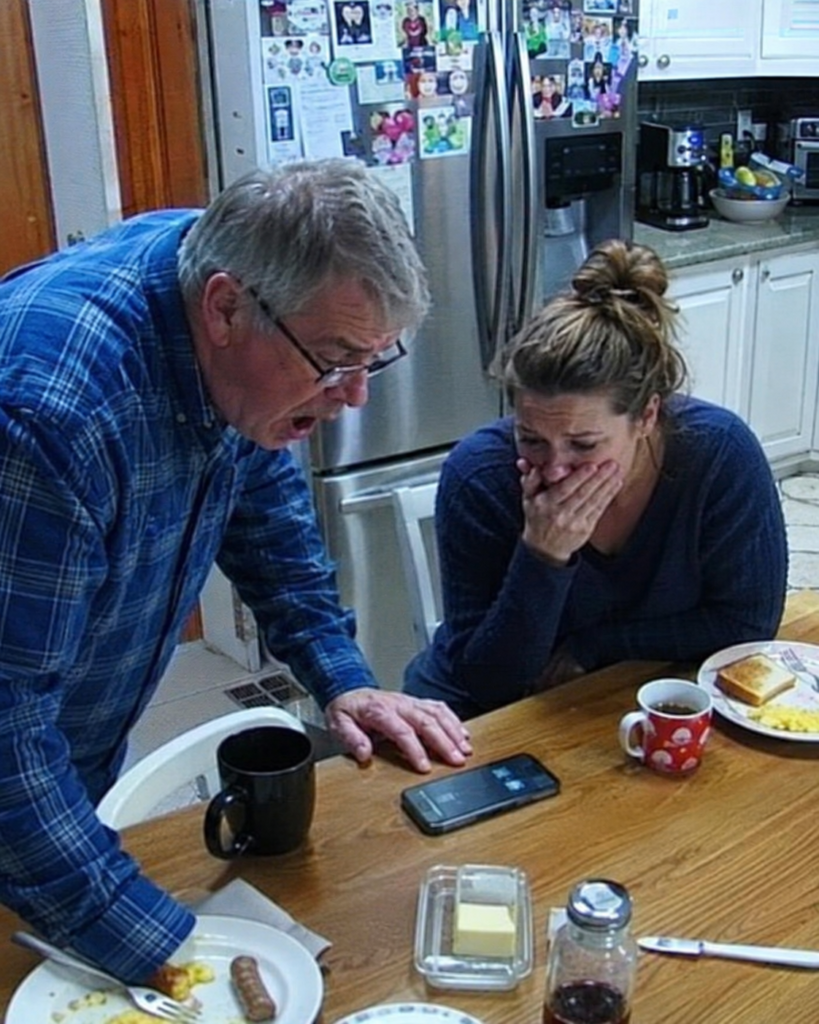
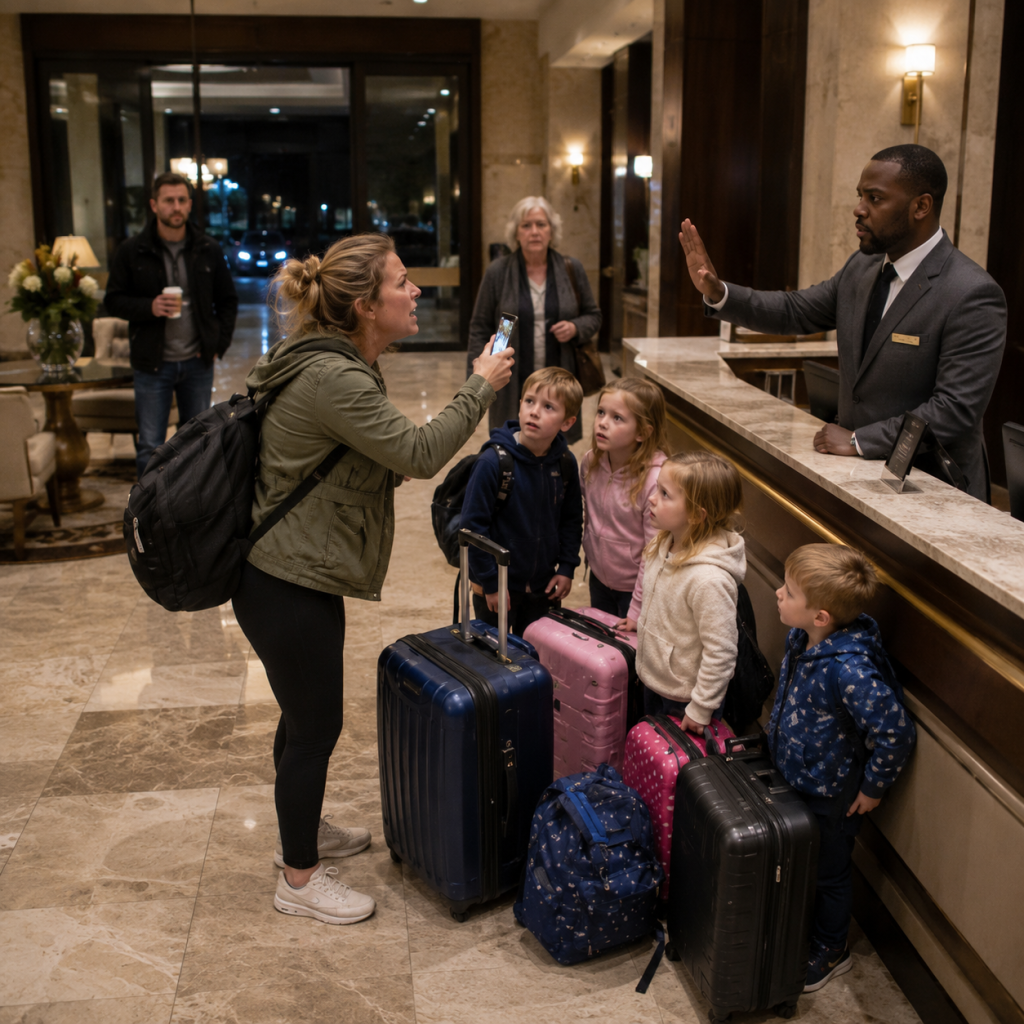
The silence that followed through the speaker was heavy, punctuated only by the distant hiss of traffic outside the lobby doors. I could picture them perfectly: my mother standing rigid by the front desk, Hannah’s face flushing with that specific brand of anger she reserved for when she didn’t get her way, and Luke awkwardly shifting his weight from one foot to the other, probably checking his phone to see how much time they had left before their gate closed.
“Mark?” my mother’s voice came through, loud and sharp, echoing off the lobby’s marble walls. “What is the meaning of this? Stop playing games. We have a flight to catch, and the children are exhausted.”
“I’m not playing games, Mom,” I said, my voice steady, devoid of the usual apologetic tremor I used to carry whenever I disappointed them. “I told Hannah I wasn’t home. I told her no.”
“You are home! Your car is in the garage, and you’re talking to us right now!” Hannah yelled into the speaker, her voice cracking with frustration. My youngest niece, Chloe, started to cry in the background, a tired, miserable sound. “We don’t have time for your little temper tantrum, Mark. Just let us up. We’re leaving the keys on your counter.”
“No,” I said.
The word felt foreign in my mouth. It felt heavy, but solid. Like an anchor.
“Mark Edward Collins,” my mother warned, using the tone that used to make me freeze as a teenager. “This is your family. Your sister and Luke have worked hard for this trip. They deserve a break. You are being incredibly selfish.”
“Luke surprised her with a trip to Bora Bora, Mom. That means they had time to book flights, time to pack, and time to plan,” I replied, looking out my window at the streetlights below. “The only thing they didn’t have time to do was ask me. Because they didn’t think they had to.”
Luke finally spoke up, his voice carrying that familiar, defensive edge. “Come on, man. It’s just two weeks. They’re your nieces and nephews. We’ll make it up to you. I’m tracking a new coin right now, once it hits—”
“I’m hanging up now,” I interrupted. “Ray, thank you. Please escort them out of the building if they refuse to leave.”
“Mark! Don’t you dare hang up on—”
I pressed the end call button. The apartment returned to its quiet, sterile stillness. My heart was hammering against my ribs, not from fear, but from the sudden, violent rush of adrenaline that comes with shattering a decades-old pattern.
I walked back to the couch and sat down. Five minutes passed. Then ten. My phone lit up repeatedly—calls from Mom, texts from Hannah, a string of increasingly hostile messages from Luke.
Hannah: You are ruining my life. I hope you’re happy. Mom: I am deeply ashamed of you tonight. Your father is disgusted.
I didn’t reply. I didn’t block them either. I just watched the notifications pile up like debris after a storm. Around midnight, I looked back out the window. A yellow taxi was pulling away from the curb, loaded down with luggage. They were gone.
I thought I would feel guilty. I thought the weight of their disapproval would crush me, the way it usually did. But as I pulled the blanket over my shoulders and closed my eyes, all I felt was an overwhelming, exhausting sense of relief. For the first time in thirty-four years, I slept until noon.
Part 3: The Aftermath
The next three days were a masterclass in family warfare.
In my family, conflict was never met with open, honest discussion. It was handled through a coordinated campaign of guilt, isolation, and weaponized silence. My mother called my aunts, my cousins, and even an old family friend, spinning a narrative where I had locked my helpless nieces out in the cold midnight air out of sheer malice.
On Wednesday, my father called. It was the first time he had initiated a conversation with me in six months.
“Mark,” he said when I answered. He sounded tired, his voice weighed down by years of keeping the peace at the expense of his own dignity. “Your mother is a wreck. She hasn’t slept.”
“Hi, Dad,” I said, leaning against my kitchen counter, pouring a cup of coffee. “Did she tell you why she’s a wreck?”
“She said you wouldn’t let the kids stay.” He sighed. “Look, I know Hannah can be a lot. And Luke… well, Luke is Luke. But you know how your mother gets. It would have been easier to just take them in for the two weeks. It’s just fourteen days, son.”
“Dad, I fly an average of eighty hours a month. I am legally required to have rest periods so I don’t crash a commercial airliner with two hundred people on board,” I said, keeping my voice level. “Hannah didn’t ask. She told me. She tried to use Mom’s key to force her way into my home while I was sleeping.”
There was a long pause on the other end of the line. I could hear the television murmuring in their living room.
“It’s just how the family functions, Mark,” he said quietly. “We help each other.”
“No,” I corrected him. “You and I help them. Hannah takes, Mom enables, and you look the other way so Mom doesn’t yell at you. That’s not a family functioning, Dad. That’s a hostage situation.”
He didn’t argue. He didn’t defend them. He just sounded smaller than before. “She’s talking about taking your spare key back permanently.”
I couldn’t help but laugh, a short, humorless sound. “Tell her she can keep it. I already changed the locks yesterday morning. It’s just a piece of brass now.”
“You’ve changed,” my father murmured.
“I just started valuing my own life as much as I value theirs,” I said. “I have to go, Dad. I have a flight to Chicago in three hours.”
When I arrived at the airport later that afternoon, pulling my roller bag through the terminal, I felt a strange sense of detachment. The airport was crowded, loud, and chaotic—a stark contrast to the quiet battlefield of my family dynamic. I put on my aviators, adjusted my tie, and stepped into the cockpit. For the next four days, the sky was my only responsibility. Up there, rules mattered. Boundaries mattered. If you ignored the warning lights in a cockpit, people died.
I realized then that I had been ignoring the warning lights in my own life for way too long.
Part 4: The Escalation
I landed back at JFK on Sunday evening. The weather had been miserable all day, with heavy rain and a biting wind that made the landing difficult. My shoulders were tight from tension, and all I wanted was a hot shower and my own bed.
When I stepped out of the elevator on my floor, I stopped dead in my tracks.
Hannah was sitting on the floor outside my apartment door. She didn’t have the kids with her, but she had a massive, oversized purse and an expression on her face that promised violence. She looked exhausted, her hair pulled back into a messy bun, her makeup smeared.
“Where the hell have you been?” she demanded, pushing herself up from the carpet.
“I was working, Hannah,” I said, not moving toward her. “What are you doing here? How did you get past the lobby?”
“I waited until someone else walked in and slipped past the desk,” she snapped, crossing her arms. “We didn’t go to Bora Bora, Mark. Because of you.”
I stared at her, genuinely surprised. “Because of me? You had airline tickets. You had a hotel.”
“We missed the flight!” she shouted, her voice echoing in the hallway. “By the time we got the kids back into the van, drove all the way back to Mom’s house, dropped off the suitcases, and tried to get to the airport, the gate was closed! Luke couldn’t get a refund on the tickets because they were non-refundable, promotional fares. We lost five thousand dollars. Five thousand dollars, Mark! Luke is furious. He says we might have to push back our mortgage payment this month.”
The sheer absurdity of the statement hung in the air between us.
“Let me get this straight,” I said slowly, my voice dropping an octave. “You booked a five-thousand-dollar vacation to a tropical island when you can barely afford your mortgage, didn’t line up childcare, tried to dump your four children on me at midnight without my permission, and now you’re blaming me because you didn’t manage your time correctly?”
“If you had just opened the door, we would have made it!” she cried, tears of anger finally spilling over her cheeks. “You have no idea what it’s like, Mark. You have no responsibilities. You just fly around, stay in hotels, collect your big paychecks, and live in this nice apartment. You don’t have a family to worry about. You don’t have kids. The least you could do is help us when we need it!”
I looked at my sister, really looked at her. I didn’t see the little girl I used to share a sandbox with. I saw a grown woman who had completely outsourced her accountability to everyone around her.
“I do have a family, Hannah,” I said softly. “But my family doesn’t respect my time, my home, or my career. You think my life is easy because it’s different from yours? I worked my ass off for every single dollar I have. I spent years flying regional turboprops for pennies, sleeping in crew lounges, and eating ramen so I could buy this apartment. I don’t owe you the fruits of my labor just because you decided to have four kids with a man who thinks cryptocurrency is a financial plan.”
Her jaw dropped. She looked at me as if I had struck her. “How dare you.”
“I’m tired, Hannah,” I said, stepping past her and pulling out my phone. “I’m going to open my door now. You are going to leave. If you don’t walk back to that elevator right now, I am calling the police to report a trespasser. And I will press charges.”
“You wouldn’t,” she whispered, her voice shaking.
I unlocked my door, stepped inside, and turned to face her from the threshold. “Try me.”
She stared at me for a long, agonizing moment, searching my face for the brother who always folded, the brother who always signed the check or opened the door. When she found nothing but an empty, cold wall, she grabbed her purse, turned on her heel, and marched toward the elevators, sobbing loudly.
I closed the door and locked it.
Part 5: Clear Skies
The final confrontation happened two weeks later, on a Sunday. It wasn’t a sudden ambush; it was a scheduled event. My mother had called me, her voice uncharacteristically quiet, asking me to come over to discuss “the state of the family.”
I knew it was a trap, but I went anyway. Not because I wanted to apologize, but because I wanted to close the book.
When I walked into my parents’ living room, the atmosphere was thick. My mother sat on the sofa, clutching a tissue. My father sat in his armchair, looking at the floor. Hannah and Luke were seated on the love seat, Luke glaring at me with open hostility, his arms crossed over his chest.
The kids were noticeably absent—likely left with Luke’s parents for once.
“Sit down, Mark,” my mother said, gesturing to the single chair opposite them.
I chose to remain standing. “I’ll stand. What’s this about?”
My mother sniffled, dabbing at her dry eyes. “We are a family, Mark. Or at least, we used to be. What happened two weeks ago… it has fractured this home. Hannah and Luke are facing severe financial strain because of that missed trip. Your father and I are heartbroken by your cruelty.”
“I didn’t cause their financial strain, Mom. Their choices did,” I said, looking directly at Luke. “Did you ever think about asking your own parents to watch the kids?”
Luke scoffed, looking away. “My parents live an hour and a half away. Your apartment was ten minutes from JFK. It just made sense.”
“It made sense to you,” I said. “Because you don’t view me as a person. You view me as an amenity. A free hotel with a built-in babysitter.”
“Mark, enough!” my mother snapped, dropping the fragile act. Her face hardened. “You will apologize to your sister. And you will help them cover the cost of the missed flights. It is the only way we can move past this. We are your family. When you are old and lonely in that apartment, we are the ones who will be there for you.”
I looked around the room. For years, this exact setup would have broken me. The combined weight of their judgment would have made me feel small, selfish, and guilty. I would have written the check just to make the shouting stop, just to see my mother smile, just to feel like I belonged.
But looking at them now, the illusion was completely gone. I didn’t see a family. I see a group of people who only loved me when I was useful to them.
“No,” I said clearly.
My mother stood up. “Mark Edward!”
“I’m not apologizing, and I’m not giving them a single dime,” I said, my voice incredibly calm, almost conversational. “In fact, I’m putting some new boundaries in place. I am changing my phone number. I will give it to Dad, on the condition that he does not give it to either of you. If I find out you have it, I will block him too.”
My father looked up, a flash of genuine hurt in his eyes, but he remained silent.
“You don’t get to dictate my life anymore,” I continued, looking at Hannah. “You don’t get to use my mother to guilt me into fixing your mistakes. If you want to see me, it will be on my terms, at a neutral location, and you will treat me with respect. If you can’t do that, then as far as I’m concerned, I don’t have a sister.”
“You’re a monster,” Hannah whispered, her voice trembling. “You’re throwing your family away over a stupid text message.”
“No,” I said, walking back toward the front door. “I’m throwing away the garbage. I’m keeping myself.”
I opened the door and stepped out onto the porch. The crisp autumn air hit my face, clean and sharp. I heard my mother call my name one last time, a desperate, angry shriek, but I didn’t stop. I walked down the driveway, got into my car, and pulled away from the house I grew up in.
As I drove back toward the city, the afternoon sun broke through the clouds, lighting up the highway ahead of me. My phone sat in the cup holder, dark and silent. No emergencies. No demands. No guilt.
I had a flight to Paris the next morning. A long, smooth cruise above the Atlantic, far above the clouds, where the air is thin, the path is clear, and nobody can reach you unless you let them in.
I smiled, stepped on the gas, and kept driving.