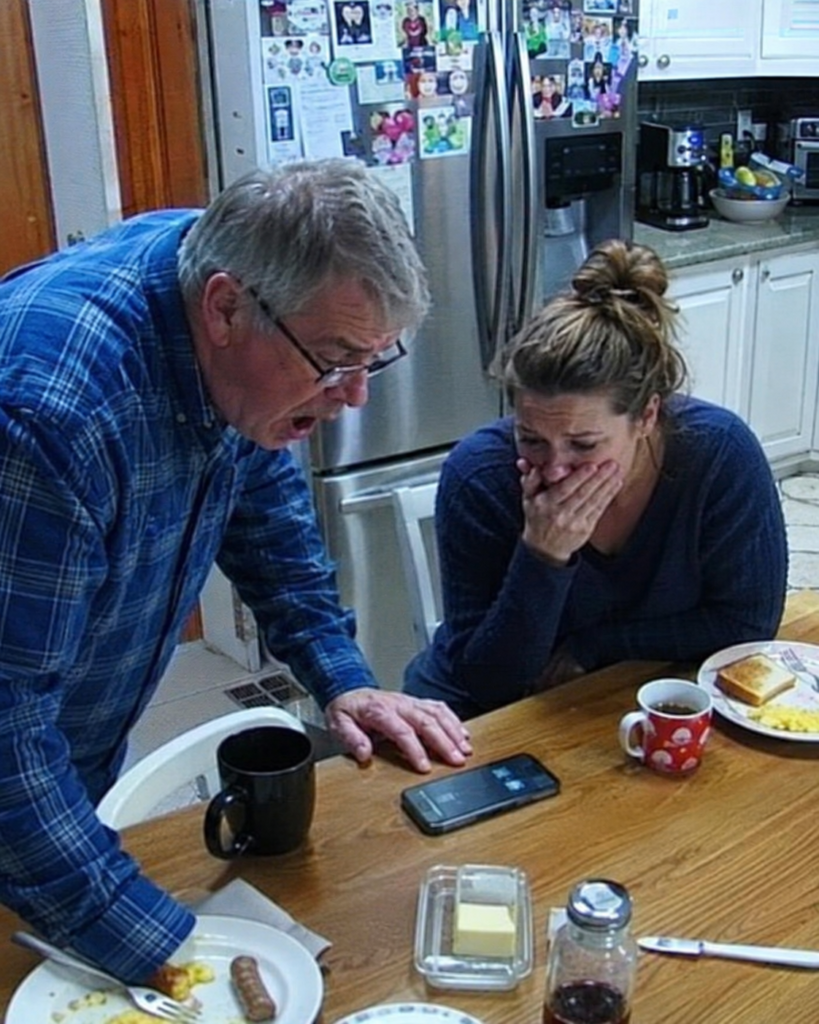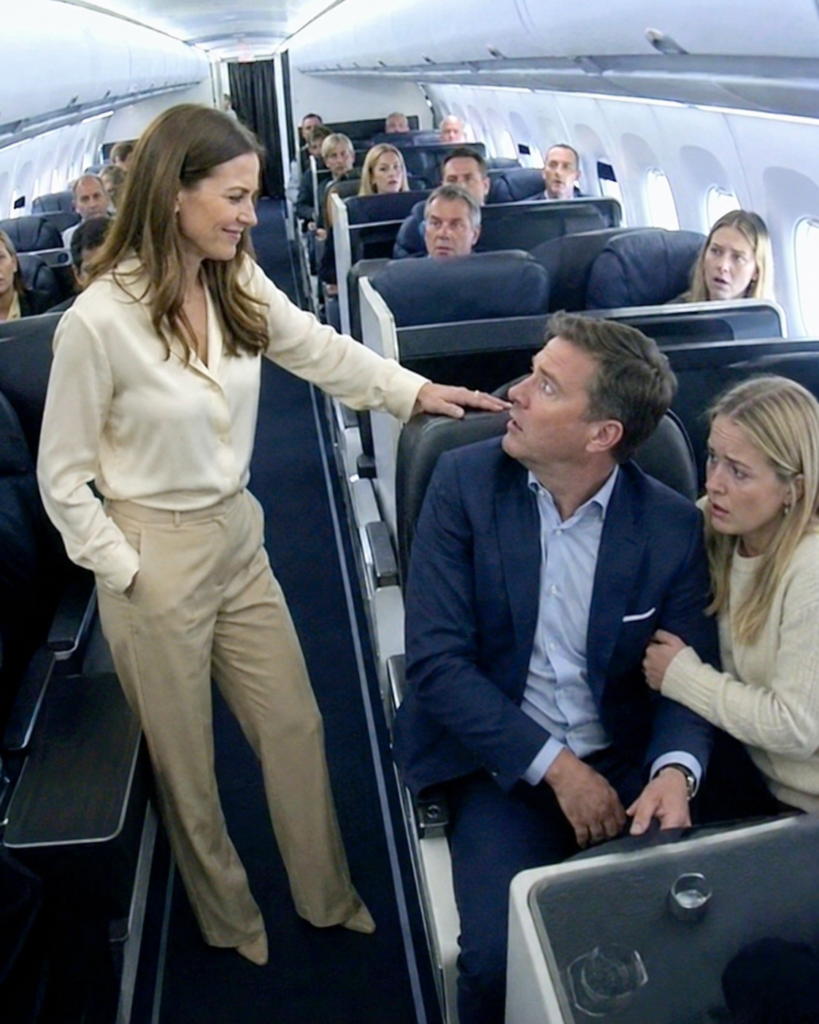
Julian did not remember leaving Westbridge Mall.
One moment, he was standing beside the marble planter with coffee cooling on his hand and two small faces burned into his memory. The next, he was in the back of his car, the city sliding past in silver and glass, his assistant speaking softly into a phone as if volume alone might keep his employer from falling apart.
“Cancel the rest of the afternoon,” Julian said.
His voice sounded unfamiliar.
His assistant, Claire, paused mid-sentence. “All of it?”
“Yes.”
“There’s a call with Frankfurt at three.”
“Cancel it.”
“And the foundation dinner—”
“Claire.”
She lowered the phone. “Yes, Mr. Vale.”
Julian stared out the window, but he saw nothing of the city. Not the traffic. Not the summer light striking the upper windows of the buildings. Not the people crossing sidewalks with shopping bags and iced drinks and ordinary lives.
He saw Mara’s hands tightening around two little boys.
He heard her voice.
No. They are mine.
It would have been easier if she had shouted. If she had cried. If she had called him every name he deserved. But Mara had stood there with five years of silence in her eyes and given him the one answer he had no defense against.
She had not denied the truth.
She had simply refused to give him ownership of it.
By the time the car reached Vale Tower, Julian’s burned fingers had begun to sting. He looked down and saw red patches along his knuckles where the coffee had spilled. It felt absurd, almost offensive, that such a small injury could announce itself so clearly when everything else inside him seemed numb.
Claire opened the car door herself. “Should I call Dr. Sloane?”
“No.”
“You’re very pale.”
“I’m fine.”
She gave him the look of someone who had worked for him long enough to know when he was lying but not long enough to say so.
Julian stepped out and entered the private lobby.
Vale Tower rose forty-two stories above Manhattan, polished and imposing, its walls covered with modern art his mother had chosen because it suggested taste without warmth. The security guards nodded. The receptionist straightened. The elevator opened before he reached it.
Everyone moved as if his path had been cleared before he even decided where to go.
For years, that had been comfort.
Now it felt obscene.
He had mistaken control for strength. He had mistaken obedience for loyalty. He had built a life in which no one questioned him loudly enough to make him hear the truth.
Mara had once questioned him.
And he had chosen the silence of an envelope over the inconvenience of courage.
On the thirty-ninth floor, Julian entered his office and closed the door behind him. The room was exactly as he had left it that morning—walnut desk, city view, leather chairs, stacks of signed documents waiting for his attention.
Everything in order.
Everything meaningless.
He walked to the bar cabinet, reached for the cut-glass decanter, then stopped.
The memory came without warning.
Mara standing in his kitchen at midnight, barefoot, wearing one of his white dress shirts over leggings, taking the glass from his hand.
“You drink when you don’t want to feel,” she had said.
He had laughed then. “And what do you suggest instead?”
“Feel it,” she said simply. “It won’t kill you.”
Julian let his hand fall away from the decanter.
Then he turned, walked to his desk, and opened the bottom drawer.
Inside, beneath a row of sealed contracts and private correspondence, was a small metal box. He had not opened it in years. He told himself he kept it because some part of him was sentimental. Now he understood that sentiment had nothing to do with it.
Guilt did not always look dramatic.
Sometimes it looked like a locked box in the bottom drawer of a powerful man’s desk.
He removed the key from his watch chain and opened it.
There were only three things inside.
A photograph of Mara taken at a charity gala, where she had been smiling at someone outside the frame.
A silver bracelet she had once forgotten at his apartment and never returned to collect.
And a copy of the check his mother had told him was necessary.
Two million dollars.
The amount was printed cleanly, formally, brutally.
Pay to the order of: Mara Bennett.
Julian stared at the copy until the numbers blurred.
His mother, Evelyn Vale, had placed it on this desk five years ago.
“She accepted,” Evelyn had said.
Julian remembered that afternoon too clearly now. The room had smelled of rain and expensive perfume. His mother had stood near the window, elegant in cream silk, her silver-blonde hair swept back with surgical precision.
“She signed the agreement?” he had asked.
“She didn’t have much choice after your little performance,” Evelyn replied.
He had looked away.
Even then, shame had moved under his skin, but it had been easier to let his mother manage the wreckage.
“What agreement?” he asked.
“Confidentiality. Waiver. Acknowledgment of no future claim against you or the company.”
Julian had closed his eyes. “Did she say anything?”
His mother’s face had softened, but not with kindness. With satisfaction. “She said she understood.”
He should have questioned that.
He should have gone after Mara himself.
Instead, he had let Evelyn place a copy of the check in front of him as proof that the matter had been settled. He had looked at that number and hated Mara for taking it, because hating her was easier than hating himself.
Now, after seeing her in a denim jacket at a mall with two little boys and no trace of the life two million dollars could have bought, something cold opened in Julian’s chest.
Mara had not looked like a woman who had taken money and vanished comfortably.
She had looked like a woman who had survived.
His phone rang.
The screen read: MOTHER.
For a moment, he only stared at it.
Then he answered.
“Julian,” Evelyn said, crisp as always. “I was just speaking with Lionel. He says you canceled Frankfurt. Is there a reason you’ve decided to frighten half of Europe before lunch?”
Julian closed his hand around the copy of the check.
“I saw Mara today.”
Silence.
It lasted less than two seconds, but Julian heard everything inside it.
Calculation.
Recognition.
Fear.
Then Evelyn said, “I see.”
“Do you?”
“Where?”
“The mall.”
“How unfortunate.”
The word passed through him like a blade wrapped in velvet.
“How unfortunate,” Julian repeated.
Evelyn exhaled softly. “Darling, whatever fantasy grief is creating in your mind, I suggest you wait before making an impulsive decision.”
“She has children.”
Another pause.
Julian turned toward the windows. The city below looked distant and defenseless.
“Many women have children,” Evelyn said.
“Twin boys.”
Silence again.
This time, longer.
Julian’s pulse beat once, hard.
“You knew,” he said.
Evelyn did not answer immediately.
Then, in a measured tone, she said, “I knew she was pregnant when she left. So did you.”
“No,” Julian said. “That is not what I asked.”
“Julian—”
“Did you know she kept them?”
His mother’s voice cooled. “This conversation is not appropriate over the phone.”
The confirmation did not arrive as a confession.
It arrived as caution.
Julian closed his eyes.
His sons had gray eyes.
His sons knew dinosaurs and bookstores and their mother’s hand, but not his voice.
His mother had known they existed.
“Mara never took the money, did she?” he asked.
Evelyn said nothing.
Julian opened his eyes.
“Answer me.”
“You are upset.”
“I am awake.”
“That girl made choices.”
“That girl,” Julian said, each word controlled with effort, “is the mother of my children.”
“Do not be dramatic.”
The words struck the exact place where he had once been obedient.
For most of his life, Evelyn Vale’s disappointment had been a climate. Julian had learned to dress for it, speak around it, survive within it. His father had died when Julian was twenty-one, leaving behind debt hidden beneath grandeur, and Evelyn had trained her son with the urgency of a general defending a collapsing kingdom.
Never flinch.
Never explain.
Never choose weakness.
And above all, never let anyone outside the family believe they could claim a piece of what the Vales had rebuilt.
Mara had been the first person who made Julian feel like he might be more than the name.
Evelyn had seen that before he had.
“I want the original documents,” Julian said.
“You want many things when you are emotional.”
“I want them today.”
“Be careful how you speak to me.”
Julian looked down at the copy of the check.
“Or what?” he asked quietly. “You’ll lie to me again?”
His mother inhaled sharply.
For the first time in his life, Julian ended a call before Evelyn Vale did.
He stood still afterward, phone in hand, listening to the silence of his office.
Then he called Claire.
She answered on the first ring. “Yes, Mr. Vale?”
“Find Mara Bennett.”
A beat of hesitation.
“Professionally or personally?”
The question had more courage in it than Julian expected.
He looked at Mara’s photograph in the open metal box.
“Carefully,” he said. “No intimidation. No investigators showing up at her home. No calls to her workplace. I want a current mailing address if it can be found legally, and nothing else. Do you understand?”
“Yes.”
“And Claire?”
“Yes?”
“If anyone asks, including my mother, you tell them nothing.”
Another pause.
“Yes, Mr. Vale.”
Across town, Mara Bennett sat in the front seat of her used blue Subaru and gripped the steering wheel until her knuckles ached.
In the back seat, Leo was telling Noah that the new dinosaur from the toy store was scientifically inaccurate because its claws were too big.
Noah was explaining that toy dinosaurs did not need to be accurate if they were good at guarding treasure.
Their voices were familiar music, rising and falling through the space behind her. Her boys had no idea that their world had tilted. They had no idea that the tall man with gray eyes and a ruined expression had once been the beginning of every dream she had been foolish enough to build.
“Mommy?” Noah asked.
Mara blinked and looked in the rearview mirror. “Yes, honey?”
“Are we still getting pretzels next time?”
She almost laughed. Almost.
“Yes. Next time.”
“Was that man sad?” Leo asked.
Of course Leo noticed. Leo noticed everything.
Mara kept her voice steady. “Maybe.”
“Did you make him sad?”
The question was not accusing. It was simply curious, the way children asked about weather, bugs, and why grown-ups sometimes stared into nothing.
“No,” Mara said after a moment. “Some sadness belongs to people because of choices they made.”
Leo considered that. “Like when Noah left crayons in his pocket and they melted in the dryer?”
“That was one time,” Noah protested.
Mara smiled faintly. “Something like that.”
“But bigger,” Leo said.
“Yes,” Mara whispered. “Bigger.”
She started the car.
Her hands trembled for the first three blocks.
By the time they reached their neighborhood, she had managed to breathe normally again.
Their apartment was on the second floor of a brick building above a bakery and a small accounting office. It had no doorman, no marble lobby, no view of the river. The hallway smelled faintly of cinnamon in the mornings and garlic in the evenings. A retired teacher named Mrs. Alvarez lived across the hall and watched the boys twice a week when Mara’s shifts at the community arts center ran late.
It was not glamorous.
It was home.
The boys loved the crooked window in their bedroom, the fire escape where they planted basil in coffee cans, and the crack in the kitchen tile that they insisted looked like a lightning bolt.
Mara carried the shopping bags upstairs while the boys raced ahead.
“Shoes by the door,” she called.
“We know,” Noah sang.
“Hands washed,” she added.
“We know!”
Inside, the apartment was bright with afternoon sun. Crayon drawings covered the refrigerator. A stack of library books leaned dangerously on the coffee table. Two mugs waited in the sink because Mara had left them there that morning and decided survival mattered more than housekeeping.
She set the bags down and pressed one hand against the counter.
For five years, she had imagined this moment in every possible way.
She had imagined Julian finding out when the boys were babies, demanding access, sending lawyers, turning her life into a negotiation.
She had imagined him never finding out at all.
She had imagined telling the boys one day, when they were older, when their hearts could hold the complicated truth: that their father was not dead, not lost, not a hero, not a villain from a storybook, but a man who had been afraid and selfish at the moment when they needed him most.
She had not imagined a mall.
She had not imagined dinosaur backpacks and bookstore bags and Julian standing there with coffee burning his hand.
Her phone buzzed.
For a second, her body froze.
But the message was from Tessa.
Saw your missed call. Everything okay?
Mara stared at the screen, then typed:
Can you come over tonight after the boys sleep?
The reply came almost instantly.
On my way after seven. Wine or emergency tea?
Mara looked toward the boys’ room, where Noah was making roaring sounds and Leo was correcting the pronunciation of ankylosaurus.
Emergency tea.
Tessa arrived at 7:18 with chamomile, chocolate cookies, and the expression of a woman prepared to fight either a landlord or a ghost.
She was Mara’s oldest friend in the city, a pediatric nurse with tired eyes, quick humor, and the rare gift of knowing when to ask questions and when to simply fill a kettle.
The boys adored her because she carried dinosaur Band-Aids in her purse and could make pancakes shaped like questionable animals.
By 8:10, Noah and Leo were asleep, one curled around a stuffed fox, the other with a book open on his chest.
Mara closed their door halfway and returned to the kitchen.
Tessa was already pouring tea.
“I saw Julian,” Mara said.
Tessa’s hand stopped.
Only for a moment.
Then she finished pouring.
“Where?”
“Westbridge Mall.”
“With the boys?”
Mara nodded.
Tessa placed the kettle down gently. “Did he know?”
“He does now.”
“Did he speak to them?”
“No.”
“Good.”
The word came out before Tessa could soften it.
Mara wrapped both hands around the mug but did not drink. “He looked shocked.”
“I imagine men often look shocked when consequences learn to walk.”
Despite herself, Mara let out a small, broken laugh.
Then the laugh turned into something else, and she pressed her fist against her mouth.
Tessa moved around the table and held her without ceremony.
Mara did not sob loudly. She had not sobbed loudly in years. Motherhood had taught her how to cry quietly in showers, in parked cars, in grocery store aisles while pretending to compare cereal prices. Her grief had learned to fold itself into small spaces.
Tonight, it unfolded.
“He said he didn’t know,” Mara whispered.
Tessa’s hand slowed on her back.
Mara pulled away and looked at her.
“What?”
Tessa’s expression had changed.
Not dramatically. But enough.
“Tessa.”
Her friend took a breath.
“What aren’t you saying?”
“Mara, don’t do that thing where you hear one sentence and build a whole courtroom around it.”
“I’m already in the courtroom,” Mara said. “Speak.”
Tessa sat down slowly.
“After you left Manhattan,” she said, “after you came to stay with me in Queens, there were calls.”
Mara frowned. “From Julian?”
“No. Not from him.”
Mara’s stomach tightened.
“From his mother?”
Tessa looked down at her tea.
“You told me Evelyn contacted you once,” Mara said. “You said she wanted to know where I was, and you told her not to call again.”
“That part is true.”
“But not all of it.”
Tessa closed her eyes briefly. “She came to the hospital.”
Mara stared at her.
“When?”
“A few weeks before the boys were born.”
“Tessa.”
“She found out where I worked. I don’t know how. She was waiting by the staff entrance when my shift ended.”
The kitchen seemed to shrink.
The hum of the refrigerator grew louder.
“What did she want?”
“To know where you were living.”
“And you told her?”
“No,” Tessa said firmly. “Never.”
Mara believed that without hesitation.
Tessa would have taken a secret to the grave if it belonged to someone she loved.
“She offered me money,” Tessa continued. “A lot of it. She said she only wanted to make sure the situation was handled properly. I told her the situation had a name, actually two names, and they were not hers to handle.”
Mara’s throat tightened. “Why didn’t you tell me?”
“Because you were eight months pregnant with twins, working part-time, sleeping three hours a night, and pretending you weren’t terrified.” Tessa’s voice softened. “I thought protecting your peace mattered more than giving you one more thing to fear.”
Mara stood up and walked to the window.
Outside, the streetlights glowed against the bakery awning. A cyclist passed. Somewhere below, someone laughed.
Five years ago, Evelyn Vale had not simply let her go.
She had searched for her.
“What else?” Mara asked.
Tessa was quiet.
Mara turned.
“Tessa.”
Her friend rubbed both hands over her face. “There was a letter.”
Mara’s breath caught.
“What letter?”
“From Julian.”
The room went still.
Tessa stood and crossed to the hall closet. She reached onto the top shelf, moved an old sewing tin, and took down a small cardboard box Mara recognized as one of the boxes she had packed in the chaotic weeks before the boys were born.
“What are you doing?” Mara asked.
“I should have given it to you years ago.”
Mara could not move.
Tessa opened the box and removed a cream-colored envelope, slightly bent at one corner.
Mara saw her name written across the front.
Mara.
Not Ms. Bennett.
Not formal.
Not legal.
Mara.
The handwriting was Julian’s.
Her heart began beating too fast.
“No,” she whispered.
Tessa held it carefully, as if it might shatter. “It arrived at my apartment about a month after you left his office. No return address, but I knew the handwriting because I’d seen birthday cards from him at your old place.”
Mara did not take it.
“You opened it?”
“No.”
“Then why did you keep it?”
“Because when it came, you had just spent the night in the hospital after going into early contractions. The doctor said stress could make it worse. You were barely holding yourself together.” Tessa’s eyes filled. “I made a decision. Maybe it was wrong. I thought if he wanted you, he knew how to find you properly. I thought a letter might pull you back into something that had nearly destroyed you.”
Mara stared at the envelope.
Five years.
A letter had existed for five years.
“What if he apologized?” Mara asked.
Tessa swallowed. “Then I stole that from you.”
The words hung between them, heavy and honest.
Mara finally took the envelope.
Her fingers recognized nothing and everything about it.
She did not open it.
Not then.
Instead she held it to her chest, closed her eyes, and felt the ground beneath the story of her life shift by a single invisible inch.
Julian did not sleep that night.
At eleven, Claire sent a secure message.
I found a public mailing address connected to Mara Bennett through her business license. She runs children’s art workshops and freelance design classes. No further search conducted.
Below it was an address.
Julian knew immediately he had no right to go there.
That was the first useful thought he had trusted all day.
The old Julian would have gone. The old Julian would have arrived in a black car, pressed the buzzer, stood in the hallway with a lawyer’s confidence and a wounded man’s entitlement.
But the old Julian had already done enough.
So he sat at his desk until dawn and wrote a letter by hand.
He ruined the first four pages.
The first sounded too formal.
The second sounded too sorry for himself.
The third tried to explain.
The fourth used the phrase “I was under pressure,” and he tore it in half so violently the paper sliced his thumb.
Finally, near sunrise, he wrote only what he could stand behind.
Mara,
I saw them.
I do not know what you need from me. Perhaps nothing. I do not know what you have told them or what you plan to tell them. I will not force myself into their lives or yours.
I am writing because I need to say plainly that what I did to you was wrong. Not complicated. Not unfortunate. Wrong.
I was a coward. I let fear, pride, and my mother’s expectations speak louder than love or decency. You owed me nothing after that day. You still owe me nothing now.
I was told things after you left. I believed what was easiest for me to believe. That was also my failure.
If there is any conversation you are willing to have, I will meet on your terms, in any place you choose, with any boundaries you set.
If you do not answer, I will respect that.
Julian
He read it once, then placed it in an envelope.
No check.
No lawyer.
No business card.
Just the letter.
At nine in the morning, he asked Claire to have it delivered by courier with no signature required.
Then he called the one person who might know where his mother kept records of the past.
“Daniel,” Julian said when Vale Capital’s general counsel answered. “I need to see every document connected to Mara Bennett from five years ago.”
Daniel Cross was silent for a fraction too long.
“I’m not sure what you mean.”
“Yes, you are.”
“Julian, some matters from that period were handled privately by your mother.”
“Then you’ll know which matters I mean.”
Daniel sighed. “This is delicate.”
“No,” Julian said. “It was delicate five years ago. Now it is something else.”
“You should speak to Evelyn.”
“I did.”
“And?”
“She lied.”
Another silence.
Daniel had worked for the Vale family since Julian was seventeen. He had been at Julian’s father’s funeral, at Julian’s first board vote, at nearly every crisis that had shaped the company. His loyalty was old, expensive, and complicated.
Finally, Daniel said, “There are archived files. Not in the main system.”
“Where?”
“Off-site.”
“I want them.”
“Julian—”
“Today.”
Daniel’s voice lowered. “You may not like what you find.”
Julian looked at the sunrise reflecting off the neighboring tower.
“I already don’t.”
The letter arrived at Mara’s apartment at 10:42 a.m.
She was at the kitchen table cutting strawberries for the boys when the buzzer rang.
Mrs. Alvarez, who had come over to borrow sugar and stayed because Leo was explaining planets to her, looked toward the hall.
“You expecting someone, mija?”
“No.”
Mara pressed the intercom. “Hello?”
“Courier for Mara Bennett.”
Her fingers tightened.
She buzzed him up.
When she opened the door, the courier handed her a plain envelope and left without waiting.
No signature.
No demand.
Her name was typed on the front.
Inside was Julian’s handwriting.
Mrs. Alvarez noticed the change in Mara’s face and quietly gathered the sugar bowl.
“I’ll take the boys to see the new puppy downstairs for ten minutes,” she said.
Mara looked at her, grateful and ashamed of needing help without asking for it.
“Thank you.”
When the apartment was quiet, Mara opened Julian’s letter.
She read it standing beside the sink.
Then she read it again.
Then she sat down because her knees no longer felt steady.
I was told things after you left. I believed what was easiest for me to believe.
Mara looked toward the hallway closet where Julian’s old unopened letter now sat on the shelf, waiting like a witness.
She had not opened that one either.
Coward, she thought.
But she was not sure whether she meant him or herself.
By noon, Tessa called.
“Did you open it?”
“The old one or the new one?”
“Either.”
Mara looked at the fresh letter on the table. “The new one.”
“And?”
“He apologized.”
“Properly?”
Mara closed her eyes. “Yes.”
Tessa was quiet.
“I hate that,” Mara said.
“I know.”
“I wanted him to be exactly as terrible as the worst day of my life.”
“That would be simpler.”
“It would.”
“But?”
“But the boys have his eyes,” Mara whispered. “And someday they’re going to ask questions that deserve answers, not just my pain dressed up as truth.”
Tessa breathed out slowly. “What are you going to do?”
Mara looked at the unopened old letter.
“I’m going to meet him.”
Tessa made a sound halfway between surprise and concern.
“In public,” Mara added. “Without the boys. And not because he deserves it. Because I do.”
Mara chose a small botanical garden café at the edge of the city, a place with glass walls, potted lemon trees, and enough strangers nearby to keep old emotions from becoming too loud.
Julian arrived fifteen minutes early.
He wore no tie.
For him, that was nearly undressed.
When Mara walked in, he stood so quickly his chair scraped the floor.
The sound made several people glance over.
Mara stopped at the table.
“Sit down,” she said.
He sat.
She did too, keeping her purse on her lap and her back straight.
For a moment, neither spoke.
Julian looked different in daylight outside the world of his own making. Still handsome, still composed, but the edges had worn thin. There were shadows beneath his eyes. A small red mark crossed one finger where he must have cut himself.
Mara hated that she noticed.
“Thank you for coming,” he said.
“I came for clarity, not reconciliation.”
“I understand.”
“Do you?”
He accepted the correction without flinching. “I’m trying to.”
A server approached. Mara ordered tea. Julian ordered nothing.
When they were alone again, Mara took his letter from her purse and placed it on the table.
“I read it.”
His gaze dropped to it.
“And before you ask,” she said, “I haven’t decided what access, if any, you will have to Noah and Leo.”
The names struck him visibly.
“Noah,” he repeated softly. “And Leo.”
Mara’s chest tightened.
“Yes.”
He pressed his lips together, and for a second she saw him fight for composure.
“Which one is which?”
“Noah is the one with the dinosaur backpack. Leo had the bookstore bag.”
A faint, fragile smile crossed Julian’s face and disappeared. “Leo looked at me like he already knew all my secrets.”
“He does that to everyone.”
“And Noah?”
“Noah believes every stuffed animal has a legal right to a name and a birthday.”
Julian looked down, and when he blinked, his eyes shone.
Mara turned toward the lemon trees.
She had not come here to comfort him.
“I didn’t know,” he said.
She looked back. “About the twins?”
“About any of it after you left.”
“You knew I was pregnant.”
“Yes.”
“You knew what you asked me to do.”
His face tightened. “Yes.”
“You knew I walked out alone.”
“Yes.”
“Then be careful with the sentence ‘I didn’t know,’ Julian. It has edges.”
He nodded slowly. “You’re right.”
The server brought Mara’s tea.
She waited until the woman left.
“Your mother contacted Tessa before the boys were born.”
Julian’s expression changed.
“What?”
“She tried to find me.”
His jaw hardened. “I didn’t know that.”
This time, Mara believed him.
She wished she didn’t.
“She offered Tessa money.”
Julian closed his eyes briefly.
“There was also a letter,” Mara said.
He opened them.
“What letter?”
“One from you. Sent about a month after I left.”
Julian went very still.
“You got it?”
“No,” Mara said. “Tessa kept it from me. She thought she was protecting me. I only found out last night.”
Julian sat back.
For the first time since she had known him, Julian Vale looked completely unguarded.
“What did it say?” she asked.
He stared at her. “You haven’t read it?”
“No.”
He swallowed. “I wrote it after I went to your apartment and found it empty.”
Mara’s breath caught. “You went there?”
“Yes.”
“When?”
“Three days after the boardroom.”
Three days.
Mara remembered those days as a blur of nausea, crying in Tessa’s guest room, refusing unknown calls, trying not to imagine Julian relieved.
“I called,” he said. “Your number was disconnected.”
“I changed it.”
“I deserved that.”
“What did the letter say?”
Julian’s hands closed around nothing on the tabletop.
“I don’t remember every word.”
“Try.”
“I said I was sorry. Badly, probably. I said I was afraid, and that I knew fear didn’t excuse what I did. I asked you to meet me. I said if you wanted the baby, I would not fight you. I said…” His voice faltered. “I said I wanted to know if there was any part of you that could still imagine a life where I learned how not to be my mother’s son.”
Mara could not speak.
Outside the glass wall, wind moved through tall grass in the garden beds.
For five years, she had built her memory around a closed door.
Now she was discovering there had been another door somewhere, unopened, gathering dust in a box.
It did not erase what he had done.
But it changed the shape of what came after.
“I waited,” Julian said.
Mara looked at him.
“For weeks,” he continued. “Then my mother told me you had taken the settlement. She showed me a copy of a check. Two million dollars. She said you signed papers and wanted no contact.”
Mara’s face went cold.
“I never took money from your family.”
“I know that now.”
“No,” she said, her voice low. “You suspect it now. Know it when you can prove it.”
“I’m getting the files.”
“From your mother?”
“From Daniel Cross.”
Mara laughed once without humor. “Your family lawyer?”
“Yes.”
“And you trust him?”
Julian hesitated.
There it was.
The tiny fracture in certainty.
Mara saw it and felt something old and bitter rise.
“You still don’t understand,” she said. “This is what money does in your world. It makes truth something people store in locked cabinets. It makes lies look notarized. It makes pain an item in a file.”
Julian absorbed the words.
“You’re right,” he said.
Mara hated how much harder his humility made this.
She had prepared herself for arrogance. She had sharpened herself against excuses. She had not prepared for a man who sat across from her and accepted every blow because he knew he had earned them.
“What do you want?” she asked.
“To know them,” he said, then quickly added, “only if and when you decide it is right for them.”
“You don’t get to come in as their father overnight.”
“I know.”
“They have a life.”
“I know.”
“They have routines, fears, favorite breakfasts, bedtime rules. Leo hates loud hand dryers. Noah cries when a balloon pops but pretends he doesn’t. They don’t like carrots unless they’re cut into coins. They think the moon follows our car because it likes us.” Her voice broke, and she steadied it. “You don’t know any of that.”
Julian’s eyes filled again, but he did not look away.
“No,” he said. “I don’t.”
“And whose fault is that?”
“Mine.”
She leaned back, exhausted by the answer she had wanted and hated receiving.
A long silence settled.
Finally, Julian said, “May I ask one question?”
Mara waited.
“Did you ever tell them anything about me?”
She looked into her tea.
“I told them their father and I weren’t ready to be a family when they were born.”
His face tightened with pain.
“That was kinder than I deserved.”
“It wasn’t for you.”
“I know.”
Mara traced the rim of her cup.
“They ask sometimes,” she said. “Not constantly. But enough. Noah asks whether you like pancakes. Leo asks whether eyes can be inherited from ghosts.”
Julian let out a breath that was almost a laugh and almost a sob.
“I like pancakes,” he said.
“I’ll alert the court.”
For one brief second, the corner of his mouth lifted.
Then it was gone.
“Mara,” he said softly, “whatever happens next, I will not let my mother near them without your consent.”
Mara looked up sharply. “That was never on the table.”
“I know. I’m saying it because I should have drawn that line five years ago.”
“Yes,” she said. “You should have.”
He nodded.
She gathered her purse.
The meeting was over.
Julian stood, but did not move toward her.
“Can I write to them?” he asked.
“No.”
He accepted it.
Then Mara paused.
“Write to me,” she said. “About them. Questions. Not demands. I won’t promise answers, but I’ll consider it.”
Hope moved across his face so quickly he could not hide it.
“Thank you.”
“Don’t thank me yet.”
“I won’t.”
She turned to leave, then stopped.
“One more thing,” she said.
“Yes?”
“If you discover your mother forged anything with my name on it, I want to know before your lawyers bury it.”
His expression became still.
“They won’t bury it.”
Mara studied him. “Make sure you mean that when it costs you something.”
Then she walked out into the afternoon.
At six that evening, Julian received a call from Daniel.
“I have the archived file,” Daniel said.
Julian was in his office, jacket off, sleeves rolled.
“And?”
“You need to come downstairs.”
“Why downstairs?”
“I’m in records. I didn’t want to bring this through the executive floor.”
Julian’s pulse slowed.
That was never a good sign.
The records room beneath Vale Tower was cold, windowless, and smelled faintly of paper and dust. Daniel stood beside a metal table with a gray storage box in front of him.
He looked older than he had that morning.
Julian closed the door.
“Show me.”
Daniel opened the file.
Inside were legal documents, correspondence, payment approvals, and a bank confirmation.
Julian saw Mara’s name printed again and again.
Mara Bennett acknowledges receipt…
Mara Bennett waives all future claims…
Mara Bennett agrees to maintain confidentiality…
At the bottom of one page was a signature.
Mara Bennett.
Julian stared at it.
“That’s not her signature,” he said.
Daniel said nothing.
Julian had seen Mara sign enough things—gallery receipts, hotel forms, birthday cards, the back of a photograph she had once mailed him from Boston.
Her real signature was quick, slanted, restless.
This one was slow and careful. An imitation by someone trying not to make mistakes.
“Who notarized it?” Julian asked.
Daniel turned the page.
Julian recognized the name.
“Margaret Ellis,” he said.
“She was your mother’s personal secretary at the time.”
“She retired four years ago.”
“Yes.”
Julian looked at the bank confirmation.
“Where did the money go?”
Daniel’s silence was answer enough.
“Where?”
Daniel placed another page in front of him.
The transfer had not gone to Mara.
It had gone to a private trust.
Beneficiary: Unlisted.
Trustee: Evelyn Vale.
Julian read it twice.
Then again.
His mother had not paid Mara to disappear.
She had made Julian believe Mara had sold his children and his silence for two million dollars.
Then she had moved the money into a trust only she controlled.
Julian gripped the edge of the table.
“Did you know?”
Daniel’s face paled. “Not then.”
“That is not an answer.”
“I prepared draft documents at Evelyn’s request. I was told Miss Bennett had separate counsel and final execution would be handled privately.”
“You accepted that?”
Daniel looked wounded. “Your mother was chairwoman of the board.”
“She was my mother.”
“And in this company, for many years, that meant the same thing as law.”
Julian stepped back, sickened.
“Who is the beneficiary?”
“I don’t know.”
“Find out.”
“I tried.”
Julian looked at him sharply.
Daniel lowered his voice.
“The trust was amended three months ago.”
“By whom?”
“Evelyn.”
“To name a beneficiary?”
Daniel hesitated.
“To activate distributions beginning next month.”
Julian’s mind sharpened through the shock.
“Distributions to whom?”
Daniel opened a second folder.
“That is the part I do not understand.”
He handed Julian a copy of the amendment.
At first, Julian could not make sense of it.
Then he saw the names.
Not Evelyn.
Not a charity.
Not a company.
Noah Bennett.
Leo Bennett.
Julian stared.
His mother had created a trust with stolen settlement money, concealed it for five years, and now—suddenly—arranged for payments to begin to the boys.
“Why?” Julian whispered.
Daniel shook his head.
“There’s something else.”
Julian looked at him.
Daniel removed one final document from the folder.
It was not a legal form.
It was an envelope.
Old. Cream-colored. Sealed.
Across the front, in Evelyn Vale’s handwriting, were four words:
For Julian, if necessary.
Julian felt the room tilt.
Daniel said, “I found it inside the trust file.”
Julian picked up the envelope.
His mother had prepared for discovery.
Of course she had.
He broke the seal.
Inside was a single page.
Julian,
If you are reading this, then the past has become inconvenient.
I did what was required to protect you from a mistake that would have destroyed everything your father left behind. You may resent me now. Someday you may understand.
The children were never the danger.
Their mother was.
There are facts about Mara Bennett you never knew, and if she has returned, it is not by accident.
Ask her why she was really hired at Vale Capital.
Ask her what her father took from ours.
Ask her why she never told you that Bennett was not the name her family used when they first came into our lives.
Julian’s hand tightened around the letter.
Beneath his mother’s signature was one final line.
Before you hand her your sons, find out who she was before she became Mara Bennett.
Julian stood in the cold records room while the air hummed above him and the city moved on somewhere far overhead.
For five years, he had believed one lie.
Now another opened beneath it.
And the worst part was not that his mother might be lying again.
The worst part was that Mara had once told him very little about her family.
Almost nothing at all.
At that exact moment, across town, Mara finally opened Julian’s first letter.
The old one.
The one written five years too late and delivered five years too early.
She read it once with tears slipping silently down her face.
Then she unfolded the second page tucked behind it—one she had not noticed at first.
It was not a letter.
It was a copy of a newspaper clipping from twenty years ago.
The headline read:
VALE INDUSTRIES WHISTLEBLOWER DISAPPEARS AFTER FINANCIAL SCANDAL
Below the headline was a photograph of a younger man standing outside a courthouse.
Mara’s breath stopped.
She knew that face.
Not from memory.
From the single photograph her mother had hidden in the back of an old Bible.
Her father.
And beneath his photograph, printed in grainy black letters, was the name he had used before Mara was born.
Thomas Arden.
Mara Bennett’s real last name had once been Arden.
And the Vale family had known it all along.
END OF PART 2 – LIKE, SHARE AND COMMENT “THE ENTIRE STORY” IF YOU WANT TO READ THE FULL STOR