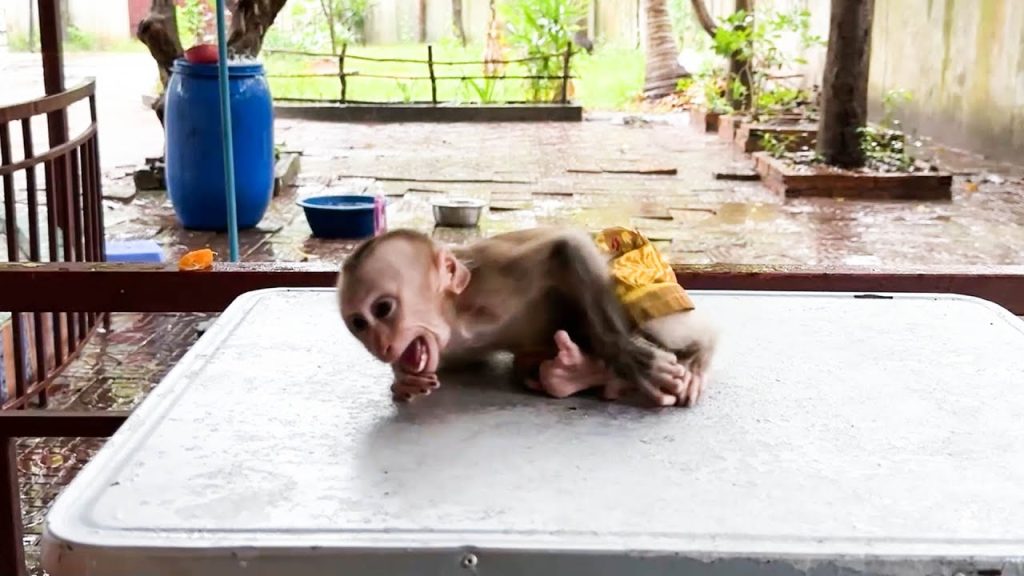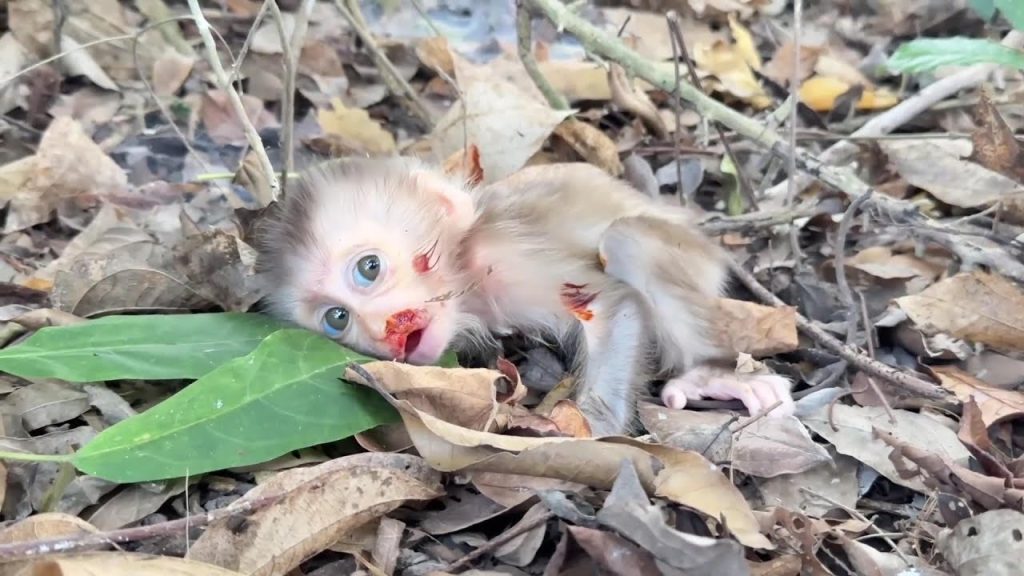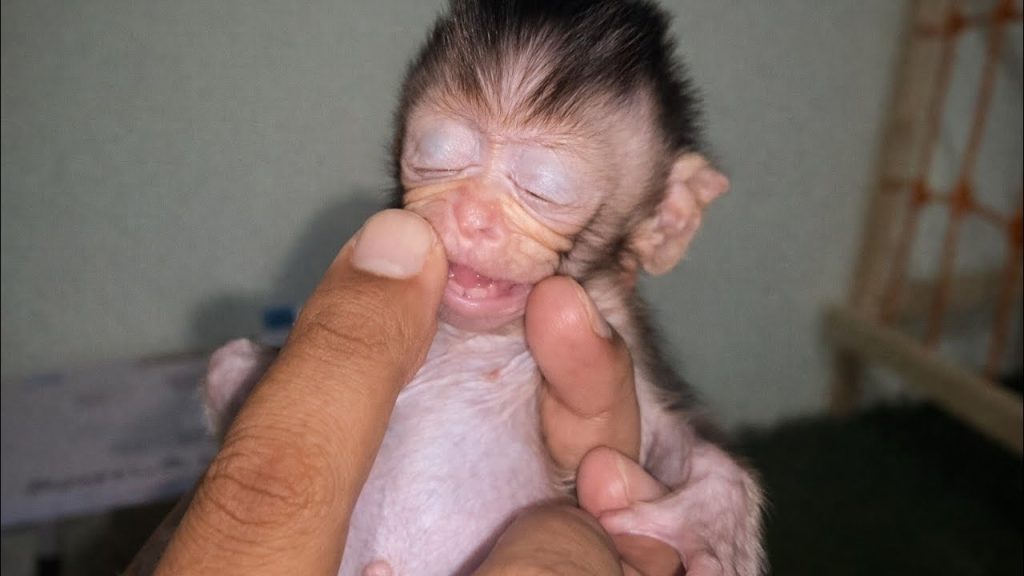
The little baby monkey sat trembling, tiny hands clutching the air as if trying to pull comfort closer. His stomach growled loudly, louder than the room itself, and the hunger burned sharply inside him. Milk was all he wanted. Milk was all he needed. But it wasn’t there yet.
At first, he whimpered softly, eyes scanning the space for his caregiver. When no bottle appeared, the fear rushed in. His cries grew louder, breaking into hysterical screams that shook his whole small body. Tears streamed down his face, soaking his fur as he kicked and twisted in desperation.
To him, waiting felt dangerous. Hunger made the world feel unsafe. Every second without milk felt like being forgotten. He screamed with everything he had, voice cracking, breath uneven, heart racing wildly in his chest.
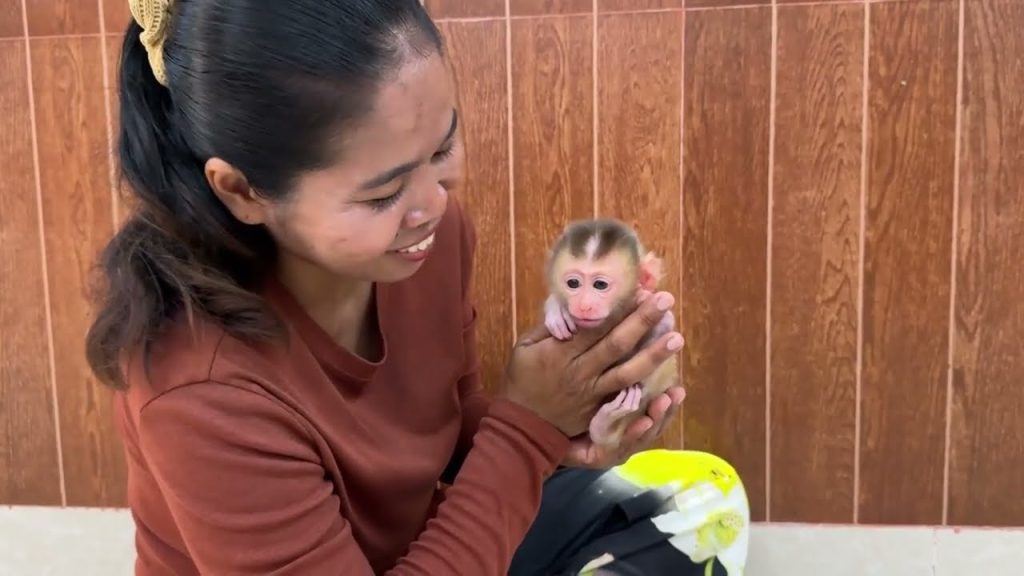
The caregiver hurried, warming the milk carefully, knowing rushing could cause harm. She spoke softly, promising it was coming, but the baby monkey couldn’t understand words yet. He only understood the pain in his belly and the panic in his heart.
He threw his head back and screamed again, louder than before, hands shaking uncontrollably. His body was too small for emotions this big. Hunger had turned into fear, and fear into hysteria.
Finally, the bottle was ready.
The moment it touched his lips, the screaming stopped instantly, as if a switch had been turned off. He drank desperately, gulping fast, hands gripping tightly. His cries melted into deep sighs of relief. His body relaxed. His eyes slowly closed halfway as warmth spread through him.
After finishing, he leaned weakly against the caregiver, exhausted from crying so hard. Hunger was gone. Fear faded with it. All that remained was quiet breathing and the comfort of being held.
Sometimes, impatience is not bad behavior. Sometimes, it is simply a small body crying out for survival. And when milk finally comes, it doesn’t just feed the stomach—it heals the heart too.