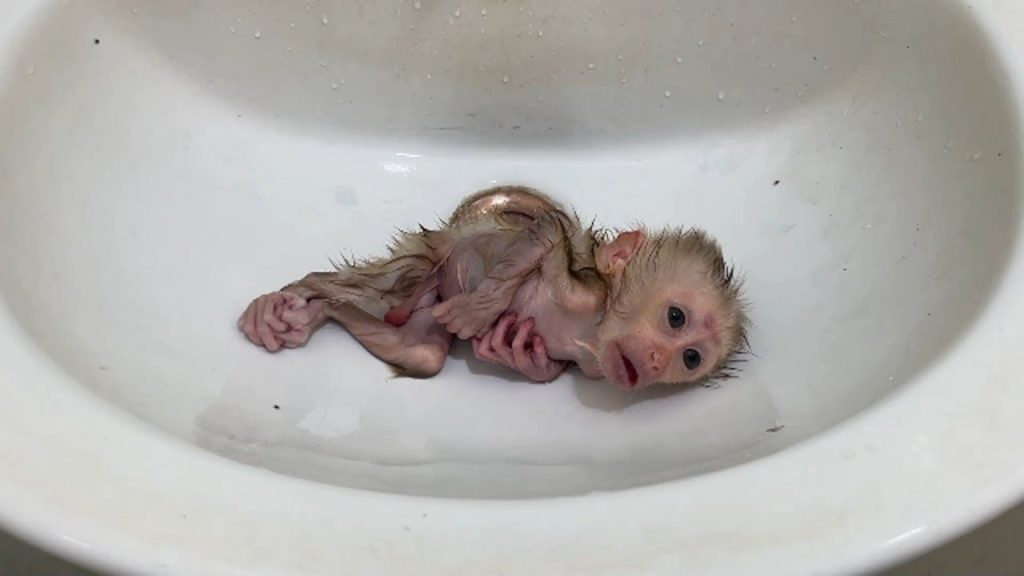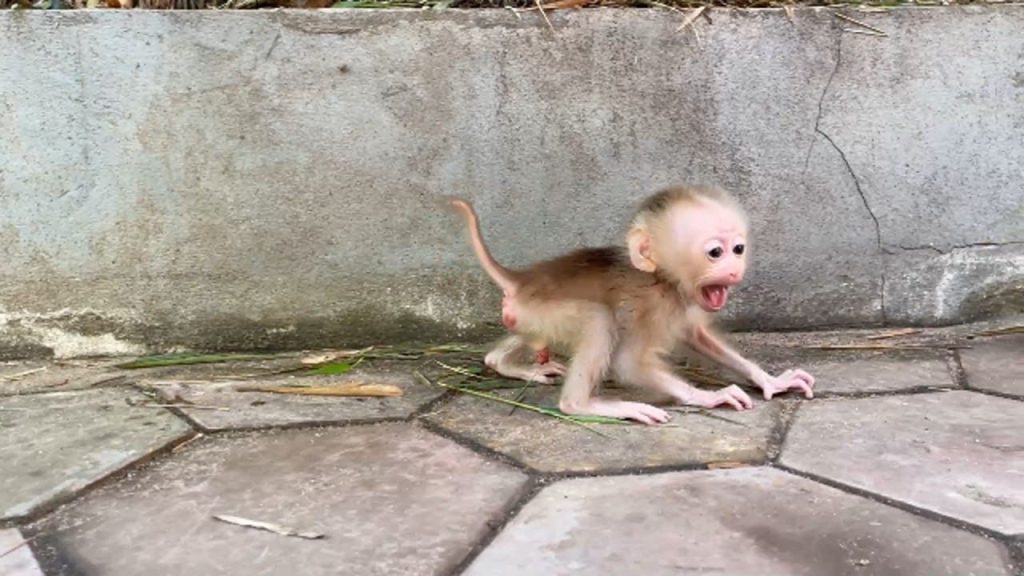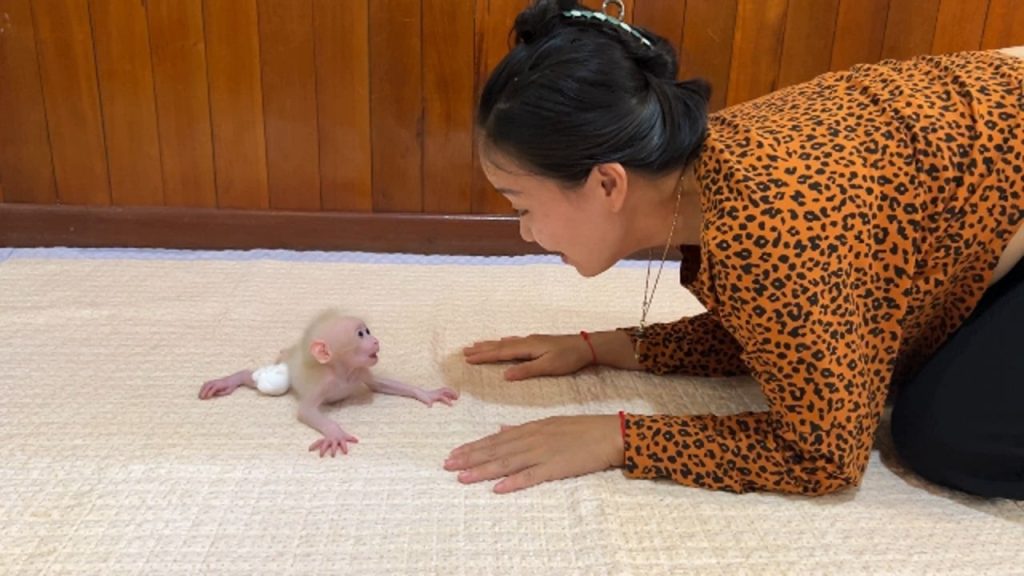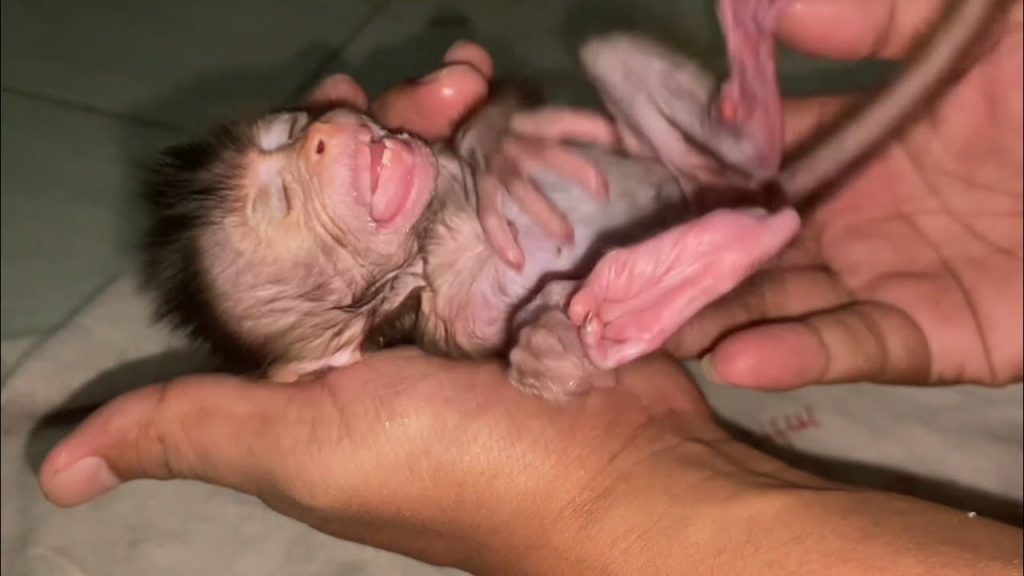
Newborn baby monkey lay trembling in the corner, tiny chest heaving, eyes wide with fear. The world felt loud, bright, and dangerous after rescue. Hands that tried to help looked like threats. When anyone came close, he snapped, hissed, and screamed with strength for such a small body.
His aggression was not cruelty. It was terror. Hunger, pain, and confusion had taught him that survival meant fighting first. Each sound made his muscles tighten. Each touch burned like memory. He had learned too early that no one stayed long.
Caregivers moved slowly, speaking softly, keeping distance. They did not punish the behavior. They understood the language behind it. Aggression was his shield, the only armor he owned. Underneath, his heart raced, begging for safety.
Feeding time was hardest. He bared tiny teeth, flailed, and cried until exhaustion took over. Then he drank desperately, shaking, never fully relaxing. Even warmth frightened him, because warmth once disappeared.
Hours passed. Then days. Consistency began to work its quiet magic. The same voices returned. The same hands waited patiently. Nothing bad happened. Slowly, between outbursts, his breathing softened.
One night, after another angry fit, he collapsed into sleep mid cry. A caregiver stayed nearby, not touching, just present. When he woke, he did not scream immediately. He looked. He listened.
That pause changed everything.
Aggression faded in seconds at a time, then minutes. Fear loosened its grip. He still snapped sometimes, still shouted when overwhelmed, but recovery came faster. Trust crept in carefully.
Healing was not about forcing calm. It was about proving safety again and again. The newborn was still fragile, still reactive, still learning. But beneath the anger lived a survivor with a fierce will to live.
One day, that same strength would become confidence. For now, it kept him alive.