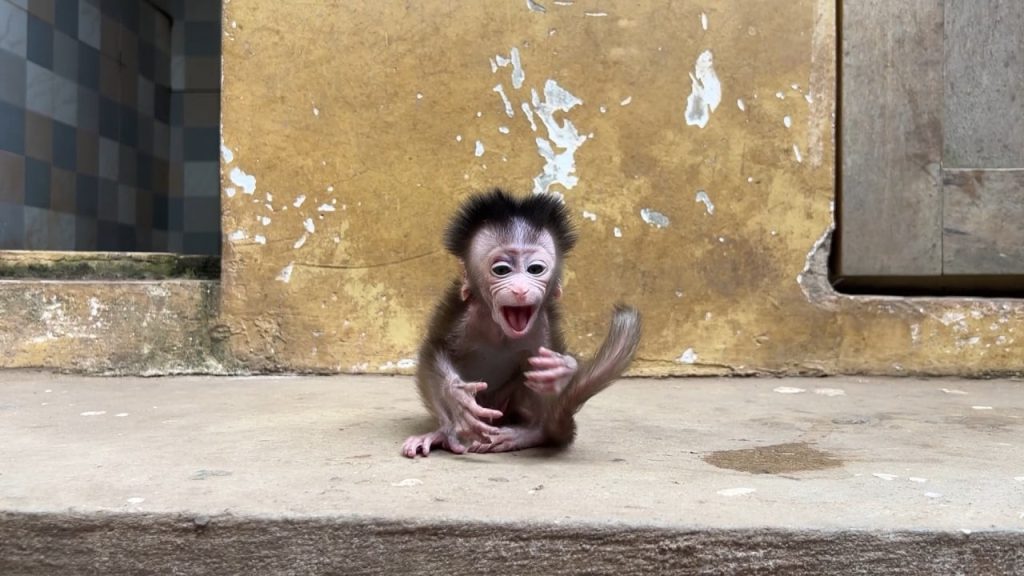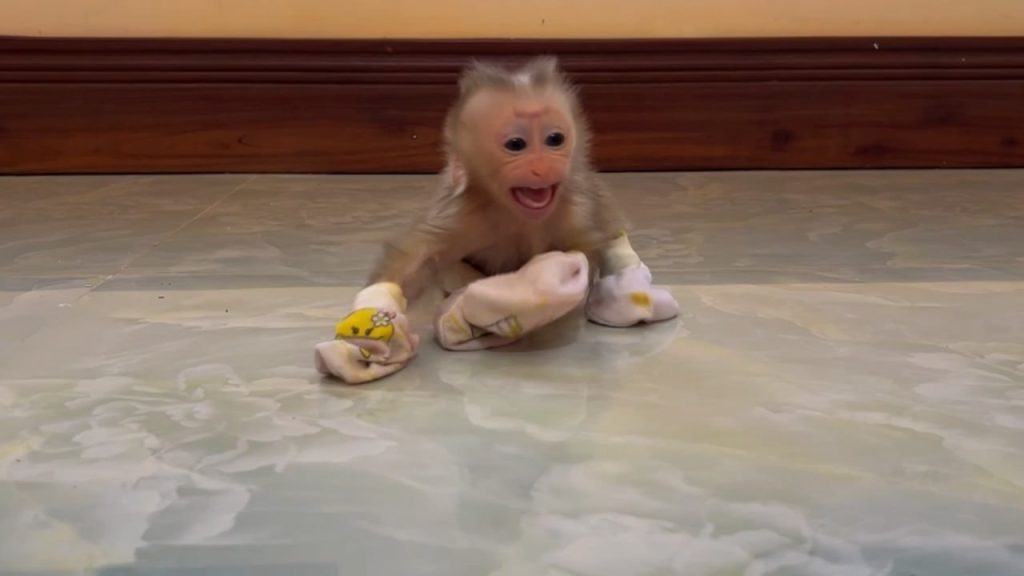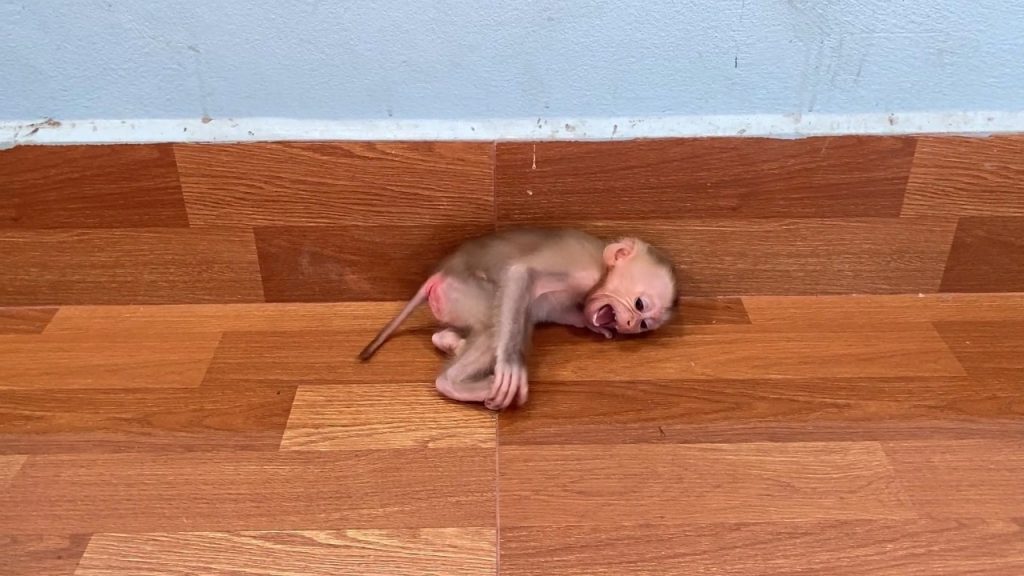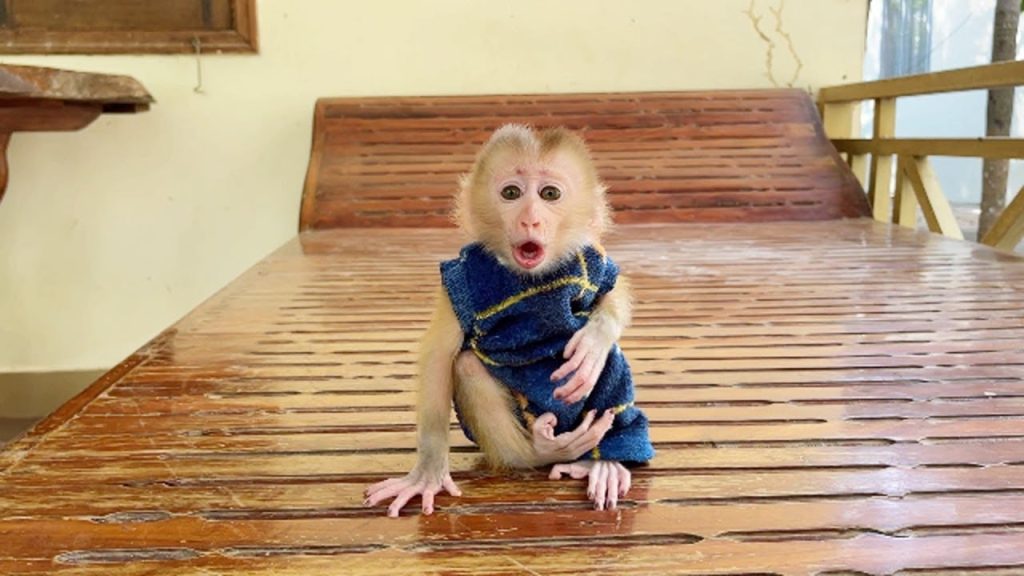
Ronaldo sat stiffly on the floor, eyes darting toward the doorway where his mom had disappeared moments earlier. His small hands fluttered as he began panic-talking in rapid, broken sounds, lips moving nonstop as if words alone could bring her back. Every noise he made carried urgency. He wasn’t playing. He was pleading.
Dad sat nearby, trying to amuse him, clapping softly and making silly faces. Ronaldo glanced at him, then quickly looked away, continuing his anxious chatter. He babbled louder, voice rising and falling, explaining his worry in a language only emotions could translate. His body leaned forward, ready to run if mom returned. Waiting was unbearable.
Dad tried again, gently tapping the floor, offering a toy. Ronaldo pushed it aside, still talking, still stressed. His eyes filled with tears, but he refused to cry yet. He believed if he stayed alert, if he kept making noise, mom would hear him. His mouth worked nonstop, tiny teeth flashing as his lips trembled between words and whimpers.
Minutes felt like hours. Ronaldo’s legs shook. He reached toward dad, not for comfort, but to be held higher, closer to the door. Dad lifted him, rocking slowly, whispering reassurance. Ronaldo pressed his ear to dad’s chest, listening, but his voice didn’t stop. Panic lived in his breath.
Then footsteps. Ronaldo froze mid-sound. His eyes widened. One sharp call escaped him, and then mom appeared. The panic collapsed instantly. Ronaldo cried out, arms stretching, voice breaking at last. Mom scooped him up, holding him tight.
His talking slowed, then stopped. His body softened. The fear drained away, replaced by relief so deep it left him quiet. He rested his head on her shoulder, exhausted from waiting.
Ronaldo hadn’t been dramatic. He had been afraid. Talking was his way of staying connected, of holding onto hope until mom returned. In her arms, he learned again that panic ends where love begins, and that someone always comes back when he calls.