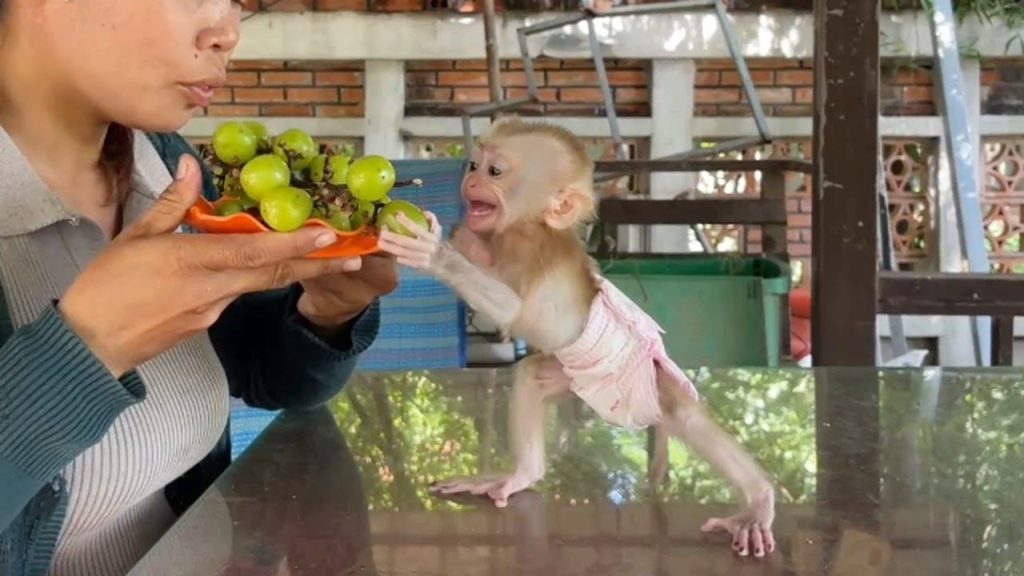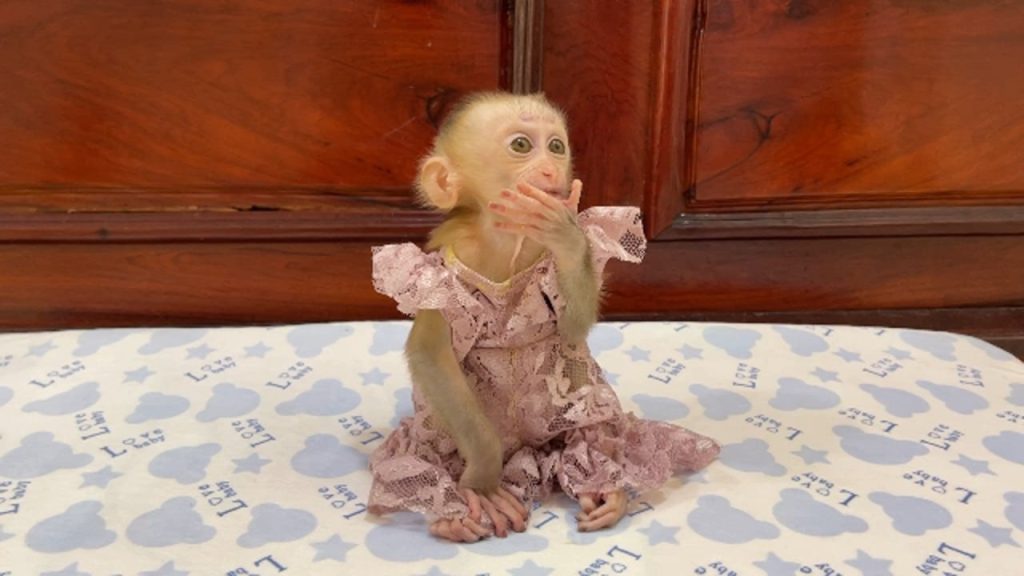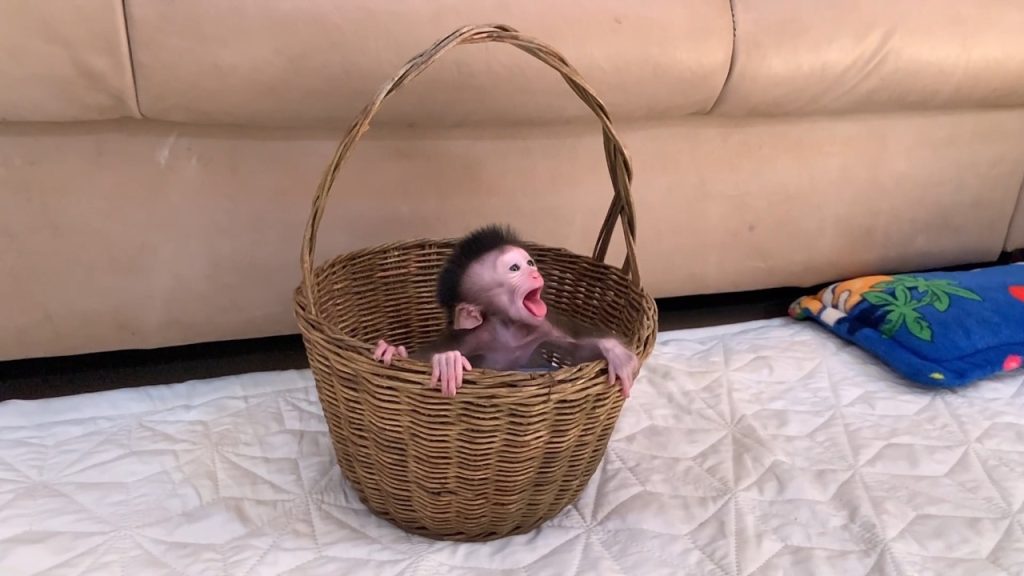
Baby Santa had reached the age when others were already walking, running, chasing light and shadows with laughter. Her legs were long enough now, her joints formed, her body shaped for movement. On paper, she was ready. But reality was much harder. Santa could not stand on her own. She could not take a step without human hands holding her steady.
Each morning, she tried. She pushed against the floor with trembling legs, eyes full of effort and hope. For a brief second, her body lifted, then fell back gently into waiting arms. Confusion crossed her face. Why wouldn’t her body listen? The instinct was there, but the strength was missing.
Humans stayed close, never leaving her alone. They lifted her slowly, supported her chest, guided her feet one by one. Santa leaned heavily into their hands, trusting completely. Without them, she froze, afraid to move, afraid to fall. Independence felt far away, like a dream she could almost touch.
Sometimes frustration appeared. Santa cried softly, shaking her head, as if angry at herself. She wanted to move. She wanted to follow. She wanted to be like others her age. Instead, she waited, dependent on kindness, patience, and constant care.
But in that dependence, something beautiful grew. Santa learned trust. She learned safety. Every time she failed, gentle hands caught her. Every time she tried again, encouragement surrounded her. No one rushed her. No one blamed her small body for being slow.
Day by day, her legs grew stronger, even if progress was invisible. Muscles remembered. Balance improved. Hope stayed alive. Santa was not lazy. She was healing, learning, rebuilding from a difficult beginning.
Though she could not walk or run yet, Santa was not behind. She was on her own path. With human help, love, and time, her legs would one day carry her forward. Until then, being held was not weakness. It was the bridge between survival and strength, and Santa crossed it slowly, safely, surrounded by care.