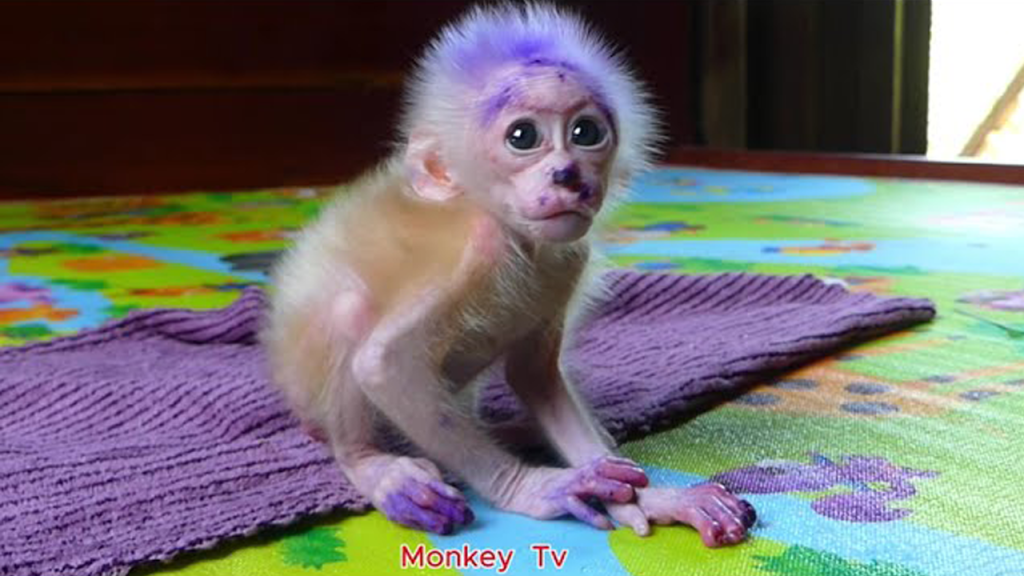
The baby monkey sat quietly, his tiny body weak and thin, eyes dull with hunger. He hadn’t eaten for a long time, and every breath felt heavier than the last. His small hands rested on his belly as if trying to ease the ache inside. Milk was all he needed, all he knew, yet it had not come.
He lifted his head every few seconds, staring toward the place where mom usually appeared. Each sound made his heart jump with hope, but when no one came, his shoulders drooped again. His lips trembled, and a soft cry slipped out—weak, tired, and full of longing. It wasn’t a loud scream anymore. Hunger had taken his strength.
The baby tried to crawl forward, but his legs failed him. He collapsed gently onto the ground, breathing fast, eyes watery. His body showed clear signs of starvation—slow movements, sunken belly, fading energy. Still, he waited. Somewhere deep inside, he believed mom would come back with milk.
Time passed slowly. The cries turned into small whimpers. His head rested on the floor as his eyes half-closed, fighting sleep he could not afford. Hunger made the world blurry. Fear whispered that maybe milk would never come.
Then footsteps approached.
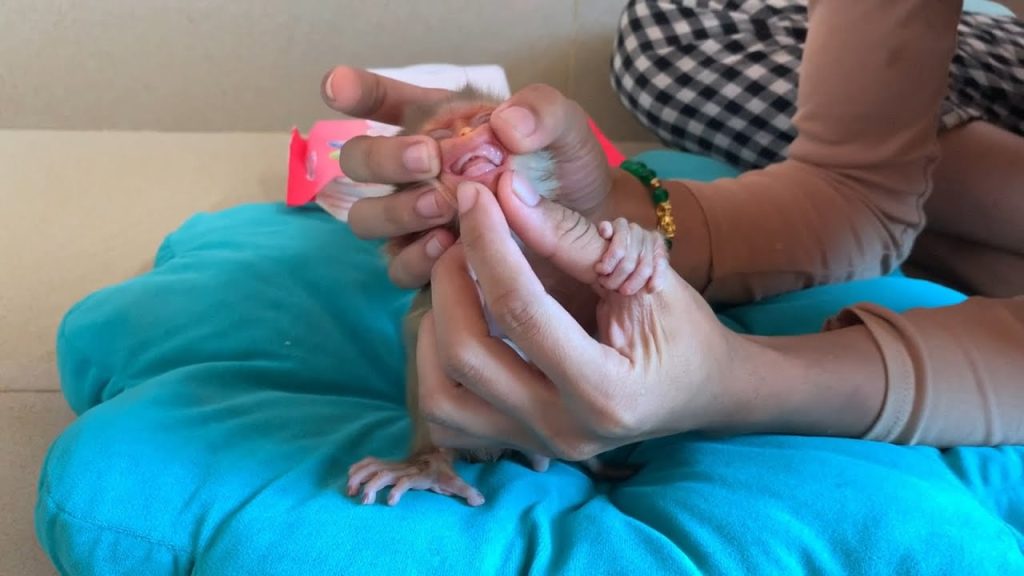
The baby’s ears twitched. With the last strength he had, he lifted his head and cried again—this time louder, filled with desperate hope. Mom rushed in, her face filled with worry when she saw his condition. She immediately lifted him, holding him close.
Milk touched his lips, and instinct took over. He drank greedily, clinging tightly, afraid it might disappear. With every swallow, his body relaxed. Color slowly returned to his face. His breathing calmed.
Soon, the cries stopped. The baby rested in mom’s arms, eyes closing peacefully. Hunger faded, replaced by warmth and safety.
That moment showed a painful truth. For a baby monkey, waiting for milk is waiting for life. Hunger is not patience—it is suffering. And when care finally arrives, it doesn’t just feed the body. It saves the heart