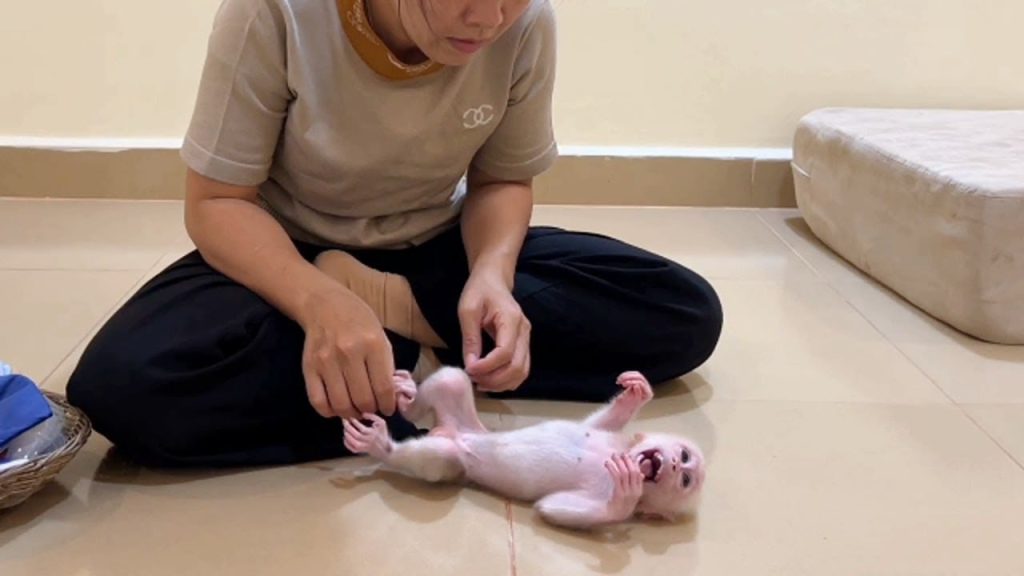
Pavpav dropped straight to the floor the moment mom tried to put clothes on him. His small body went limp, arms spread wide, face turned away in stubborn refusal. Then the crying came—loud, emotional, and full of protest. He didn’t want clothes. He didn’t want instructions. He wanted control.
Mom knelt beside him, holding the little shirt in her hands. She spoke softly, calling his name, but Pavpav ignored her completely. He kicked his feet against the floor and screamed harder, eyes squeezed shut as if blocking out the whole world. Every attempt to lift him ended with more resistance.
This wasn’t just about clothes.
It was about feelings.
Pavpav had been playing freely, comfortable and happy. Suddenly, playtime ended. That sudden change overwhelmed him. He rolled slightly onto his side, crying dramatically, refusing to look at mom. His tiny chest heaved with each breath, anger mixing with frustration and sadness.
Mom stayed calm. She didn’t force the clothes on him. She sat nearby, waiting, letting the storm pass. Pavpav cried and cried, slapping the floor once in anger, then curling inward as the energy drained from his body. His cries slowly turned into sobs.
After a while, mom gently touched his back. This time, Pavpav didn’t pull away. He stayed still, sniffing softly. Mom spoke again, slower now, offering comfort before rules. She showed him the clothes, letting him touch them, letting him feel involved.
Pavpav finally lifted his head. His eyes were red and wet. He looked at mom, checking her face. She was still there. Not angry. Not leaving.
Slowly, he sat up. The tantrum was over.
Mom helped him put on his clothes gently. Pavpav didn’t fight anymore. He leaned against her, tired but calm, holding onto her arm as if to make sure she wouldn’t disappear.
That moment showed something important. Pavpav wasn’t naughty. He was emotional. And sometimes, the floor is where big feelings come out.
With patience, presence, and love, even the strongest tantrum can soften into trust again.