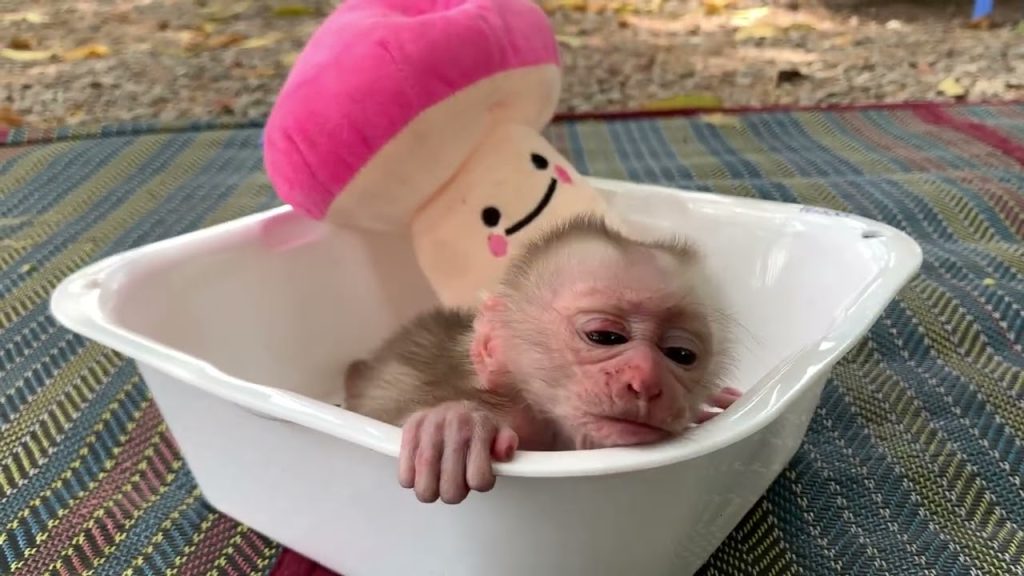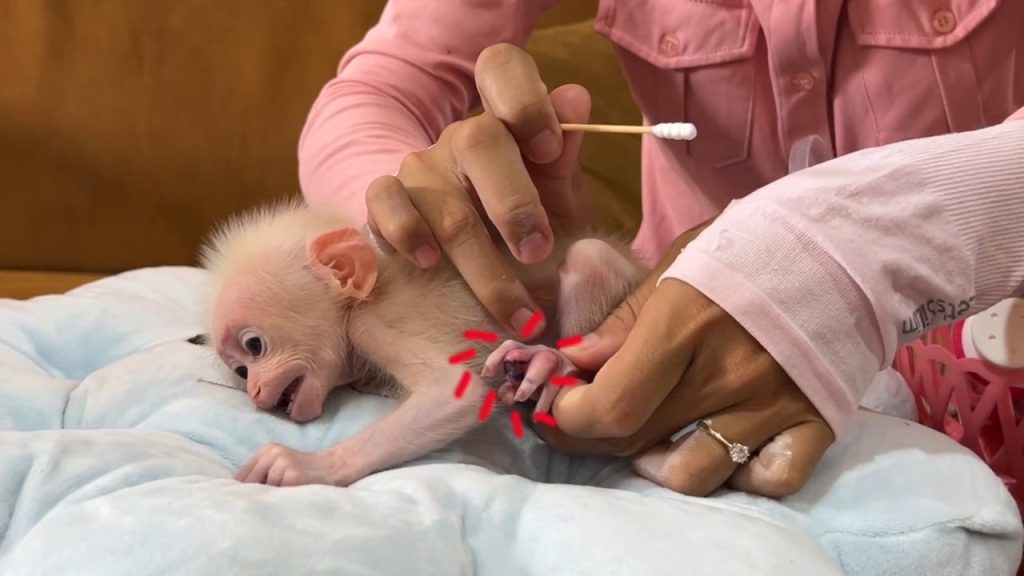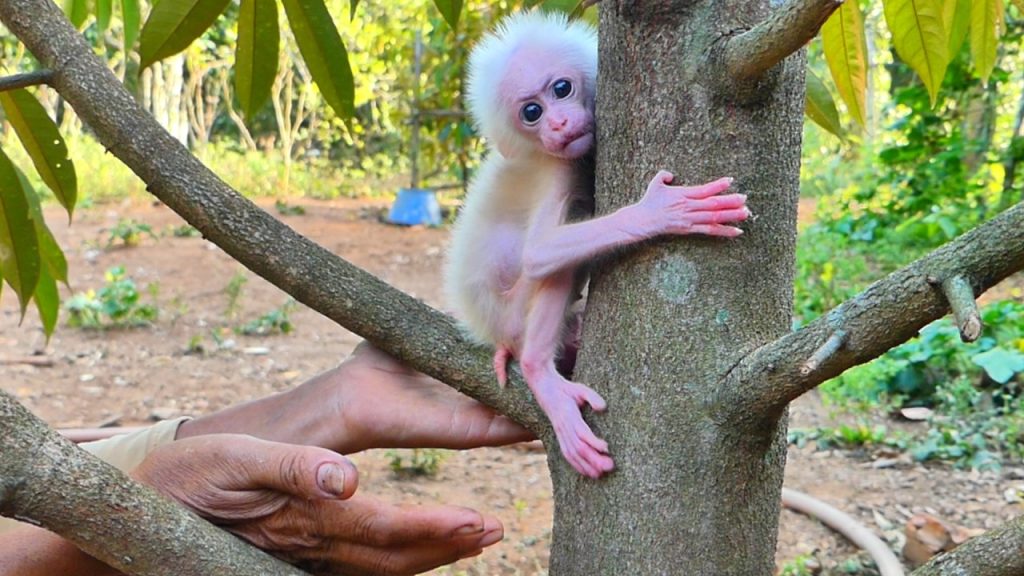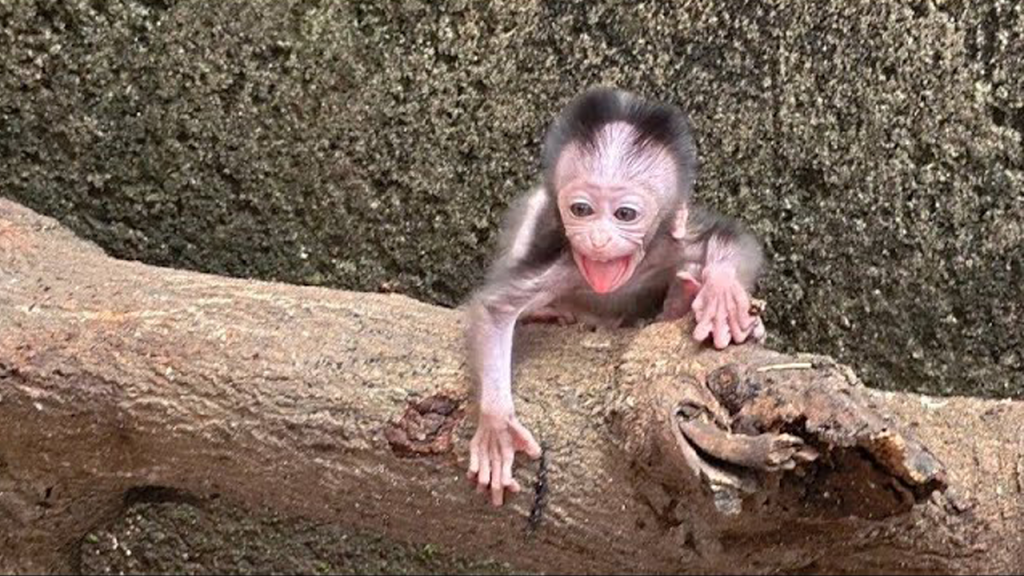
The baby monkey was left behind, sitting alone where moments ago warmth and safety existed. When the carer disappeared from sight, confusion struck instantly. His tiny body stiffened, eyes wide with panic, and then the crying exploded. Sharp, angry screams tore through the air, filled with fear, temper, and desperation he couldn’t control.
He stood up unsteadily, turning in circles, calling out again and again. Each cry sounded louder than the last, echoing his disbelief. To him, being left meant danger. It meant hunger, cold, and loneliness all at once. His little hands clenched tightly as if trying to hold onto someone who was no longer there.
The baby’s temper rose with his fear. He stomped his feet, shook his head, and screamed harder, his voice cracking. Tears streamed down his face as his chest heaved. He wasn’t being naughty. He was overwhelmed. His small heart didn’t understand waiting or reasons. It only understood loss.
Every sound around him made him flinch. Leaves rustling. Distant movement. Still no carer. The crying became frantic, sharp cries mixed with sobs. His body trembled, exhaustion creeping in, but he refused to stop calling. Silence felt unbearable.
Finally, familiar footsteps returned. The moment the baby saw his carer, his scream changed. Anger melted into relief. He ran forward clumsily, arms reaching out, still crying as if afraid the carer might vanish again. He pressed his face into their chest, clinging tightly, breathing fast.
The cries slowly faded into broken sniffles. His body relaxed, tension draining away. The world felt safe again. Being left had hurt deeply, but being held healed just as quickly.
That moment showed a simple truth. Baby monkeys don’t cry with temper because they are bad. They cry because separation feels terrifying. Love, to them, means presence.
And when that presence returns, even the sharpest cries finally find peace.