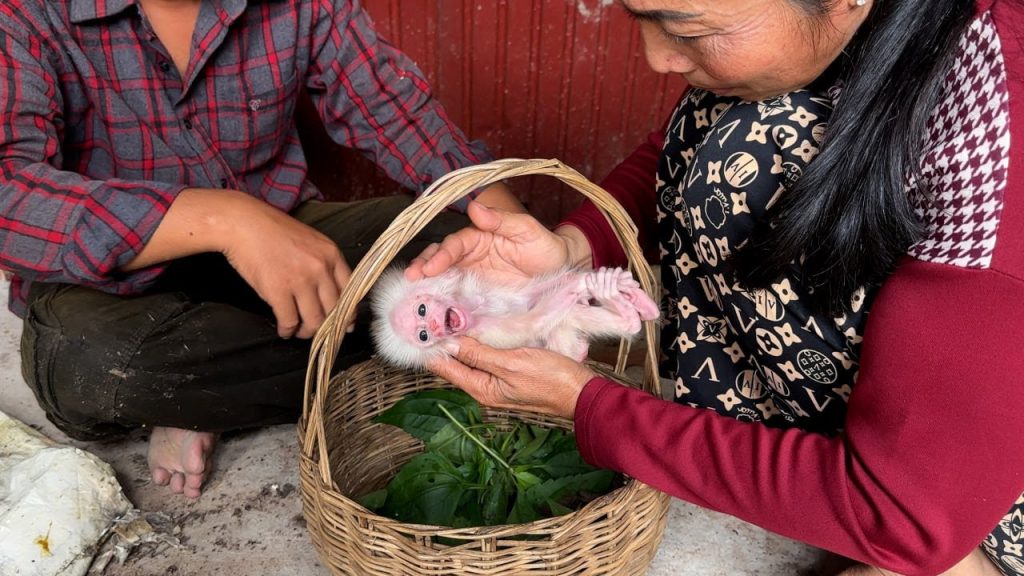
The newborn baby monkey was handed over quietly by a farmer whose eyes were filled with worry, not cruelty. He stood at the edge of his small farm, holding the tiny life with trembling hands. The baby was too young, too fragile, and too demanding for him to care for. With no milk, no knowledge, and no time, the farmer knew he could not save the baby on his own.
The newborn cried softly, unaware that his life was about to change forever.
His eyes were barely open, his body thin and weak. He clung instinctively to warmth, searching for a mother who was no longer there. Hunger made his cries shaky. Fear made them endless. The farmer sighed deeply and made the hardest decision—letting go, so the baby could live.
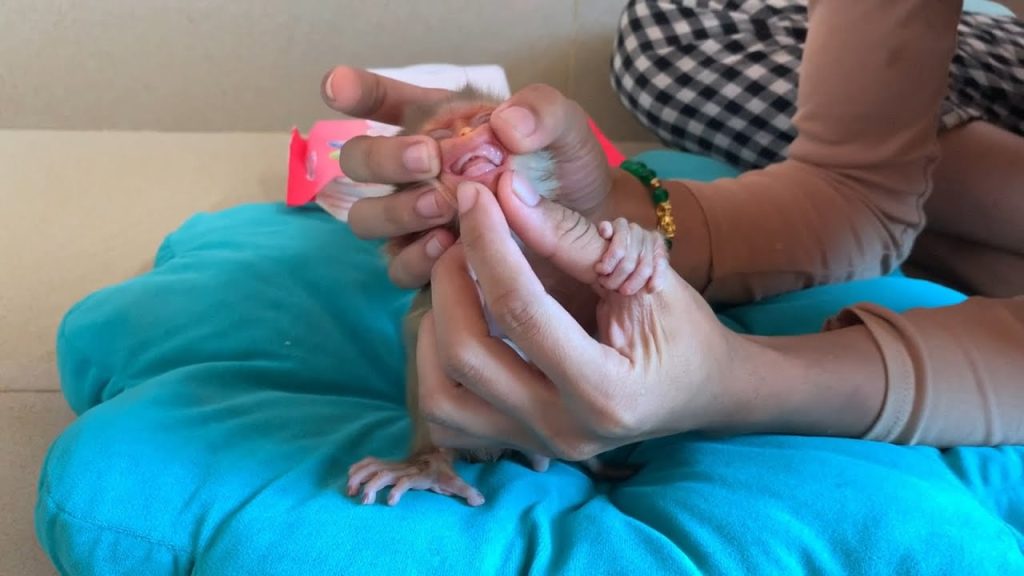
When the baby monkey was adopted, gentle hands received him with care. He was wrapped immediately in a soft cloth, protected from wind and noise. His cries grew louder for a moment, frightened by new smells and unfamiliar voices. But warmth surrounded him, and his tiny body slowly relaxed.
Milk was prepared carefully, drop by drop. The newborn latched weakly at first, then drank with desperate strength. Each swallow brought life back into his small frame. His breathing steadied. His cries softened into tiny sounds of relief. For the first time since being separated, he felt safe.
The farmer watched from a distance, eyes wet but peaceful. He had not abandoned the baby out of neglect, but out of love. He knew this adoption was the baby’s only chance.
As night came, the newborn slept in a clean, warm place, far from danger. His chest rose and fell steadily. He was no longer just a helpless baby on a farm. He was now protected, cared for, and wanted.
That day marked more than an adoption. It marked survival. The newborn baby monkey lost his mother—but gained a future. And sometimes, love means knowing when to let someone else save a life you cannot.