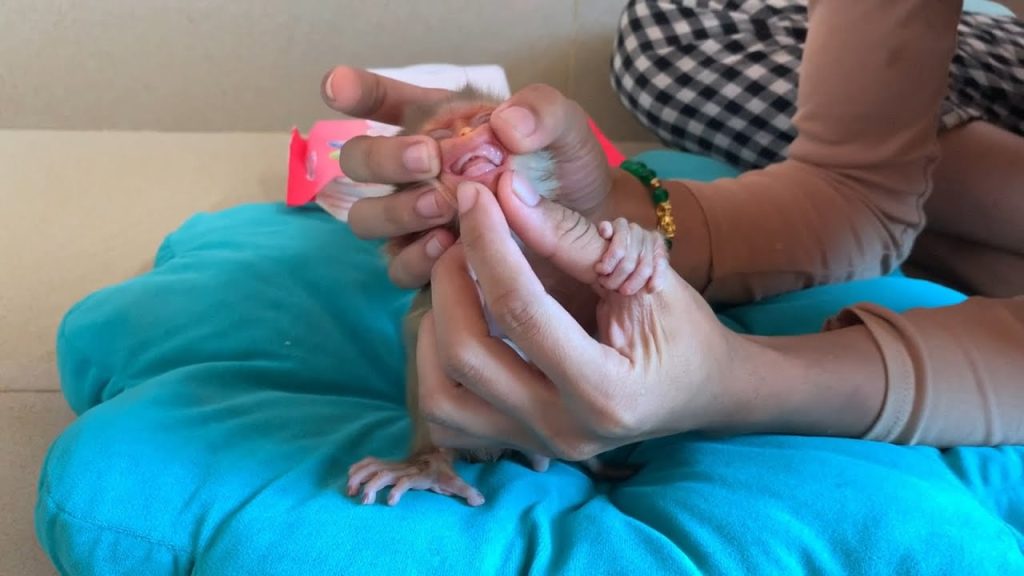
Milk spilled across the blanket as the poor baby monkey retched softly, his tiny body shaking. He had been so hungry that he drank too fast, gulping desperately, afraid the warmth might disappear. When his stomach finally rebelled, confusion replaced relief. His eyes widened, wet and frightened, as he whimpered, not understanding why comfort had turned painful.
Caregivers reacted immediately. They lifted him upright, supporting his fragile chest, rubbing slow circles to steady his breath. The room quieted. No panic, only patience. The baby vomited again, weaker this time, then slumped, exhausted, trusting the hands that held him. Hunger still burned, but fear burned brighter.
They cleaned his mouth gently, wiping away milk and tears together. Fresh air brushed his face. His breathing eased. A small sigh escaped, shaky but real. Overfeeding had come from love, from urgency, from the memory of starvation that made every feeding feel like a race against loss.
They waited. Minutes passed. His belly softened. His eyes followed movement again, tracking light and shadow. When he cried, it was softer, asking, not screaming. Caregivers measured carefully this time, offering tiny sips, pausing often, letting him swallow at his own pace. The milk returned as kindness, not pressure.
He drank slowly. He stopped when full. Nothing came back up. Relief spread through the room like dawn. The baby curled into a towel, warm and safe, cheeks damp, strength returning in small increments. He rested his head against a steady heartbeat, learning a new lesson his body would remember.
That day was not a failure. It was guidance. The baby learned fullness. The caregivers learned restraint. Together they learned that healing is not about more, but about enough. In gentle balance, the baby slept, stomach calm, heart comforted, tomorrow waiting patiently, for him and everyone who cared.