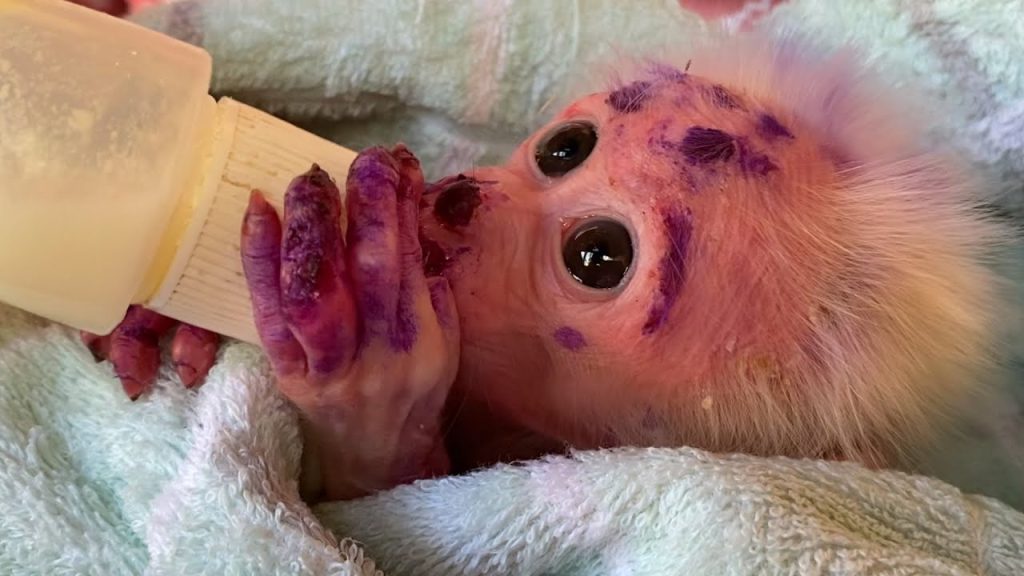
After feeding, the poor baby monkey lay quietly in mom’s arms, his tiny body weak and exhausted. Milk had dribbled around his mouth, leaving his lips wet and sticky. His breathing was shallow, and his eyes half-closed, fighting sleep while his fragile body tried to gather strength. He was still too small, too sickly, and every movement seemed to cost him effort.
Mom noticed immediately.
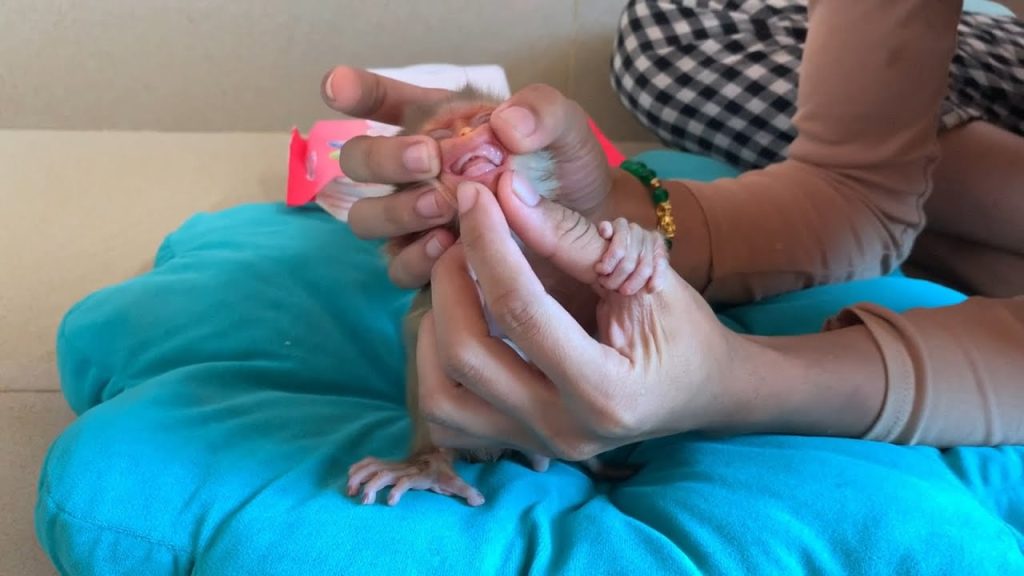
She did not rush. She dipped a soft cloth into warm water, squeezing it carefully before bringing it close. Her hands moved slowly, respectfully, as if afraid even kindness might be too much. When the cloth touched the baby’s mouth, he flinched slightly, then relaxed. He was too tired to resist.
Mom wiped gently, removing the leftover milk from his lips and chin. Each soft stroke was filled with care, not just cleanliness. She whispered calming sounds, letting him know he was safe. The baby’s tiny tongue moved weakly, and his fingers twitched, holding onto her shirt as if anchoring himself to life.
Cleaning his mouth was a small act, but it meant everything. It prevented infection. It gave comfort. It showed attention. For a baby with weak health, these moments mattered more than anyone could see.
When she finished, mom held him close against her chest. The baby sighed softly, a faint sound, but full of trust. His body settled, warmth replacing strain. His mouth was clean, his belly full, and his heart calmer.
In that quiet moment, love did not speak loudly. It showed itself through gentle care after feeding—proof that survival is built from patience, tenderness, and hands that never give up on the weakest life.