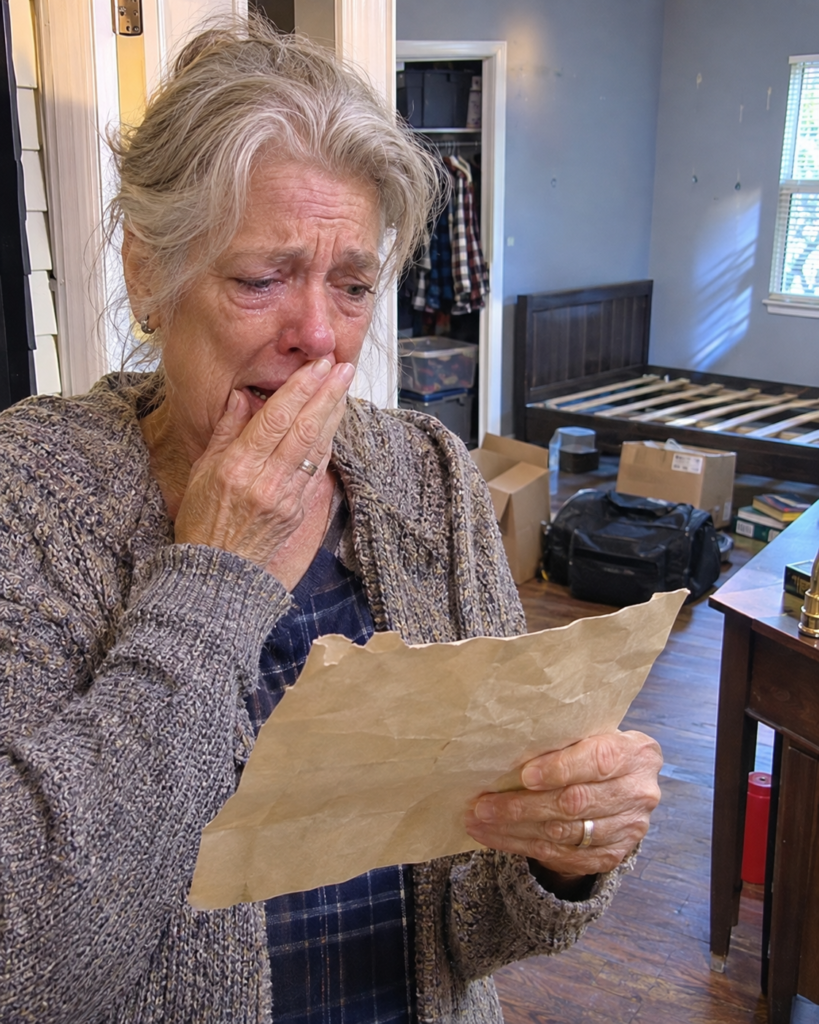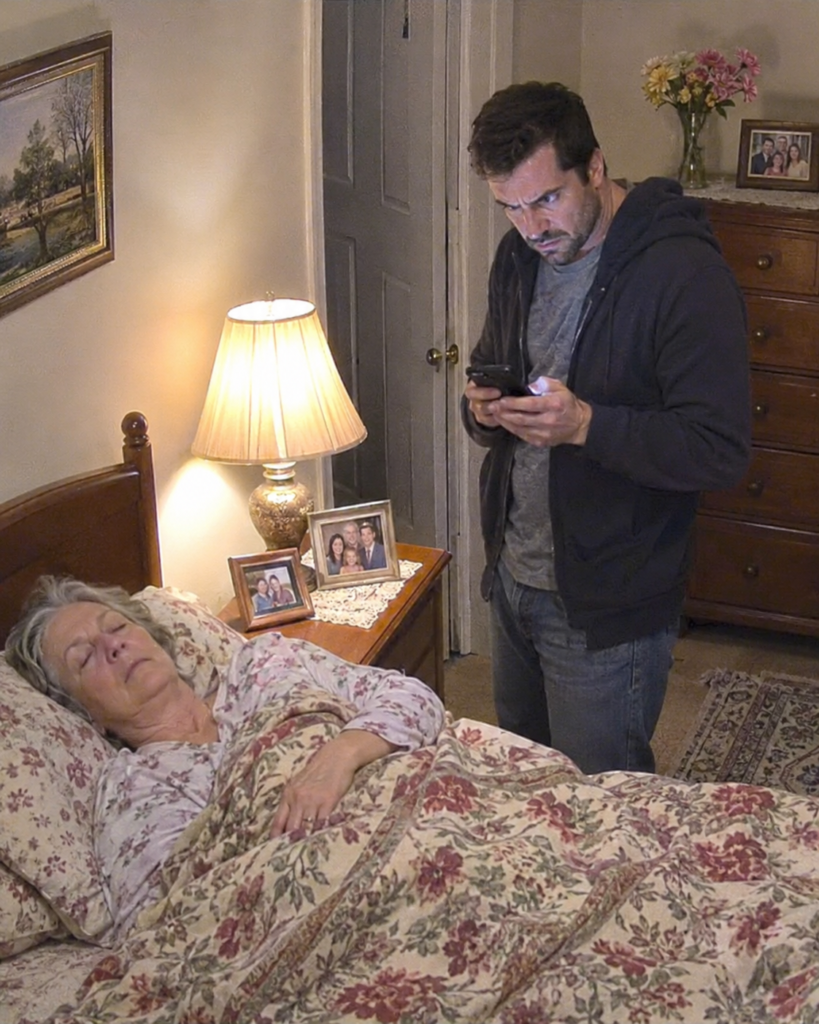
At 3:15 in the morning, I overheard my son telling his wife the four-digit PIN to my bank card.
“Empty the account,” he whispered. “Mom has more than $80,000 saved.”
I stayed perfectly still beneath my blankets, pretending to sleep while the two people I’d trusted were planning to steal everything I’d worked for.
But less than an hour later, my son’s phone rang.
And when he heard what his wife had to say, his voice suddenly changed.
My name is Eleanor Hayes. I’m sixty-four years old, and I live in a peaceful neighborhood outside Columbus.
My house is a modest split-level with a small front porch, the kind of place where neighbors wave to one another and the streets become completely silent after dark.
Usually, I sleep soundly.
But that particular night, something woke me.
It wasn’t a bad dream.
It wasn’t the familiar discomfort in my knees.
It was my son’s voice coming from the guest bedroom across the hallway.
Even though he was speaking quietly, I recognized Mark immediately.
A mother doesn’t forget the sound of her child’s voice, no matter how old he becomes.
At first, I assumed something ordinary was happening.
Maybe he was worried about his job.
Perhaps he and Clare had argued.
I heard him pacing slowly across the bedroom floor, speaking into his phone in a low, cautious tone.
Then he began mentioning numbers.
My numbers.
I knew them immediately because they belonged to my personal bank account.
I stopped moving.
“Listen carefully,” Mark whispered. “Tomorrow morning, go as early as possible.”
There was a pause.
I couldn’t hear Clare’s reply, but I knew he was speaking to his wife.
Then he continued.
“She won’t notice. Mom sleeps like a rock. She never gets up that early.”
My stomach tightened.
What was he talking about?
I remained motionless, listening.
Then he spoke again.
He repeated the four numbers that unlocked my bank card.
My PIN.
The same code I’d never knowingly shared with either of them.
“Make sure you take everything,” he added. “She’s sitting on more than eighty thousand dollars.”
For a moment, I could barely believe what I’d heard.
My own son was instructing his wife to drain my savings.
Money I’d spent decades putting aside.
Money intended to support me through retirement, medical expenses, and whatever unexpected problems old age might bring.
I didn’t sit up.
I didn’t rush into the hallway.
Instead, I kept my eyes closed and allowed my breathing to remain slow and steady.
A faint smile crossed my face.
Not because anything was funny.
But because something I’d suspected for months had finally been confirmed.
Mark and Clare had moved into my house the previous autumn.
They’d explained that they were going through a difficult financial period and needed somewhere temporary to stay.
I agreed without hesitation.
He was my son.
And I’d always believed that family should help one another during hard times.
At first, I thought they’d stay for only a few weeks.
But weeks turned into months.
And gradually, their behavior began changing.
Clare was especially curious about my finances.
She’d sit beside me in the kitchen, smiling sweetly while asking questions about my retirement.
“Eleanor, do you have everything saved in one account?”
“Do you keep emergency money somewhere separate?”
“Have you thought about who’ll manage your finances when you’re older?”
Her questions were always disguised as concern.
But I noticed how often her eyes wandered toward my handbag whenever I left it on the dining table.
Mark wasn’t much better.
During dinner, he’d make little comments about my savings.
“Mom, you don’t need that much money sitting in the bank.”
Or, “You could help us get back on our feet instead of leaving all that cash untouched.”
Sometimes he’d laugh and add, “What’s the point of having money if you can’t share it with family?”
I usually changed the subject.
They seemed to have forgotten that those savings represented years of sacrifice.
I’d worked extra shifts.
Skipped vacations.
Repaired old appliances instead of replacing them.
And carefully saved whatever I could.
That $80,000 hadn’t appeared overnight.
It was the result of an entire working life.
Yet Mark and Clare acted as though they deserved it simply because we were related.
Over time, I began noticing other small things.
Clare became unusually interested whenever I received bank statements.
Mark asked whether my accounts had daily withdrawal limits.
And both of them seemed frustrated whenever I refused to discuss my financial arrangements.
I’d tried to dismiss my suspicions.
Nobody wants to believe their own child is capable of stealing from them.
But now, lying in bed at 3:15 a.m., I couldn’t ignore what I’d heard.
Mark had given Clare my PIN.
He’d told her exactly how much money I had.
And they’d made plans to take it while I slept.
The betrayal hurt more than I wanted to admit.
I remembered holding Mark when he was a baby.
Helping him with homework.
Working overtime to buy him things I couldn’t always afford.
And now, decades later, he was standing just across the hallway plotting to empty my retirement account.
Still, I didn’t confront him.
I remained beneath my blanket, breathing evenly.
When Mark was little, I used to pretend I was asleep whenever he tried sneaking into the kitchen for a late-night bowl of cereal.
Back then, it was an innocent game.
Tonight, pretending to sleep had a much more serious purpose.
I listened as his footsteps moved around the guest bedroom.
Eventually, his conversation ended.
The house became quiet again.
I stayed awake, thinking about everything I’d heard.
Then, approximately fifty minutes later, a sudden buzzing sound broke the silence.
Mark’s phone was vibrating against the bedside table.
He answered immediately.
“Clare?”
His voice was sharp.
Something was wrong.
I heard him move quickly across the room.
“What do you mean?” he whispered.
There was another pause.
Then his voice rose.
“Clare, what happened?”
I could hear panic replacing the confidence he’d shown earlier.
The man who’d calmly planned to steal his mother’s savings now sounded terrified.
Another notification came through.
Mark muttered his wife’s name in frustration.
I couldn’t see his screen, but I heard enough to realize their plan hadn’t unfolded the way they’d expected.
And somewhere in the darkness, I imagined Clare staring at her phone, desperately trying to explain what had gone wrong.
The message she sent began with words neither of them had expected to say.
“Baby, your mother knew everything. Now I…”
Then the house fell silent.
What happened when Clare tried to withdraw Eleanor’s $80,000, and how did she discover that her mother-in-law already knew about their plan?
PART 2 (THE END)
“Baby, your mother knew everything. Now I think we’re in serious trouble.”
I heard Mark stop moving.
“What are you talking about?”
Clare’s voice came through the phone, trembling.
“I went to the bank. I did exactly what you told me. I used her card and entered the PIN you gave me.”
“And?”
“It didn’t work.”
Mark lowered his voice.
“What do you mean it didn’t work?”
“The ATM rejected the transaction. Then it swallowed the card.”
There was a long silence.
I could almost picture my son standing in the guest bedroom, staring at his phone.
Then Clare continued.
“Mark, listen to me. Someone at the bank asked me whose card it was. I told them it belonged to my mother-in-law, and that she had given me permission.”
“You idiot!” Mark hissed.
“I panicked! Then they told me the account had been flagged for suspicious activity. They said the account holder had already contacted them.”
Another silence.
This time, Mark didn’t respond immediately.
Finally, he whispered three words.
“Mom knows everything?”
I opened my eyes.
Yes, Mark.
Your mother knew.
And she was about to make sure you understood exactly what that meant.
But there was something my son and his wife didn’t know.
I hadn’t simply been lying in bed listening to their conversation.
The moment Mark left the guest bedroom, I’d quietly reached for my phone.
At 3:22 a.m., I’d opened my banking application and frozen my debit card.
Then I called the bank’s twenty-four-hour fraud department.
I explained everything.
I told the representative that someone in my household had obtained my PIN without permission and might attempt to withdraw money from my account.
I also requested that the bank place a security hold on suspicious transactions and require my personal identification before allowing any changes.
The representative took my concerns seriously.
She asked whether I knew who might be involved.
I hesitated before answering.
“My son and his wife.”
There was a brief pause.
Then she said something I’ll never forget.
“Mrs. Hayes, protecting your money doesn’t make you a bad mother.”
I nearly cried.
Because for months, I’d been made to feel guilty for protecting something I’d worked my entire life to earn.
That night, I finally understood that I didn’t owe anyone an explanation for keeping myself financially secure.
Especially not someone planning to rob me.
At 4:17 a.m., Mark’s bedroom door opened.
I heard his footsteps approaching my room.
Then came a gentle knock.
“Mom?”
I didn’t answer immediately.
He knocked again.
“Mom, are you awake?”
I slowly sat up and switched on my bedside lamp.
“What is it, sweetheart?”
He stood in the doorway wearing sweatpants and a wrinkled T-shirt.
His face was pale.
“Have you been using your bank card tonight?”
I looked at him.
“Why would you ask me that?”
He swallowed.
“Clare went to get some cash, but there was a problem with the card.”
I tilted my head.
“That’s strange. What card?”
He looked uncomfortable.
“Your debit card.”
I pretended to think.
“Oh, you mean the card that was in my handbag?”
He nodded.
I reached toward the nightstand and picked up my phone.
“Mark, I think we need to have an honest conversation.”
His expression changed.
“What do you mean?”
I looked directly into his eyes.
“I heard you at 3:15.”
He froze.
For several seconds, neither of us spoke.
Then he shook his head.
“Mom, I think you misunderstood something.”
“Did I?”
“Clare and I weren’t trying to steal anything.”
I almost laughed.
“Then why did you give her my PIN?”
His mouth opened, but no words came out.
“Why did you tell her I had more than $80,000? And why did you tell her to take everything before I woke up?”
He took one step backward.
“Mom, please. Let me explain.”
I raised my hand.
“No. Tonight, you’re going to listen.”
My voice wasn’t loud.
I wasn’t crying.
I wasn’t even angry anymore.
“I worked for thirty-nine years to save that money. I skipped vacations. I worked weekends. I went without things I wanted because I believed I’d eventually be able to retire without depending on anyone.”
I looked at him.
“And you decided that because I’m your mother, you had the right to take it.”
Mark lowered his eyes.
“Clare has been under a lot of pressure. We have debts. Things have been difficult.”
“Then you should have asked for help.”
“We were afraid you’d say no.”
I nodded slowly.
“So you decided to steal instead.”
He didn’t answer.
A few minutes later, Clare appeared in the hallway.
She was still wearing her coat.
Her face was pale, and she was holding her purse tightly against her chest.
“Eleanor, please,” she began. “This has gotten completely out of hand.”
I looked at her.
“Did you use my card?”
She looked at Mark.
Then back at me.
“I was trying to help us.”
“By taking my money?”
“It wasn’t supposed to happen like this.”
I stood up.
“Then how was it supposed to happen, Clare? Were you going to withdraw $80,000 and leave me with nothing? Or were you planning to take a little at a time so I wouldn’t notice?”
Neither of them answered.
That silence told me everything.
I walked to my dresser and picked up a small folder.
Inside were copies of my bank statements, account information, and documents I’d kept after noticing their growing interest in my finances.
I placed the folder on the bed.
“There’s something else you should know.”
Mark stared at it.
“What?”
“Your father taught me something before he died. He always said that the people who love you shouldn’t need access to everything you own.”
I opened the folder.
“Three months ago, after I noticed money disappearing from my purse, I started documenting everything. I also installed a security camera in the hallway and near the front entrance.”
Clare’s face suddenly changed.
“What?”
I looked at her.
“The camera recorded you entering my bedroom yesterday afternoon while I was gardening.”
Mark turned toward his wife.
She immediately looked away.
I continued.
“It also recorded you opening my handbag and taking my debit card.”
Clare began shaking her head.
“I was only checking something!”
“Checking what? Whether my card was still there?”
She said nothing.
I picked up my phone.
“And the bank has already been informed. Your attempted withdrawal was recorded, and I’ve requested that the relevant security footage be preserved.”
Mark’s face had gone completely white.
“Mom, please. You can’t involve the police. I’m your son.”
I looked at him for a long moment.
“That’s exactly why this hurts so much.”
Then I said something I’d wanted to say for months.
“Being my son gives you a place in my heart, Mark. It does not give you ownership of my bank account.”
He began crying.
Not the kind of quiet tears I’d seen when he was a child.
These were desperate tears.
“Mom, I made a mistake.”
I shook my head.
“A mistake is forgetting an appointment. A mistake is breaking a glass. You gave your wife my PIN, discussed my savings, and planned to take my money while you believed I was asleep.”
I paused.
“You had plenty of opportunities to change your mind.”
Clare suddenly interrupted.
“Fine! We needed the money! We’re behind on our credit cards, and Mark’s car payments are overdue. We thought you could afford to help us.”
I stared at her.
“So you decided I should lose my retirement savings to solve your financial problems?”
She folded her arms.
“We’re family!”
I nodded.
“Yes. We are. And that’s why I welcomed you into my home when you had nowhere else to go.”
I pointed toward the hallway.
“But this is my home. And I will not live with people who steal from me.”
I told them they had until the following afternoon to pack their belongings and leave.
Mark pleaded.
Clare argued.
They accused me of being cruel, selfish, and unreasonable.
But I didn’t change my decision.
At 9:00 that morning, I contacted my attorney.
By lunchtime, I’d received confirmation that my bank account was secure, my debit card had been canceled, and a new card would be issued with a completely different PIN.
I also began the formal process of reporting the attempted unauthorized withdrawal and the theft of my card.
The bank’s investigation later confirmed that Clare had taken my card without permission and attempted to access my account.
Fortunately, no money had been withdrawn.
But the damage to our family was already done.
By the following afternoon, their suitcases were sitting beside the front door.
Mark stood on the porch, looking at the house where he’d grown up.
“Mom, are you really going to let this destroy our relationship?”
I looked at him.
“No, Mark. You made that decision when you decided my money was more important than my trust.”
He wiped his eyes.
“Will you ever forgive me?”
I took a slow breath.
“I don’t know. Forgiveness takes time. But trust is something you have to earn, and you haven’t earned it back.”
Then I closed the door.
For the first time in months, my house was quiet.
I made myself a cup of coffee and sat beside the kitchen window.
The morning sunlight fell across the little table where I’d spent so many evenings paying bills, reviewing statements, and planning for retirement.
My savings were still there.
My home was still mine.
And, most importantly, I was still in control of my own life.
A week later, Mark sent me a long message.
He apologized for what he’d done.
He admitted that he and Clare had discussed taking my money several times before that night.
He also admitted that they’d been counting on my love for him to keep me from reporting them.
I read the message twice.
Then I put my phone down.
I didn’t respond immediately.
Because something had finally become clear to me.
For sixty-four years, I’d believed being a good mother meant sacrificing whatever I had for my children.
But being a good mother didn’t mean allowing my children to destroy me.
And being a good person didn’t mean making myself an easy target.
A month later, I changed the locks, updated my financial arrangements, and arranged for my retirement savings to be protected through a plan reviewed by my attorney.
I also started taking the little vacations I’d postponed for years.
Nothing extravagant.
Just quiet weekends, good food, and places I’d always wanted to see.
One afternoon, I received another message from Mark.
It was short.
“Mom, I miss you.”
I stared at those three words for a long time.
Then I replied.
“I miss the son I thought I could trust, too.”
And I put my phone away.
Because I had finally learned a lesson that took me sixty-four years to understand:
You can love your children with your entire heart without giving them permission to destroy your life.
My $80,000 was never just money.
It was thirty-nine years of hard work.
It was my security.
My independence.
My future.
And I wasn’t going to apologize for protecting it.
Not even to my own son.
THE END.