PART 2
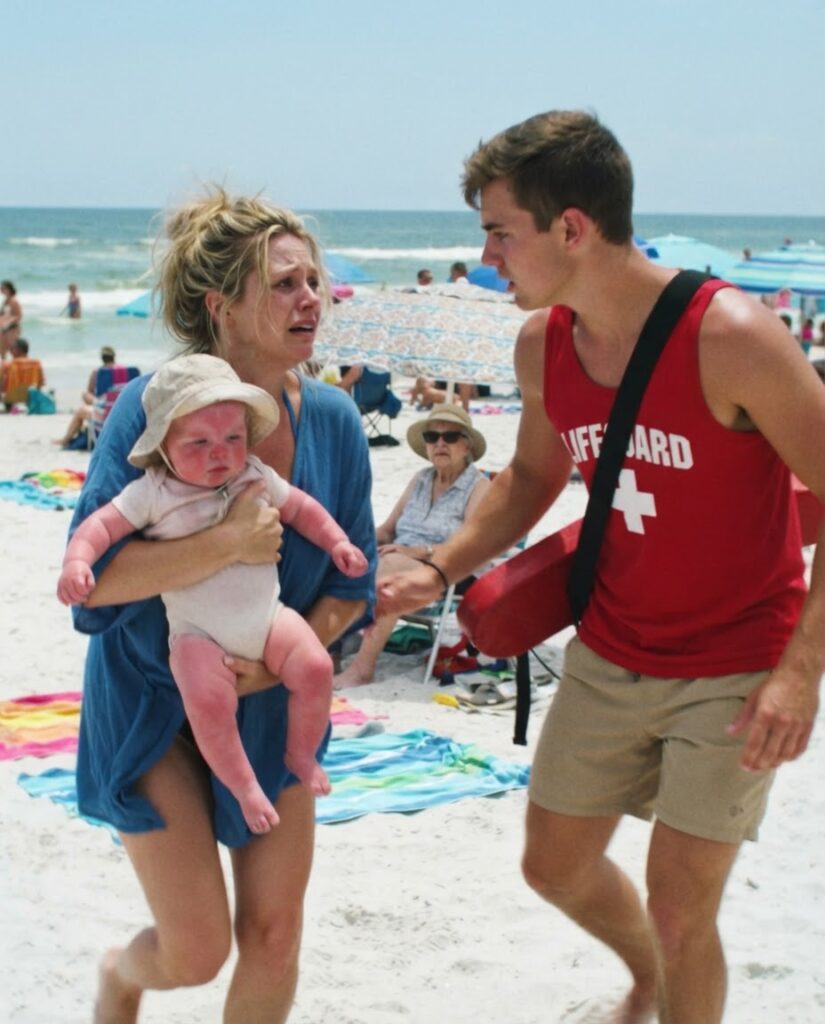
Isak didn’t wait for the ambulance.
He carried Kenley into the shade of the lifeguard stand. He grabbed cold water bottles from his cooler and started soaking a towel. He laid the cool, wet towel gently over her body. “Not ice,” he said. “Cool, not ice. We have to cool her slowly.”
He’d been trained for this. Every summer, he said, they get at least one baby with heat stroke.
The ambulance arrived in six minutes.
The paramedics put Kenley on a tiny stretcher. They put cold packs under her arms and behind her neck. They started an IV in her foot.
Her body temperature was 105 degrees.
I rode in the ambulance with her. I held her little hand and whispered to her the whole way.
“Stay with me, baby. Stay with Mommy.”
At the children’s hospital, the doctors worked on her for hours. Cooling her down. Giving her fluids. Treating the burns.
The doctor came to talk to me that evening.
“Your daughter has heat stroke and second-degree burns over most of her body,” she said. “Babies her age can’t sweat well. They can’t cool themselves down. Ninety minutes in direct sun in that heat is extremely dangerous.”
She paused.
“That lifeguard knew exactly what to do. If he’d waited for the ambulance, she might not have made it.”
Kenley was in the burn unit for nine days. Every day, the nurses changed her bandages. Every day, she screamed. Every day, I held her and cried with her.
Hortense came to the hospital on the second day.
She brought a teddy bear and a box of chocolates. She walked in smiling like nothing had happened.
“How’s my little sunshine?”
Then she saw Kenley. Wrapped in white bandages from her head to her toes. With an IV in her foot and a tube in her nose.
Hortense dropped the teddy bear.
“Oh my God,” she whispered. “I didn’t know. I didn’t know it would do this.”
“I told you,” I said. “I told you to keep her in the shade. I told you not to take off her hat.”
“I thought you were being overprotective.”
“She’s six months old, Hortense.”
Hortense sat down in the chair and started sobbing.
The hospital reported the injury to Child Protective Services, the way they have to. Hortense wasn’t charged with a crime. But she’s not allowed to babysit Kenley alone again.
My husband talked to his mother for a long time. When he came back, he told me something.
“When I was a baby, I got burned so badly at the beach that I was in the hospital for a week. Mom told me it was an ‘accident.’ I never thought about it. Until now.”
Kenley healed. It took months. Her doctors said she was lucky. Most of her skin will be fine.
She has a few small white scars on her cheeks and the tops of her feet. They’ll fade as she grows.
Hortense comes to visit every Sunday now.
And every time we go outside, she’s the first one to grab the hat.
She bought Kenley a whole collection. Big floppy sun hats. Pink, purple, yellow. One with a little duck on top.
She also bought something else.
She sent a check to the lifeguard station on Pensacola Beach. Enough to buy a dozen new shade tents.
With a note.
“For the babies. So no grandmother ever makes my mistake again.”
Isak sent us a picture of them all set up on the beach.
Every tent had a little sign on it.
“KENLEY’S SHADE.”
THE END.