PART 1 — The Door They Finally Came To
When I called my parents from the hospital chapel, ash from the crash scene still marked my hands. That morning, on Interstate 85 outside Charlotte, North Carolina, a commercial truck had crossed the grassy median and crushed my family’s sedan. The driver had fallen asleep. My husband, Liam Vance, never had time to avoid him. Our daughter, Maya, was seven. Our son, Leo, was four. All three were gone. I had survived only because I stayed at the clinic to cover an early shift, a fact that kept cutting through the shock. I called my father, hoping his voice would give me something solid to hold. “Dad,” I whispered into the receiver. “There’s been a terrible accident.” Behind him, jazz played, glasses clinked, and my sister, Hannah, laughed about birthday candles.
On Friday, I stood beside three caskets while Liam’s parents kept me upright. Evelyn cried so hard she could scarcely breathe. Richard held my shoulder as though removing his hand might let me fall apart. The seats reserved for my family were nearly empty: no parents, no sister, no cousins. Only Aunt Grace sat in the front pew. She had driven seven hours from Savannah after a neighbor told her about the crash; her own sister had never called. Three days after the burial, my mother texted that she hoped I was managing, then added that Hannah was deeply hurt I had not wished her a happy birthday. I read it twice. That afternoon, something warm inside me went silent.
The pounding started at six-fourteen. I remember because I was looking at the microwave clock Liam had promised to repair for two years. It remained four minutes fast; I could not bring myself to correct it. “Nora!” my father shouted through the oak door. “Nora, I know you’re inside because your car is parked right in the driveway.” Aunt Grace put down the chamomile tea she had held untouched for an hour. She had come from Savannah that morning after seeing the headline, preferring my kitchen to another story about me on her phone. “You don’t have to open that door,” she said. “Not tonight, and not ever again if you don’t want to.” “I know, Aunt Grace,” I answered.
“Finally,” he said sharply. “We’ve been calling your cell since ten o’clock this morning.” “I saw the missed calls,” I replied. “You saw them,” he repeated with a disbelieving laugh. “Your mother had to find out about this from the evening news anchor, Nora. Do you have any idea how humiliating that felt?” I held his gaze before answering. “Yes, Dad, I do, because I found out what I actually meant to you during a phone call in a hospital chapel.” His jaw tightened, the familiar warning that his temper was close. “That’s hardly a fair comparison.” “No,” I said. “Nothing about that week was fair.”
Behind him, the passenger door opened. My mother approached in heels unsuited to the icy path, pulling her wool coat close at the throat. Beatrice stopped one step below Arthur, occupying the same position she had maintained throughout their marriage. Her eyes searched mine, but I stayed behind the narrow opening. For six months, grief had arrived in crushing waves. The absence of feeling toward my parents was different, and almost stranger. The places they once occupied inside me had gone dark.
My father waited with the impatient posture of someone expecting an obstacle to move. Beyond him, the sedan remained running, Hannah still inside. Aunt Grace stood somewhere behind me in the warmth. I had spent half a year learning that a ringing phone did not obligate me to answer, and that a familiar voice could still belong to someone who had abandoned me. Yet my mother continued looking at the chain as if this thin piece of brass, rather than everything that preceded it, was keeping us apart.
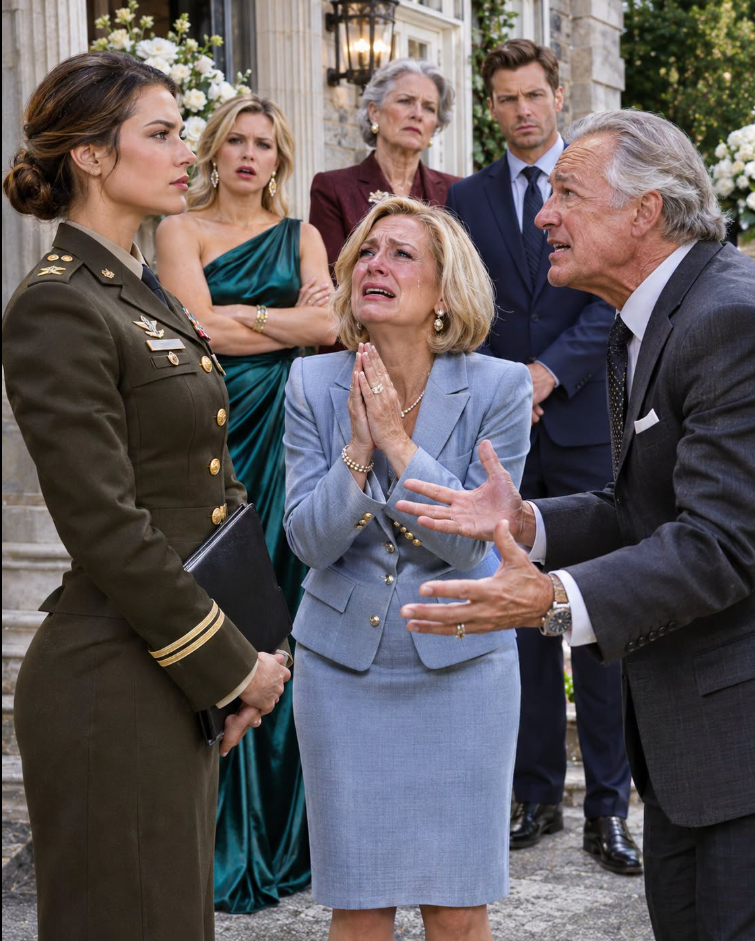
“Sweetheart,” she pleaded, her voice catching. “Please, it’s freezing out here, so can we just come inside and talk like a family?” “We stopped being a family on a Friday afternoon in July, Mom.” She recoiled as though I had slapped her. I watched without feeling anything. Arthur cleared his throat and adopted the polished authority he used with accounting clients. “Look, Nora, whatever lingering feelings you have about the funeral, this situation is much bigger than that now,” he said. “You’re a grieving young woman sitting on eighteen point seven million dollars, and you have no idea how many vultures are going to come out of the woodwork.”
He paused, allowing his warning to settle. “Financial advisors, fake charities, and opportunistic men will all target you, so let me use my thirty years as a CPA to structure this before someone takes advantage of you.” “The money is already handled, Dad,” I said through the gap. “Handled how?” His voice sharpened immediately. “Every single dollar went into the Maya and Leo Vance Foundation, which is structured as an irrevocable charitable trust that I signed off on last Friday.” My mother gasped. “Irrevocable,” he repeated. “It means I cannot take the money back, and neither can anyone else,” I explained. “I know what irrevocable means, Nora, I’m a certified public accountant.”
“Then you understand that I only kept enough to pay off this mortgage, because Maya’s handprints are pressed into the cement on the back patio and I refuse to leave them.” Looking beyond his shoulder toward the frozen yard, I continued. “The rest belongs entirely to the foundation to provide free car seats for low-income families, grief counseling for children, and lobbying for stricter driver-fatigue laws.” My mother quickly asked, “Who is sitting on the board of directors?” “A small board consisting of Richard and Evelyn Vance, our family attorney, Marcus Silva, and Aunt Grace.” Her gaze jumped past me as Grace appeared in the hallway. “Hello, Beatrice,” my aunt said evenly.
“You put my sister on the board?” my mother whispered. “You put Grace in charge of millions and left out your own mother?” “Grace showed up when it mattered, Mom,” I answered. “She drove seven hours and held my hand at the graveside, which was the only qualification I needed.” I expected Arthur to erupt. Losing access to money had never suited him; once, I had watched him argue with a parking attendant for forty minutes over three dollars. Instead, his face lost its color. Watching closely, I realized the change had come just after I mentioned taking on trucking companies.
“The settlement,” he said, his voice suddenly lower. “Was it a confidential agreement?” I narrowed my eyes. “What do you mean?” “Did you sign a standard nondisclosure agreement, because every corporate settlement of that size requires one.” “Their lawyers offered one, and I turned it down.” His alarm was unmistakable. “You turned it down?” “They offered nearly thirty-one million dollars if I agreed to stay silent, so I took eighteen point seven million and kept my right to speak freely.” My mother turned abruptly toward him. A strained, silent exchange passed between them, one I could not yet understand.
Arthur pressed his bare palm against the door beside the opening. His fingers trembled. I had not seen his hands shake at his own father’s funeral, or during a major tax audit years earlier. He lowered his voice, apparently hoping Grace would not hear. “Nora,” he said. “I need you to answer one question for me, and I need you to answer it with complete honesty.” I waited behind the chain. Suddenly, the settlement no longer seemed to be the only reason he had come. “Did your attorney ever mention my name during the depositions?” he asked.
PART 2 — The Name Behind the Missing Hours
“No, Dad,” I answered, studying him through the narrow opening. “He never mentioned you once, so why on earth would he?” Relief crossed his face so openly that he could not disguise it. “No specific reason at all,” he replied quickly. “I simply don’t want our family’s good name dragged through a messy public lawsuit.” “Our family’s name wasn’t even listed in the funeral program, Dad, so nobody will notice the difference.” He withdrew his hand and straightened his overcoat. For an instant, I thought something honest might follow. Instead, he said, “Beatrice, we’re leaving now.” My mother opened her mouth, closed it, and followed him down the icy path. Hannah never left the backseat.
After their car disappeared, I locked the door and rested my forehead against the wood. “He asked if the lawyer mentioned his name,” Grace said behind me. “Why on earth would Arthur be worried about his name coming up in a trucking lawsuit?” “I honestly have no idea,” I admitted. Already, though, I was retracing the case. At first, I had wanted no lawsuit, only Leo’s dinosaur quilt and whatever remained of his strawberry shampoo on his pillow. In late August, Richard finally sat me at his kitchen table. Evelyn held a thick folder beside him. “The truck driver’s name is Frank Miller,” Richard said, his retired highway patrolman’s voice measured. “He’s fifty-four years old with a spotless driving record over two decades, and men like that don’t fall asleep at nine in the morning unless someone forced them to keep driving.”
That conversation brought me to Marcus Silva, a quiet, persistent personal injury lawyer from Raleigh. A fatigued commercial driver had killed his younger brother years before. He accepted my case on contingency and was direct from our first meeting. “The freight company will eventually offer to settle because they always do,” he explained. “The real question you need to answer is what you want out of this besides a check.” “I want to know why it happened,” I told him. Four months of investigation followed. The truck belonged to Vanguard Freight Logistics, a Greensboro carrier with two hundred rigs and a profitable reputation for deliveries that always arrived on time. Federal rules allowed eleven driving hours before mandatory rest. Vanguard’s records claimed Frank had driven only nine and a half.
Raw satellite information, subpoenaed from the electronic logging device manufacturer, told another story: nineteen consecutive hours behind the wheel. Someone had entered Vanguard’s system after the crash and rewritten the logs. The alterations were meticulous. Invented rest periods matched real highway stops Frank had passed, and their timestamps agreed with GPS pings. Whoever did it understood compliance inspections, digital records, and corporate audits. In late October, the resistance from Vanguard’s lawyers abruptly vanished. Eight million became fourteen. During the week Marcus moved to depose the outside compliance consultant, the offer reached thirty-point-eight million—provided I accepted complete confidentiality, made no public foundation announcements, and gave federal investigators nothing.
Marcus pushed the contract across his table. “That is a staggering amount of money, Nora, and nobody in the world would blame you for signing it,” he said gently. I thought about Maya insisting I read toy warning labels because rules kept people safe, and Leo believing grown-ups could repair anything if someone told them the truth. “What happens if I refuse to sign the gag order?” I asked. “They will cut the payout significantly, probably by more than ten million dollars, but you will walk away free to share every single document we uncovered.” “Then take the lower offer, because I want to hand all of this evidence to someone who can put the guilty people in prison.” We settled for eighteen-point-seven million, without a silence clause.
On December nineteenth, before the trust received a dollar, Marcus and I took every discovery document, original log file, and deposition transcript to the federal building in Charlotte. We delivered them to a safety investigator and Assistant U.S. Attorney Rachel Brooks. That was what my father had not known at my door: the criminal investigation was already active. Once I finished explaining this to Grace at my kitchen table, she asked, “Did Marcus ever find out the name of that outside compliance consultant?” “His identity was redacted in every single file Vanguard turned over, listed only as Consultant A,” I said. “Marcus subpoenaed the company’s vendor payment records last week, so we should have the actual name any day now.”
Grace went still. Her eyes moved toward the junk drawer where unopened family mail lay beneath takeout menus. “Sweetheart,” she said slowly. “What is the full name of the man your sister is engaged to marry?” I realized I did not know. From the drawer, I retrieved a cream envelope embossed in gold, my mother’s handwriting expressing the hope that I would attend because family was everything. The engraved card announced Hannah Marie Sterling’s engagement to Lucas Grant Vanguard, son of Victor Vanguard of Vanguard Freight Logistics. It slipped from my fingers onto the linoleum. Grace needed to say nothing. My hands shook so badly that dialing Marcus took three attempts.
He answered immediately. “Nora, I was literally just about to call you,” he said urgently. “The subpoenaed vendor payment records arrived an hour ago, and I’ve read them four times to make sure I’m not seeing things.” “Tell me who it is,” I whispered. “Consultant A was paid sixty-two thousand dollars in three separate installments during the weeks right after the crash,” he read. “The checks were issued to a private consulting firm called Sterling Advisory Group, and the sole registered agent is Arthur Sterling.” After a pause, his voice softened. “Nora, isn’t that your father?” I stared at the invitation on the floor. “Yes, Marcus,” I whispered. “That’s my father.”
I spent the night against Maya’s white bookshelf, watching her ceiling stars fade. At six, I drove to Richard and Evelyn’s home in Huntersville. Evelyn opened the door in her bathrobe before I knocked. In their sunlit kitchen, I placed the invitation beside the payment records. Richard read the card twice and removed his glasses. “Nora,” he said gently. “Remind me of the exact date of your sister’s birthday dinner.” “It was the exact day of the funeral, Friday the eighteenth,” I answered. He turned to Evelyn. “And when did the local news stations first report that the semi-truck belonged to Vanguard Freight?” My memories were blurred by shock and sedatives, but Evelyn remembered. “It aired Thursday night on the eleven o’clock broadcast, and I remember because I threw the television remote across the den,” she said.
Richard assembled the facts with an investigator’s grim precision. “When your father told you on Wednesday that he couldn’t make the funeral, he may have simply been a cold, selfish man,” he observed. “By Thursday night, however, he knew whose company truck had killed his grandchildren, and on Friday he still sat down to celebrate with the people who owned it.” Evelyn was searching her phone. “Your sister’s social media profile is completely public, Nora,” she said. “I stumbled across it back in September, though I never showed you because I didn’t think your heart could survive seeing it.” She turned the screen toward me. At eight-forty on the night of the burial, Hannah had been photographed laughing at the Crestview Country Club, wearing emerald green and displaying a huge diamond.
White roses lined the banquet table. Lucas, tall and broad-shouldered, sat beside Hannah. At its head, silver-haired Victor Vanguard raised champagne. My father sat at his right, wearing the deferential smile he saved for wealthy clients. Hannah’s caption celebrated her best birthday and acceptance of the proposal. Six hours before that photograph, the smallest white casket I had ever seen had descended into red clay. I carefully laid the phone facedown. “He chose them over us,” I said hollowly. “He sat at their table and toasted their success while I buried his grandchildren, and three weeks later he took their money to erase the evidence.” Richard covered my cold hand. “And now he is going to answer for every bit of it, Nora, provided you let the federal prosecutor handle this the right way.”
At eleven, Rachel Brooks joined us in Marcus’s conference room. She looked about forty, wearing a navy blazer, a hair tie around her wrist, and an expression of calm concentration. “Mrs. Vance,” she began, opening her portfolio. “I need to ask you something critical about last night when your father came to your house, specifically whether you mentioned anything about our federal investigation.” “No, I didn’t say a word about it,” I assured her. “Did he ask any unusual questions?” “He only asked whether my civil attorney had ever mentioned his name during the depositions.” She exchanged a look with Marcus. “That means he’s terrified,” she said. “When white-collar criminals get scared, they usually do one of two things, either they run or they destroy evidence, so I need you to have zero contact with him from this moment on.” “That won’t be difficult, considering I’ve already had six months of practice,” I replied.
I returned after sunset to a silent house; Grace had gone grocery shopping. At ten-forty, three hesitant taps sounded at the door. Through the peephole, I saw Hannah alone, without a coat or a car in the driveway. Mascara streaked her cheeks, and she hugged herself against the cold. I opened the door on its chain. “I took a rideshare here,” she blurted. “Lucas thinks I’m staying at my friend’s apartment, and Mom and Dad think I’m upstairs asleep, so please just give me five minutes.” I knew about Rachel’s warning, yet the shaking woman outside was still the little sister I had taught to ride a bicycle. I unhooked the chain.
She remained standing in the living room, staring at the photograph of Liam dangling Leo upside down while Maya laughed behind them. “I wanted to come to the funeral, Nora,” she whispered. “I swear to God I wanted to be there for you.” “You got engaged at a country club instead,” I said. Her eyes closed. “I had no idea Lucas was going to propose that night, and I didn’t even know it was his family’s truck until Dad pulled me aside Thursday evening.” Wiping her face with her sleeve, she continued. “Dad told me that Mr. Vanguard had specifically asked us not to attend the funeral because it would look like we were taking sides in a wrongful death lawsuit.”
“So you just agreed to stay away?” I asked. “I told him I didn’t care about the lawsuit because you were my sister, and then Dad warned me that if I showed up at that church, Mr. Vanguard would call off the engagement and ruin our family.” Her voice broke. “When I still tried to call you that morning, Lucas took my cell phone and locked it in his jacket pocket for the entire weekend, claiming he was protecting me from unnecessary drama.” She struggled for breath. “I didn’t get my phone back until Monday afternoon, and that awful text Mom sent you claiming I was mad you missed my birthday was a complete lie that I didn’t even find out about until November.” Hannah had always been a dreadful liar. Looking at her, I believed her.
“Why did you come here tonight, Hannah?” I asked softly. “Because last night, right after we got back from your house, Dad locked himself inside his home office and ran his industrial paper shredder until two o’clock in the morning,” she said. Then she swallowed and met my eyes. “And I came because there is a huge secret I should have told you years ago, something Mom blurted out one Christmas after drinking too much wine.” “What are you talking about?” Hannah looked at me with aching sorrow. “Mom admitted that Dad never forgave you for being born, and she said his coldness toward you has never been about anything you actually did.” Her voice sank almost beyond hearing. “Nora, you need to ask Aunt Grace who your real biological father is.”
PART 3 — The Evidence He Could Not Burn
Before I could answer, Grace entered through the kitchen, stamping snow from her boots and carrying grocery bags. Her cheerful account of the bakery stopped when she saw us. She lowered the bags; a soup tin rolled across the floor. “She finally told you,” Grace said. “She told me to ask you about it,” I replied. “So I’m asking you right now, Grace.” She sank into a chair, staring at the wedding band she had worn since Uncle Walter died twelve years earlier. “I swore a solemn oath to your mother that I would take this secret to my grave,” she said. “However, I suppose Beatrice has broken enough promises to you over the years that I’m allowed to break one for your sake.”
In spring 1991, my twenty-three-year-old mother had been engaged to Arthur, an ambitious accountant her parents adored. Three months before the wedding, she fell in love with Owen Bennett, a middle school music teacher who played piano at their Methodist church. He was gentle, funny, broke, and wrote her songs on scraps of sheet music. “Beatrice was fully prepared to call off the wedding to Arthur until she discovered she was pregnant,” Grace explained. “Owen was thrilled and wanted to marry her right away, even buying a modest little garnet engagement ring, and I’ll never forget how genuinely happy he looked.” “Then what happened?” I asked. “Our parents intervened, and Arthur stepped in with an ultimatum,” she said. “Arthur marched over to the house and told Beatrice that he would still marry her and raise the baby as his own child, provided she agreed to two strict conditions.”
Grace raised two fingers. “First, Owen had to leave North Carolina immediately and never attempt to contact her again, and second, nobody in the family was ever allowed to breathe a single word of the truth.” She sighed. “Back then, everyone praised Arthur for being so noble and forgiving, and to be honest, I believed he was a saint for about a year.” “Until what?” “Until I watched the way he treated you as you grew up,” she answered tearfully. “He never raised a hand to you or screamed at you, Nora, he simply never once looked at you like you were his own flesh and blood.” She reached toward me. “To Arthur, you were simply the monthly bill he had to pay in order to keep the trophy wife he wanted.”
Hannah cried into her hands. Every skipped recital and unread report card suddenly made sense. Hannah had been his sweet girl; I was always Nora, spoken like a name in a ledger. He taught her to park, but paid a driving school to teach me. For thirty-four years, I thought I was difficult to love. Now that shame lifted: I had merely reminded him of another man. “Where is Owen now?” I asked. “He passed away back in twenty-fifteen from pancreatic cancer out in Portland, Oregon, and he never married anyone else.” Another loss opened inside me. “He never forgot about you, though, not for a single year,” Grace added quickly.
From the garage, she brought a worn shoebox filled with birthday cards addressed to me through her Savannah home, one for every year from my first through my twenty-fourth. “He mailed them to my house because your mother returned the very first two cards unopened,” she admitted. “I begged Beatrice a hundred times to let me hand them over to you, and every time she pleaded with me not to, claiming it would destroy our entire family.” She wiped her face. “I should have defied her and given them to you years ago, and I am so deeply sorry I didn’t.” My seventh-birthday card showed a cartoon giraffe. Owen wondered whether I loved music or hummed while concentrating, as he and his mother did. He hoped someone told me daily how wonderful I was; otherwise, he was telling me from three thousand miles away. I hummed when concentrating. So had Maya. I held the card to my chest and sobbed. Hannah knelt beside me, and I let her hold me.
At seven-fifteen, after another sleepless night, Marcus called. “Turn on the local morning news right now,” he instructed. Onscreen, Arthur sat in a navy blazer beside my rigid mother. “We love our daughter deeply, of course,” he told the anchor. “Unfortunately, this horrific tragedy has altered her mental state, causing her to cut off her own mother and prevent us from grieving our beloved grandchildren.” He shook his head. “Even more alarming, she has handed over nearly nineteen million dollars to a brand-new entity controlled entirely by her in-laws and an attorney she barely knows, leaving us terrified that she is being financially manipulated while unwell.” My mother said nothing.
By noon, the interview had more than two hundred thousand views. Strangers called me unstable and ungrateful; someone attached my hospital nursing portrait to a post questioning my fitness to manage millions. “He isn’t doing this for public sympathy, Nora,” Marcus warned. “He’s laying the groundwork for a criminal defense jury, because if he can paint you as emotionally unstable, his lawyers will argue that every document you handed the federal prosecutor is tainted.” Unable to remain inside, I drove to the foundation’s newly leased Tryon Street storefront. Fresh paint scented the brick building, and Evelyn’s logo—two small handprints—marked its front window.
A heavyset man waited on the pavement in a faded brown work jacket, turning a worn baseball cap in his hands. His gray beard framed a face reddened by cold. He stepped forward when he saw me, then stopped as if he had no right to approach. I recognized him from the deposition video I had watched while hating him with everything I had. “Mrs. Vance,” he said roughly. “My name is Frank Miller, and I’m the man who was driving that semi-truck.”
For six months, I had imagined screaming at him. Instead, I unlocked the office and brought him out of the cold. State Trooper Caleb Mercer immediately moved between us. Caleb had retrieved Maya’s plush bunny from the median and now volunteered on his days off. “It’s alright, Caleb, just stay in the room with me,” I murmured. Frank remained standing, twisting his cap. “I didn’t come here asking for forgiveness, Mrs. Vance, I came because I saw your daddy on television this morning calling you unstable, and I couldn’t stay silent anymore.”
“You saw my father?” I asked sharply. “A week after the crash, I went to turn in my keys and saw that exact man in a gray suit sitting at dispatcher Carl Hayes’s computer, saying Victor wanted those nineteen driving hours erased by Friday,” Frank confessed. Hayes had threatened his employment and his sick wife’s insurance if he missed the delivery. Vanguard’s lawyer had later pressured him to conceal his handwritten logbook. “I still have that original paper logbook and four voicemails from Carl ordering me to keep driving past my legal limit, and I’ll hand them all over right now,” he wept, hiding his face behind the cap. I could not forgive him yet, I told him, but I believed him.
By seven, Rachel was examining his evidence in a federal conference room. “This is huge, though what guarantees a conviction is the original electronic data before your father altered it, since a careful accountant always keeps a backup,” she said. “He keeps a black encrypted hard drive in his home office safe as his personal insurance policy,” Hannah answered. Rachel began preparing a Monday warrant and warned that she could not ask Hannah to remove anything. Then our mother texted: Arthur had opened the safe and was packing for the Vanguards’ Lake Norman estate with Lucas. “I have to go with them, because if I vanish tonight, Dad will know something is wrong and destroy that drive,” Hannah insisted despite Rachel’s objections.
I gave her Liam’s old phone, fully charged, and told her to call with the line open in her pocket. Caleb drove me to Lake Norman and parked behind pines near the estate. Rachel joined us in the dark cab. At nine-fifty-two, Liam’s number appeared. Through the speaker came Victor’s furious voice and the crackle of a fireplace. “A federal prosecutor has our entire file, Arthur, and you promised me she’d take the money and disappear!” “She’s never fought for anything in her life, and I brought the only copy of the drive right here,” Arthur answered. “Then throw it in the fire right now,” Victor ordered. Plastic snapped in the flames. Rachel cursed.
Footsteps sounded. “Nora, he threw a decoy drive in the fire and slipped the real one into his overcoat pocket in the mudroom,” Hannah whispered. A zipper rasped. “What are you doing in my mudroom with two cell phones? Give me that right now!” Lucas snarled. Fabric tore. “Get your hands off me, Lucas!” Then my mother’s voice cut through, fiercer than I had ever heard it. “Take your hands off my daughter immediately, Lucas, because I am done watching a man decide what happens to my children—grab your coat, Hannah, we’re leaving!” Doors slammed. Tires roared. Her silver sedan passed our hiding place, Arthur’s Mercedes close behind. Over the open phone, Rachel directed her to a brightly lit gas station four miles away.
Caleb followed. Two sheriff’s cruisers arrived as we pulled beside my mother’s crookedly parked car. Hannah stumbled out and pushed the warm drive into my hand; Rachel immediately bagged it. Arthur stopped beneath the canopy and stepped into falling snow. Seeing the deputies and evidence, he stared at me. “You did this,” he whispered. I stepped outside, six feet from him, despite Caleb’s protective reach. “I know all about Owen Bennett, Dad,” I said. His composure collapsed. “I gave you my name, fed you, and raised another man’s child for thirty-four years without ever saying a word—do you know what that cost me?” “Yes, Dad, it cost you a real daughter, because you withheld every hug and every shred of love while taking blood money from the men who killed my children,” I answered.
“If that drive opens, your mother loses the house and this family is ruined,” he pleaded. “This family ended the day you skipped my children’s funeral,” I replied. Rachel told him to go home and contact counsel. That night, my mother slept on my sofa beneath Leo’s dinosaur blanket, her first overnight stay since Maya’s birth. At nine the next morning, Rachel called: military-grade encryption might delay access for months, and Arthur had hired Richmond’s leading defense attorney. From the kitchen doorway, holding coffee, my mother spoke. “I know the password, because he has used the exact same numbers since nineteen-ninety-two—it’s your birthday, Nora.”
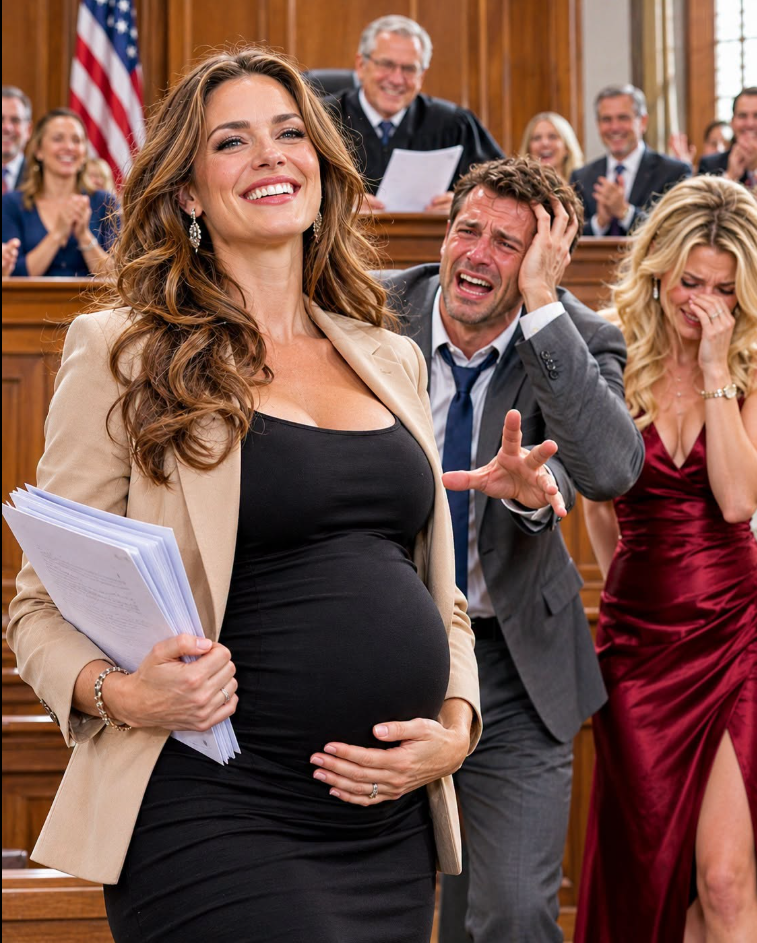
March fourteenth, nineteen-ninety-two opened it immediately. Victor’s email ordered Arthur to erase the nineteen hours; Arthur’s reply was Consider it done. Eleven additional cover-ups and two earlier deaths emerged. Federal indictments followed in April, and Vanguard’s two hundred trucks were grounded overnight. Hannah returned her diamond without a note. My mother testified before the grand jury for four hours, then sat beside me on the courthouse steps in spring sunshine. Frank pleaded guilty to reckless driving. At my request, he avoided prison and began serving two thousand community-service hours, loading foundation car seats every Saturday.
Arthur pleaded guilty in August after reviewing the decrypted messages. Victor went to trial and lost on every count. At October’s sentencing, I asked the judge to remember that Liam, Maya, and Leo mattered infinitely more than a birthday meal or delivery deadline. Victor received eleven years, Hayes six, and Arthur forty-six months. As marshals escorted him away, Arthur quietly admitted he had lied to himself for decades about using my birthday as his password. That weekend, Hannah brought a dusty box from his closet. Inside lay Maya’s crayon invitation asking Grandpa to visit, and an unopened letter Liam had mailed six days before the crash. Liam had gently urged him to attend Leo’s coming birthday, reminding him that children remember who appears, not who keeps score.
I mailed the drawing and letter to Arthur without a note. Three weeks later, his handwritten apology arrived. I placed it beside Owen’s birthday cards. The following spring, North Carolina enacted Maya and Leo’s Law, requiring unalterable audit trails for commercial driving logs. I stood beside the governor as he signed. Nearly two years after the crash, our foundation had distributed more than six thousand car seats and opened a Blue Ridge bereavement camp. Hannah became outreach director. My mother lived beside Grace in Savannah and called every Sunday. Grace and I visited Owen’s Portland grave, where I hummed our shared melody with Mount Hood in view.
Caleb kept appearing every week. Last fall, he finally repaired my microwave clock and asked me to dinner. On the second anniversary that July, we gathered on the back patio around Maya’s handprints in the cement. I could finally recognize family in the people who chose to be there. Yet Arthur’s apology remained inside the shoebox beside the birthday cards Owen had never been allowed to give me—two fathers’ words, waiting for me whenever I lifted the lid.