PART 2
I’ve been a wrestling coach for thirty years. I know when a man is trying to intimidate me.
I also know when to stay calm. I took my phone out of my jacket pocket. My hand was still weak from the stroke, so it took me a few tries.
“Who are you calling?” Cecil asked.
“The sheriff,” I said. “I’m my son’s legal guardian. Court-appointed. My wife had no right to sign anything. And neither do you.”
Cecil’s smile disappeared.
“You’re bluffing.”
“I have the papers in my brother’s truck. Want to see them?”
Cecil walked back into the farmhouse and slammed the door.
The sheriff’s deputies arrived in twenty minutes. Three cars.
When they walked into that farmhouse, one of the young deputies came back out and threw up in the yard.
There were nine adults with disabilities living inside. Down syndrome. Autism. Cerebral palsy. One woman in her fifties who couldn’t speak at all. They were sleeping on mattresses on the floor. There was one bathroom. The toilet was broken. The refrigerator had a padlock on it.
The deputies found a ledger on the kitchen table.
Nine names. Nine disability checks a month. Cecil kept most of the money. He paid a “referral fee” to the people who brought the residents to him.
Three of those payments went to Luann.
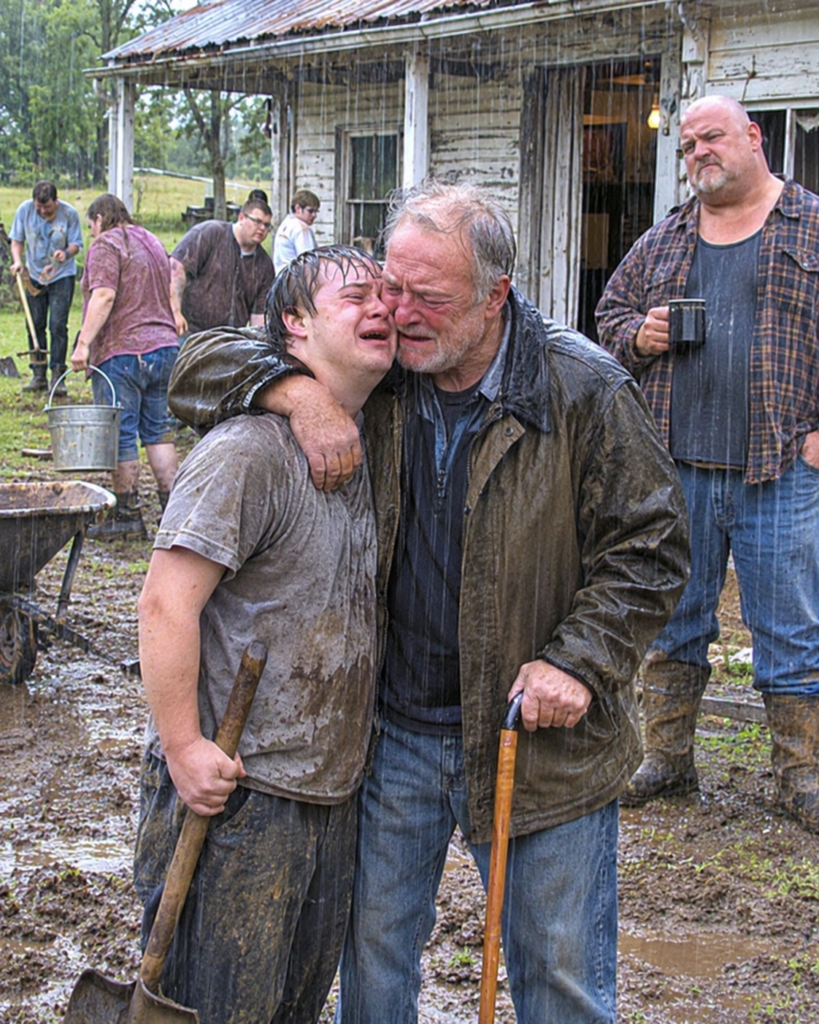
Every one of the residents was taken to a hospital that night. Kellan rode in the ambulance with me. He held my hand the whole way.
“Dad, are we going home?”
“Yes, buddy. We’re going home.”
Cecil was arrested for running an unlicensed care facility, abuse of vulnerable adults, and fraud. The state shut down Sunny Acres the next week.
Luann was arrested two days later.
She cried. She said she didn’t know how bad it was. She said she just needed a break.
The detective showed her the ledger with her name on it. Three referral payments. Six hundred dollars each. And Kellan’s disability checks going straight into her personal account.
She stopped crying.
I filed for divorce from my hospital bed during my follow-up appointment.
Kellan came home. He took a long hot bath. He ate three plates of spaghetti. Then he went to his room, saw it was empty, and sat down on the bare mattress.
He didn’t cry. He just looked sad.
The next morning, I called a few people.
By that afternoon, eleven of my former wrestlers were standing in my driveway. Grown men now. Mechanics, teachers, a firefighter, a lawyer. Boys I’d coached when they were fifteen.
They carried in a new bed. New sheets. Country music posters. A stereo. One of them, a guy named Marvin who owns a furniture store, brought a recliner and set it right next to the window.
“For when you want to watch the birds, Kellan,” he said.
Kellan hugged every single one of them.
The lawyer, a quiet man named Cash, helped the families of the other eight residents file lawsuits. Every one of them got their benefits back.
It’s been a year now.
Kellan went back to his job at the grocery store. His manager threw him a welcome back party. He’s the best bagger they’ve ever had.
I still walk with a cane. Some days, my right hand still shakes.
But every morning, Kellan and I walk Rex around the block together. Slowly. One step at a time.
He holds my arm on the curbs.
“I got you, Dad,” he says.
He’s right. He does.
THE END.