PART 2
I was already in my car when Calvin said it. I drove with the phone pressed to my ear.
Green Bay to that gas station is three and a half hours. I knew I’d never make it in time. But I drove anyway.
“Calvin, is he breathing?”
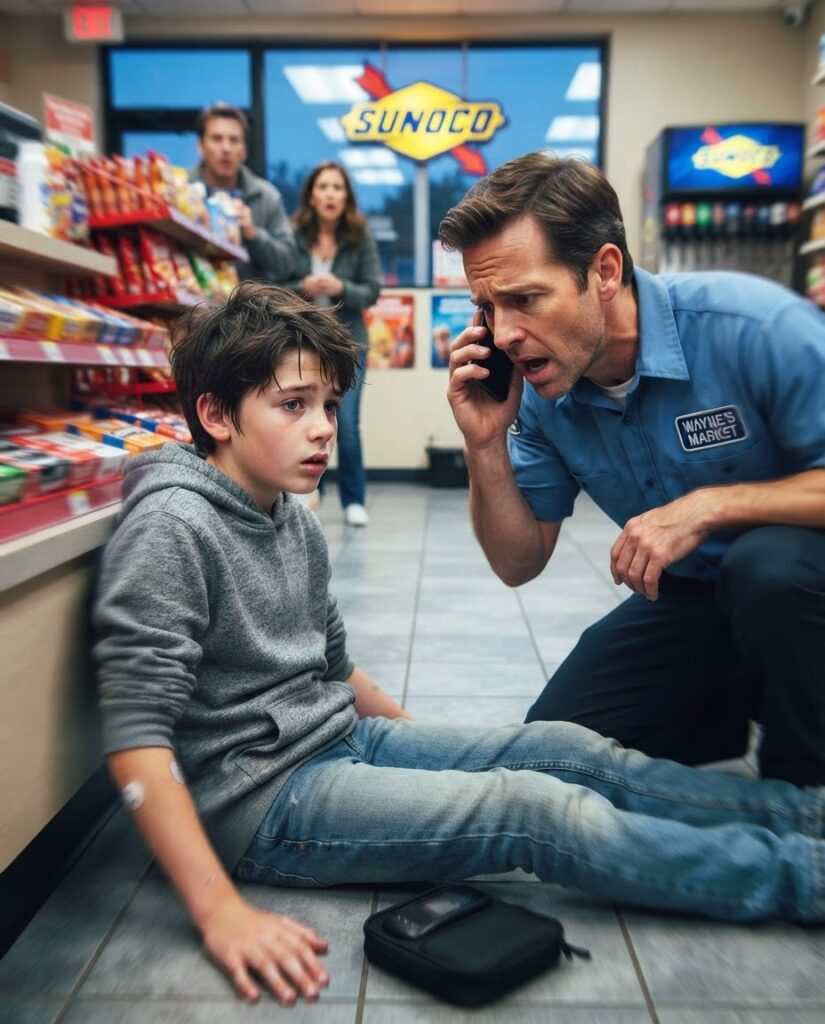
“Yes, ma’am. He’s breathing. I put him on his side like they showed me in a first aid class. I’ve got my jacket under his head.”
“Talk to him. Please. Keep him awake.”
I listened to that stranger talk to my son for twenty minutes. About fishing. About the Packers. About his own grandkids. He never stopped talking. Not once.
“You’re doing great, buddy. Your mom’s coming. Hang on.”
At 4:41 p.m., I heard the sirens through the phone.
The paramedics gave Ripley fluids in the ambulance and flew him by helicopter to a children’s hospital in Marquette.
When I got there, he was in the intensive care unit with tubes in both arms. He was so pale. So small.
The doctor told me his blood sugar had been over six hundred. His blood had turned acidic. His kidneys were starting to fail.
“If that man hadn’t called 911,” she said quietly, “your son would not have survived the night.”
Ripley spent four days in the ICU. On the second day, he woke up and squeezed my hand.
“Mom,” he whispered, “I’m sorry I didn’t call you sooner. Grandma took my phone. She said I’d only worry you.”
“You have nothing to be sorry for,” I said. “You saved yourself. You walked four miles.”
The police went to the cabin that night.
They found Ripley’s insulin pens at the bottom of the lake, right off the dock. Exactly where he said they’d be. They found his glucose sensor in the kitchen trash.
My parents told the officers they were “trying to heal him naturally.”
My mother was charged with child neglect and endangerment. My father too, because he knew, and he helped.
They called me from the police station.
“Marla, you have to tell them this is a misunderstanding. We’re your parents.”
“You threw my son’s medicine in a lake,” I said. “And then you laughed at me while he was dying on a gas station floor.”
I hung up. I haven’t spoken to them since.
When Ripley got out of the hospital, the first thing he asked was to go see Calvin.
So we drove back up to that little gas station on Highway 2.
Calvin was behind the counter. He was in his seventies, with a gray beard and a Packers cap. When he saw Ripley walk in, he came around the counter and hugged him so hard he lifted him off the floor.
“There’s my buddy.”
It turned out Calvin’s wife had type 1 diabetes. She passed away six years ago. That’s how he knew the fruity smell. That’s how he knew it was an emergency.
“I couldn’t save her,” he said, wiping his eyes. “But I got to save you.”
Now, every summer, we drive up to the U.P. We stay at a motel near Calvin’s gas station. He and Ripley go fishing every morning.
And Calvin always keeps a box of glucose tablets and a juice box behind his counter.
“Just in case,” he says.
THE END.