PART 2
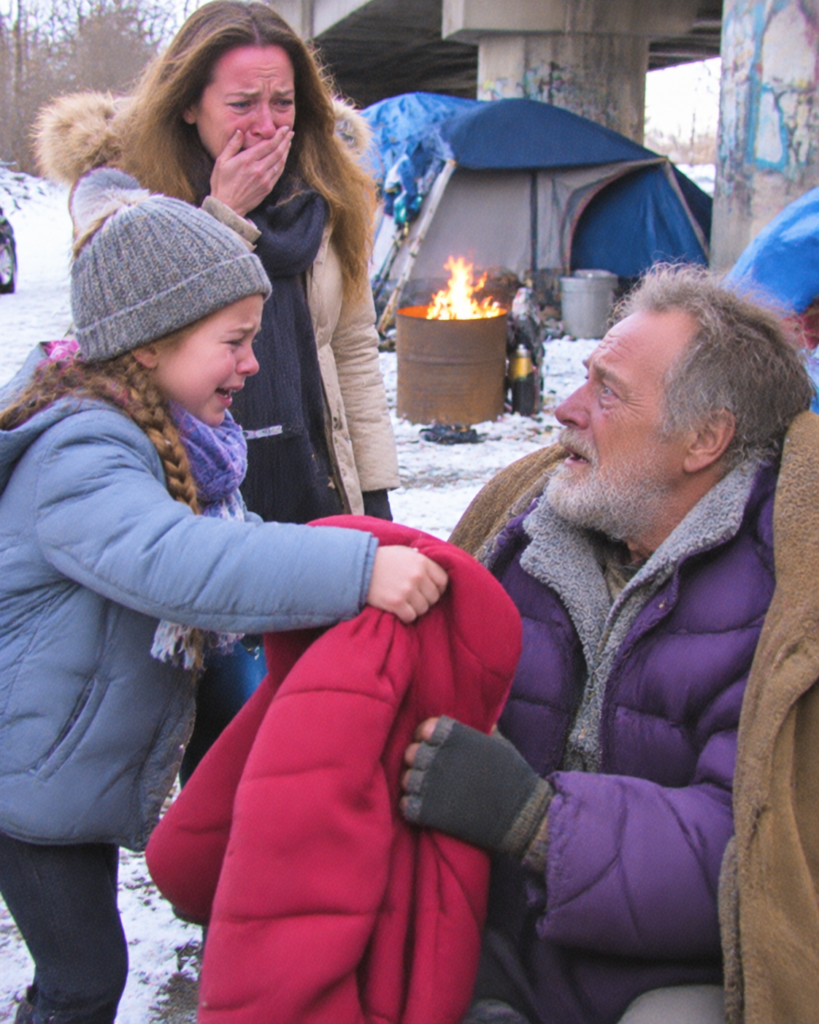
For a long moment, none of us moved. The fire popped in the barrel. A train rumbled somewhere far away.
Vada turned around and saw me. Her face went pale.
“Mom! I’m sorry. I’m so sorry. Please don’t be mad.”
I couldn’t speak. I just walked forward, knelt in the frozen dirt, and looked at the old man.
My father. Zeb Vale.
He had left when I was twenty-four. One morning, he said he was going to the hardware store, and he never came home. My mother searched for him for years. She died believing he was dead.
“Dad,” I whispered. “Where have you been?”
His hands were shaking.
“I got sick, Rosie,” he said. “In my head. I started hearing things. Losing time. I was ashamed. I thought you’d all be better off without me. So I just kept walking.”
Fifteen years.
He’d been living on the streets in towns all over Minnesota. He’d come back to Duluth two winters ago because he wanted to be near the house he raised me in. Just to see it. He never had the courage to knock.
I turned to Vada.
“How did you find him?”
She wiped her nose with her sleeve.
“He was sitting by the school fence in October. He was so cold. He was shaking. I gave him my granola bar. Then he looked at my name on my backpack. Vale. And he started crying.”
She looked down.
“He told me he had a daughter named Rosie once. He showed me a picture he keeps in his pocket.”
My father reached into the purple jacket and pulled out a tiny, bent photograph.
It was me. Six years old. Sitting on his shoulders at the county fair.
“I knew it was you, Mom,” Vada whispered. “I knew it was Grandpa. But he made me promise not to tell. He said you’d be ashamed of him.”
I took my father’s frozen hands in mine.
“Dad, I have never been ashamed of you. I’ve been missing you.”
He broke down sobbing. So did I. So did Vada.
We brought him home that night.
Tad was standing in the kitchen when we walked in. He looked at the old man in the purple coat and wrinkled his nose.
“What is this? Rosario, you can’t bring some homeless guy into this house.”
“This is my father,” I said. “And this is my house. I bought it before I married you.”
He opened his mouth. Then he closed it.
“And you grabbed my daughter,” I said. “You called her a liar. You were going to send her out in the cold without a coat. She was giving hers away to keep her grandfather alive.”
Tad moved out two weeks later. He said we were “too much drama.” I didn’t stop him.
My father got help. Real help. A doctor at the county clinic diagnosed him, and with the right medication, his mind cleared like a fog lifting. He sleeps in our guest room now. He fixes things around the house. He walks Vada to school every morning.
And every Saturday, Vada and her grandpa take a bag of coats and blankets down to the bridge.
They’ve given away sixty-two coats this winter.
Last week, I found a note on the fridge in Vada’s handwriting.
“Coats lost: 4. Grandpas found: 1. Best trade ever.”
THE END.