The Condition Wasn’t About Money—It Was About the Family Secret My Father Buried
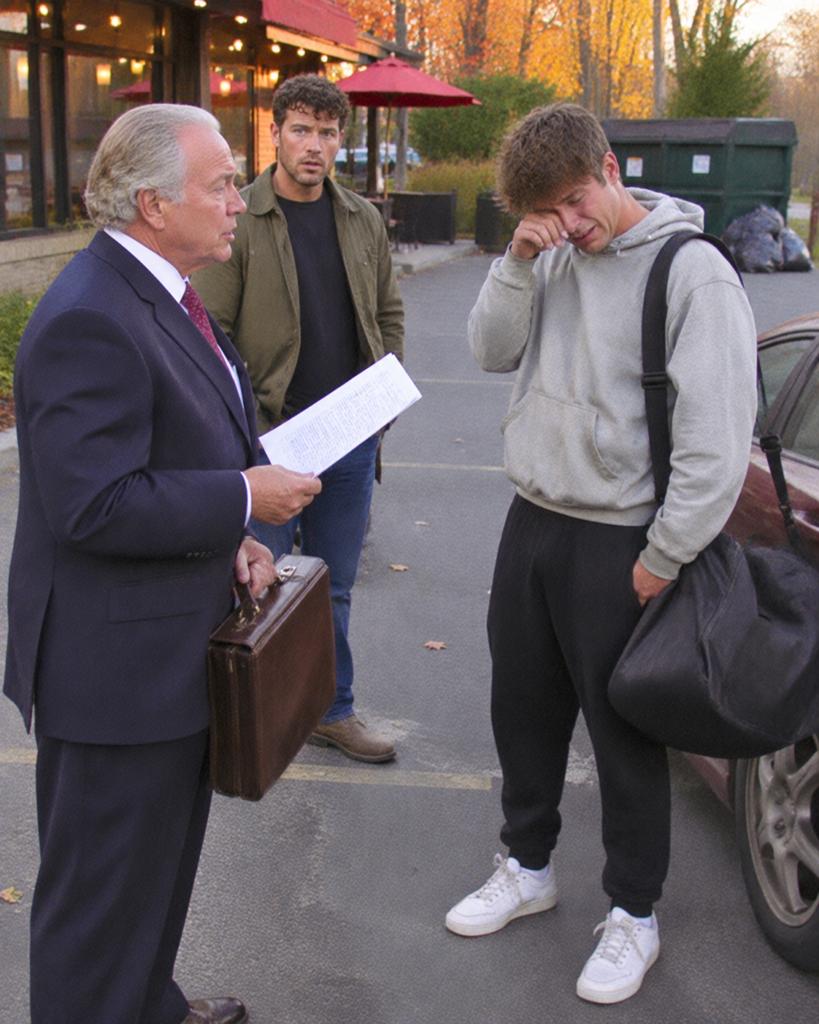
Richard Hartwell looked at me for a long moment.
Then he closed the briefcase.
“You must live in your grandfather’s house for one year before you can sell it, transfer it, or liquidate the investments.”
I blinked.
“That’s the condition?”
“That is the first condition.”
The restaurant’s back door hummed behind us. Somewhere inside, dishes clattered and someone called for more coffee. I stood beside a dumpster in a jacket that smelled faintly of fryer grease, trying to understand how the worst morning of my life had somehow turned into a legal conversation.
“What’s the second?”
Richard’s expression softened.
“You must read the letter your grandfather left for you.”
I almost laughed.
“That’s it?”
“No. The letter explains the rest.”
He handed me a thick cream-colored envelope. My name was written across the front in dark blue ink.
Nathaniel Brooks.
Not Nathan.
Nobody had called me Nathaniel since I was little. My mother had used it when she was annoyed, and my father had used it on school forms. Seeing it now made something inside me tighten.
The handwriting looked familiar, though I couldn’t say why.
“Where did he live?” I asked.
“About two hours north of here. Outside a town called Bellmere.”
“Did he know about me?”
Richard hesitated.
“He knew you existed. He spent several years trying to find you.”
I looked down at the envelope.
“Why didn’t he just call my father?”
“I don’t know.”
“You’re his attorney.”
“I was his attorney near the end of his life. Before that, he kept many things private.”
That answer bothered me.
“What did he die from?”
“A heart condition. Peacefully, in his sleep.”
I swallowed. “And my father knew?”
Richard didn’t respond immediately.
The silence answered for him.
I turned away, staring at my battered sedan. The hood was raised, and steam curled into the cold air. Nine days ago, I had been living in a house I thought belonged to my family. Now a stranger was telling me the grandfather I had believed dead had spent years looking for me.
“What was my grandfather like?” I asked.
Richard glanced toward the street.
“Difficult.”
That wasn’t what I expected.
“Difficult how?”
“Proud. Private. Brilliant with numbers. Terrible at apologizing.”
Despite everything, I smiled faintly.
“That sounds familiar.”
Richard gave me a careful look.
“You resemble him more than you realize.”
He reached into his briefcase again and removed a set of keys attached to a plain brass tag.
“Your car won’t get you to Bellmere. I arranged a room at a motel tonight and a rental vehicle for the morning. The expenses will be covered by the estate.”
I stiffened.
“I don’t need charity.”
“This isn’t charity, Nathan. It is an authorized estate expense.”
“I can’t accept money from someone I never met.”
“You can accept a safe place to sleep.”
His tone wasn’t forceful. It was simply certain.
That made it harder to refuse.
I looked at the envelope again.
“What happens if I don’t go?”
“The inheritance passes to a foundation your grandfather established.”
“And my father?”
“Your father receives nothing.”
The words landed with surprising weight.
I hated that part of me felt relieved.
Richard studied my face. “Your grandfather was clear. He wanted the estate to go to you, but he didn’t want to hand you a fortune without giving you time to understand where it came from.”
“Understand what?”
“That is what the letter is for.”
He left me with a motel address, the keys to a rental car waiting at a nearby agency, and one final warning.
“Don’t make any decisions about your father until you’ve read everything.”
I wanted to ask what he meant, but he was already walking toward the black sedan parked along the curb.
“Richard.”
He stopped.
“Did my father ask you to find me?”
“No.”
“Then who did?”
Richard looked back at me.
“Your grandfather.”
The answer followed me long after he drove away.
At the motel, I sat on the edge of a narrow bed and held the envelope in both hands.
The room smelled of industrial soap and old carpet. A television mounted across from me played a daytime talk show with the sound turned low. Outside, tires hissed over wet pavement.
I had spent nine nights sleeping in my car, yet the clean sheets made me uncomfortable. They felt too generous, too temporary.
The envelope had no seal.
Inside was a single folded letter and a small photograph.
I picked up the photograph first.
It showed a younger version of my grandfather standing beside a woman I recognized immediately.
My mother.
She was smiling at the camera, one hand resting on her stomach. She couldn’t have been more than twenty-two. My grandfather stood beside her with one hand on her shoulder, his expression serious but unmistakably proud.
I turned the photograph over.
For my son, Nathaniel.
Before he arrives.
My breath caught.
My mother had never mentioned a photograph like this. She had never told me that her father knew she was pregnant. In every story I had heard, she had left home at eighteen, married my father, and cut ties with her family.
I unfolded the letter.
Nathaniel,
If you are reading this, then I have failed to meet you in the ordinary way. I am sorry for that.
There was no easy sentence after that.
I read the first paragraph twice.
I knew about you only after your mother left Bellmere. By then, she had made it clear that she wanted no contact with me. I respected that decision, even when it broke my heart. I sent letters. They were returned unopened. I sent money through an attorney, but it was never accepted.
Years later, I learned that your mother had died and that you were being raised by your father. I tried again to reach you.
Your father answered instead.
My fingers tightened around the page.
He told me you wanted nothing to do with me. He said your mother had spoken of me with bitterness and that contacting you would only disturb your life.
I believed him longer than I should have.
A cold feeling moved through my chest.
My father had told me my grandfather died before I was born. He had never mentioned letters. Never mentioned money. Never mentioned that my grandfather had tried to find me.
I continued reading.
When I finally discovered the truth, I was already ill. You were nearly eighteen. I wanted to see you, but I was afraid of appearing in your life only because I had money to offer.
So I made arrangements instead.
The house in Bellmere is not merely a home. It contains your mother’s belongings, my records, and the truth about what happened between us.
Live there for one year.
Do not sell it before you understand why I kept it.
Your father will tell you that I abandoned your mother. He may even tell you that I was responsible for her leaving.
Listen to him if you choose. But read the records first.
Whatever you decide after that, the choice will be yours.
I am sorry I waited too long.
Your grandfather,
James
I set the letter down.
For several minutes, I couldn’t move.
My father had always spoken of my grandfather with a flat, dismissive contempt.
“He chose money over family.”
“He cared more about being right than being kind.”
“He didn’t want anything to do with your mother.”
When I was younger, I had assumed those were adult problems I couldn’t understand. Later, when my mother died, Dad had said it was better that I never knew her side of the family.
“They didn’t come to the funeral,” he’d told me.
Now I wondered whether they had been invited.
I picked up the phone and called my father.
He answered after four rings.
“What?”
I almost hung up.
I hadn’t spoken to him since the morning he put my bags outside. He hadn’t called to ask where I was sleeping. He hadn’t asked whether I had eaten.
“Did you know Grandpa was alive?”
The silence on the other end was immediate and absolute.
“Who told you that?”
“An attorney.”
“Nathan, listen to me—”
“No. You listen to me. Did you know?”
My father exhaled sharply.
“Your grandfather was sick and confused.”
“That isn’t an answer.”
“He contacted me years ago.”
“And you told me he was dead.”
“I told you what I thought was best.”
“What was best about lying to me?”
“He didn’t deserve access to you.”
The certainty in his voice stunned me.
“You told him I wanted nothing to do with him?”
“I protected you from him.”
“From what?”
My father didn’t answer.
I looked at the photograph on the bed.
“What did he do?”
“He abandoned your mother.”
“That’s not what the letter says.”
“You’re reading a letter from a dead man who wants to make himself innocent.”
“He tried to send money.”
“He wanted to buy forgiveness.”
“Did you return it?”
Again, silence.
That silence was more revealing than anything he could have said.
“Dad, what did you do with the money?”
“Don’t make accusations you can’t prove.”
“I’m not accusing you. I’m asking.”
“You’ve always been dramatic.”
The old phrase struck me with unexpected force. Whenever I had questioned him as a child, he had said I was dramatic. If I cried, I was dramatic. If I objected to Tyler taking my things, I was dramatic. If I asked why my mother’s photographs had disappeared from the house, I was too young to understand.
“Did Grandpa ever send money for me?”
My father’s voice lowered.
“He had no right.”
“That still isn’t an answer.”
“I raised you.”
“You did,” I said quietly. “But that doesn’t mean you owned every choice made about my life.”
He hung up.
I stared at the phone until the screen went dark.
The next morning, I rented a small blue sedan and drove north toward Bellmere.
Richard had arranged for my car to be towed to a repair shop, though I didn’t understand how he knew the details. I promised myself I would repay everything once I had a job and somewhere stable to live.
The road climbed through low hills covered in late-autumn trees. Their leaves had turned bronze and red, and the sky was the pale gray of early winter.
For the first hour, I listened to nothing but the tires against the pavement.
Then I stopped at a gas station and bought coffee, toast, and a notebook.
I wrote down every question I could think of.
Why did Mom leave home?
Why did Dad lie?
Why did Grandpa wait so long?
What was in the house?
And why had my father seemed so certain he had the right to decide whether I knew my own family?
Bellmere appeared just after noon.
It was a quiet town built around a square with a courthouse, a library, and a row of old brick shops. A clock tower stood at the center, its hands frozen at eleven minutes past four.
The address Richard had given me led beyond the town, along a narrow road lined with stone walls and bare trees.
The house stood at the end of a long drive.
It was larger than I expected, but not grand in the way I imagined an inherited house might be. It had gray shingles, white trim, and a wide porch with two wooden chairs facing the road.
A faded sign near the driveway read:
BROOKS & SONS — ORCHARDS, CIDER, AND PRESERVES
Beyond the house, rows of dormant apple trees stretched over the hillside.
I parked near the porch and stepped out.
A woman in a green coat came from the side of the house carrying a basket of folded linens. She was perhaps in her sixties, with silver hair pulled into a braid.
“You must be Nathaniel,” she said.
I nodded cautiously.
“Who are you?”
“Eleanor Price. I managed the house for your grandfather.”
“You knew him?”
“For thirty years.”
She set the basket down.
“Your attorney called. He said you might arrive today.”
I looked at the house.
“Did you know he had a grandson?”
“I knew he had a daughter. I suspected he had a grandson.”
“Why didn’t anyone tell me?”
Eleanor’s eyes held no surprise.
“Your father made that difficult.”
The answer was so direct that I didn’t know what to say.
She picked up the basket again.
“Come inside. You look cold.”
The kitchen was warm and bright, with old wooden cabinets and a long table beneath a window. A kettle whistled on the stove. Everything seemed cared for but untouched, as though the house had been waiting.
Eleanor poured tea and placed a plate of sandwiches in front of me.
“I’m not hungry,” I said automatically.
“That’s what people say when they’re very hungry.”
I looked at her.
She gave me a gentle smile.
“I’ve been told about the car.”
“By Richard?”
“By your grandfather, in a manner of speaking.”
I took a sandwich.
The first bite nearly hurt. My body had grown accustomed to scarcity so quickly that food felt unfamiliar.
Eleanor waited until I had eaten half of it before speaking.
“Your grandfather spent his final year preparing the house.”
“For me?”
“For the possibility of you.”
“What does that mean?”
“He had no certainty you would come.”
“Did he think I wouldn’t?”
“He thought you might be angry.”
“I am angry.”
“That’s allowed.”
I looked toward the windows. Beyond them, the orchard sloped toward a small pond.
“Was he angry with my father?”
“Sometimes.”
“Why didn’t he confront him?”
“Because he believed forcing his way into your life would only make you pay the price.”
That sounded noble, but I wasn’t ready to forgive a man who had stayed away, even if he had tried to reach me.
“Where are his records?”
“In the study. He left instructions that you were to have them after you arrived.”
Eleanor stood and took my empty plate.
“Your room is upstairs. The blue room at the end of the hall.”
I followed her through the house.
The walls held framed photographs of apple trees, workers, and old family gatherings. In one picture, my mother stood beside a younger James Brooks. She was laughing at something outside the frame.
I stopped.
“Was she happy here?”
Eleanor looked at the photograph.
“Sometimes.”
“That isn’t very reassuring.”
“Families are rarely one thing.”
She continued upstairs.
The blue room had a narrow bed, a writing desk, and a window overlooking the orchard. On the desk sat a wooden box.
My name was carved into the lid.
Eleanor paused in the doorway.
“Your grandfather told me not to open it.”
“What’s inside?”
“I don’t know.”
“Did he leave anything else?”
“He said you would know when you were ready.”
That phrase irritated me.
“I don’t know anything.”
“Then start with the box.”
She left me alone.
The lid opened without a key.
Inside were several envelopes, a small silver locket, and a stack of letters tied with blue ribbon.
The envelopes were addressed to my mother.
All of them had been returned unopened.
I untied the ribbon.
The first letter was dated twenty years ago.
Claire,
I am not asking you to forgive me. I am asking you to let me explain.
The second was written a month later.
I spoke with a lawyer today. He says I can arrange a trust for the child without contacting you directly. I hope you will allow it. The money is not meant to control you. It is meant to give him choices.
The third was shorter.
I saw him today.
He has your eyes.
I pressed the paper flat with trembling fingers.
My grandfather had seen me.
He had been near my life, somewhere outside it, and I had never known.
At the bottom of the box lay a final envelope. Unlike the others, it had my father’s name on it.
Thomas Brooks.
I stared at it for a long time before opening it.
Thomas,
I know you believe I took Claire from you when she was young. That is not what happened.
She left because she discovered the truth about the money you borrowed from the orchard business.
The letter blurred.
I read the sentence again.
My father had worked for my grandfather’s company before I was born. He had always said he built his life without help. He had never mentioned borrowing money.
I continued.
You promised to repay it. When you could not, you asked me to hide the debt from Claire. I refused. She learned the truth and decided to leave.
I did not stop her.
I should have.
Not because she was wrong to leave, but because I believed giving her space was the respectful thing to do. I did not understand how frightened she was.
You told me she wanted no contact. I believed you because I wanted to believe the conflict was over.
But when I learned she was ill, I discovered you had not told me.
You kept her illness from me.
I had to set the letter down.
My mother had died when I was eight. Dad had told me she had been sick for a short time, that doctors couldn’t do anything, and that she didn’t want me to remember hospitals.
I had believed him.
The final paragraph was written in a shakier hand.
I am leaving the house and the business interests to Nathaniel because they were built, in part, from money that should have protected him. I am not doing this to punish you. I am doing it because the truth should not disappear with me.
There is one document you must read before you decide whether to confront your father.
It is in the old cider room, behind the loose brick beneath the west window.
James
I read the letter twice.
Then I went downstairs.
Eleanor was in the kitchen, washing dishes.
“Where is the old cider room?”
She turned off the faucet.
“You found the letter.”
“How did you know?”
“Your grandfather told me where he had hidden it.”
“What document is behind the loose brick?”
Eleanor dried her hands slowly.
“I don’t know.”
“Did you know my mother was sick?”
Her face changed.
Only slightly, but enough.
“Yes.”
“Did my father?”
“He knew she was ill.”
“Did he tell Grandpa?”
“No.”
The kitchen seemed to grow smaller.
“What kind of illness?”
“Your mother had a heart condition. She knew it could become serious. She wanted to see your grandfather before she died.”
“Why didn’t she?”
Eleanor looked down.
“Because your father told her James had refused to help.”
My throat tightened.
“That wasn’t true.”
“No.”
“Did you tell my grandfather?”
“By the time I learned what had happened, your mother was gone.”
I gripped the back of a chair.
“Why did everyone keep quiet?”
“Because grief makes people afraid. Your grandfather believed he had lost his daughter. Your father believed he was protecting you. Your mother believed she had been rejected.”
“And I was the only person who didn’t know anything.”
Eleanor’s eyes filled with sadness.
“You were a child.”
“I’m not a child now.”
“No,” she said. “You’re not.”
The old cider room stood behind the orchard house, attached to a weathered barn. The air smelled of apples, wood, and dust. Sunlight entered through narrow windows near the ceiling.
At the west window, three rows of brick formed the wall.
I ran my fingers along them until one shifted under my hand.
Behind it was a small metal tin.
Inside lay a folded legal document, a bank receipt, and a photograph.
The document was a trust agreement dated eighteen years earlier—signed by my grandfather and naming me as beneficiary.
The bank receipt showed a deposit of $3,000.
The date was my eighth birthday.
My father had told me he had spent that year working extra shifts to pay for my school expenses.
I unfolded the photograph last.
It showed my mother sitting in a hospital room, pale but smiling. Beside her stood my grandfather.
Between them was a younger Richard Hartwell.
On the back, my mother had written:
I told him everything. Nathan must know when he is old enough.
Underneath, in different handwriting, someone had added:
He still doesn’t know.
I turned the photograph over again.
The trust document named Richard Hartwell as trustee.
At the bottom of the last page, beneath my grandfather’s signature, was a handwritten note.
The money was withdrawn the day after the deposit.
Authorized by Thomas Brooks.
And beneath that, in Richard’s handwriting:
Nathaniel, there is one more record. Your father signed for it.
I read the handwritten sentence until the words lost their meaning.
Your father signed for it.
“What record?” I asked.
Eleanor stood just inside the cider room, one hand resting against the doorframe. She had followed me without making a sound.
Richard’s note was still folded in my fingers.
She looked at it, then at me. “Your grandfather kept copies of everything important.”
“Where?”
“Usually in the study.”
“Usually?”
“There was one place he trusted more than the rest.”
I waited.
“The old office above the packing shed.”
I looked through the window toward the orchard. Beyond the rows of bare trees stood a long, low building with a rusted metal roof. A narrow staircase climbed along one side.
“Why didn’t you tell me about it?”
“Because I thought you should find the first truth before someone handed you the second.”
I almost laughed, though nothing about the situation was funny.
“Everyone in this family seems to believe I need to discover my own life like a scavenger hunt.”
“Your grandfather believed evidence mattered more than accusations.”
“And what do you believe?”
Eleanor met my eyes.
“I believe people can do wrong things for reasons they once thought were right. That doesn’t erase the harm. It only helps us understand what happened.”
I folded the note and placed it in my pocket.
“Did my father take the three thousand dollars from the trust?”
“I don’t know.”
“The bank receipt says it was withdrawn by him.”
“That tells you what happened to the money. It doesn’t tell you why.”
I stared at the photograph of my mother.
“He took my savings when I turned eighteen.”
Eleanor’s expression tightened.
“I know.”
“How?”
“Your grandfather found out before he died.”
My anger, which had been simmering since the kitchen table at home, suddenly had somewhere to go. It moved through me hot and immediate.
“He knew?”
“He knew your father had taken money from you. He didn’t know whether you understood where it had gone.”
“It went to Tyler.”
“Your stepbrother?”
I nodded.
Eleanor lowered her eyes. “Your grandfather said he was sorry he couldn’t protect you sooner.”
The words should have comforted me. Instead, they made my chest ache.
Protection had become a complicated word. My father had used it to justify lies. My grandfather had used it to explain distance. Both men had claimed to be acting for my sake, and I was left standing in the middle of consequences neither had been willing to face.
“Did he know about the eviction?” I asked.
“He knew you had been put out. He did not know you were sleeping in your car until the attorney located you.”
Richard’s efficiency no longer felt mysterious. It felt connected to years of preparation I had never known existed.
“Why didn’t Grandpa come to me himself?”
Eleanor’s answer took a moment.
“By then, he was too ill to travel. And he believed you might reject him if he appeared without proof.”
“Proof of what?”
“That he had tried.”
I looked toward the darkening orchard.
My grandfather had spent years trying to prove something to a grandson who had never known there was a question.
The office above the packing shed was colder than the house. Dust covered the windowsills, and the shelves held old ledgers bound in cracked brown leather. A single desk sat beneath a hanging lamp.
Eleanor unlocked the door with a key she wore on a chain around her neck.
“Your grandfather stopped using this room after the business was sold,” she said. “But he came here whenever he needed to think.”
“Did he come here after learning about me?”
“Many times.”
I walked to the desk.
A leather folder lay in the center, sealed with a strip of blue tape. My name was written on it.
I peeled the tape away.
The first document was a photocopy of the trust agreement. The second was a bank statement from eighteen years earlier. The account had been opened in my name, with my grandfather listed as trustee and Richard Hartwell as co-trustee.
The initial deposit was exactly three thousand dollars.
A withdrawal appeared the following day.
The check number was visible in the copy.
Pay to the order of Thomas Brooks.
The signature beneath it looked like my father’s.
I turned the page.
Attached was a withdrawal authorization signed by Thomas. In the space marked Purpose, he had written:
Medical and educational expenses for Nathaniel Brooks.
My hands went cold.
“What medical expenses?” I asked.
Eleanor stood across the desk.
“Your mother’s treatment, perhaps.”
I looked up sharply.
“You said she wanted to see Grandpa.”
“She did.”
“And my father took the money from a trust meant for me to pay for her treatment?”
“I don’t know if that is what happened.”
“Then what else could it mean?”
“Your grandfather had been told that your mother needed care. He may have created the trust so your father could use the money for that purpose.”
I stared at the authorization.
“Why would he say the money was for my education?”
“Because your father may have believed no one would approve medical expenses connected to Claire.”
The thought settled between us.
My father had always said my mother’s illness was handled privately. He had told me there were bills, but that insurance had covered most of them. When I asked as a teenager why we had moved so often, he blamed rent increases and unstable work.
Could he have used money intended for me to pay for her care?
If so, why had he never told me?
Eleanor touched the edge of the folder.
“There’s another page.”
Beneath the authorization was a letter from Richard, written eighteen years earlier.
Thomas,
I am releasing these funds at your request because you have represented that they will be used for Nathaniel’s immediate medical and educational needs. Mr. Brooks has instructed me to remind you that the trust is for Nathaniel’s benefit and cannot be treated as a general family account.
If circumstances change, you must notify us.
Richard Hartwell
The letter was formal, almost cold.
At the bottom, beneath Richard’s signature, was a handwritten note from my grandfather.
Thomas came to me after Claire’s diagnosis. He said she did not want my help. I did not believe him, but I respected her supposed wishes. I gave him the money because he promised it would keep Nathaniel secure.
I was wrong to trust him without speaking to her.
I sat down in the chair.
For years, I had believed my mother had died with no one fighting for her. Now I was learning that people had been making decisions around her, using her name, misunderstanding her wishes, and leaving me outside every conversation.
“What happened to the rest of the trust?” I asked.
Eleanor pointed to the final page.
The account balance had been replenished over time. Deposits appeared every year until I turned eighteen. The final balance was far larger than the original three thousand dollars.
My grandfather had continued contributing.
But the statement showed that the account had been closed three weeks before my birthday.
The balance had been transferred to another account.
I read the destination number.
“Where did this go?”
Eleanor shook her head.
“I don’t know.”
At the bottom of the page was a note in Richard’s handwriting:
Transfer authorized by the beneficiary upon reaching majority. Signature required.
My signature.
I looked at the date.
The transfer had been processed six days before my eighteenth birthday.
“I didn’t sign this.”
Eleanor stepped closer.
“Are you certain?”
“I have never seen this document.”
A photocopy of the transfer form was clipped behind the statement.
The signature appeared to be mine.
But it wasn’t.
The letters looked like my name, yet the loops were too careful, the lines too stiff. Someone had copied my signature from a school form or a bank document.
My father had taken my money from beneath my bed. But perhaps he had been planning to take far more.
I stood abruptly.
“I need to call Richard.”
“He may already know.”
“Then why would he leave this here?”
“Because your grandfather wanted you to see it before the estate was finalized.”
I pulled out my phone.
Richard answered on the second ring.
“Mr. Brooks.”
“Were you aware that my trust was closed before my eighteenth birthday?”
“Yes.”
“And that someone forged my signature?”
“I was aware that the signature was disputed.”
“Disputed?”
“That is the legal term when a document appears valid but the beneficiary denies signing it.”
“Did you investigate?”
“We began investigating.”
“Began?”
Richard was quiet.
“Your grandfather’s health deteriorated before we could complete the process. Then he died.”
“Why didn’t you tell me?”
“We did not know where you were.”
“You knew where my father lived.”
“We contacted him repeatedly.”
“And?”
“He said you were away at school, then visiting friends, then unavailable.”
My grip tightened around the phone.
“Did you believe him?”
“No.”
The answer was so direct that it stopped me.
“Then why did you do nothing?”
“Because I had no authority to remove you from your father’s home or accuse him of forgery without evidence. I needed your testimony.”
“You could have found me.”
“We tried.”
A sharp, humorless breath escaped me.
“You found me behind a dumpster.”
“I found you because your grandfather had hired a private investigator six months earlier. Until then, every trail led back to your father.”
I turned toward the window. The orchard had disappeared into dusk.
“What happens now?”
“If the signature is forged, the transfer can be challenged. The funds, including any gains, remain part of the estate until the matter is resolved.”
“How much?”
Richard gave me a figure.
I didn’t speak.
The amount was more money than I could imagine, but it didn’t feel like a gift. It felt like another locked door my father had placed between me and the truth.
“Richard,” I said, “did my grandfather know my mother wanted to see him?”
“Yes.”
“Did you tell him?”
“I did.”
“Why didn’t he go to her?”
“Your father told him she had refused contact.”
“But he knew that wasn’t true.”
“I suspected it wasn’t.”
“Suspected?”
“I was not present for the conversations between your parents. I had documents, statements, and conflicting accounts. Your grandfather was proud. He interpreted silence as rejection because accepting that interpretation hurt less than admitting he might have failed her.”
The words were difficult to hear because they did not make my grandfather innocent.
“What about my mother’s photograph?” I asked. “It says she told him everything.”
“I saw that note.”
“So what did she tell him?”
“I don’t know.”
“You’re his attorney.”
“I was not her attorney.”
The distinction sounded practiced, but not evasive.
“Did she leave anything else?”
Richard paused.
“There is a sealed file in the house. Your grandfather instructed me to give it to you only if you asked about your mother’s final year.”
“I’m asking.”
“Then I’ll bring it tomorrow.”
“No. Tell me now.”
“It concerns medical records and a letter your mother wrote.”
My heart began to beat faster.
“What letter?”
“One addressed to you.”
The room seemed to tilt.
“Why didn’t anyone give it to me?”
“Your grandfather wanted you to be old enough to understand it. Then he wanted to tell you himself.”
“He didn’t.”
“No.”
Richard’s voice softened.
“I’m sorry, Nathan.”
I ended the call and stood in silence.
Eleanor had moved to the window.
“What did he say?”
“There’s a letter from my mother.”
She nodded as if she had been expecting it.
“Do you know what it says?”
“No.”
“Did you know it existed?”
“I knew she wrote something. I didn’t know where it went.”
I looked at her.
“Why did you stay?”
“Stay where?”
“With Grandpa. After all this.”
Eleanor’s face reflected in the dark glass.
“Because he was wrong about many things. But he was not incapable of changing.”
“Did he change?”
“Slowly.”
“That isn’t an answer.”
“He stopped speaking about your father as though anger made him righteous. He admitted that his pride had cost him his daughter. He began writing letters without expecting forgiveness.”
“To my mother?”
“To you.”
She walked to a filing cabinet and opened the bottom drawer.
Inside was a stack of notebooks.
“Your grandfather kept journals,” she said. “He asked me to give these to you after you read the letter.”
I took the top notebook.
The cover was worn at the corners. The first entry was dated three months after my birth.
Nathaniel is healthy. Claire sent no word. Thomas says she does not want me involved.
The next entries were scattered over years.
I sent another letter. Returned.
Thomas says Claire is angry that I offered money. I wish she would tell me herself.
Nathaniel started school today. I watched from across the street. He has Claire’s habit of biting his lip when concentrating.
I should have approached him. I did not.
Claire is ill. Thomas says the doctors are optimistic. I have asked for details. He refuses to provide them.
I cannot decide whether respecting her privacy has become an excuse for my cowardice.
I turned the pages more slowly.
The last entry was written three weeks before his death.
Richard says Nathaniel’s trust was closed without proper authorization. I believe Thomas used his signature. If I am right, then I have allowed my fear to endanger the child I meant to protect.
I have left Nathaniel the truth, but truth is not the same as justice.
He must choose what to do with both.
I closed the notebook.
For the first time since arriving at the house, my anger toward my grandfather shifted. It didn’t disappear. But it made room for something else: grief for the man he had been, and for the person he might have become if he had chosen courage sooner.
That evening, Eleanor made soup and bread. I ate at the long kitchen table while she sat across from me with a cup of tea.
“I don’t know what I’m supposed to feel,” I admitted.
“You don’t have to decide tonight.”
“My father lied about everything.”
“Perhaps not everything.”
“He lied about Grandpa. He lied about the trust. He lied about Mom.”
“He may have told himself different stories.”
“That doesn’t make them less false.”
“No.”
I traced a finger along the rim of my bowl.
“I keep thinking about the three thousand dollars he took from me. Maybe that was part of the trust.”
“Maybe.”
“And Tyler?”
“Your stepbrother?”
“He said the money was for Tyler’s applications.”
Eleanor’s expression softened.
“Did Tyler know where it came from?”
“I don’t know.”
“Then don’t place him inside your father’s choices until you do.”
I thought of Tyler sitting at the kitchen table, looking embarrassed while Dad explained that I was no longer welcome. Tyler had not stopped me. But he had also not looked pleased.
“I don’t want to become like them,” I said.
“Like whom?”
“People who decide what others deserve without asking what they know.”
Eleanor leaned back.
“Then ask questions before you decide.”
The next morning, Richard arrived shortly after nine.
He carried a slim black case and wore the same careful expression as before, but his eyes looked tired.
We sat in the study.
He placed a sealed envelope on the desk.
“Your mother’s letter,” he said.
The envelope was yellowed at the edges. My name was written in a handwriting I recognized from the few birthday cards she had left behind.
Nathaniel.
I touched the ink.
“Why did Dad hide this?”
“I don’t know.”
“Do you think he ever saw it?”
Richard’s hesitation was answer enough.
“How did you get it?”
“Your mother gave it to your grandfather. She asked him to keep it until you were old enough to understand.”
“Why didn’t he send it?”
“Because he believed your father might intercept it.”
I opened the envelope.
The letter was only three pages long.
My dear Nathaniel,
If you are reading this, then you are old enough to know that adults can love each other and still make choices that hurt one another.
I need you to understand that none of what happened between your grandfather and me was your fault.
I left home because I was angry and afraid. Your grandfather had discovered that Thomas had borrowed money from the orchard and had confronted him. Thomas told me he had done it to support us, but he had not told me the debt was growing.
When I learned the truth, I felt betrayed by both of them.
Your grandfather wanted me to stay. Thomas wanted me to leave with him. I chose Thomas because I believed marriage meant standing beside the person who needed me.
I was young. I thought loyalty could repair everything.
It could not.
The letter continued.
When I became ill, I wanted to tell your grandfather. I wanted you to know him. But Thomas said your grandfather would use my illness to take you away. I believed him because I was frightened.
Later, I learned that my father had offered help and that Thomas had refused it. By then, I was too ashamed to admit how much I had misunderstood.
If I do not recover, please know this: your grandfather loved you before he knew your name. He made mistakes, but he never stopped trying to protect a future for you.
And your father loves you too, though love does not excuse dishonesty. If he has told you that he acted for your sake, ask him whether he was protecting you or protecting himself from the consequences of his decisions.
I wish I had been brave enough to ask that question sooner.
Love,
Mom
The paper trembled in my hands.
Richard waited.
“She knew,” I said. “She knew he lied.”
“She came to understand some of it.”
“Did she forgive him?”
“I cannot answer that.”
The door opened before I could say more.
Eleanor stood in the hall, pale.
“Richard,” she said, “there’s someone outside.”
I rose.
“Who?”
She glanced at me.
“Your father.”
For a moment, none of us moved.
Then I walked to the front window.
A dark SUV sat at the end of the drive. My father stood beside it, hands in his coat pockets, staring at the house.
He looked older than he had nine days earlier. Not remorseful. Not defeated. Simply tired, as if he had spent the night arguing with himself and had not found a way to win.
Richard stepped beside me.
“You don’t have to speak with him.”
I looked at the letter in my hand.
For years, my father had controlled the story by deciding what I was allowed to know. My grandfather had left me a fortune, but the greater inheritance was the ability to choose differently.
“I’ll speak with him,” I said.
Eleanor touched my arm.
“Ask questions.”
“I will.”
I walked down the porch steps.
My father remained by the SUV until I reached the drive.
“Nathan,” he said.
“No one calls me Nathaniel except Mom.”
The muscles in his jaw tightened.
“I came to explain.”
“You came because Richard found the trust records.”
“I came because you’re my son.”
“Were you my father when you forged my signature?”
His eyes shifted away.
The silence was not an admission, but it was close.
“I never meant to take anything from you,” he said.
“You transferred money from an account in my name.”
“I used it for your family.”
“My family?”
“Your mother needed treatment. Tyler needed stability. I was trying to keep everyone together.”
“You took money meant for me and lied about where it went.”
“I paid your mother’s medical bills.”
“And then you took my savings.”
“That was different.”
“How?”
He looked toward the orchard.
“Because by then I had no options.”
I felt something inside me settle.
Not peace. Not forgiveness.
Certainty.
“What happened to Mom’s letter?” I asked.
His face changed.
“You found it.”
“Did you hide it?”
“She gave it to me.”
“When?”
“Before she died.”
“Why didn’t you give it to me?”
“She asked me not to.”
I held his gaze.
“That isn’t what the letter says.”
His shoulders lowered.
“She changed her mind later.”
“Did she tell you that?”
“No.”
“Then you decided for her.”
He looked at the house.
“I thought I was protecting you from a family that would confuse you and turn you against me.”
“You turned me against them by lying.”
“I was afraid.”
“So was everyone.”
He rubbed his hands together.
“Your grandfather knew about the money. He threatened to take you.”
“Did he?”
“No.”
“Because he didn’t know where I was.”
My father flinched.
The truth seemed to stand between us, too large for either of us to move around.
“What did you do with the money from the trust?” I asked.
He took a folded document from his coat.
“I brought this because I knew you’d want proof.”
I did not reach for it immediately.
“What is it?”
“A loan agreement.”
“Between whom?”
“Your grandfather and me.”
I took the paper.
The signature at the bottom was my father’s. The amount matched the original trust withdrawal.
But beneath the signature was a handwritten clause I had not seen in the office records.
If the funds are used for Claire Brooks’s medical care, the debt will be forgiven.
I looked up.
“You borrowed it.”
“Yes.”
“And Grandpa forgave the debt?”
“After your mother died.”
“Then why did you keep saying he abandoned her?”
My father’s face tightened.
“Because I couldn’t bear that he had helped her when I couldn’t.”
It was the first honest thing he had said.
Not enough to repair what he had done. But honest.
I looked at the loan agreement again.
“What about the transfer before my eighteenth birthday?”
He closed his eyes briefly.
“Tyler was accepted into a program. We needed money.”
“You forged my signature.”
“I thought the account was still under my control.”
“You knew it wasn’t.”
“I panicked.”
“You made a choice.”
“Yes.”
The admission hung in the cold air.
I had expected excuses, anger, maybe another accusation. I had not expected him to say yes.
“Why did you throw me out?” I asked.
His face broke with something like shame.
“Because Tyler found out about the account. He was going to leave school to work. I thought if I gave him the money, I could keep him from making the same mistakes I made.”
“So you sacrificed me for him.”
“I thought you would land on your feet.”
“You knew I had nowhere to go.”
“I thought you had friends.”
“You never asked.”
“No,” he said. “I didn’t.”
The wind moved through the bare branches.
Behind him, the house stood quiet and solid, holding letters, photographs, and years of choices that could not be undone.
My father extended the document.
“I’m not asking you to forgive me today.”
“Good.”
“I’m asking you to let me repay what I took.”
“You can start by telling the truth.”
“To whom?”
“To Tyler. To your wife. To everyone you lied to.”
His mouth tightened at the mention of my stepmother.
“She knew some of it.”
“Then she deserves the rest.”
He nodded once.
“Will you come home?”
The question surprised me.
Not because I wanted to go back. Because he seemed to believe home was still something he could offer.
“I don’t know where home is yet.”
He looked at the house.
“Your grandfather wanted you to have it.”
“He wanted me to understand it first.”
My father’s gaze dropped to the ground.
“There’s something else,” he said.
I waited.
“The account wasn’t closed by me.”
“What?”
“I tried to access it. I did not transfer the balance.”
“Then who did?”
He pulled another paper from his coat and handed it over.
It was a notice from the bank, dated six days before my birthday.
The account had been closed after a request from the trustee.
The transfer had not gone to my father.
It had gone to a private account in Bellmere.
The account holder’s name was listed beneath the number.
Claire Brooks.
My mother.
I stared at the name.
“That’s impossible. She was dead.”
My father’s face had gone pale.
“I know
I stared at the name.
“That’s impossible,” I said. “She was dead.”
My father’s face had gone pale.
“I know.”
The notice trembled between my fingers. The account number matched the one from the trust records, but the recipient name was unmistakable.
Claire Brooks.
My mother.
For several seconds, the only sound was the wind moving through the orchard.
Then Richard took the notice from my hand.
“May I see that?”
I gave it to him. He studied the page, his expression tightening as he reached the final line.
“What?” I asked.
“This isn’t a transfer to your mother.”
“What do you mean?”
He turned the notice toward me and pointed to the account classification.
“Beneficiary designation. The account was transferred into a payable-on-death structure. The name listed here is the beneficiary, not the account holder.”
“But it says Claire Brooks.”
“Look at the date.”
I did.
The designation had been filed two months before my mother died.
Richard’s voice softened.
“Your mother may have opened a separate account and named herself as beneficiary of the trust funds.”
I looked at my father.
“Did you know about this?”
“No.”
“Did Grandpa?”
“I don’t know.”
Richard folded the notice carefully.
“The bank should have sent correspondence when the account matured. If your mother was deceased, the funds would have remained frozen until the estate was settled. But someone accessed the account recently.”
“Who?”
He looked at the lower corner.
“There’s a notation.”
I leaned closer.
The handwriting was printed in black ink.
Beneficiary confirmed by legal representative. Transfer pending estate determination.
Richard let out a slow breath.
“This is not a completed transfer. Someone confirmed your mother as beneficiary, but the money is still being held.”
“Who confirmed it?”
He turned the page over.
A reference number had been written in blue ink.
Richard recognized it immediately.
“That’s the number for a supplemental filing,” he said. “I submitted it three weeks ago.”
I looked at him.
“You did this?”
“I was trying to determine whether your mother had any unresolved financial arrangements connected to the trust. Your grandfather’s records were incomplete.”
“Why didn’t you tell me?”
“Because I hadn’t confirmed the account. I didn’t want to raise your hopes over an interpretation of an old document.”
My father looked from Richard to me.
“So the money is still there?”
“Possibly,” Richard said. “But it may not belong to the trust anymore. We need to review the account history and your mother’s estate documents.”
“My mother’s estate?”
Richard nodded.
“She left a small estate, mostly medical debts and personal belongings. Your father was named administrator.”
I turned toward my father.
“You knew she had an estate account?”
“I handled the paperwork.”
“Did you know about this money?”
“No.”
“Did you keep copies of everything?”
He looked ashamed.
“I kept what the attorney gave me.”
Richard studied him.
“Which attorney?”
“Martin Hale.”
Richard’s eyes narrowed slightly.
“Martin Hale retired years ago. His files were transferred to another firm.”
“Could they have the records?”
“They may.”
The discovery did not answer the central question. It only opened another door.
But this time, I did not feel as though I was standing outside it alone.
Richard called the bank while we remained in the drive. The conversation lasted nearly twenty minutes. When he ended the call, he told us the account still existed, but access required proof of my identity and documentation establishing my mother’s death.
“The balance is substantial,” he said. “Not the original three thousand. Your grandfather continued making deposits for years.”
“How much?”
“Enough to cover the original amount many times over.”
I closed my eyes.
My grandfather had kept building a future for me, even after he believed I wanted nothing to do with him.
Richard continued.
“Your mother’s designation appears to have been part of a separate agreement. She may have intended the funds to pass through her estate to you.”
“Why would she name herself?”
“She may have expected to remain alive when the account was finalized. Or she may have named herself because she wanted the money controlled by her estate rather than transferred directly to your father.”
My father flinched.
“Claire didn’t trust me with money,” he said.
“Did she have reason not to?” I asked.
He looked down.
“Yes.”
That answer hurt more than another denial would have.
We returned to the house.
Eleanor had left a pot of coffee warming on the stove, as though she understood that truths rarely arrived one at a time. I sat at the kitchen table with Richard and my father while she gathered folders from the study.
“I want to know exactly what happened,” I said. “Not the version each of you finds easiest to live with.”
My father nodded.
Richard opened his case.
“Then we begin with documentation.”
For the next two hours, we sorted through records.
My mother had opened the account shortly before her final hospitalization. The original trust funds had not been transferred directly to her. Instead, she had signed an agreement acknowledging the money as a protected asset intended for my education and long-term security.
If she died, the funds would pass through her estate to me.
Her signature appeared on the document.
So did my father’s, as witness.
I read the page twice.
“Why would she do this?”
Richard answered carefully.
“Because she wanted to make sure the money could not be used for household expenses without your consent.”
My father rubbed his forehead.
“She was worried I’d spend it.”
“Had you already spent money that belonged to Nathan?” I asked.
“Not at that time.”
“But she expected you might.”
He did not answer.
The records showed that my mother had made the arrangement three months before her death. She had also written a letter to the bank requesting that all correspondence be sent to her father and to Richard.
That explained why my grandfather knew about the account.
It did not explain why the bank had listed Claire as the beneficiary years later.
Richard found the answer in a supplemental page attached to the agreement.
“She updated the designation,” he said.
I looked over his shoulder.
The page was dated two weeks before she died.
Beneficiary: Claire Brooks, trustee for Nathaniel Brooks.
My mother had not named herself for her own benefit. She had named herself as trustee for me, likely because she did not trust my father to act in that role.
“When she died,” Richard said, “the designation should have been reviewed by the estate attorney. It appears that never happened.”
“Because Dad handled everything.”
My father’s voice was barely audible.
“I didn’t know.”
“Maybe you didn’t,” I said. “But you should have.”
He accepted that without argument.
Eleanor entered carrying a small box.
“There’s something else,” she said.
She placed it on the table.
The lid was marked with my mother’s initials.
“Where did you find it?”
“In the linen cupboard in the blue room. Your grandfather told me it belonged to Claire, but he never opened it.”
Inside were three things: a hospital bracelet, a pressed white flower, and a folded note.
The note was addressed to my grandfather.
Dad,
If Nathan ever comes to you, please give him the enclosed letter. If he doesn’t, keep it anyway. I know I have made a mess of things, but I want him to know that my leaving was not because of him.
I was afraid of being wrong.
I was afraid of needing help.
And I was afraid that if I admitted Thomas had lied to me, I would have to admit how long I had helped him lie to everyone else.
I’m sorry.
Claire
Beneath the note was a second envelope.
My name was written on it.
I opened it with unsteady hands.
Nathan,
I have spent years trying to decide what you should know and what should remain between adults. The truth is that children often carry the consequences of secrets without being given the facts that might help them understand.
Your father and I loved each other. We also hurt each other. He believed that if he kept certain things hidden, he could protect us from losing everything. I believed that if I stayed quiet, I could preserve our family.
We were both wrong.
Your grandfather did not abandon us. He made mistakes, and he was proud, but he tried to help. I was the one who refused to listen because I was angry and ashamed.
If you are reading this, then I am gone, and I am sorry that my silence became part of your life.
Please do not let loyalty become an excuse for fear.
Love is not proven by how much truth we hide for someone.
It is proven by whether we trust them enough to face the truth with us.
Mom
I pressed the letter to my chest.
For a long time, no one spoke.
Then my father said, “She wrote that before she died.”
“Yes.”
“She never showed it to me.”
“Did she try to talk to you?”
He looked at the table.
“She asked me to call your grandfather.”
“And you refused?”
“I told her he wouldn’t come.”
“Did you know whether that was true?”
“No.”
The answer was quiet, but it carried the weight of years.
“I was angry,” he continued. “I thought your grandfather had judged me. When he offered money, I heard criticism instead of help. When Claire wanted to contact him, I thought she was choosing him over me.”
“She was dying,” I said.
“I know.”
His eyes were wet now, though he did not wipe them.
“I know what I did.”
The room remained silent.
I had imagined this moment so many times during the past week. In those imagined versions, my father begged for forgiveness or became furious when confronted. I had never pictured him simply sitting there, unable to escape the consequences of his choices.
That was not enough to heal the damage.
But it was enough to make the truth feel real.
Richard gathered the documents.
“There will need to be a formal accounting,” he said. “The trust funds, the account connected to your mother’s estate, the unauthorized transfer, and the money taken from you directly.”
“I don’t want to spend the rest of my life in court.”
“You may not have to. Your father can agree to repayment and cooperate with the estate review.”
My father looked at me.
“I will.”
I studied him.
“Not just the money.”
He nodded.
“Not just the money.”
“You’ll tell Tyler the truth.”
“Yes.”
“And my stepmother.”
“Yes.”
“You’ll provide every document you have.”
“I will.”
“And you won’t contact me until I decide I’m ready.”
He swallowed.
“I understand.”
That was the first boundary I had ever set with him that he did not challenge.
Richard prepared a written agreement before my father left. It required him to disclose all accounts, return the money taken from my savings, and cooperate with the investigation into the forged signature. It also required him to make no claim against the Brooks estate.
My father signed without protest.
At the door, he paused.
“Your mother would have wanted you to keep the house,” he said.
I looked past him toward the orchard.
“Maybe.”
“She loved that place.”
“Did she tell you?”
“She told me once, before she got sick. She said the trees made her feel like life could start over every spring.”
He looked at me then.
“I should have brought you here.”
“Yes.”
“I should have told you about your grandfather.”
“Yes.”
“I should have given you her letters.”
“Yes.”
He nodded, accepting each answer.
“I’m sorry, Nathaniel.”
The use of my full name nearly broke me.
Not because it erased anything.
Because for the first time, he said it without using it as a warning or a correction.
“I’m not ready to forgive you,” I said.
“I know.”
“But I don’t want to hate you forever.”
His face tightened.
“Neither do I.”
He left.
I watched the SUV disappear down the road between the trees.
Eleanor stood beside me on the porch.
“You did well,” she said.
“I don’t feel as though I did anything.”
“You told the truth without using it to punish him.”
“I wanted to.”
“Wanting is not the same as choosing.”
I folded my mother’s letter and placed it carefully inside my coat.
“What happens now?”
“Now you live here.”
“For a year.”
“For as long as you choose after that.”
Richard remained in Bellmere for two more days while the legal work began. The bank confirmed that the protected account still held the original funds and accumulated interest. My mother’s estate had never been properly closed, but once the paperwork was corrected, the money would be transferred to an account under my control.
The forged signature was sent to an examiner. The investigator later concluded that my father had copied it from a school enrollment form, but because he agreed to repay the money and cooperate fully, the matter was resolved through a civil settlement rather than criminal charges.
Tyler returned the application money from the portion he had not spent and apologized in person.
He arrived with his mother, who cried before she reached the porch.
“I knew something was wrong,” Tyler said. “I should have asked.”
“You were afraid of losing your chance,” I said.
“Yes.”
“So was Dad.”
Tyler looked toward the orchard.
“That doesn’t make it right.”
“No.”
He nodded.
“I’m going to pay back the rest.”
“You don’t have to do it all at once.”
“I know. But I want to.”
That was the first conversation we had ever had that did not involve comparison.
Over the following months, the house became less like a museum and more like a home.
Eleanor stayed on to manage the orchard, though she insisted I learn the business instead of simply signing papers. I discovered that the estate was not a fortune in the effortless sense. It required employees, maintenance, contracts, and decisions. My grandfather had left me security, but not a life free from responsibility.
I liked that.
I took a part-time job in Bellmere while finishing my final months of school online. The first paycheck felt different from the money in the trust. It was small, but it belonged entirely to the person I was becoming.
In spring, the orchard bloomed.
White flowers covered the trees, and bees moved through the branches in a soft, constant hum. I stood beneath the oldest tree with my mother’s photograph in my hand.
Richard had arranged for a memorial plaque to be placed near the pond, honoring James and Claire together.
My father came to the dedication.
He stood at a distance at first, unsure whether he was welcome. I walked over and invited him to sit.
We did not pretend everything was repaired.
He told me he had started counseling. He had arranged repayment of the money he owed and moved into a smaller apartment. My stepmother had left him, though they remained in contact while handling Tyler’s education.
“I don’t know whether any of them will forgive me,” he said.
“Forgiveness isn’t something you can schedule.”
“I know.”
“Keep doing what you said you’d do.”
He nodded.
After the ceremony, he placed a small envelope beside the plaque.
“What is that?” I asked.
“Your mother’s wedding ring. I found it in a box.”
I didn’t touch it.
“Why are you giving it to me?”
“Because it belongs to her. And because I kept too many things from you.”
I accepted it.
The ring was simple, a narrow band with a tiny engraving inside.
C.B. to T.B. — always honest.
I almost smiled at the painful irony.
My father saw my expression.
“She believed it,” he said.
“She believed it could be true.”
He looked down.
“I wish I had made it true.”
“So do I.”
We sat beneath the flowering trees until the light began to fade.
A year after I arrived in Bellmere, Richard returned for the final estate review.
The house was mine without conditions. The accounts were secure. The orchard business had turned a modest profit. The legal disputes were finished.
“You can sell now,” Richard said. “Or transfer. Or liquidate.”
I looked around the study at the shelves of journals and the photograph of my mother.
“Do you think Grandpa expected me to stay?”
“He expected you to choose.”
“And what would you choose?”
Richard smiled faintly.
“I’m an attorney. I prefer not to answer hypothetical questions.”
Eleanor laughed from the doorway.
I had already made my decision.
I would keep the house.
I would continue the orchard business, though I planned to modernize it carefully. I would establish a scholarship in my mother’s name for students who needed help finishing school. Not because money could repair the past, but because choices could shape the future.
The remaining trust funds would stay invested under professional management. I would use only what I needed.
And I would keep seeing my father, cautiously, with boundaries that belonged to me.
Some wounds did not vanish. They became quieter. They stopped controlling every room.
On the anniversary of the day I had been thrown out, I drove into town and parked behind the same strip mall where Richard had found me.
The dumpster was gone. A new restaurant stood in its place, bright windows glowing against the evening.
I sat in the car for a while, remembering hunger, shame, and the feeling that my life had ended before it had begun.
Then I drove back to Bellmere.
The house was lit from within. Eleanor had left the porch light on. Somewhere in the kitchen, Tyler was helping prepare dinner while arguing with my father about university paperwork. Their voices drifted through the open window.
For the first time, the sound did not make me feel like an outsider.
I walked to the porch and looked toward the orchard.
My grandfather had left me property, money, and records.
My mother had left me the courage to question the stories I inherited.
My father had left me a harder lesson: love without honesty can still cause lasting harm.
But the future was not a debt owed to the past.
It was a choice.
I opened the front door.
“Nathaniel,” Eleanor called from the kitchen. “You’re late.”
“I know.”
My father appeared in the doorway, uncertain but present.
I looked at him.
“Come in,” I said.
It was not forgiveness.
Not yet.
But it was a beginning.
And for the first time in my life, the choice was mine.