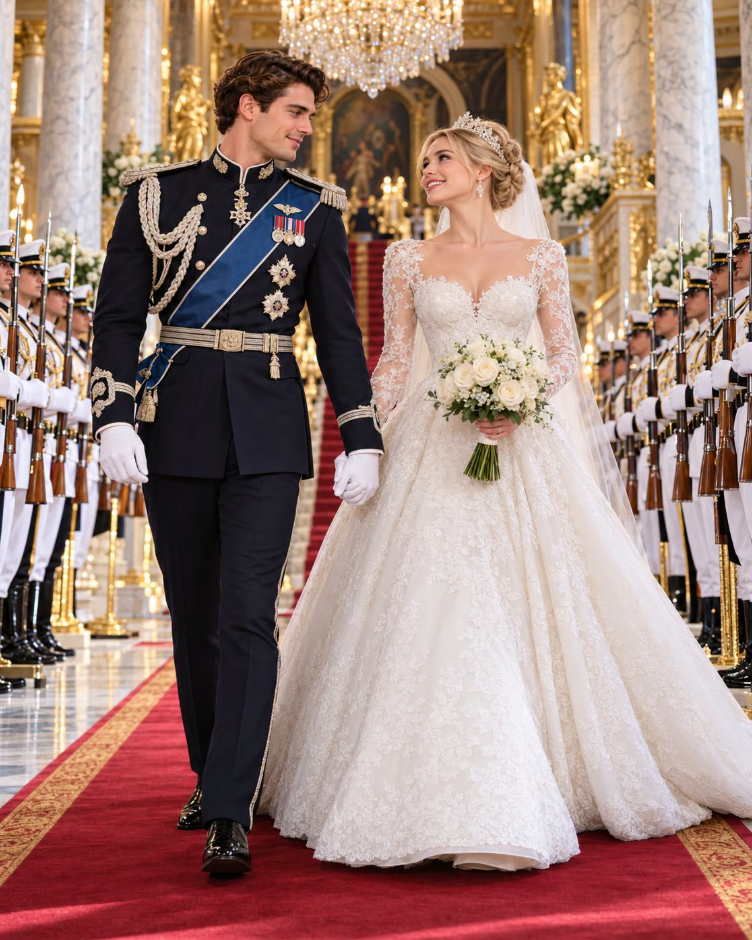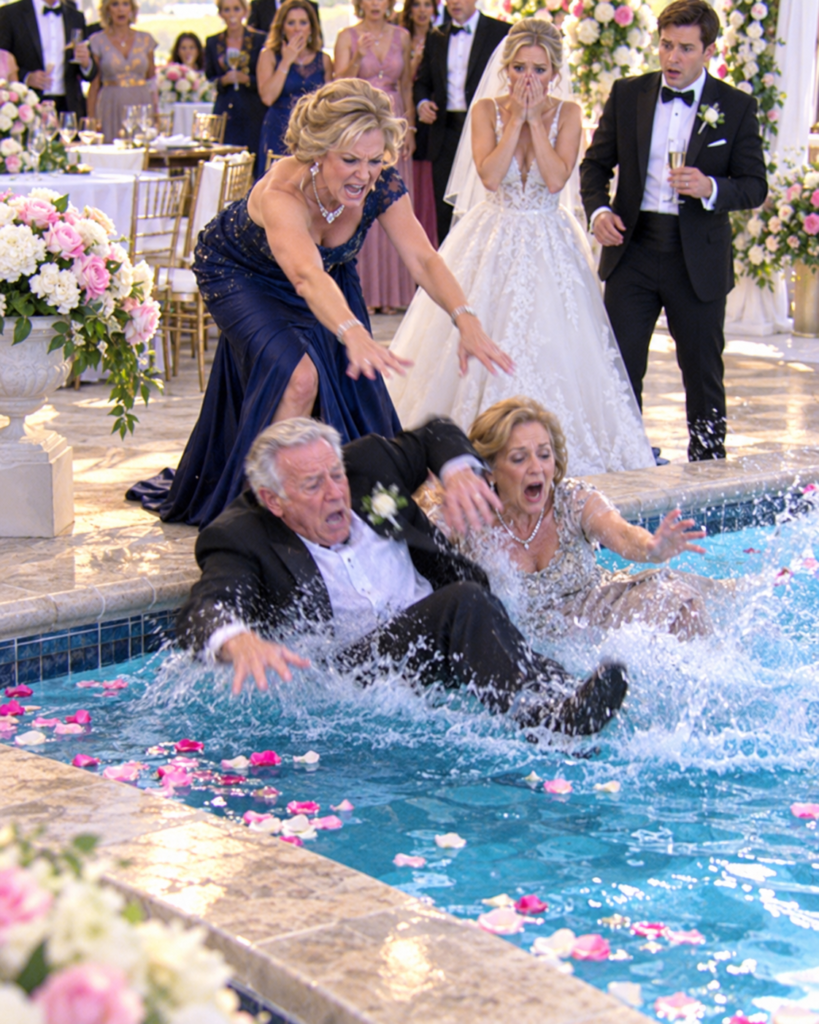
PART 1 — THE SEVENTY-FIVE-DOLLAR BLUE DRESS
The zipper of the blue polyester dress caught on a loose thread near the waist. My mother stood perfectly still in the center of my small Chicago apartment, holding her breath so I could work the metal slide free without tearing the synthetic fabric.
“I think it just needs a little tug, Clara,” she murmured, smoothing the stiff material over her hips.
She had paid seventy-five dollars for it on the clearance rack at Carson Pirie Scott.
It was a bright, clean cobalt blue, but the polyester had that slight synthetic sheen that did not quite mimic silk, even in the soft morning light.
“There,” I said, finally backing away to look at her.
I adjusted the comb of my wedding veil where it sat on the small vanity desk.
The lace was light, but the humidity rising from the pavement outside already made the fabric cling to the back of my neck.
My mother turned slowly in front of the full-length mirror, her fingers smoothing her skirt over and over.
Her hands, worn rough from decades of helping my father in his Blue Island shop, looked incredibly pale against the blue fabric.
“Do you think the color is too loud for Lake Forest?” she asked, her voice dropping to a soft, reassuring murmur.
“I wanted to look nice for Ethan’s family.”
“You look beautiful, Mom,” I said.
“I just do not want them thinking we did not try,” she said, looking down at her sensible black low heels.
I reached up to adjust my glasses, catching my reflection in the glass of a framed print on the wall.
The white silk of my own gown felt heavy, a physical weight that seemed to anchor me to the hardwood floor.
We had to leave in twenty minutes to make the drive up to the Sterling estate.
My father was already downstairs waiting in their dented sedan, warming up the engine so the air conditioning would have a chance to kick in.
“They are going to love you,” I said, though the words felt dry in my mouth.
My mother did not answer.
She only nodded and reached for her small vinyl purse on the counter.
The Lake Forest air smelled of damp cut grass and expensive catering by the time we arrived.
Ethan was standing near the edge of the stone terrace, looking out over the fifty round tables set up under the white canvas pavilion.
He looked remarkably handsome in his tailored dark suit, though he was spinning his gold signet ring around his finger, a habit he only fell into when his mind was elsewhere.
I walked up behind him, holding the skirt of my gown to keep it off the damp stone tiles.
“Ethan,” I said.
He turned and smiled, his face softening, though the nervous movement of his hand on his signet ring did not stop.
He reached out to take my fingers in his.
“You look incredible, Clara,” he said in that smooth, quiet voice he used when we were alone.
“My mother is already looking for the photographer.”
“I was just looking at the seating chart by the entrance,” I said, pulling my hand back slightly to adjust my glasses.
“My parents are at table forty-eight, all the way at the back near the catering tents.”
Ethan looked down at his ring, spinning it twice before he answered.
“It is probably just a catering mistake, Clara.
The coordinator handled the layout.”
“Your mother hand-delivered the final seating chart to the printer on Wednesday,” I said.
“I am sure she did not mean anything by it,” he said, stepping closer to tuck a loose strand of hair behind my ear.
“It is a massive guest list, and we have a lot of investors to coordinate.”
“They are the parents of the bride.
They should be near the front.”
“Let me talk to the coordinator after the ceremony,” Ethan said, his voice hushed and reassuring.
“We can fix it before dinner, I promise.”
A server walked past us carrying a silver tray loaded with empty crystal champagne flutes, the glass clinking softly.
“Who authorized the change?” I asked.
Ethan did not answer.
His eyes followed the server until the man disappeared beneath the pavilion.
I knew that silence.
Over the previous several weeks, I’d learned exactly what it meant when Ethan stopped speaking and began turning the signet ring on his finger.
Usually, it meant his mother had made another decision he wasn’t willing to question.
And on my wedding day, she’d apparently decided my parents belonged beside the service entrance.
The ceremony itself passed in a strange haze.
I remember the heat beneath the flower arch, the officiant’s steady voice, and Ethan’s fingers tightening around mine when I hesitated before answering.
I’d spent the previous night wondering whether I should go through with it.
There were questions about the Sterling family I couldn’t ignore.
Questions about money.
Documents.
The way Ethan allowed his mother to treat people she considered beneath her.
Still, I had persuaded myself that marriage might give us the independence we’d never managed while planning the wedding.
That was a mistake I would regret.
When the ceremony ended and guests began drifting toward the pool and reception pavilion, I searched for my parents.
I found my father beside an enormous ice sculpture carved into the Sterling Group crest.
The midday sun had begun melting its edges, and water dripped steadily onto the marble beneath it.
Arthur wore his only dark wool suit.
It was too heavy for June.
He’d scrubbed his hands before leaving Blue Island, but dark grease remained deep in the lines of his knuckles.
A faded red shop rag protruded from one pocket.
My mother approached him.
“Arthur,” she whispered.
“Put that away.”
He tucked the rag out of sight.
Then looked at me.
“They have a lot of ice here,” he said.
“Must have cost more than my first truck.”
I smiled weakly.
“Probably.”
He studied the sculpture.
Then glanced toward the guests gathered beneath the pavilion.
“These people don’t see people, Clara.
They see transaction entries.”
“Ethan is different,” I said.
Dad looked at me.
I heard how unconvincing the words sounded.
He rested one hand on my shoulder.
“Just make sure you know what’s on the other side of the ledger.”
Then he looked toward the driveway.
“I left a broken lawnmower on the main bench at the shop.
Should’ve finished it before coming.”
“You have time.”
“No,” he said quietly.
“I don’t think we do.”
I wanted to ask what he meant.
Instead, I went looking for Olivia Sterling.
She stood near the rose garden with a brass clipboard beneath one arm.
Her cream-colored suit was perfectly tailored, and her French-manicured nails tapped against the metal edge while she corrected two florists arranging an arch.
“Olivia.”
She turned.
Her public smile appeared immediately.
“Clara, darling.
The ceremony was lovely.
We’re slightly behind schedule, though.”
“I need to ask about my parents’ table.”
Her nails stopped tapping.
“The seating arrangements are finalized.”
“They’ve been placed beside the kitchen entrance.”
“We have an unusually complicated guest list.”
“They are the parents of the bride.”
Olivia sighed.
Then leaned closer.
“Your father smells of gasoline, Clara.
And your mother’s dress is a very interesting shade of blue.”
For a moment, I couldn’t speak.
She continued as though discussing the weather.
“There are more than three hundred investors, trustees, and business associates here.
We can’t afford an unfortunate impression.”
“An impression?”
“People notice these things.”
I stared.
“My parents have worked their whole lives.”
“I’m sure they have.”
She raised the clipboard.
“But this is a Sterling event.”
Then she turned and called for the head caterer.
The conversation was over.
At least to her.
I found Ethan in the library.
He stood beside a tall window, looking over the gardens while turning his ring.
“Your mother moved my parents away from the family tables.”
“I know it looks bad.”
“It doesn’t look bad, Ethan.
It is bad.”
He sighed.
“She thinks the guests near the service entrance will appreciate the breeze.”
I stared at him.
“You know that’s ridiculous.”
He looked away.
“Clara, please.
We’re married now.
Can we get through one afternoon without a confrontation?”
“Your mother insulted my parents.”
“She can be difficult.”
“She called my father’s work embarrassing.”
Ethan reached toward me.
I stepped back.
He lowered his hand.
“She’s worried about the merger.”
“There is always something she’s worried about.”
He didn’t answer.
I looked toward the mahogany desk.
A brass signature stamp lay beside a silver tray of correspondence.
It bore Ethan’s engraved corporate signature and the Sterling crest.
I’d seen him use it before.
It disturbed me now for reasons that had nothing to do with the wedding.
For weeks, my professional work at Vanguard Capital had involved disputed Sterling Group transfers.
Ethan’s stamped signature appeared on several authorizations that required serious examination.
I looked away from the stamp.
“This has to stop,” I said.
“We’ll discuss it after the reception.”
“You always say that.”
“Because you’re choosing the worst possible time.”
I looked at him.
“There never seems to be a good time to question your mother.”
He picked up the stamp and put it into his pocket.
“That’s not fair.”
I left him in the library.
On my way toward the terrace, I passed Douglas, a senior Sterling board member I’d known professionally.
He was polishing his reading glasses with a blue silk cloth.
“Douglas.”
He glanced up.
“Clara.”
“Have the auditors received the additional offshore authorization records?”
His expression tightened.
“This isn’t an appropriate place to discuss them.”
“I’m asking because there’s another transfer reference.”
“Your compliance team is handling the matter.”
“I know.”
He looked toward the main office.
Then said quietly:
“Don’t confuse what you see at a family gathering with evidence you’re authorized to use.”
He was right about that.
My personal relationship with Ethan had already complicated the audit enough.
I had formally disclosed the conflict and referred my findings through Vanguard’s independent compliance process.