Ryan’s final words seemed to remain suspended above the tables.
“…refused to leave me behind on a burning mountain in Afghanistan.”
Nobody laughed.
My mother still had one hand pressed against her throat.
Lauren stared at her new husband.
Then at me.
Then back at him.
My mother still had one hand pressed against her throat.
Lauren stared at her new husband.
Then at me.
Then back at him.
And sat down again.
That should have been the end of it.
Apparently Ryan had other plans.
“Ryan.”
I said quietly.
He heard the warning in my voice.
So did several officers seated near the front.
There were things about Afghanistan that did not belong in a wedding toast.
Some because they remained professionally sensitive.
Others because men had died there.
And some stories simply did not belong to the loudest person in the room.
Ryan nodded.
“Yes, ma’am.”
Then he faced the guests.
“I’ll keep this to what I can appropriately say.”
Good.
Lauren looked completely lost.
“Major General?”
she whispered.
Ryan turned toward her.
“Yes.”
“But Danielle works at a gate.”
A sound escaped somebody near Table 6.
Not laughter exactly.
More disbelief.
I closed my eyes.
For years, my family had apparently taken one tiny piece of information and built an entire biography around it.
Years earlier, Mom had asked where I worked.
I had been assigned to an installation.
I told her.
She asked what I did there.
I said I was responsible for security and operations.
Somehow, after passing through enough family conversations, responsible for security had become gate guard.
I had never corrected them.
At first because I assumed nobody seriously believed it.
Later because I discovered they did.
And eventually because I wanted to know whether correcting them should matter.
Ryan looked at Lauren.
“Your sister is not a gate guard.”
Mom spoke from the front table.
“Then what exactly does she do?”
Ryan looked toward me.
That was the right instinct.
He didn’t answer for me.
Every face turned toward Table 19.
I stood again.
“My current position isn’t relevant to Lauren’s wedding.”
Mom blinked.
“Danielle.”
“You asked.”
I looked at her.
“So I’ll answer the part that’s appropriate.”
“I am a Major General in the United States Army.”
The silence deepened.
“I have served for more than three decades.”
“I’ve held command and staff assignments at multiple levels.”
“I’ve deployed.”
“I’ve worked in planning, operations and strategic assignments.”
“And yes, at various points in my career, installation security was part of the larger responsibilities around organizations I served.”
Aunt Clare’s mouth had fallen open.
My cousin’s wife—the woman who had compared my Pacific travel to Disney World—was staring at her plate.
Mom looked at my shoulders.
Then finally seemed to see the stars.
Two silver stars.
They had been there when I entered.
Nothing about me had changed in the previous thirty seconds.
Only the information available to the room had.
That distinction mattered.
Lauren gripped the edge of the table.
“You’re a general?”
“Yes.”
“Since when?”
“Several years.”
“Several—”
She stopped.
Her face went pale.
Ryan reached for her arm.
“Lauren?”
She swayed.
Someone shouted her name.
Then her knees gave way.
Ryan caught most of her weight before she reached the floor.
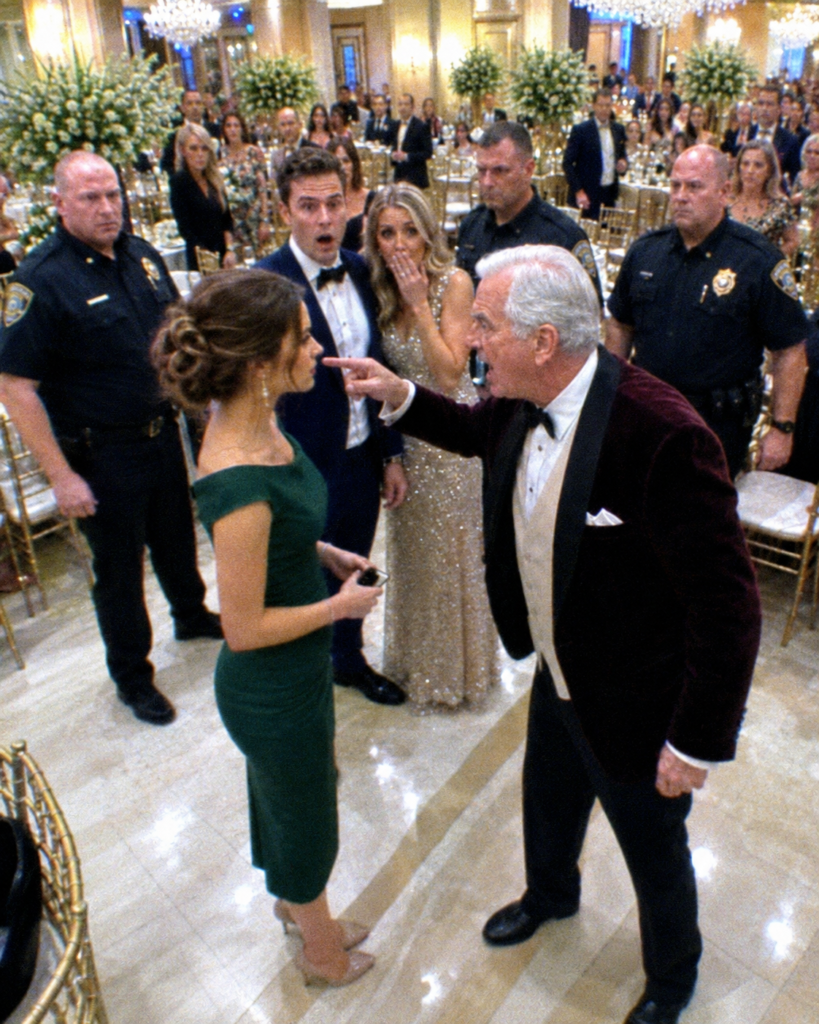
Immediately, the room exploded.
Chairs moved.
People stood.
Someone yelled for water.
Another person announced he was a doctor despite apparently being a dermatologist.
I remained where I was until I could see Lauren was conscious again.
Embarrassed.
Shaken.
But conscious.
A physician among the guests checked her.
The venue staff brought water.
After several minutes, Lauren was helped into a chair.
No dramatic ambulance.
No mysterious medical catastrophe.
She had fainted.
People faint.
Especially after standing in a hot wedding tent, drinking champagne, skipping most of dinner and discovering that the sister they had just publicly mocked had a biography nobody bothered to learn.
I looked at Ryan.
“Captain.”
“Yes, ma’am?”
“Can we stop turning your wedding into a command briefing?”
For the first time all evening, he smiled.
“Yes, ma’am.”
Mom did not.
She came toward me.
Her expression was unlike anything I had seen before.
Not pride.
Not yet.
Confusion.
“How?”
I frowned.
“How what?”
“How did you become…”
She glanced at my shoulders.
“This?”
I looked down at my uniform.
“The usual way.”
“What does that mean?”
“Years.”
She shook her head.
“No.”
“You don’t just become a general.”
“Correct.”
“Then why didn’t we know?”
That question almost made me laugh.
Instead, I asked:
“When was the last time you asked?”
Her mouth opened.
Nothing came out.
Dad was not there.
He had died four years earlier.
For one painful second, I wondered what he would have done.
Would he finally have been proud?
Would the stars have changed his mind?
Then I became angry with myself for wondering.
Because that was still the old bargain.
Become impressive enough and perhaps they will decide you were worth loving correctly.
I was tired of that bargain.
Mom lowered her voice.
“You let us think you worked at a gate.”
“No.”
“I let you think whatever you chose to think after you stopped asking questions.”
“That isn’t fair.”
“Isn’t it?”
“No.”
“You could have corrected us.”
I stared at her.
“Mom, I told you I was promoted to brigadier general.”
She froze.
“When?”
“Six years ago.”
“I don’t remember that.”
“I know.”
“I called you.”
Her face changed.
“You were preparing Lauren’s engagement party.”
She looked toward my sister.
I continued.
“You said you were busy.”
“You told me to email you whatever it was.”
Her hand moved slowly toward her mouth.
I had emailed.
Her response arrived three days later.
Wonderful, honey. Glad work is going well.
That was it.
When I received my second star, I didn’t call.
Not because I was punishing her.
Because I had finally learned the difference between sharing news and begging someone to care.
Ryan approached us.
“Danielle?”
He used my first name deliberately now.
This was family.
Not a military formation.
“Can we talk?”
I nodded.
He led me several steps away.
“I owe you an apology.”
“For what?”
“I should have asked before saying anything about Afghanistan.”
“Yes.”
He winced.
“I thought—”
“I know what you thought.”
I softened my voice.
“You were defending me.”
“Yes.”
“I appreciate the intention.”
“But?”
“But my service history isn’t ammunition for family arguments.”
He nodded immediately.
“Understood.”
“And don’t ever use something that happened on deployment to make me sound heroic at a wedding.”
He smiled slightly.
“You did save my life.”
“People saved your life.”
His smile disappeared.
“There’s a difference.”
The incident Ryan referenced had happened eleven years earlier.
The public version was less cinematic than the wedding guests probably imagined.
Our element had been caught in a rapidly deteriorating situation during an operation in Afghanistan.
There had been casualties.
Confusion.
Fire.
Communications problems.
Ryan was injured.
So were others.
I had responsibilities in the response.
I made decisions.
Other people made decisions too.
Medical personnel worked.
Air crews worked.
People on the ground worked.
Ryan survived because a chain of human beings refused to treat him as expendable.
I was one link.
An important one.
Not the entire chain.
“Still.”
Ryan said.
“I never forgot.”
“I know.”
“And when I heard them laughing at you…”
He stopped.
“I lost my temper.”
“I noticed.”
He looked embarrassed.
“Sorry.”
“Apology accepted.”
Then I looked at Lauren.
She was watching us.
“Does she know?”
“Know what?”
“Anything about me?”
Ryan hesitated.
That answer was enough.
“You never told her?”
“I tried once.”
“What happened?”
“She said your military stories were exaggerated.”
I closed my eyes.
Of course.
“Ryan.”
“Yes?”
“You married her.”
He swallowed.
“Yes.”
“Then you need to deal with your marriage.”
“Not recruit me into it.”
He nodded.
“Yes, ma’am.”
I raised an eyebrow.
“Danielle.”
He smiled.
“Right.”
I returned to Table 19.
Aunt Clare had transformed.
It was almost impressive.
She moved her purse from the chair beside her.
“Danielle, sweetheart, why don’t you sit here?”
I looked at the chair.
“I’ve been sitting here all evening.”
“No, I mean closer to me.”
“I’m fine.”
My cousin’s wife leaned toward me.
“So you’re like… very high up?”
I took a sip of water.
“Depends where you’re standing.”
She laughed too loudly.
I hadn’t made a joke.
“What do two stars mean?”
she asked.
I explained my rank briefly.
Her eyes widened.
“How many people do you command?”
“That’s not a fixed answer based simply on insignia.”
She looked disappointed.
Apparently she wanted a number large enough to retell at brunch.
Then she asked:
“Do you know the President?”
I stared at her.
“No.”
“Oh.”
Another disappointment.
I almost enjoyed that one.
Dinner resumed awkwardly.
The band started playing again.
People talked.
Forks moved.
The wedding tried to become a wedding.
I wanted that for Lauren.
Despite everything.
Then the master of ceremonies announced the family speeches were continuing.
My mother stood.
I immediately became suspicious.
Mom took the microphone.
For several seconds, she said nothing.
Then:
“I owe my daughter an apology.”
The room became still again.
I closed my eyes.
Not here.
Please.
She looked directly at me.
“I did not know what Danielle had accomplished.”
There it was.
The wrong lesson.
I stood.
“Mom.”
She stopped.
I walked toward the front.
“May I?”
Confused, she handed me the microphone.
I looked around the room.
Three hundred people.
Some had laughed at me.
Some hadn’t.
Some had simply remained silent.
Most barely knew me.
This was ridiculous.
My worth did not require a jury of wedding guests.
“I appreciate what my mother is trying to say.”
I began.
“But I need to correct something.”
Mom looked at me.
“I did not deserve respect tonight because you discovered my rank.”
Silence.
“If I had actually been a gate guard, the jokes would still have been cruel.”
A few people looked down.
“If I were a private instead of a general, they would still have been cruel.”
“If I had never deployed, never received a decoration, never commanded anyone and spent my entire career checking identification at a gate, I would still deserve ordinary dignity.”
I looked toward Lauren.
She was crying.
“This uniform isn’t a receipt proving my value.”
Then I handed the microphone back to Mom.
She didn’t take it immediately.
Her eyes were wet.
Finally she whispered:
“I called you the family shame.”
“Yes.”
“I’m sorry.”
I waited.
“For what exactly?”
She flinched.
But she understood.
“For being ashamed that you didn’t build the life I expected.”
Good.
“For making Lauren’s marriage and family look like evidence that she succeeded where you failed.”
Better.
“For deciding that because you weren’t married and didn’t have children, something was missing from you.”
My throat tightened.
“And for not asking enough about your life to know what you had spent thirty years doing.”
I handed her the microphone.
“Thank you.”
That was all.
No hug.
Not yet.
Then Lauren stood.
Ryan tried to stop her.
She shook him off.
“I need to say something.”
I almost laughed.
Apparently nobody at this wedding understood the value of ending a speech.
Lauren looked at me.
Her mascara had smudged.
“I didn’t know.”
I said nothing.
“I really thought you were basically security.”
I waited.
Then she caught herself.
“That sounded terrible.”
“Yes.”
She took a breath.
“No.”
“Let me try again.”
Good.
“I thought your job wasn’t important.”
“I thought my life was better than yours because I was getting married.”
“I thought because Mom admired my choices more, that meant I had won something.”
Her voice broke.
“And I knew you paid for this wedding.”
The room changed.
That part had not been public.
Mom closed her eyes.
Ryan looked at Lauren.
Several relatives turned toward me.
Lauren continued.
“Danielle paid for almost all of this.”
I wished she hadn’t said it.
Not because it wasn’t true.
Because I knew what would happen next.
The room would simply replace one status symbol with another.
First:
Poor pathetic gate guard.
Now:
Powerful general who paid for everything.
Neither one was me.
Lauren looked around the tent.
“And I thanked her by humiliating her.”
She lowered the microphone.
“I’m sorry.”
I walked toward her.
“Why did you do it?”
She looked startled.
“What?”
“The toast.”
Her eyes dropped.
“I wanted people to laugh.”
“I know.”
“Why?”
She cried silently for several seconds.
“Because I’ve always been jealous of you.”
That surprised me.
I almost laughed.
“Lauren.”
“I am.”
“Of what?”
“You leave.”
I frowned.
“You’ve always been able to leave.”
“Home.”
“Arguments.”
“Mom’s expectations.”
“Dad’s moods.”
“You built something somewhere else.”
Her voice shook.
“I stayed.”
That was the first moment all evening when I stopped seeing my sister as an antagonist in a story.
She was still responsible for what she had done.
But suddenly I could see the machinery beneath it.
Lauren had become the daughter our parents rewarded.
Beautiful.
Social.
Married.
Nearby.
Available.
She had won the competition because she had agreed to compete.
I had walked off the field.
“That doesn’t excuse what you said.”
I told her.
“I know.”
“Jealousy isn’t permission.”
“I know.”
“You humiliated me in a room full of people after accepting money from me to pay for this celebration.”
Her face crumpled.
“I know.”
“Then don’t explain it away.”
“I won’t.”
“Change it.”
She nodded.
I hugged her.
Briefly.
Not because everything was fixed.
Because she was my sister and it was her wedding and I wanted, despite everything, one photograph from that day that wasn’t about humiliation.
The wedding continued.
No one was punished.
No one was removed.
Nobody lost a career.
Nobody saluted me every time I walked past.
Thank God.
By dessert, people had mostly returned to behaving normally.
One thing did change.
When Aunt Clare started asking about my decorations, I told her:
“Not tonight.”
She nodded.
No argument.
A small boundary.
Accepted.
Imagine that.
At 10:30, I found Ryan outside near the edge of the reception tent.
He was alone.
“Running away already?”
I asked.
He smiled.
“Five-minute tactical withdrawal.”
“Approved.”
We watched the lights reflected across the lawn.
Then he said:
“I meant what I said.”
“About Afghanistan?”
“Yes.”
“I know.”
“I wouldn’t be here without you.”
I looked at him.
“You don’t know that.”
He frowned.
“I absolutely—”
“You don’t.”
I turned toward him.
“You might have survived through another decision.”
“Another aircraft.”
“Another medic.”
“Another officer.”
“We don’t get to run alternate timelines.”
He nodded slowly.
“Fair.”
“What I know is that a lot of people worked very hard to bring people home.”
“You were one of them.”
“Yes.”
I allowed that.
Because false humility is still falsehood.
Ryan smiled.
“Lauren really had no idea.”
“No.”
“How?”
“Families are remarkably capable of maintaining outdated versions of people.”
He laughed.
Then became serious.
“I should have told her.”
“Maybe.”
“I assumed she knew.”
“That’s a dangerous sentence.”
“Yes, ma’am.”
I looked at him.
“Danielle.”
“I’m trying.”
Before I left, I found the venue manager.
There was still an outstanding balance.
Not much compared with what I had already paid.
I settled what I had previously agreed to cover.
Nothing more.
That distinction mattered.
I did not cancel checks already owed.
I did not demand gifts back.
I did not announce that Lauren now owed me for flowers because she had insulted me.
A completed gift is a completed gift.
I had chosen to help pay for my sister’s wedding.
Her cruelty did not retroactively turn my generosity into a loan.
But it changed the future.
That mattered too.
For years, I had been the family’s quiet emergency fund.
Mom needed a roof repair.
Danielle handled it.
Lauren needed help with graduate-school debt.
Danielle helped.
Dad’s final medical expenses exceeded what insurance covered.
I paid a portion without announcing it.
Then the wedding.
Afterward, I stopped automatic generosity.
Not all generosity.
Automatic generosity.
There is a difference.
Three months later, Mom called.
“The property taxes are due.”
I waited.
Silence.
Then:
“I was wondering whether you could…”
“No.”
She stopped.
“Is this because of the wedding?”
“Partly.”
“I apologized.”
“Yes.”
“Then I don’t understand.”
“An apology addresses what happened.”
“It does not restore every arrangement that existed before it.”
She became quiet.
“So you’re punishing me.”
“No.”
“Then what do you call it?”
“A boundary.”
She hated that word.
People often do when the previous arrangement benefited them.
“Mom, I love you.”
“But I am no longer going to function as the family’s invisible financial infrastructure while being treated as its visible embarrassment.”
Silence.
Then:
“That’s fair.”
I almost dropped the phone.
Lauren and Ryan’s marriage survived the wedding.
I say that because people always assume the revelation should have destroyed them.
It didn’t.
But it started conversations they should have had before marrying.
Ryan had assumed Lauren understood his respect for my career.
Lauren had assumed Ryan agreed with the family’s version of me.
Both had substituted assumptions for questions.
They went to counseling.
That was their work.
Not mine.
Lauren called me six months later.
“I want to take you to lunch.”
“Why?”
“Because you’re my sister.”
“That answer needs work.”
She laughed.
“Because I’ve realized I know almost nothing about you.”
Better.
We went to a diner.
Not a country club.
Not somewhere with cloth napkins.
A diner halfway between us.
She asked about the Army.
I answered what I could.
She asked about Afghanistan.
I gave her broad truths.
She asked about my scars.
I told her some stories belonged to me.
She accepted that.
Then she asked the hardest question.
“Are you lonely?”
I put down my coffee.
“Sometimes.”
Her face softened.
“I thought—”
“I know what you thought.”
I continued.
“Being unmarried doesn’t make me immune to loneliness.”
“It also doesn’t mean my entire life is loneliness.”
“I have friends.”
“Work.”
“People I love.”
“People who love me.”
“I have had relationships.”
“I have lost people.”
“I have chosen things.”
“I have regretted things.”
“My life is not the blank space around the husband I never acquired.”
Lauren stared at me.
“I was awful.”
“Yes.”
She laughed.
“So we’re just saying it?”
“Apparently.”
Then she asked:
“Do you regret paying for my wedding?”
I thought carefully.
“No.”
Her eyes widened.
“Really?”
“I regret the way you treated me.”
“I don’t regret being generous.”
She started crying.
I handed her a napkin.
“But.”
I added.
She groaned.
“Here it comes.”
“You don’t get another one.”
She laughed through tears.
“Fair.”
Years passed.
I eventually retired.
By then, the two stars had become something people around me understood.
My family understood them too.
But the strangest thing happened.
They became less important to me.
At my retirement ceremony, Mom sat in the second row.
Lauren and Ryan sat beside her.
When the formal portion ended, Mom came toward me.
She touched my sleeve.
“You look beautiful.”
I raised an eyebrow.
“Not intimidating?”
She winced.
“I deserved that.”
“Yes.”
Then she looked at my decorations.
“I still don’t know what half of these mean.”
I smiled.
“That’s okay.”
“I’d like to.”
That was different.
So later, privately, I explained some of them.
Not all.
Some memories belonged to people who were no longer there to give permission for their stories to become family entertainment.
Mom listened.
For once, she didn’t compare me with Lauren.
She didn’t ask why I had never married.
She didn’t tell me what Dad would have wanted.
She listened.
When we finished, she said:
“I wasted a lot of years.”
I knew what she meant.
But I corrected her anyway.
“We did not lose every year.”
“No.”
“But too many.”
“Yes.”
She looked down.
“I thought if you became more feminine, married, settled near us…”
“You’d be more comfortable.”
“Yes.”
“I know.”
“I called that love.”
“I know.”
She looked at me.
“What was it?”
“Fear.”
“Of what?”
“Of having a daughter whose life you couldn’t use as proof that you had raised her correctly.”
Mom began crying.
That answer hurt both of us.
It was also true.
Lauren changed too.
Not completely.
Nobody does.
She remained dramatic.
Still loved expensive parties.
Still occasionally said things so thoughtless I had to stare at her until she heard herself.
But she learned to apologize before being cornered.
That was progress.
One Christmas, her daughter—my niece Emma—announced that she wanted to join the Army.
The entire dinner table froze.
Lauren looked at me.
Mom looked at me.
Ryan wisely looked at his potatoes.
Emma was seventeen.
I said:
“Why?”
Everyone seemed surprised.
Emma shrugged.
“Aunt Danielle did.”
“That’s not a reason.”
She frowned.
“Do you know what kind of work interests you?”
“Sort of.”
“Do you understand the commitment?”
“Not really.”
“Then learn.”
Lauren stared at me afterward.
“I thought you’d be thrilled.”
“Why?”
“Because she wants to follow you.”
“I don’t need followers.”
Emma ultimately chose engineering at a civilian university.
No Army.
No uniform.
No stars.
I was just as proud.
That mattered enormously to me.
Because I had finally broken the bargain completely.
Achievement did not create worth.
Neither did imitation.
Ryan eventually made lieutenant colonel.
At his promotion reception, he introduced me to another officer.
“This is my sister-in-law, Danielle.”
The officer looked at me.
No uniform.
Jeans.
Gray sweater.
Coffee in my hand.
“Nice to meet you.”
I smiled.
“You too.”
That was the entire exchange.
Ryan did not mention my former rank.
He did not tell the Afghanistan story.
He did not turn me into a credential.
Later I thanked him.
He understood immediately.
The famous wedding story survived, of course.
Families love mythology.
By the tenth retelling, apparently three hundred people had stood and saluted me.
They didn’t.
Someone claimed Lauren fainted before Ryan even said my rank.
Wrong.
A cousin insisted Mom dropped a champagne glass.
She didn’t.
And according to Aunt Clare, I had secretly commanded the entire Afghanistan war.
Definitely not.
Whenever someone exaggerated, I corrected them.
Not because the real story was less interesting.
Because the real story mattered more.
My family mocked me.
Ryan stood.
He identified my rank and acknowledged a part of our shared service history.
Lauren fainted.
My mother apologized imperfectly.
My sister apologized more specifically later.
I established boundaries.
And then everyone had to do the much less cinematic work of changing.
That was the actual ending.
Not the salute.
Not the stars.
Not the silence after Ryan stood.
For years, I thought the most satisfying moment of my life would be watching my family discover who I really was.
I imagined their faces.
The shock.
The regret.
The sudden respect.
And when it finally happened, I learned something uncomfortable.
Their respect arrived for the wrong reason.
They respected the stars.
They respected the title.
They respected the story about Afghanistan.
They respected the size of the wedding check.
But none of those things addressed the original cruelty.
So I had to teach them—and myself—a harder lesson.
If I had really been the woman they thought I was, I still deserved a seat at the table.
If I had spent thirty years checking IDs at a gate, there would have been honor in doing the job well.
If I had never commanded thousands of soldiers, I would still have deserved not to be mocked for being unmarried.
If I had arrived wearing a department-store dress with no ribbons, no rank and no remarkable biography, Lauren’s toast would still have been wrong.
That was why Ryan’s salute was not the moment that restored my dignity.
My dignity had never left.
The salute merely exposed how selectively other people had been willing to recognize it.
I still have Mom’s wedding invitation.
At the bottom, in her handwriting:
Please behave.
Years later, I showed it to Lauren.
She stared at it for a long time.
Then said:
“We were horrible.”
“Yes.”
“Why did you still come?”
I thought about that.
“Because I loved you.”
She looked down.
“Why did you pay for everything?”
“Same answer.”
She wiped her eyes.
“And why did you stop afterward?”
I smiled.
“Same answer.”
She looked confused.
So I explained.
“Love paid for the wedding because I freely chose to give.”
“Love also stopped financing disrespect because generosity without boundaries was teaching all of us the wrong lesson.”
Lauren nodded slowly.
“Generosity isn’t ownership.”
“No.”
“And an apology doesn’t buy access back.”
“No.”
“And being family doesn’t mean you can treat someone however you want.”
“Now you’re getting annoying.”
She laughed.
So did I.
When Mom died years later, Lauren and I cleaned out her desk together.
Inside one drawer was a photograph from the wedding.
Not the photograph of Lauren and Ryan cutting the cake.
Not the formal family portrait.
It was me.
Table 19.
Sitting alone near the kitchen doors in my Class A uniform.
On the back, Mom had written something.
Lauren handed it to me.
I read it.
My daughter Danielle. I wish I had seen her before everyone else told me to look.
I sat down.
For a long time, neither of us spoke.
Then Lauren put her arm around me.
I kept the photograph.
Not because it proved Mom eventually understood my rank.
Because she finally understood the mistake had happened before she knew it.
She should not have needed two stars.
She should not have needed Ryan’s salute.
She should not have needed three hundred silent wedding guests.
She should have looked at the woman at Table 19 and seen her daughter.
And eventually, she did.
Too late for some things.
In time for others.
That is often how families heal.
Not perfectly.
Not all at once.
Not because somebody finally wins.
But because people stop asking who has enough status to deserve respect and begin asking why respect was ever conditional in the first place.
I had spent most of my life earning things.
Rank.
Responsibility.
Decorations.
Trust.
Command.
But the most important thing I learned required earning nothing at all:
Respect is not rank.
Love is not a reward for achievement.
Generosity is not permission to humiliate the giver.
And human worth does not begin when a room full of people finally learns your title.
It was there before anyone stood up.