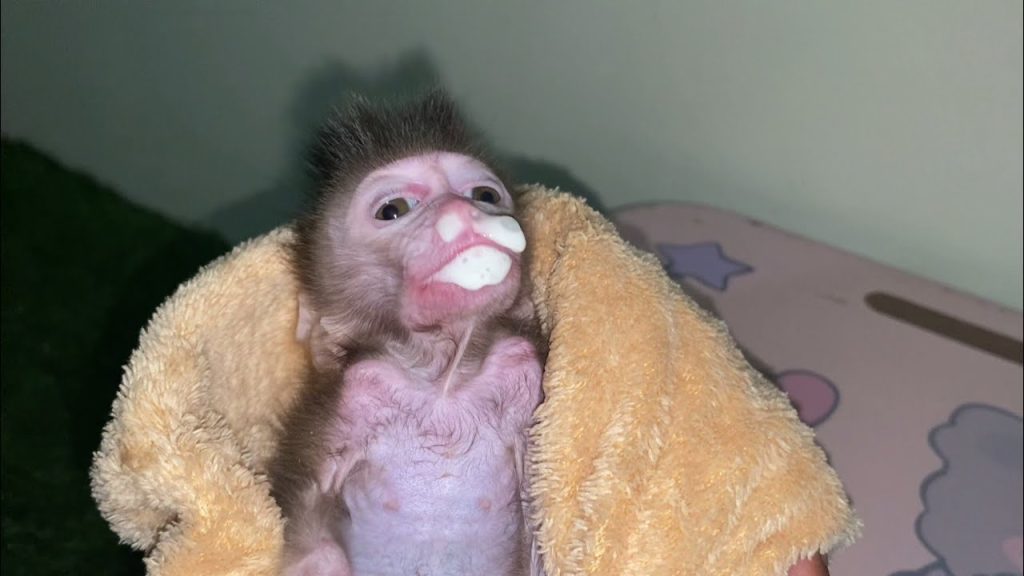
Little Donal had been looking forward to his milk all morning. When Dad brought his bottle, the tiny baby monkey became excited and reached out with both little hands. He made impatient noises, moving his head as if he couldn’t wait another second.
“Easy, little Donal,” Dad said softly. “Let’s take our time.”
Donal drank eagerly while Dad carefully supported him. The little monkey seemed so hungry that Dad initially thought everything was going well. But after the feeding, Donal began moving restlessly. He looked uncomfortable, and his little face suddenly changed.
Then, without warning, he vomited.
Dad froze for a moment.
“Oh, no, sweetheart! What’s happening?”
Donal made a weak, unhappy sound. Dad’s heart sank as he saw the milk on the blanket. He had wondered whether Donal had drunk too much or too quickly, but he knew he couldn’t be certain. A newborn monkey could vomit for several reasons, and guessing the cause could be dangerous.
Dad immediately stopped the feeding.
He carefully made sure Donal’s mouth and nose were clear and watched his breathing. He didn’t force the baby to drink more milk or give him water or medicine. Instead, he contacted a veterinarian experienced in primate care and explained exactly what had happened.
While waiting for professional instructions, Dad stayed close.
“I’m right here, little buddy,” he whispered. “We’re going to get you some help.”
Donal looked frightened and confused. His tiny fingers moved against the blanket, and he occasionally made soft cries. Dad spoke calmly to him, keeping the environment quiet and comfortable.
But a few minutes later, Donal began looking restless again.
Dad became even more concerned. He knew that repeated vomiting could quickly become dangerous for such a small animal. He followed the veterinarian’s advice and arranged urgent care rather than waiting to see whether the problem would disappear by itself.
At the clinic, the veterinarian examined Donal and asked Dad several questions. How much milk had he received? What type of milk had been used? How quickly had he drunk it? Had he vomited before?
Dad answered as carefully as he could.
“I thought he was just very hungry,” Dad admitted. “I didn’t realize something might be wrong.”
The veterinarian explained that feeding difficulties could sometimes contribute to vomiting, but illness and other problems could also cause it. Donal needed an individual assessment before anyone could safely decide what feeding changes, if any, were appropriate.
Dad listened closely.
He wanted to learn everything he could to help his tiny companion.
After examining Donal, the veterinarian gave Dad specific instructions for monitoring him and managing his feeding safely. Dad promised to follow the plan carefully and return immediately if Donal’s condition worsened.
Later, Dad sat beside Donal’s secure resting area and watched over him.
The little monkey looked exhausted after the frightening experience. Dad gently spoke to him, offering reassurance without disturbing his rest.
“You don’t have to rush, little one. We’ll follow the doctor’s instructions and make sure you get the care you need.”
That evening, Dad prepared a notebook to record Donal’s feedings, the amounts recommended by the veterinarian, and any unusual symptoms. He realized that keeping track of these details could help the care team identify patterns and respond quickly if the problem returned.
Most importantly, he learned not to assume that vomiting simply meant a baby had drunk too much milk.
As Donal rested, Dad stayed nearby, alert and ready to follow the veterinarian’s instructions.
He hoped the little monkey would soon feel comfortable again, but he knew that careful observation and professional care mattered more than rushing to make everything seem normal.
That day taught Dad an important lesson: loving a tiny baby means paying attention when something goes wrong, asking for expert help, and never guessing when the baby’s health is at stake.