“You need to see what they found down here.”
For a moment, I said nothing.
Across the hospital consultation room, Leo’s X-ray glowed against a white screen. Several weeks old, the doctor had said.
Several weeks.
My hand tightened around the phone.
“What did they find?”
There was hesitation on the other end.
“Boxes. Documents. Some of Ethan’s things. Police are going through everything. There’s a locked file case with your name on it.”
I looked through the glass panel in the door.
Maya was asleep beneath a pale blue blanket, a stuffed rabbit tucked under her chin. A nurse had found it for her.
Leo was in another room while the orthopedic team discussed treatment.
Nothing waiting in Rebecca’s basement mattered more than those two children.
“Don’t touch anything,” I said. “Nobody touches anything. Let the police handle it.”
My man sounded surprised.
“Boss?”
“You heard me.”
“Yes.”
I ended the call.
For most of my adult life, people had expected Thomas Moretti to solve problems with influence.
A phone call.
A favor.
A name quietly spoken.
That night, I did something harder.
I waited.
Detective Elena Ruiz arrived shortly after midnight.
She was in her early forties, with tired eyes and the calm manner of someone who had learned that raising her voice rarely made frightened people tell the truth.
She introduced herself, then glanced toward the children’s rooms.
“I understand you’re their uncle.”
“Their father was my younger brother.”
“Ethan Moretti.”
“Yes.”
She already knew who I was.
Most people in Austin did, even if they pretended otherwise.
Her expression remained professional.
“Mr. Moretti, I’m going to be very clear. Because of your reputation and business associations, anything you do from this moment forward will be examined carefully.”
“I expected that.”
“That means no private visits to Rebecca’s house. No conversations with witnesses. No employees conducting their own investigation.”
I met her eyes.
“Agreed.”
That surprised her.
She studied me for another second.
Then she sat.
“What did Leo tell you?”
I repeated everything exactly as I remembered it.
No additions.
No assumptions.
When I finished, Ruiz closed her notebook.
“The basement was being used partly for storage. We did find a small finished room there. We’re documenting everything. I’m not going to discuss conclusions tonight.”
“What about Rebecca?”
“She’s speaking with officers.”
“Is she under arrest?”
“I’m not discussing that yet.”
My instinct was to push.
Instead, I asked the question that mattered.
“Are the children going back there?”
“No.”
The word loosened something inside my chest.
“At least not tonight,” Ruiz added. “Child Protective Services will determine emergency placement.”
“I want them with me.”
“I assumed you would.”
“Then tell me what I need to do.”
Her eyebrows lifted slightly.
Maybe she expected demands.
Maybe threats.
Instead, she said, “You’ll have to be assessed like anyone else.”
“Then assess me.”
A quiet voice came from the doorway.
“Uncle Thomas?”
Leo.
He was being pushed in a wheelchair by a nurse. His leg had been stabilized, and exhaustion made him look smaller than six.
I stood immediately.
The nurse smiled.
“He refused to settle until he saw his sister.”
Maya was still sleeping.
Leo looked through the open doorway at her and relaxed.
“She ate?”
“She ate,” I said.
“All of it?”
“Most of it.”
He nodded, satisfied.
Only then did he seem to remember himself.
“Does my leg have to stay like this?”
“For a while.”
“Can I still go to school?”
“When the doctor says you’re ready.”
His mouth tightened.
“I missed a lot.”
I crouched beside the chair.
“That can be fixed.”
He watched me carefully.
Adults had apparently taught him that promises were dangerous things.
So I corrected myself.
“We’ll work on it,” I said. “One day at a time.”
That answer seemed safer to him.
He leaned back.
“Okay.”
Dr. Patel joined us a few minutes later.
He explained that Leo would need treatment and time, but children healed remarkably well. He kept his language simple, turning recovery into something understandable: appointments, rest, exercises later, and patience.
Leo listened seriously.
Then he asked, “Will I run again?”
Dr. Patel smiled.
“That is exactly what we’re planning for.”
It was the first time I saw Leo smile.
Only a little.
But it was there.
By morning, a CPS caseworker named Nora Bennett had joined Detective Ruiz.
Nora was perhaps thirty-five, with a canvas bag full of folders and a coffee she repeatedly forgot to drink.
She spoke first to Leo alone.
Then, briefly and gently, to Maya.
I waited down the hall.
Waiting was becoming my new occupation.
At ten fifteen, Nora sat across from me.
“Both children have asked to stay with you.”
I swallowed.
“They know me.”
“Leo remembers you well. Maya seems to associate you with your brother.”
“My house still has Ethan’s photographs.”
She nodded, making a note.
“Mr. Moretti, I need to discuss practical matters.”
“Anything.”
“Your home.”
“Gated. Staffed.”
“That isn’t necessarily what I mean.”
I almost smiled.
Of course it wasn’t.
“Bedrooms?”
“I have twelve.”
“Children need two.”
“I’m aware.”
“Who lives there?”
“Me.”
“Any firearms in the residence?”
“Secured in a locked safe inaccessible to children.”
She wrote that down.
“Employees?”
“A housekeeper during weekdays. Security staff outside the primary residence.”
“Criminal record?”
“No convictions.”
Her pen stopped.
“That wasn’t exactly my question.”
“No,” I said. “It wasn’t.”
We looked at each other.
“I know what people say about me, Ms. Bennett.”
“I’m not interested in rumors. I’m interested in whether two children can be safe in your home.”
“They can.”
“That will be determined through the assessment.”
“Understood.”
Something in my answer seemed to satisfy her.
She closed the folder halfway.
“There is another possibility. Foster placement for several days while your home is assessed.”
“No.”
Her expression hardened.
I corrected myself.
“I mean—I would strongly prefer to prevent another unfamiliar transition. Tell me what needs to happen today.”
That was better.
Nora noticed.
“Can your house be inspected this afternoon?”
“Yes.”
“Can you provide identification for everyone with regular access?”
“Yes.”
“Would you agree to temporary restrictions regarding unrelated visitors and business meetings at the residence?”
“Yes.”
Again, she paused.
“You’re agreeing very quickly.”
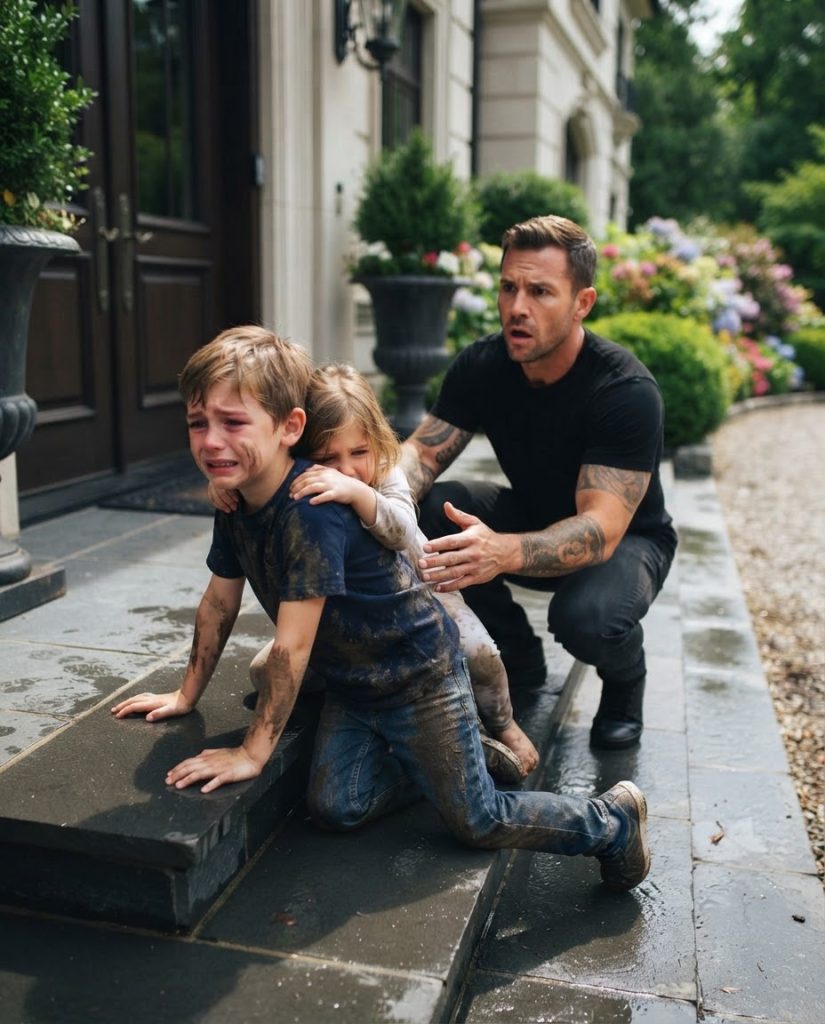
“My niece is three. My nephew is six. They crawled to my door because they believed it was the safest place they knew.”
My voice lowered.
“I intend to make sure they were right.”
Nora’s expression softened, but only slightly.
“Then help us do this correctly.”
“I will.”
At noon, Detective Ruiz returned.
She carried a plastic evidence sleeve containing a photograph.
Not evidence itself.
A photograph of evidence.
Inside the basement at Rebecca’s house had been a steel document case.
Across its lid, written in Ethan’s unmistakable block handwriting, were two words.
FOR THOMAS.
I stared at the photograph.
“When did he put that there?”
“We don’t know.”
“Can it be opened?”
“Not by you.”
“I understand.”
“The key was found among Ethan’s personal effects in an envelope Rebecca had stored with several documents.”
“Did she know what was inside?”
“She says no.”
I looked at Ruiz.
“You believe her?”
“I don’t decide what to believe before I have facts.”
I almost laughed.
Ethan would have liked her.
“What else was downstairs?”
“Family records. Tax documents. Your brother’s personal files. Children’s clothes in storage. Household bills.”
Nothing theatrical.
Nothing designed to satisfy the angry part of me.
Just the debris of a family that had stopped functioning after one person died.
Ruiz continued.
“There were also overdue notices. Mortgage correspondence. Insurance paperwork. Some unopened.”
“Financial problems?”
“Significant ones.”
That surprised me.
Ethan had been careful with money.
He ran a small architectural firm and lived comfortably. Not extravagantly, but comfortably.
“He had life insurance.”
Ruiz gave me a level look.
“That may be one of the questions we need answered.”
My stomach tightened.
“What does that mean?”
“The policy appears to have been changed approximately six months before his death.”
“To whom?”
“We’re verifying that.”
Before I could ask more, a nurse stepped out of Maya’s room.
She was awake.
And asking for me.
Everything else disappeared.
By late afternoon, my house had been transformed.
Nora arrived with another caseworker.
Cabinets were checked.
Medicine was moved.
The pool gate was inspected twice.
Security protocols were reviewed.
One of my men attempted to introduce himself as “director of residential protection.”
Nora stared at him.
“What does that mean?”
He looked at me helplessly.
“It means he watches the gate,” I said.
For the first time all day, Nora smiled.
“He could have said that.”
“He enjoys titles.”
My employee looked deeply offended.
It felt strange to joke.
Stranger still that the joke helped.
The rooms I prepared for Leo and Maya had once been guest rooms.
I stood in the hallway looking at them and immediately realized they were wrong.
Too polished.
Too expensive.
Too adult.
Cream walls. Heavy curtains. Antique furniture.
Rooms designed for people who stayed two nights and left.
“What do children like?” I asked my housekeeper, Rosa.
She stared at me.
“You mean generally?”
“Yes.”
“How much time do you have?”
“Apparently not enough.”
Rosa had worked for me for nine years and was one of perhaps four people on earth unimpressed by my surname.
“Take out the glass lamps,” she said.
I nodded.
“The white rugs.”
“Why?”
She gave me a look.
“Because they’re children.”
“Right.”
“And stop trying to make everything perfect.”
“I’m not.”
“You’ve asked me whether the blankets are soft enough three times.”
I looked at the blankets.
“They might not be.”
“They’re soft.”
We bought nothing elaborate.
A night-light for Maya.
A small bookshelf.
A desk for Leo when he was ready.
Washable bedding.
Crayons.
Puzzles.
Two cups with their names written on them in removable stickers because Rosa said children liked knowing which cup was theirs.
That tiny detail broke something in me.
Ethan should have been doing this.
He should have been arguing about night-lights and cups.
Three months earlier, he had called me while I was eating dinner.
We had talked for twelve minutes.
I knew because I checked afterward.
Twelve minutes.
He had complained about traffic.
Asked whether I was still working too much.
Told me Leo had learned to ride a bicycle.
Then Ethan said, “Come by Sunday.”
I said, “I’ll try.”
I never went.
There had always been another Sunday.
Until there wasn’t.
The children were discharged the following afternoon.
Temporary placement with me was approved for seventy-two hours, subject to continued review.
Leo came through my front door in a wheelchair.
Maya rode on my hip.
She stared up at the tall ceiling.
“Big.”
“It is.”
“Too big.”
I looked around.
She was right.
“It can be smaller.”
She frowned at me as though doubting my architectural abilities.
Then Rosa appeared.
“Hello, Maya.”
Maya hid her face against my shoulder.
Rosa didn’t push.
She simply said, “I made grilled cheese.”
One eye appeared.
“With triangles.”
The second eye appeared.
Rosa had acquired an ally.
Leo remained quiet.
I showed him his room.
He looked at the new desk, the shelves, the navy-blue comforter.
Then he asked, “Where’s Maya?”
“Next door.”
“How next?”
I opened the connecting door between the two rooms.
I had ordered it unlocked and checked before they arrived.
Leo wheeled himself through.
Maya followed.
They inspected both rooms with the solemnity of diplomats reviewing treaty territory.
Finally Leo pointed to the connecting doorway.
“Can that stay open?”
“As long as you want.”
“At night too?”
“At night too.”
He nodded.
That was the entire negotiation.
That evening, we ate at the kitchen table rather than the formal dining room.
Maya dismantled her sandwich and consumed it by ingredient.
Leo ate slowly.
I kept noticing the careful way he watched everyone else.
When Rosa reached for the bread basket, his eyes followed it.
I slid it nearer to him.
“There will always be food here.”
He looked down.
“I know.”
But he didn’t.
Not yet.
Trust was apparently something adults wanted children to give immediately after proving it could be misplaced.
I decided not to ask for it.
After dinner, Maya discovered that the refrigerator dispensed crushed ice.
This became the greatest technological achievement in human history.
She pressed the lever repeatedly until Rosa intervened.
“No more.”
Maya looked at me.
I knew that look.
She was searching for the higher court.
I shook my head.
“Rosa outranks me in the kitchen.”
Rosa folded her arms triumphantly.
Maya considered this new political structure.
“Okay.”
Leo laughed.
A real laugh this time.
It lasted maybe two seconds.
It was enough.
At eight thirty, Detective Ruiz called.
“The case has developed.”
I stepped onto the back terrace.
“What happened?”
“We opened the document case.”
My pulse increased.
“And?”
“There were letters. Estate documents. Copies of correspondence with an attorney.”
“Whose attorney?”
“Your brother’s.”
I waited.
“One document appears to be an unsigned draft guardianship amendment.”
I gripped the railing.
“Guardianship?”
“Ethan was reconsidering the arrangements concerning Leo and Maya.”
My mind raced backward.
Ethan’s funeral.
Rebecca crying.
Her hand holding mine.
I’ll protect them like they’re my own.
“What did the draft say?”
“I’d rather you see it with counsel present.”
“Elena.”
It was the first time I had used her first name.
She went quiet.
“Please.”
After a moment, she answered.
“The draft named you.”
I closed my eyes.
Me.
Ethan, who had spent years insisting his children remain far away from my life.
Ethan, who once told me that loving someone occasionally meant accepting that you should stand at a distance.
“Why would he do that?”
“There’s a letter in the case addressed to you.”
“Can I read it?”
“Tomorrow, probably. We’re coordinating with the estate attorney.”
I looked through the kitchen windows.
Leo had fallen asleep on the sofa.
Maya was curled against him.
Rosa was draping a blanket over both.
“What about Rebecca?”
Ruiz exhaled.
“She says Ethan had been worried about her after his death.”
I frowned.
“That doesn’t make sense.”
“Not worried about what she would do to the children.”
“Then what?”
“Worried about what grief might do to her.”
The words settled heavily.
“There’s more,” Ruiz said.
“What?”
“We located Ethan’s estate lawyer.”
I waited.
“He says your brother called him two days before he died.”
My hand tightened around the phone.
“He scheduled an appointment for the following Monday.”
Ethan died Saturday morning.
“What did he want?”
“The lawyer says Ethan told him he needed to make one final change.”
“Which was?”
“That’s what we don’t know.”
Ruiz paused.
“But apparently Rebecca knew about the appointment.”
I stared into the dark yard.
For three months, I had believed the story began with Ethan’s death.
Maybe it had begun before that.
Maybe my brother had seen something changing—not something monstrous, but something fragile.
Something he had tried to prepare for.
Inside, Maya stirred.
Leo’s hand reached for hers even while he slept.
I lowered my voice.
“Detective, what exactly was Ethan trying to change?”
“That,” she said, “is what we need to find out.”
And for the first time since Leo appeared at my gate, anger was no longer the strongest thing I felt.
It was fear that I had misunderstood my brother’s last months completely.
PART 3
The letter arrived the next morning.
Not by courier.
Ethan’s estate attorney brought it himself.
His name was Samuel Pierce, and I remembered him vaguely from the funeral—a gray-haired man standing near the back, holding an umbrella he never opened.
He entered my study carrying a slim leather folder.
Detective Ruiz came with him.
So did Nora Bennett.
There were days when my house had held governors, executives, union leaders, musicians, men who traveled with entourages.
None had ever made me as nervous as those three people.
“Where are the children?” Samuel asked.
“In the garden with Rosa.”
Leo had discovered binoculars that morning.
He and Maya were attempting to determine whether squirrels had a formal government.
Samuel nodded.
“Good.”
He sat across from me.
“I represented Ethan for eleven years.”
“I know.”
“He spoke about you often.”
That surprised me.
“Mostly complaints?”
Samuel almost smiled.
“Not mostly.”
He removed an envelope.
My name was written across it.
THOMAS.
Just that.
My brother’s handwriting.
The sight of it hurt more than I expected.
“May I?”
Samuel looked at Ruiz.
She nodded.
“It has been documented.”
I opened it carefully.
There were four handwritten pages.
The first line stopped me.
Tom, if you’re reading this because I finally found the courage to give it to you, try not to look smug.
I laughed.
One short, involuntary sound.
My throat tightened immediately afterward.
That was Ethan.
Even on paper, he could annoy me within seven seconds.
I continued.
He wrote that becoming a father had changed him in ways he never expected.
He worried constantly.
About money.
About school.
About whether Leo was too serious.
About whether Maya would inherit the Moretti talent for stubbornness.
Then the letter changed.
Ethan wrote about Rebecca.
He loved her.
That was unmistakable.
But after Maya’s third birthday, Rebecca had begun struggling with anxiety.
She worried about illness, accidents, finances, losing people.
Ethan had encouraged her to speak with someone.
She agreed, then stopped attending.
Not because she didn’t care.
Because she was ashamed.
My brother had recognized the pattern.
Our mother had lived with anxiety for years and hid it from almost everyone.
Ethan wrote:
Rebecca loves the kids. But love doesn’t automatically make someone able to carry everything alone.
I lowered the letter.
Nora was watching me.
“So he knew she was struggling.”
“Yes,” Samuel said.
“Did he know how badly?”
“No.”
I resumed reading.
Ethan had drafted a backup guardianship plan.
If Rebecca became unable to care for the children, he wanted me considered first.
Not automatically appointed.
Considered.
There were conditions.
Many conditions.
I nearly smiled again.
Ethan wanted independent financial oversight.
No business meetings around the children.
No exposure to “Thomas’s more questionable acquaintances.”
That phrase was underlined twice.
“He really did know you,” Ruiz said.
I looked at her.
She was trying not to smile.
The final paragraph was different.
You always think protecting people means standing in front of them. Sometimes it does. But if you ever have to protect my kids, give them something neither of us got enough of when we were young: an ordinary life.
I stopped reading.
For years, I had told myself Ethan rejected my world because he judged me.
Maybe that was easier than admitting he had been afraid for me too.
The letter continued.
Teach Leo that being strong doesn’t mean carrying everybody alone.
I looked toward the garden.
Through the window, I could see Leo sitting beneath an oak tree with his leg supported on a cushion.
Maya had the binoculars backward.
Teach Maya she can be loud.
I rubbed a hand across my face.
And Tom—show up.
That was all.
No grand speech.
No final wisdom.
Just two words.
Show up.
I had missed Sunday.
I wasn’t going to miss anything else.
Samuel explained the legal situation.
The guardianship draft had never been executed.
Ethan died before the scheduled appointment.
Rebecca therefore remained the children’s legal guardian after his death, subject to the current protective proceedings.
The letter had emotional importance.
Legally, it was only one piece of evidence.
“What change did Ethan want to make Monday?” I asked.
Samuel hesitated.
“We don’t know exactly.”
“You spoke with him Friday.”
“Yes.”
“And?”
“He said he wanted to establish a separate trust for the children.”
“That’s all?”
“No.”
Samuel adjusted his glasses.
“He also asked whether a temporary co-guardian arrangement was possible.”
“With me?”
“He didn’t say.”
That surprised everyone.
“Then who?”
“We don’t know.”
Detective Ruiz leaned forward.
“Could it have been Rebecca’s sister?”
Samuel shook his head.
“I never met her sister.”
I looked at him.
“Rebecca has a sister?”
“Elise Harper,” Ruiz said. “Lives outside San Marcos.”
I had never heard the name.
That bothered me.
Ethan and I had grown apart in recent years, but not so much that an entire sister-in-law should have been unknown to me.
“Why wasn’t she at the funeral?”
Ruiz answered carefully.
“She and Rebecca had been estranged.”
“For how long?”
“Approximately four years.”
“Why?”
“We’re still determining that.”
There was another hidden room inside this family.
Not a literal one.
A silence.
Sometimes those were harder to open.
That afternoon, I took Leo to his follow-up appointment.
He wanted Rosa to come because Maya liked her.
Maya wanted to come because Leo was going.
Thus six adults eventually coordinated what should have been a simple medical visit.
On the drive home, Leo stared out the window.
“Uncle Thomas?”
“Yes?”
“Is Rebecca coming here?”
The question was quiet.
“No.”
He relaxed slightly.
“Will I ever have to see her?”
I chose each word.
“No one is going to surprise you. There are adults whose job is to decide what is safe, and they will listen to you too.”
He thought about that.
“She used to be nice.”
I turned toward him.
He was still looking out the window.
“Before Dad died.”
I said nothing.
“She made pancakes shaped like dinosaurs.”
His voice wobbled.
“Then after Dad died, she stopped making anything.”
There are emotions children carry that adults sometimes try to simplify because complexity frightens us.
Anger and love.
Fear and memory.
Missing someone you do not want near you.
Leo had all of them.
“You’re allowed to remember the pancakes,” I said.
He turned toward me.
“And still be mad?”
“Yes.”
“And not forgive her?”
“You don’t have to decide anything like that right now.”
He nodded slowly.
That seemed to help.
After a minute, he asked, “Can we have pancakes tomorrow?”
“Absolutely.”
“Do you know how to make them?”
“No.”
He considered this serious obstacle.
“Does Rosa?”
“Almost certainly.”
“Then she should do it.”
Again, the hierarchy of my household became clearer.
Two days later, I met Rebecca’s sister.
Elise Harper arrived at the CPS office wearing jeans, a linen blouse, and the expression of someone who had spent an entire drive rehearsing what to say and forgotten all of it upon arrival.
She was thirty-nine.
Rebecca was thirty-four.
They looked alike around the eyes.
Elise saw me and stopped.
“You’re Thomas.”
“You’re Elise.”
She gave a nervous laugh.
“That sounded dramatic.”
“It did.”
“I’m not very good at dramatic.”
“That may be useful today.”
We sat with Nora.
Elise held a paper cup between both hands.
“I haven’t spoken to Rebecca in almost three years,” she said.
“Why?”
Her eyes lowered.
“Our mother got sick. Rebecca and I disagreed about what to do.”
“What kind of disagreement?”
“I wanted Mom to move closer to me. Rebecca insisted she could care for her.”
A pattern.
Elise continued.
“Rebecca thought accepting help meant failing.”
“What happened?”
“Mom eventually moved into assisted living. She was fine there. Happier, actually.”
“And Rebecca?”
“Stopped speaking to me.”
“Because you were right?”
Elise looked at me sharply.
“No. Because she thought I believed I was right.”
There was wisdom in that distinction.
“She loved our mother,” Elise said. “She just kept believing love should make her capable of everything.”
I thought of Ethan’s letter.
Love doesn’t automatically make someone able to carry everything alone.
“What happened after Ethan died?” I asked.
“I called Rebecca every day.”
“Did she answer?”
“Twice.”
“What did she say?”
“That she had it handled.”
Elise’s voice broke slightly.
“She always had it handled.”
Nora slid a box of tissues across the table.
Elise ignored them.
“Then six weeks ago she called me at two in the morning.”
I leaned forward.
“What did she say?”
“She asked whether I remembered the lake house.”
“What lake house?”
“Our grandparents had a tiny cabin when we were children. It’s gone now.”
“Why did that matter?”
“I don’t know. She said she wished we could go back before everything got complicated.”
Elise swallowed.
“Then she said something strange.”
“What?”
“She said, ‘Ethan knew.’”
I felt the air change.
“Knew what?”
“She wouldn’t explain.”
That evening, Detective Ruiz called Samuel Pierce.
Samuel searched his archived notes.
At 9:20 p.m., he called me.
“I found something.”
I stepped away from the children’s bedtime story.
Rosa was reading a book about a bear searching for his hat.
Maya was outraged on the bear’s behalf.
“What did you find?”
“A note from my conversation with Ethan.”
“Friday?”
“Yes.”
Samuel read it.
“Client concerned spouse may experience severe grief response. Wants sister contacted despite estrangement.”
Elise.
I closed my eyes.
“So the co-guardian—”
“Could have been Elise.”
“Why me then?”
“Backup structure, perhaps. Ethan wasn’t finished deciding.”
That answer stung unexpectedly.
I wanted to be the person Ethan had chosen.
Then I realized how selfish that was.
He had not been choosing a winner.
He had been trying to build a net.
Me.
Elise.
A trust.
Professional oversight.
People with different strengths standing beneath his children in case one person could not hold them.
For a man who hated asking for help, my brother had died trying to make sure his family had plenty of it.
“We need to talk to Rebecca,” I said.
Samuel was quiet.
“She has counsel now.”
“Not me personally.”
“Good.”
“What has she said about Ethan knowing?”
“I don’t know.”
But Detective Ruiz found out.
The answer came the following morning.
Rebecca had finally given investigators permission to retrieve records from a storage unit rented in her name.
Inside were Ethan’s remaining office boxes.
Most had never been unpacked after his firm closed.
Among invoices, architectural drawings, and framed certificates was an old laptop.
Samuel had helped identify it.
The computer itself revealed nothing criminal.
What it contained was something far more intimate.
Draft emails Ethan had never sent.
One to me.
One to Elise.
And three to Rebecca.
The last had been written the night before he died.
Over the next week, the children settled into routines.
Ordinary routines.
Breakfast at seven.
Maya argued against socks.
Leo completed schoolwork sent by his teacher.
A physical therapist named Daniel visited twice.
Rosa introduced a rule prohibiting syrup in the living room after an event involving Maya, a waffle, and one extremely expensive chair.
The chair survived.
Barely.
I began moving meetings away from the house.
Then I moved more.
Then nearly all of them.
For the first time in twenty years, my calendar had empty spaces.
I discovered empty spaces could be frightening.
They forced you to notice what your life contained.
Mine contained too many meetings with men I didn’t like about businesses I no longer cared about.
The Moretti organization had begun with my father.
Trucking.
Warehouses.
Construction.
Then came cash businesses, favors, arrangements, and relationships I had spent years pretending could be separated neatly into legal and illegal compartments.
Ethan never believed the distinction.
“You can’t build a clean room inside a dirty house,” he once told me.
I had called him naive.
Now his children lived in mine.
So I called my attorney.
Then my accountant.
Then the handful of people I trusted.
“We’re restructuring everything,” I told them.
My attorney stared.
“How extensively?”
“Completely.”
“That will be complicated.”
“I know.”
“Some people will object.”
“Then they can object.”
I was not doing it to impress CPS.
I was doing it because one day Leo would ask what I actually did.
I wanted an answer I could give him without editing half the sentence.
Warehousing.
Logistics.
Property management.
Security consulting conducted lawfully.
Everything else would be sold, closed, or separated from me.
For years, I believed power meant never needing to change for anyone.
I was beginning to understand that refusing to change was often the weakest thing a man could do.
The temporary custody hearing was scheduled for Friday.
I wore a gray suit.
No entourage.
No dramatic arrival.
Just me, my attorney, and enough nervousness to embarrass my younger self.
Elise attended.
Rebecca did not appear in person. Her attorney represented her.
The children were not required to attend.
Thank God.
Nora testified regarding my home assessment.
She described it as stable and safe.
Then she added, “Mr. Moretti has demonstrated unusual willingness to comply with every recommendation.”
My attorney glanced toward me.
I knew what he was thinking.
Unusual was not always flattering.
But I would take it.
The judge reviewed Ethan’s letter.
The medical records.
The children’s statements.
The ongoing investigation.
Then she ordered that the children remain temporarily placed with me while permanent guardianship was evaluated.
Elise would be introduced gradually as a family support, pending background checks and the children’s comfort.
Rebecca would have no unsupervised contact.
Any future communication would be determined according to professional guidance and the children’s wellbeing.
There was no triumphant moment.
No cheers.
No defeated villain.
Just paper sliding across a desk.
A judge signing her name.
And two children gaining another month without wondering where they would sleep.
Outside the courtroom, Elise sat on a bench.
“You look disappointed,” she said.
“I’m not.”
“You do.”
“I thought certainty would feel different.”
She nodded.
“It rarely does.”
“You sound experienced.”
“My divorce took fourteen months.”
“That’ll do it.”
We sat quietly.
Then she said, “I’d like to know them.”
“Leo and Maya.”
“Yes.”
“They should know you.”
“If they want to.”
I looked at her.
“You keep saying that.”
“Saying what?”
“If they want to.”
“They’ve had enough adults deciding things for them.”
I liked Elise.
That was inconvenient.
I had spent years building a life around distrusting almost everyone.
Now my brother had left me a family.
Families required the opposite skill.
Elise first met the children Sunday afternoon.
We didn’t tell them she was coming to “discuss the situation.”
We said she was their aunt and wanted to visit.
Maya inspected her from behind my leg.
Leo asked, “Are you Rebecca’s sister?”
Elise answered, “Yes.”
“Do you like her?”
There it was.
Adults would have avoided that question for an hour.
Children walked directly through the wall.
Elise crouched so she was closer to his eye level.
“I love her.”
Leo’s shoulders stiffened.
Elise continued.
“And I know she made choices that weren’t safe for you.”
He watched her carefully.
“I can love someone and know they did something wrong.”
Leo thought.
Then he looked at me.
The conversation from the car.
The pancakes.
Anger and memory.
He understood more than he should have needed to.
“Okay,” he said.
Elise brought photographs.
Rebecca at seven with missing front teeth.
Rebecca at twelve wearing an enormous sunhat.
Elise and Rebecca standing beside their mother.
The children laughed at the haircuts.
For an hour, Rebecca became someone who had once been a child.
Not an enemy.
Not a monster.
Not someone they needed to forgive.
Just a complicated human being safely distant from them.
That mattered.
Monday morning, Detective Ruiz came to my house.
She carried no notebook this time.
Only an envelope.
“We’ve finished reviewing the draft emails.”
I invited her into the study.
“What did Ethan write?”
She handed me a printed page.
“The one addressed to you.”
I read.
Tom, I need a favor, and you’re going to hate the way I ask.
Typical.
Then:
Rebecca is struggling more than she admits. I don’t think she would ever intentionally hurt the kids, but I think grief could make her shut everyone out. If anything happens to me, don’t let her isolation become theirs.
I stopped.
Ruiz remained silent.
I continued.
I’ve asked Sam about creating a structure where she doesn’t have to carry everything. Elise should be part of it if Rebecca will allow it. So should you.
Then:
And before you get offended, no, I am not handing you my children and declaring you redeemed in some cinematic brotherly gesture.
Despite everything, I smiled.
I’m asking you to be their uncle.
That sentence stayed with me.
Not savior.
Not protector of last resort.
Uncle.
A man who showed up.
Someone who knew how they liked their pancakes.
Someone who sat through school plays.
Someone who remembered which stuffed animal could not be washed because “he hated swimming.”
I looked at Ruiz.
“What did he write to Rebecca?”
Her expression changed.
“That’s complicated.”
“Why?”
“The first two drafts encourage her to reconnect with Elise.”
“And the third?”
She slid another page across the desk.
It was short.
Only a few paragraphs.
Ethan had written:
Becca, there’s something I should have told you sooner.
I read faster.
Then stopped.
Not because of anything frightening.
Because of a name.
A name I had not seen in twelve years.
Daniel Moretti.
Our father.
My father, who had supposedly died estranged from Ethan.
According to the email, that wasn’t true.
Ethan had been speaking to him secretly for almost a year before his death.
And our father had left something for Leo and Maya.
Something Ethan had never told me about.
I looked up.
“My father died two years ago.”
Ruiz nodded.
“Apparently he left a trust.”
“I handled his estate.”
“Not this one.”
My skin prickled.
“Then who did?”
“Elise found the answer in one of Ethan’s notebooks.”
She placed a business card on my desk.
A law firm in New Orleans.
On the back, in Ethan’s handwriting, were four words:
For the children only.
Whatever my brother had been building before he died, it was bigger than guardianship.
And for some reason, he had believed the truth about our father needed to wait.
PART 4
My father had been dead for two years, and somehow he still knew how to ruin my breakfast.
I sat at the kitchen table staring at the business card Detective Ruiz had left.
Across from me, Maya was arranging blueberries according to a classification system known only to her.
Leo was doing math homework.
“Twenty-four,” he said.
“What?”
“Six times four.”
I looked down at the worksheet.
“Right.”
“You weren’t listening.”
“No.”
“Adults do that a lot.”
I glanced at him.
“That is unfortunately true.”
He circled twenty-four.
“What are you thinking about?”
“My father.”
“Grandpa Daniel?”
I was surprised.
“You remember him?”
“A little.”
Leo frowned.
“He gave me a wooden train.”
I remembered that train.
My father had ordered it from a craftsman in Vermont because nothing available in stores was, according to him, “built properly anymore.”
That was Daniel Moretti.
He could reject a son for years and spend three months locating the perfect wooden locomotive for his grandson.
Love in our family had often arrived wearing the disguise of stubbornness.
“Do we still have it?” Leo asked.
“I don’t know.”
“Maybe at the other house.”
The other house.
Not home.
I noticed the distinction.
“We’ll ask about it.”
He returned to multiplication.
I looked at the business card again.
I had spent half my life avoiding surprises.
Ethan, apparently, had saved several for after his death.
Samuel Pierce contacted the New Orleans attorney.
Her name was Claire Beaumont.
She agreed to meet us by video that afternoon.
Elise joined.
So did my attorney.
Claire appeared on screen from an office lined with books and framed photographs.
She was in her sixties, silver-haired and brisk.
“Thomas Moretti.”
“Yes.”
“You look like Daniel.”
“I’m sorry to hear that.”
Elise coughed to disguise a laugh.
Claire smiled.
“You also sound like him.”
“That is worse.”
“I represented your father regarding one specific trust. I did not administer his primary estate.”
“Why was I never informed?”
“Because you weren’t a beneficiary.”
There was something refreshing about a person entirely unimpressed by me.
“Who was?”
“Initially, Ethan’s children.”
“Initially?”
“The trust contained conditions.”
Of course it did.
My father had never written one sentence when twelve could create administrative suffering.
Claire continued.
“Daniel placed a portfolio of legitimate real-estate holdings into an irrevocable trust. Income was to be preserved for Leo and Maya’s education, healthcare, and eventual benefit.”
“How much?”
She gave the figure.
Elise inhaled sharply.
I didn’t react.
Money was not what interested me.
“Why hide it?”
“He didn’t.”
I frowned.
“Ethan knew?”
“Yes.”
“Rebecca?”
“Not initially.”
Claire folded her hands.
“Daniel and Ethan reconciled privately approximately fourteen months before Daniel’s death.”
I leaned back.
My father and Ethan had not spoken for almost eight years.
Or so I thought.
“Why privately?”
“You would have to ask Ethan.”
“I can’t.”
Her expression softened.
“No.”
The word hung there.
Claire continued.
“Daniel wanted to repair things with both sons.”
I almost laughed.
“He had my number.”
“He believed you wouldn’t answer.”
“He was probably right.”
There it was.
One more family tragedy built not from hatred, but from people correctly predicting one another’s pride.
“What were the conditions?” Samuel asked.
Claire opened a file.
“This is where the situation becomes relevant.”
The trust did not simply hand money to Leo and Maya at adulthood.
My father wanted part of the annual income used to support what he called “family continuity.”
Therapy if needed.
Education.
Travel to see relatives.
Shared experiences.
He had included a peculiar provision allowing funds for something called the Moretti Family House.
“What is that?” I asked.
Claire almost smiled.
“A residence where any guardian of the children could raise them without financial pressure.”
Elise blinked.
“He bought them a house?”
“Not exactly.”
Claire turned a document toward the camera.
“He retained the old property outside Wimberley.”
My chest tightened.
“The ranch?”
“Yes.”
I had not been there in twenty-six years.
Ethan and I spent summers there as boys.
Our mother grew tomatoes behind the kitchen.
Our father taught us to swim in the creek.
Ethan broke his wrist falling from a cedar tree and lied about it for six hours because he was afraid our mother would make us stop climbing.
After she died, Father closed the ranch.
I assumed he sold it.
“He kept it all these years?”
“Yes.”
“For Ethan?”
“For both of you.”
I stared at the screen.
Claire’s voice gentled.
“Your father’s final amendment said he hoped the property might become somewhere the family could begin again.”
Nobody spoke.
Eventually I asked, “Why didn’t Ethan tell me?”
Claire looked down.
“I have a letter that may answer that.”
Naturally.
My family had apparently decided direct conversation was an unacceptable technology.
The letter was not from Ethan.
It was from my father.
Claire emailed a scanned copy.
I did not read it immediately.
For three days, it sat unopened in my inbox.
I could face judges.
Police.
Financial audits.
Men twice my size furious over contracts.
But a letter from a dead man who had once told me I had become everything he feared?
That required courage I apparently did not possess before Thursday.
Eventually, I printed it.
Then took it outside.
Leo was practicing with his therapist near the terrace.
Maya was drawing circles with sidewalk chalk.
Life continued while I unfolded the page.
Thomas,
No joke.
No clever opening.
My father never wasted time decorating emotion.
I was wrong about you in ways that took me too long to understand.
I read the sentence twice.
You were wrong about me too, but since I am writing the letter, I get to go first.
I laughed.
Quietly.
There he was.
Father wrote that after Mother died, he had become harder.
Control felt safer than grief.
He demanded things from Ethan.
He demanded different things from me.
Ethan resisted openly.
I learned to win.
Father wrote:
I rewarded you for becoming strong and then blamed you for the shape your strength took.
My vision blurred.
I lowered the page.
Across the lawn, Leo was attempting to balance with assistance.
Daniel, the therapist, said something.
Leo tried again.
No anger.
No shame.
Just repetition.
Try.
Rest.
Try again.
I returned to the letter.
My father admitted he had reconciled with Ethan because Ethan made the first call.
They met at a diner halfway between Austin and San Antonio.
Then again.
Then regularly.
Ethan asked him not to tell me.
Not because he wanted to exclude me.
Because he wanted Father to prove the reconciliation was real before involving me.
Your brother told me you carried the family long enough.
I stopped again.
He said if I wanted you back, I had to approach you as a father, not as another responsibility.
I folded the letter.
Then unfolded it.
At the bottom was one final paragraph.
The ranch is not an apology. Property makes a poor apology. It is simply a place. What happens there will depend on the people who enter it.
Then:
Do better than I did.
I sat beneath the Texas sun holding a letter from a man I had spent years being angry with.
Forgiveness did not arrive.
Not like lightning.
Not like a door opening.
Something quieter happened.
I understood him a little better.
For that afternoon, it was enough.
Rebecca’s situation took months to resolve.
There was no miraculous explanation that erased what had happened.
There shouldn’t have been.
She had failed the children.
Grief explained some choices.
Anxiety explained others.
Neither made those choices safe.
She accepted responsibility through her attorney.
She began treatment.
She moved in temporarily with Elise after a careful reconciliation between the sisters.
Most importantly, she stopped asking when she could “get the children back.”
Instead, according to Nora, she began asking what the children needed.
That change mattered.
One afternoon, Nora came to my house carrying an envelope.
“From Rebecca.”
I didn’t take it.
“For me?”
“For Leo and Maya.”
“Have you read it?”
“With permission.”
“Is it appropriate?”
“Yes.”
“Then we’ll let their therapist decide when they should see it.”
Nora nodded.
“You’ve learned.”
“Apparently.”
She smiled.
“I remember the man who told me ‘no’ when I mentioned foster placement.”
“I immediately revised the wording.”
“After I looked at you.”
“You have an effective look.”
Months earlier, I might have opened Rebecca’s letter.
I might have believed protecting the children meant controlling every piece of information around them.
Now I understood something else.
Sometimes protection meant trusting qualified people.
Sometimes it meant letting a six-year-old say no.
Sometimes it meant not deciding the ending before everyone else had lived through the middle.
Leo returned to school gradually.
His first morning, he insisted on wearing a backpack despite having almost nothing in it.
I drove him.
He stared at the building through the windshield.
“You don’t have to go inside with me.”
“I know.”
“You can.”
“I know.”
“But you don’t have to.”
“Leo.”
He looked at me.
“Would you like me to come inside?”
“Yes.”
“Then why didn’t you say that?”
He shrugged.
Because asking was difficult.
I knew exactly where he learned that.
I walked him to his classroom.
His teacher, Mrs. Alvarez, greeted him without making a spectacle of his return.
A boy named Noah showed Leo a seat they had saved.
Another child immediately asked about his leg.
Mrs. Alvarez redirected the conversation toward a science project involving bean plants.
Normality arrived disguised as dirt in plastic cups.
At the doorway, Leo turned.
“You’re coming back?”
“At three.”
“Exactly?”
“Probably two fifty-five because Rosa thinks I’m incapable of estimating traffic.”
“Are you?”
“Yes.”
That satisfied him.
I was there at two forty-seven.
Maya began preschool two months later.
She cried for exactly ninety seconds.
Then she discovered finger paint and forgot I existed.
I remained outside the classroom for twenty minutes anyway.
Elise found me there.
“You know you’re allowed to leave.”
“I know.”
“She’s fine.”
“I know.”
“You’re staring through a window.”
“I’m aware.”
Elise joined me.
Maya was pressing a blue handprint onto paper.
“You love them,” Elise said.
I looked at her.
“Of course.”
“You know that’s not the same as being afraid all the time.”
I didn’t answer.
She understood anyway.
That was becoming annoying.
“I used to think worrying about Rebecca constantly was the same as helping her,” Elise said. “It wasn’t.”
“What should I do?”
“Go get coffee.”
“I meant generally.”
“I know. But start with coffee.”
So we did.
Families, I discovered, sometimes healed through grand conversations.
More often, they healed through coffee on ordinary Wednesdays.
My business restructuring took nearly a year.
It cost money.
Relationships.
Reputation among certain people.
A few men told me I was becoming soft.
I discovered I no longer cared.
The legitimate companies survived.
Some grew.
The warehouse division expanded.
Our logistics operation won contracts I once would have considered boring.
Boring became one of my favorite words.
Boring meant payroll.
Insurance.
School pickup at three.
Dinner at six thirty.
Arguments about bedtime.
The powerful Thomas Moretti, feared in certain Austin circles, slowly became known to a different set of people.
Mrs. Alvarez knew me as Leo’s uncle.
The preschool receptionist knew me as “Maya’s emergency contact who arrives too early.”
Daniel knew me as the man who asked too many questions during physical therapy.
The pediatrician knew me as the adult who wrote everything down.
Rosa knew me as a continuing disappointment in the kitchen.
These identities mattered more.
Six months after the children arrived, Leo walked across the living room without assistance.
He had been improving steadily.
We knew it was coming.
There was no audience planned.
No camera.
No celebration prepared.
I was reading email when he appeared near the hallway.
“Uncle Thomas.”
I looked up.
He took one step.
Then another.
Then another.
Maya screamed.
“LEO IS WALKING!”
Leo laughed.
“Maya!”
She ran toward him.
I caught her gently before she collided with him.
“Careful.”
“I was hugging!”
“You were launching.”
Leo stood there grinning.
I stared at him.
“What?”
“Nothing.”
“You’re doing the face.”
“What face?”
“The watery-eye face.”
“I don’t have one of those.”
“You do.”
Rosa appeared from the kitchen.
She saw Leo.
Her hands flew to her mouth.
Then she cried immediately, destroying my attempt to remain dignified.
Leo rolled his eyes.
“Adults are weird.”
“Yes,” I said.
“Very.”
That evening we ordered pizza.
Maya insisted this was required after “walking emergencies.”
No one corrected her.
Rebecca’s first supervised letter reached Leo several weeks later.
His therapist asked whether he wanted to hear it.
He said yes.
Rebecca did not ask him to forgive her.
She did not explain herself at length.
She wrote that she was sorry she had frightened him and Maya.
She wrote that adults were responsible for getting help when they could not manage alone.
She wrote that Leo should never have had to become responsible for everyone.
That sentence affected him.
He asked to stop reading.
They stopped.
Two weeks later, he asked to finish.
At the end, Rebecca wrote:
I am working on becoming healthier. You do not have to take care of my feelings. That is an adult job.
Leo kept the letter.
He did not respond.
Not then.
Several months later, he drew her a picture.
No message.
Just four people standing beside a lake.
He asked Elise to give it to her.
I did not ask who the people were.
Some things belonged to him.
Permanent guardianship was finalized almost a year after the night at my gate.
The hearing lasted forty-three minutes.
This time, Leo and Maya came.
Not because they were required.
Because Leo wanted to.
Maya wanted to wear sparkly shoes.
The judge asked Leo whether he understood what guardianship meant.
He said, “It means Uncle Thomas does all the paperwork.”
The courtroom laughed.
The judge asked, “Anything else?”
Leo considered.
“He comes back.”
The room became very quiet.
The judge looked at me.
I looked down because the watery-eye face had returned.
Maya climbed halfway into my lap.
The judge signed the order.
That was it.
No orchestra.
No dramatic declaration.
A signature.
A date.
A family officially becoming what it had already been practicing every day.
Outside the courthouse, Elise took photographs.
Rosa brought cupcakes.
Detective Ruiz appeared unexpectedly during her lunch break.
Even Nora came.
“You didn’t have to,” I told them.
Ruiz shrugged.
“I wanted a cupcake.”
“You could buy one.”
“Free tastes better.”
Leo hugged her.
That ended the joke.
Ruiz’s face softened.
She crouched.
“You’ve gotten taller.”
“I’m seven now.”
“I heard.”
“I can run soon.”
“I heard that too.”
He pointed toward me.
“He worries.”
“I definitely heard that.”
Traitors.
All of them.
We visited the Wimberley ranch that summer.
The house was smaller than I remembered.
Childhood makes everything enormous.
The porch sagged slightly.
Dust covered the windows.
The creek still curved behind the property beneath the cypress trees.
Maya ran toward the yard.
Leo followed more carefully.
Elise stood beside me.
“You’re going to keep it?”
“I think so.”
“For the children?”
I watched them.
“For whoever needs it.”
The trust funded repairs.
Not luxury renovations.
Repairs.
We kept my mother’s kitchen shelves.
Restored the porch.
Fixed the roof.
Leo chose a bedroom overlooking the creek.
Maya chose whichever room was closest to Leo’s.
Of course.
One afternoon while clearing an old storage cabinet, we found a wooden box.
Inside were photographs.
Ethan and me as boys.
My father beside an ancient pickup truck.
My mother laughing on the porch.
Then Leo shouted from the hallway.
“Uncle Thomas!”
I hurried toward him.
He stood holding something made of dark polished wood.
A locomotive.
His train.
“Grandpa’s train!”
Somehow Ethan had brought it to the ranch before he died.
Leo ran his fingers over the wheels.
“Can I keep it here?”
“Absolutely.”
He placed it on his shelf.
Not in a locked box.
Not hidden with documents.
Just on a shelf where a child could reach it.
That seemed appropriate.
The following spring, Maya turned five.
We held her birthday at the ranch.
There were balloons tied badly to porch railings.
Children from preschool chased bubbles across the lawn.
Leo and Noah tried to build a bridge over a section of creek approximately nine inches wide.
Rosa brought enough food for a small municipality.
Elise arrived with her mother, now eighty and delighted to have several generations available to boss around.
Rebecca did not attend.
Not yet.
But she sent Maya a birthday card through the approved process.
Maya chose to open it.
Inside was a drawing Rebecca had made of dinosaur pancakes.
Maya stared at it.
Then smiled faintly.
“I remember these.”
Leo looked over her shoulder.
“So do I.”
No one told them what the memory meant.
They were allowed to decide that for themselves.
Maya placed the card beside her gifts.
Then ran back outside.
That was healing too.
Not forgetting.
Not pretending.
Simply discovering that a difficult memory did not have to own the whole day.
Near sunset, I sat on the porch.
Leo joined me.
He was eight now.
Long-legged.
Serious.
Still occasionally more observant than was convenient.
“Dad liked it here?” he asked.
“He loved it.”
“Why didn’t we come before?”
“Adults are complicated.”
“That’s what you always say when you don’t have a good answer.”
I glanced at him.
“Who taught you to argue like that?”
“You.”
Fair.
I looked toward the creek.
“Your dad and I stopped doing a lot of things together because we disagreed about each other’s lives.”
“Were you mad?”
“Yes.”
“Was he?”
“Yes.”
“Did you still love each other?”
“Always.”
Leo thought about that.
“Then why didn’t you just stop being mad?”
There are questions only children can ask because adults know enough to make simple truths difficult.
“I wish we had.”
He leaned against the porch post.
“Do you miss him every day?”
“Yes.”
“Me too.”
Maya’s laughter drifted across the yard.
I looked at Leo.
“You know something your dad wrote to me?”
“What?”
“He told me to teach you that being strong doesn’t mean carrying everybody alone.”
Leo frowned.
“Was I doing that?”
“For a while.”
“Oh.”
“You don’t have to anymore.”
He nodded.
Then, after a moment, said, “You don’t either.”
I looked at him.
He shrugged.
“You worry about everybody.”
I laughed softly.
“Apparently you inherited your father’s talent for criticizing me.”
“Is that bad?”
“No.”
I put an arm around his shoulders.
“No, Leo. It’s very useful.”
That night, after everyone went inside, I remained on the porch.
The ranch lights glowed behind me.
Through the windows I could see Elise collecting cups.
Rosa directing cleanup as though commanding an army.
Maya showing her birthday gifts to anyone trapped long enough to listen.
Leo placing his grandfather’s wooden train back on the shelf.
For most of my life, I thought family was something you protected by being stronger than whatever threatened it.
Ethan understood something I didn’t.
Family was also something you protected by answering the phone.
Showing up Sunday.
Admitting you needed help.
Letting someone else carry part of the weight.
Keeping the connecting door open because a frightened six-year-old asked you to.
My brother had died believing I could become that person.
For a long time, I wondered whether I deserved his faith.
Eventually I stopped asking.
Love was not an award given to people who deserved it.
It was work.
Daily, ordinary work.
Breakfast.
School pickup.
Physical therapy.
Birthday candles.
Listening when a child said no.
Returning when you promised you would.
The night Leo and Maya arrived at my gate, I believed they had come because I was the strongest person they knew.
Maybe that was partly true.
But strength had not saved us afterward.
People had.
Doctors.
Teachers.
A caseworker who refused to be impressed by my name.
A detective who cared more about facts than rumors.
An estranged aunt willing to reopen a painful relationship.
A woman who eventually accepted that loving children meant stepping back until she could be safe for them.
A dead brother who had tried to build a net before anyone knew they would need one.
Even my father, years too late, had left us a place where something new could grow.
I heard footsteps.
Maya appeared in the doorway wearing pajamas covered in stars.
“You’re supposed to be sleeping.”
“I forgot something.”
“What?”
She climbed into my lap.
“This.”
She wrapped her arms around my neck.
I held her.
A moment later Leo appeared too.
“I knew she was coming out here.”
“Were you stopping her?”
“No.”
“Helpful.”
He sat beside me.
The three of us watched fireflies flicker above the grass.
After a while, Maya whispered, “Uncle Thomas?”
“Yes?”
“Are we going home tomorrow?”
I looked through the window at the ranch.
Then toward the road leading back to Austin.
I understood what she was really asking.
“Tomorrow,” I said, “we’re going to the Austin house.”
She considered that.
“But this is home too?”
“Yes.”
“And your house?”
“Yes.”
“And where Leo is?”
Leo smiled.
I kissed the top of her head.
“Yes.”
Apparently satisfied, Maya closed her eyes.
Leo leaned against my shoulder.
For once, I did not reach for my phone.
Did not check the gate.
Did not think about business.
I simply sat there while the night settled over the hill country.
Years earlier, Ethan had written two words to me.
Show up.
I finally understood.
Showing up was not something you did once.
It was a choice you made tomorrow.
And the day after that.
And every ordinary day you were lucky enough to be given.
So that was what I chose.