I used to believe love could survive disappointment.
For eighteen years, I told myself that if I loved my husband enough, stayed patient enough, and carried our family’s burdens without complaining, eventually he would stop looking at me as though I had stolen the life he had always imagined.
I was wrong.
Instead, every year only made the distance between us wider.
And our son was the one who quietly paid the highest price.
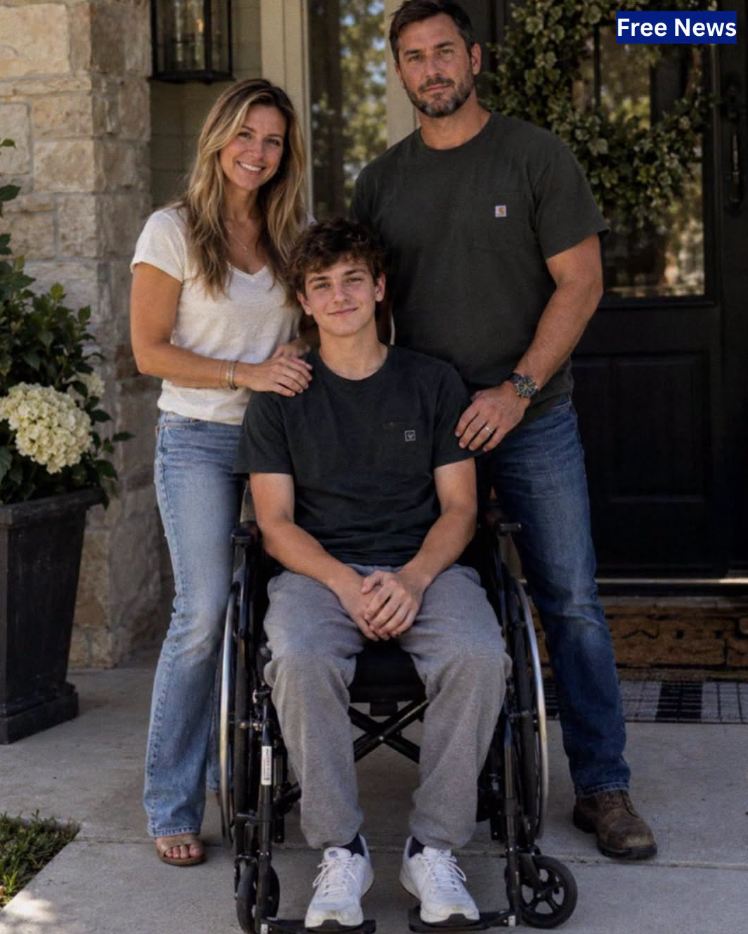
My name is Cyra.
My son, Liam, has used a wheelchair since he was a little boy.
And not once—not for a single day—did I look at him and wish he had been someone else.
Liam was funny, thoughtful, and incredibly intelligent.
He could solve problems that left grown adults scratching their heads. He had a gift for making people laugh when they needed it most. He noticed when someone was sitting alone. He remembered little things other people forgot.
To me, he was never a disappointment.
He was my son.
But my husband, Greg, could never completely let go of the son he thought he was supposed to have.
And for eighteen years, that disappointment followed all of us.
Greg had grown up in a family where football wasn’t simply a sport.
It was a tradition.
His father had been a respected high school coach, and Greg often told stories about Friday night games under bright stadium lights.
He talked about the sound of the crowd, the smell of the grass, the excitement of watching his father on the sidelines.
Even after his father died, Greg spoke about those memories as though they were sacred.
When we were still dating, he once smiled at me and said:
“When we have a son, I’ll teach him everything Dad taught me.”
I remember smiling.
At the time, it sounded sweet.
I imagined Greg throwing a football with our future son in the backyard.
I imagined Friday night games.
I imagined the kind of father-and-son relationship Greg had always wanted.
Neither of us imagined that life would take a completely different path.
Liam was only three when doctors finally gave us an answer.
For years, we’d gone from one specialist to another, hoping someone would tell us that his difficulty walking was temporary.
It wasn’t.
I still remember sitting in that small examination room while the doctor explained everything in careful, compassionate words.
I remember looking at Liam.
I remember wondering how anyone could look at that little boy and see anything other than a child who deserved to be loved.
Greg barely spoke during the entire drive home.
For weeks afterward, he buried himself in work.
At first, I thought he was simply struggling to process what we’d been told.
I gave him time.
I gave him space.
I told myself that grief looked different for everyone.
But months passed.
And something inside Greg began to change.
Not all at once.
Little by little.
First, he stopped talking about football.
Then he stopped coming with me to Liam’s physical therapy appointments.
And eventually, every setback became my fault.
“If you had noticed something sooner…”
“If you’d pushed the doctors harder…”
“If your family didn’t have all those medical problems…”
He rarely finished the sentences.
He didn’t need to.
The accusation was always there.
Hanging between us.
As Liam grew older, Greg became strangely good at disguising cruelty as humor.
Whenever neighbors talked about their sons making varsity teams or winning championships, Greg would laugh and say:
“Guess I won’t be buying football gear after all.”
People would chuckle awkwardly.
I would force a smile.
Liam would quietly look away.
Sometimes, late at night after Liam had gone to bed, Greg would stand at the kitchen window.
One night, he said quietly:
“You know what hurts?”
“What?”
“I see fathers throwing footballs with their boys in the park.”
I stayed silent.
“They don’t even realize how lucky they are.”
“I know,” I whispered, trying not to cry.
He turned toward me.
“No.”
His voice became colder.
“You don’t.”
The words themselves weren’t the worst part.
It was the way he looked at me.
As though I had personally taken that future away from him.
For years, I carried guilt that never belonged to me.
I knew logically that I hadn’t caused Liam’s condition.
The doctors had explained it.
They had explained it more than once.
But when the person you love blames you often enough, a terrible thing can happen.
Part of you begins to believe them.
Only Liam kept me grounded.
When he was twelve, Greg made another insensitive comment.
Afterward, I found Liam alone.
“I’m sorry, sweetheart.”
He looked genuinely confused.
“For what?”
“For… everything.”
He smiled gently.
“Mom, you didn’t do anything.”
My eyes filled with tears.
He reached over and squeezed my hand.
“You know what Coach Mara told me?”
I frowned.
“Who’s Coach Mara?”
“The adaptive basketball coach.”
I had forgotten that Liam had started volunteering with the community sports program.
“He said people spend too much time thinking about the things they can’t do.”
“And?”
Liam smiled.
“And they miss everything they can.”
I laughed through my tears.
“That’s pretty wise.”
“I know.”
He grinned.
That was Liam.
He could find light almost anywhere.
Greg rarely noticed it.
As high school went on, Liam began collecting accomplishments that should have made any parent proud.
Academic awards.
Volunteer recognition.
Scholarships.
Certificates.
Teachers constantly praised his determination.
One afternoon, our mailbox was overflowing with college letters.
“Liam!”
I spread them across the dining room table.
He rolled into the room, his eyes widening.
“Seriously?”
I nodded.
“They just keep coming.”
He picked up one of the envelopes.
“Wow.”
A few minutes later, Greg came home from work.
He glanced at the envelopes.
“What’s all this?”
“College offers,” I said proudly.
Liam had barely started reading the first letter when Greg shrugged.
“Good.”
Then he walked upstairs.
That was it.
No congratulations.
No hug.
No expression of pride.
Just one word.
I watched Liam carefully.
He smiled anyway.
“I guess that’s something.”
My heart broke.
Later that evening, I confronted Greg.
“Could you have acted any less interested?”
He loosened his tie.
“What are you talking about?”
“Our son has schools fighting over him.”
“So?”
I stared at him.
“What do you mean, ‘so’?”
“He’s worked incredibly hard.”
Greg sighed.
“Cyra, I said good.”
“That isn’t enough.”
“It should be.”
I couldn’t stop myself.
“Would it have been enough if he’d scored the winning touchdown instead?”
Greg’s face tightened.
“This again?”
“No.”
I folded my arms.
“This has always been about you.”
He pointed toward the living room.
“I didn’t ask for this life.”
I froze.
Neither of us spoke.
Then Greg quietly added:
“I had dreams.”
“So did I.”
He looked away.
“I know.”
But there was no apology.
No regret.
Only silence.
What neither of us knew was that Liam had heard us.
At least, I thought he hadn’t.
Looking back now, I realize how much our son had noticed.
Far more than either of us understood.
Despite everything, Liam graduated at the top of his class.
The principal praised his resilience in front of hundreds of families.
Parents stood and applauded.
I cried through almost the entire ceremony.
Greg clapped politely.
Nothing more.
Liam received acceptance letters from several outstanding universities.
Eventually, he chose one known for engineering and assistive technology research.
“I want to build things that make life easier,” he told me.
“You already make people’s lives better,” I told him.
Then I kissed his forehead.
He smiled.
That was my son.
He had spent his entire life finding ways to move forward.
The weeks before Liam’s eighteenth birthday passed quickly.
My sister, Nora, insisted we celebrate at our house.
“He’s becoming an adult,” she said. “That’s worth a real party.”
Greg agreed without argument.
For the first time in years, I wondered whether maybe something had changed.
Perhaps watching everything Liam had accomplished had finally softened him.
I spent days preparing.
I baked Liam’s favorite chocolate cake.
Nora decorated the backyard with blue and silver balloons.
My brother Owen volunteered to grill burgers.
Our neighbors came by.
Several of Liam’s teachers stopped in.
Coach Mara arrived carrying a wrapped gift.
The backyard filled with laughter.
For a few precious hours, we looked like the family I had always wanted us to be.
Even Greg smiled while talking with relatives.
Watching him laugh, I wondered if perhaps we had finally left the bitterness behind.
Maybe Liam’s eighteenth birthday could mark a new beginning.
I was wrong again.
Dinner ended.
The cake was served.
Everyone gathered around Liam.
He looked happier than I had seen him in months.
Nora handed him a glass of sparkling cider.
“Birthday toast!” she announced.
Everyone raised their glasses.
Greg stood beside me.
For the first time in years, he looked genuinely proud.
Liam looked around the yard.
He thanked everyone individually.
Then his expression changed.
The conversations slowly faded.
He wasn’t angry.
He wasn’t nervous.
He was calm.
Almost too calm.
“I want to make a toast to my parents,” he began.
The backyard went silent.
Greg wrapped an arm around my shoulders.
Liam looked at both of us.
Then he said:
“So, the truth is, I know everything that’s been happening in our family all these years.”
The smile disappeared from Greg’s face.
Liam took a slow breath.
“But there’s something you don’t know about me.”
Nobody moved.
He paused.
Then he continued.
“I’ve heard every argument you thought happened after I went to bed.”
My heart stopped.
“I’ve heard every joke Dad made about me.”
Greg shifted uncomfortably.
“I’ve heard every time Mom tried to defend both of us.”
I wanted to interrupt.
I wanted to protect him.
Instead, I remained frozen.
Liam continued gently.
“I know Mom always believed she was hiding Dad’s resentment from me.”
He looked around the yard.
“But walls are thinner than people think.”
Greg swallowed.
“Liam…”
My son raised one hand.
“Please let me finish.”
His voice wasn’t angry.
Somehow, that made it even harder to hear.
“I also know Dad blamed Mom for my disability.”
Several relatives exchanged uneasy glances.
Nora lowered her eyes.
Coach Mara folded her arms across her chest.
Greg gave a nervous laugh.
“Son, this isn’t the time.”
“I think it’s exactly the time.”
Liam’s expression remained calm.
“You’ve spent eighteen years believing Mom took something away from you.”
Greg looked around at our guests.
“Can we talk about this privately?”
“No.”
Liam shook his head.
“You’ve made Mom carry this privately for long enough.”
I felt tears gathering.
Liam looked at me.
“It’s okay, Mom.”
Then he turned back toward Greg.
“I know you dreamed about coaching football.”
Greg nodded slightly.
“I know Grandpa did the same with you.”
Another small nod.
“And I know every time you saw fathers playing with their sons, you looked at Mom like she’d stolen your future.”
Greg’s face reddened.
“I was disappointed.”
“No.”
Liam’s voice remained steady.
“You were cruel.”
The words landed heavily.
Nobody spoke.
Then Nora quietly broke the silence.
“He’s right, Greg.”
Her voice trembled.
“Cyra has spent eighteen years carrying guilt that never belonged to her.”
Owen slowly shook his head.
“We all saw pieces of it,” he admitted. “I wish we’d spoken up sooner.”
Liam continued.
“I used to wonder why I wasn’t enough.”
Greg stared at the ground.
“I thought maybe if I got better grades…”
Liam smiled sadly.
“So I became valedictorian.”
Silence.
“I thought maybe if I earned scholarships…”
He shrugged.
“So I worked harder than anyone else.”
Still silence.
“I thought maybe if I volunteered, helped other people, stayed positive, and never complained…”
His voice caught.
“…maybe Dad would finally see me.”
I covered my mouth.
Across the table, Nora quietly wiped away tears.
“But eventually,” Liam continued, “I realized the problem wasn’t me.”
He looked directly at Greg.
“It was the dream you refused to let go of.”
Greg finally spoke.
“It’s not that I didn’t love you…”
“I know.”
Liam nodded.
“But love isn’t something people are supposed to guess.”
The sentence seemed to knock the air out of Greg.
“You told Mom she ruined your life.”
Greg looked horrified.
“I…”
“You said you didn’t ask for this life.”
“I was angry.”
“For eighteen years?”
Greg had no answer.
Liam reached toward the side of his wheelchair.
“I’ve actually been keeping something.”
He pulled out a neatly folded stack of papers.
“I started writing when I was ten.”
My eyebrows lifted.
“You write?” I whispered.
He smiled.
“Every birthday.”
He unfolded the first page.
“I wrote letters to myself.”
Greg frowned.
“What kind of letters?”
“The kind I hoped I’d never need.”
Liam looked down at the paper and read:
“Dear Future Me, Dad didn’t come to my game today, but Mom cheered loud enough for both of them. Don’t let that make you think you’re worth less.”
I burst into tears.
Liam picked up another page.
“Dear Future Me, if Dad ever tells you he’s proud of you, remember how long Mom waited to hear those words too.”
Greg covered his face.
Liam unfolded another.
“Dear Future Me, don’t become someone who blames other people for the life you have. Be grateful for the people who stay.”
The backyard was filled with quiet sobs.
Greg slowly lowered his hands.
“I didn’t know.”
“No.”
Liam folded the papers carefully.
“You didn’t.”
Then he looked at me.
“Mom spent eighteen years protecting you.”
I shook my head.
“I wasn’t protecting him.”
“You were.”
Liam smiled sadly.
“You kept telling everyone Dad was just stressed.”
He wasn’t wrong.
For years, I had made excuses.
Because admitting the truth meant admitting our family was broken.
Liam turned back to Greg.
“I don’t hate you.”
Greg looked up.
“But I won’t let Mom keep carrying blame that never belonged to her.”
Greg took one hesitant step forward.
“I was wrong.”
Nobody answered.
He took another step.
“I spent years mourning a life that never existed.”
His voice trembled.
“And while I was doing that…”
He looked directly at Liam.
“…I missed the incredible son standing right in front of me.”
Liam listened without expression.
Greg’s eyes filled with tears.
“I blamed your mother because blaming myself was harder.”
Then he looked at me.
“I couldn’t accept that life doesn’t always follow our plans.”
I had imagined hearing those words countless times.
But when they finally came, I didn’t feel victorious.
I felt exhausted.
“You made me believe I had failed both of you,” I said quietly.
Greg nodded.
“I know.”
“No.”
I wiped my cheeks.
“I don’t think you do.”
He lowered his head.
“I watched you celebrate other people’s sons while barely noticing your own.”
His shoulders slumped.
“I know.”
“You let Liam wonder whether he was enough.”
“I know.”
“You let me believe I deserved your resentment.”
Greg began crying openly.
“I know.”
Coach Mara finally stepped forward.
“I’ve coached hundreds of young people,” she said.
Everyone turned toward her.
“Some became great athletes.”
She smiled warmly at Liam.
“Very few became the kind of person others want to be.”
She placed a hand on his shoulder.
“Your son already is.”
Then she looked directly at Greg.
“You should have been proud of him long before tonight.”
Several guests nodded.
Owen quietly applauded.
Then another relative joined.
Soon, almost everyone was clapping.
Not because of the confrontation.
Not because anyone wanted to embarrass Greg.
They were applauding Liam.
For the young man he had become despite everything.
Greg remained standing alone.
For the first time since I’d known him, nobody was looking at him with admiration.
They were looking at him with disappointment.
And for once, nobody rushed to make excuses for him.
Nobody tried to soften the truth.
He had to face it.
After the guests began leaving, Greg approached us again.
“I’ve made an appointment.”
I frowned.
“With whom?”
“A therapist.”
Liam looked surprised.
“I should have done it years ago,” Greg said.
Then he turned toward me.
“If you’ll let me, I want to spend whatever time it takes earning back your trust.”
I didn’t answer immediately.
Some wounds don’t heal simply because someone finally says the right words.
They heal when actions change.
“I don’t know what happens next,” I admitted.
Greg nodded.
“I understand.”
Then he looked at Liam.
“I’ll understand if you never forgive me.”
Liam was quiet for several seconds.
Finally, he spoke.
“Forgiveness isn’t the same as pretending nothing happened.”
Greg nodded.
“I know.”
“But if you’re really willing to change…”
Liam glanced toward me.
“…then start by apologizing to the person who deserved your support from the very beginning.”
Greg turned toward me.
Not quickly.
Not dramatically.
Simply honestly.
“I’m sorry, Cyra.”
No excuses.
No blaming.
No explanations.
Just the words I had waited eighteen years to hear.
The next morning, before Liam was even awake, I found Greg in the garage.
He was assembling a storage cart for Liam’s dorm room.
Boxes were stacked neatly around him, and a list of supplies lay beside a toolbox.
He looked up when he noticed me.
“I measured Liam’s desk online,” he said quietly.
“I wanted to make sure this would fit underneath it.”
I didn’t know what to say.
It wasn’t a grand gesture.
It wasn’t enough to erase eighteen years.
But it was the first time in a long time that I had seen Greg thinking about Liam’s future instead of mourning the future he’d once imagined.
Whether our marriage would survive, I honestly didn’t know.
Maybe it would.
Maybe it wouldn’t.
But something had finally changed.
The weight I had carried for nearly twenty years was no longer mine.
A few weeks later, Liam left for college.
Greg insisted on helping him move into his dorm.
He carried every box he could and spent nearly an hour adjusting the furniture so Liam could move around the room comfortably.
Before we left, Greg hugged him tightly.
“I’m proud of you, son,” he said, his voice breaking.
Liam smiled.
“Thank you, Dad.”
I stood there watching them.
And as Liam rolled through the university gates on his first day, smiling with that same quiet confidence he’d carried since childhood, I realized something I should have understood years earlier.
My husband had spent eighteen years grieving the son he imagined.
I had been blessed with the son who was real.
The son who had heard every argument.
The son who had seen every tear.
The son who had watched me carry guilt that never belonged to me.
And somehow, despite all of it, he had grown into a young man who could still choose compassion without pretending the hurt never happened.
Liam didn’t need to become the son Greg had once imagined.
He never had to score a winning touchdown.
He never had to stand on a football field beneath Friday night lights.
He never had to prove that he was worthy of being loved.
He had already done something far more difficult.
He had learned how to live without allowing someone else’s disappointment to define him.
And on the night he turned eighteen, he finally gave his mother something she had needed for almost two decades:
Permission to put down a burden that had never been hers to carry.
For the first time in eighteen years, I looked at my son and didn’t wonder whether his father would ever see what I saw.
I knew.
Liam had never been the life we lost.
He was the life we were given.
And he had been enough all along.