The Two Pink Lines
When I saw the two pink lines appear on the pregnancy test, I burst into tears.
Not because I was afraid.
Because I was happy.
I thought it was a miracle.
My hands trembled as I held the test and ran down to the kitchen to find Diego. He was sitting there, drinking coffee as if nothing in the world could shake his fake sense of calm.
“I’m pregnant,” I said, my voice choking with emotion.
Diego didn’t smile.
He didn’t hug me.
He didn’t even ask if I was okay.
He simply placed his coffee cup slowly on the table and looked at me with cold eyes, as if he had just discovered something filthy inside his own home.
“That’s impossible.”
My throat tightened.
“What do you mean?”
Diego let out a mocking laugh.
“I had a vasectomy two months ago, Laura. I’m not an idiot.”
That sentence hit me like a slap across the face.
An idiot.
The man I had lived with for eight years, the man who once promised to face every hardship with me, was now speaking to me with such contempt.
I tried to explain that the doctor had made it very clear: after a vasectomy, time was still needed for follow-up tests. We had to wait for confirmation. It wasn’t as if the surgery made him instantly sterile the moment it was done.
But Diego wasn’t listening.
In his mind, the verdict against me had already been written.
“Who is he?” he asked.
I froze.
“What?”
“The father of the baby. Tell me.”
A wave of nausea rose in my throat.
Not because of the pregnancy.
Because of the man standing in front of me.
That very night, Diego dragged a suitcase out of the bedroom.
He didn’t pack much.
Just enough for me to understand that he already had somewhere else to go.
“I’m moving in with Paula,” he said without the slightest shame.
Paula.
His coworker.
The woman who used to text me asking for recipes.
The woman who had once smiled sweetly and said to me, “Lauri, you have such an admirable marriage.”
It turned out she had only been waiting for the chance to step into my bed without even having to make it herself.
The next day, my mother-in-law appeared at the door with two black trash bags.
Not to comfort me.
But to collect her son’s things.
“What a disgrace, Laura,” she said, her eyes sliding down to my belly as if it had already been stained. “Diego didn’t deserve this.”
“I didn’t betray him.”
She smiled at me with pity.
“Women always say that when they’re caught.”
In less than a week, the whole neighborhood knew.
The cheating wife.
The shameless woman.
The one who got pregnant right after her husband had a vasectomy.
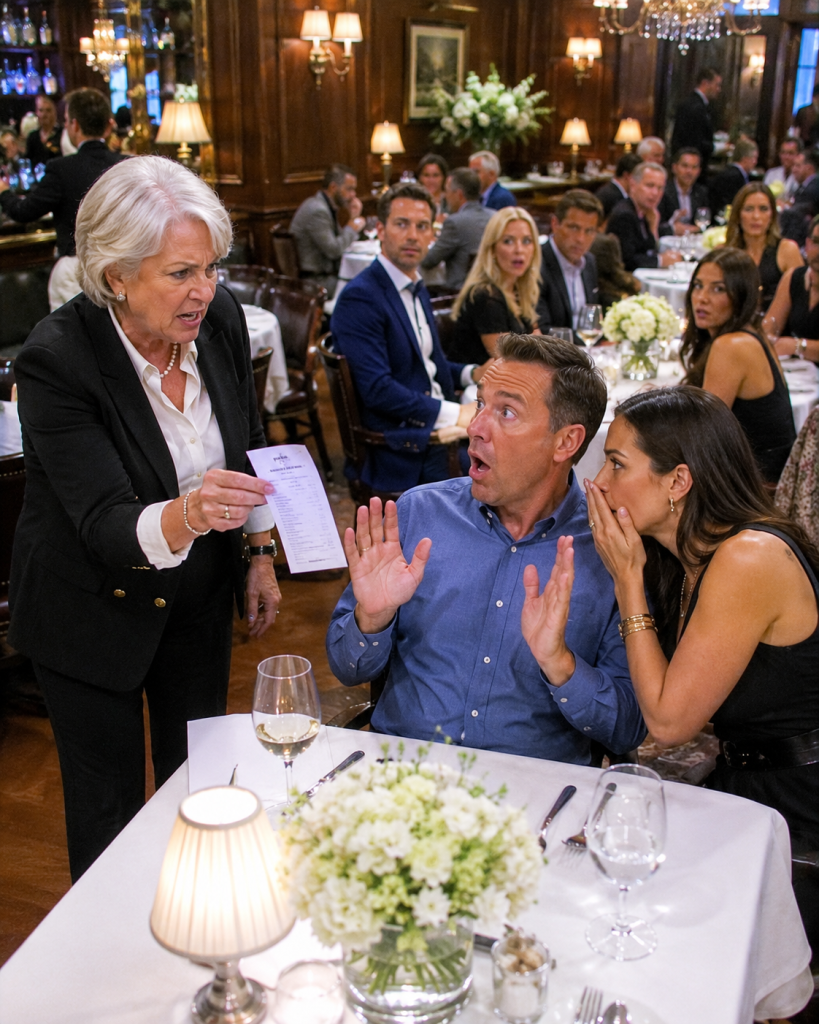
Diego even posted a photo with Paula at a fancy restaurant in the city. She clung to his arm, smiling brightly as if she had just won a victory.
His caption made my blood run cold:
“Sometimes life takes away a lie to give you peace.”
I read those words while sitting on the bathroom floor, one hand clinging to the toilet, vomiting and crying until I was completely drained.
I had no peace.
I only had fear.
Fear of losing my home.
Fear of raising a child alone.
Fear that the baby in my womb would be born with the last name of a man who already hated them without ever having seen their face.
Two weeks later, Diego summoned me to a coffee shop.
He didn’t come alone.
Paula came with him.
And in Diego’s hand was a folder.
“I want a quick divorce,” he said bluntly. “And when the baby is born, I’ll demand a DNA test.”
Paula gently stroked her own stomach, even though it was still completely flat, the smugness at the corner of her mouth impossible to hide.
“That’s what’s healthiest for everyone.”
I looked straight at her.
“For everyone, or just for you?”
Diego slammed his hand down on the table.
“Stop playing the victim.”
The sentence hung in the air like smoke after a gunshot.
I didn’t raise my voice. I didn’t cry. I simply looked at Diego the way a person looks at a house they once lived in and no longer recognize.
“I’m not playing the victim,” I said. “I’m telling you the truth. You had the procedure. You never went back for the semen analysis. The doctor told both of us—both of us—that we still needed protection until the lab confirmed it. You decided that wasn’t necessary. Now you’re deciding I’m a liar.”
Paula’s smile tightened. Diego’s jaw worked as if he were chewing something bitter.
“Save it for court,” he said, standing. “You’ll hear from my lawyer.”
They left together. Her hand slid into the crook of his arm with the ease of someone who had practiced the gesture. I sat there until the waiter asked, very gently, if I wanted more water. I paid for three coffees I hadn’t finished and walked home with my coat pulled tight against a wind that felt personal.
The weeks that followed were not cinematic. They were small and ugly and ordinary. Neighbors stopped waving. My mother-in-law sent a message that said only, Don’t expect us at the birth. I learned which aisles at the grocery store I could walk without running into someone who used to borrow sugar from me. At night I pressed my palm to the slight swell of my belly and whispered apologies to a child who had not asked to be evidence.
I also did what Diego refused to do. I called the clinic.
The nurse pulled the chart. Yes, vasectomy on such-and-such date. No, no post-vasectomy semen analysis on file. The surgeon’s notes were clear: Patient advised that sterility is not immediate. Alternate contraception required until azoospermia confirmed.
I asked for a copy of everything. I scheduled an obstetrics appointment. I asked, quietly, whether a pregnancy after vasectomy always meant another man.
The doctor did not laugh at the question. She folded her hands and spoke the way people speak when they have said the same careful words many times.
“It is rare,” she said. “It is not impossible. Sperm can remain in the tract for months. The tubes can recanalize. Failure before clearance is more common than people want to believe. A pregnancy is not a confession. It is a medical event that needs dates, labs, and, if necessary, genetic testing. Not a verdict.”
I left with pamphlets I would later read until the paper softened at the folds.
Diego’s lawyer sent papers. I signed nothing in haste. I asked for a paternity test to be done as soon as it was medically appropriate—not because I doubted the child, but because I would not let a rumor raise my baby.
The first ultrasound was scheduled for the end of the eighth week.
I almost went alone. Then, two days before, Diego texted a single line:
I want to be there. For the dates. That’s all.
I almost refused. Pride is a warm coat in a cold house. But the child was not a weapon, and I would not teach it to become one. I wrote back: 9:40. Don’t bring her.
He arrived early, standing in the waiting room as if the chairs might accuse him. He looked thinner. He did not look sorry. He looked like a man who had come to inspect a crime scene.
They called my name.
The room was dim and smelled of gel and paper gowns. I lay back. The technician was kind in the practiced way of people who have watched marriages crack on this same table. The wand pressed. The screen bloomed with grain and shadow.
Then the sound.
A heartbeat—fast, stubborn, unafraid.
Diego’s breath caught. I did not look at him yet.
The technician moved the probe, measured, frowned slightly in concentration, then smiled.
“There,” she said. “And… there.”
Two sacs. Two flickering lights. Two small lives sharing the same dark water.
Twins.
The room did not tilt for me. I had already been living inside the impossible. It tilted for him.
The technician kept talking—gestational age consistent with conception in the window after the vasectomy and before any clearance test, measurements matching, no reason on imaging to suspect anything other than a single conception event. She printed pictures. She wiped the gel. She left us with a courtesy that felt like mercy.
Diego stared at the grainy black-and-white as if it might rearrange itself into an explanation he preferred.
“Two,” he said.
“Two,” I answered.
He sat down hard in the plastic chair. For a long time he said nothing. When he finally spoke, the contempt was gone. What remained was smaller and more dangerous: fear of being wrong.
“I need the test,” he whispered. “I still need the test.”
“You’ll have it,” I said. “And when it comes back, you will have to decide what kind of man you are with the result in your hands. Not the man who left. The one who stays, or the one who doesn’t. I won’t beg either way.”
He nodded once, like a person accepting a sentence.
Outside, the morning was ordinary—traffic, a woman walking a dog, a sky that had not noticed us. I folded the ultrasound pictures into my bag. Two tiny shapes. Two heartbeats that had arrived after a procedure the world calls permanent.
The noninvasive prenatal paternity test came later, when the science allowed it. I did not open the envelope in front of him. I opened it at my kitchen table, with the same shaking hands that had once held two pink lines.
Probability of paternity: 99.9 percent.
Diego.
Not a stranger. Not a rumor. Not a betrayal.
A rare failure. Sperm that had not yet cleared. A man who had treated a highly effective procedure as if it were magic, then treated his wife as if she were guilty for the gap between surgery and proof.
I sent him a photograph of the result. No caption. No triumph.
He came to the house that evening without Paula. He stood on the porch like a guest. For a long time he could not look at my face.
“I was certain,” he said.
“I know.”
“I told people.”
“I know that too.”
He asked if he could come to the next appointment. I said he could come for the children. Not for me. Not yet. Maybe not ever as a husband. Trust is not a lab result. It does not print at 99.9 percent and walk back into a bedroom.
Paula faded the way borrowed victories fade. The neighborhood learned a quieter story, the kind that does not travel as fast as shame. My mother-in-law never quite found the words for apology. Some people don’t.
I raised my hands to my belly in the dark and felt two answers kick, small and certain.
A vasectomy is one of the most effective methods there is. It is not a spell. Follow-up matters. Dates matter. And when something appears impossible, the first story we tell ourselves is not always the true one.
I had not been a traitor.
I had been a woman holding a miracle no one wanted to believe, until a screen in a dim room showed two heartbeats and a piece of paper finally gave them a name.
Diego’s.
And mine.
And theirs—two children who would grow up knowing this, if I could teach it without bitterness:
When reality does not fit your pride, pause.
Ask the question that costs the most.
What if I am wrong?
Note: This story is a work of fiction inspired by real events. Names, characters, and details have been altered. Any resemblance is coincidental. The author and publisher disclaim accuracy, liability, and responsibility for interpretations or reliance. All images are for illustration purposes only.