The pregnancy test shook in my hands.
Two lines.
I stared at them until my eyes blurred, as if looking long enough might somehow turn two lines into one.
I was only in tenth grade.
At that age, I was still supposed to worry about homework, exams, and whether I had enough money in my backpack for lunch. Instead, I stood there holding a piece of plastic that made my entire future feel as if it had cracked open beneath my feet.
Fear came first.
Not a clear fear with one name, either. It was fear of school, fear of people finding out, fear of what would happen to the baby, and most of all, fear of telling my parents.
I kept imagining different versions of that conversation.
Maybe my mother would cry and then hug me.
Maybe my father would yell but calm down later.
Maybe they would be disappointed, but they were still my parents. I believed there had to be some line they would never cross.
I was wrong.
When I finally told them, my father looked at me so coldly that for a second I wondered whether I had walked into the wrong house.
There was no question about whether I was scared.
No question about whether I was safe.
No question about what I wanted to do next.
His voice was flat when he said, “You’ve shamed this family. From today on, you are no longer our daughter.”
I remember every word because some sentences do not fade with time.
They become dates on a calendar inside you.
My mother stood nearby, and for one desperate moment I kept waiting for her to interrupt him.
I wanted her to say he had gone too far.
I wanted her to tell me to sit down.
I wanted anything that sounded like I still belonged there.
Instead, that night, rain poured down outside while she took my ripped backpack and threw it through the doorway.
Then she pushed me out after it.
The door closed behind me.
I stood there soaked, staring at the house where I had grown up.
I had no money.
I had nowhere to sleep.
There was nobody waiting for me around the corner with a plan.
I picked up my backpack, held one arm across my stomach without even realizing I was doing it, and started walking.
For years afterward, whenever people asked me what made me strong, they expected some inspiring answer.
The truth was less beautiful.
I became strong because there was nobody left to be weak for me.
The months that followed were not the kind of struggle people turn into neat motivational stories.
I was frightened, embarrassed, tired, and often completely unsure of what I was doing.
People whispered.
Some stared at my stomach before they looked at my face.
Some spoke to me as if one decision had erased every other thing about me.
But the baby kept growing, and slowly my fear began making room for something else.
Responsibility.
When my daughter was born, I gave birth without the family I had always assumed would be beside me.
Afterward, I brought her back to a tiny rented room.
There was nothing impressive about our beginning.
The room was small. Money was tight. Every purchase mattered.
But when I looked at my daughter sleeping, I knew one thing with absolute certainty.
I would never make her earn the right to be called my child.
I raised her while people continued whispering about me.
Their opinions did not pay for food.
They did not wake up when she needed me.
They did not carry her when I was exhausted.
So eventually I learned to let people talk.
When my daughter turned two, I made another decision that terrified me.
I left everything familiar behind and moved to Saigon.
I did not arrive with money, connections, or some perfect business plan.
I arrived with a little girl, a pile of worries, and the belief that staying where I was would keep us trapped inside the story other people had written for me.
During the day, I waited tables.
I learned how to stay on my feet when they hurt, how to keep moving when I was tired, and how to smile at customers even when my mind was calculating what I could afford after work.
At night, I studied.
Sometimes I was so exhausted that the words seemed to swim across the page.
Sometimes my daughter slept beside me while I tried to learn one more thing that might help us move forward.
I failed.
Then I started over.
I failed again.
That part matters because success did not arrive the moment I decided I deserved it.
There were no magical doors opening because my life had already been hard enough.
I tried things that did not work.
I misjudged opportunities.
I had days when quitting sounded less like weakness and more like relief.
But each time I imagined giving up, I looked at the life I was building for my daughter and remembered the rain outside my parents’ house.
I could lose money.
I could lose time.
I could fail at a business idea.
What I refused to lose was control of our future.
Eventually, I started an online business.
It did not become successful overnight.
I built it from nothing, one step at a time, learning from every mistake I had already paid for.
Little by little, things changed.
There was more money left after necessities.
There was less panic attached to every unexpected expense.
There were days when I realized I had gone several hours without calculating exactly how much was left.
Six years later, I bought my first house.
I remember standing inside it and thinking about the night I had been pushed out of another one.
For most people, buying a house was a financial milestone.
For me, it meant something quieter.
Nobody could throw my daughter and me into the rain because they were ashamed of us.
Ten years later, I owned multiple stores.
The girl people had whispered about had become a woman people wanted business advice from.
The teenager who had once walked away with a ripped backpack now signed papers involving numbers she would not have believed possible back then.
Twenty years passed.
By then, my assets were worth more than 200 billion.
People who knew only the second half of my life would have called it a victory.
They would have pointed to the business, the stores, the house, the car, and the money and said I had proven everyone wrong.
Maybe I had.
But money has limits.
It can change where you sleep.
It can change what choices are available to you.
It can make certain fears smaller.
What it cannot automatically do is erase the moment your own parents looked at you and decided that loving you was conditional.
I carried that wound for twenty years.
I did not go back during the years when I was struggling.
I did not go back after I bought my first house.
I did not go back when my stores began succeeding.
Part of me told myself I had moved on.
Another part knew I had simply become very good at walking around one locked door inside my memory.
Eventually, I decided to open it.
I went back.
Not because I needed money.
Not because I needed somewhere to stay.
Not because I wanted them to rescue me from anything.
And I was not going back to ask for forgiveness.
I wanted them to see me.
That was the part I had never admitted out loud.
I wanted the two people who had watched a frightened tenth-grade girl walk into the rain to see the woman she had become without them.
I wanted them to understand that the life they had treated as ruined had not ended at their front door.
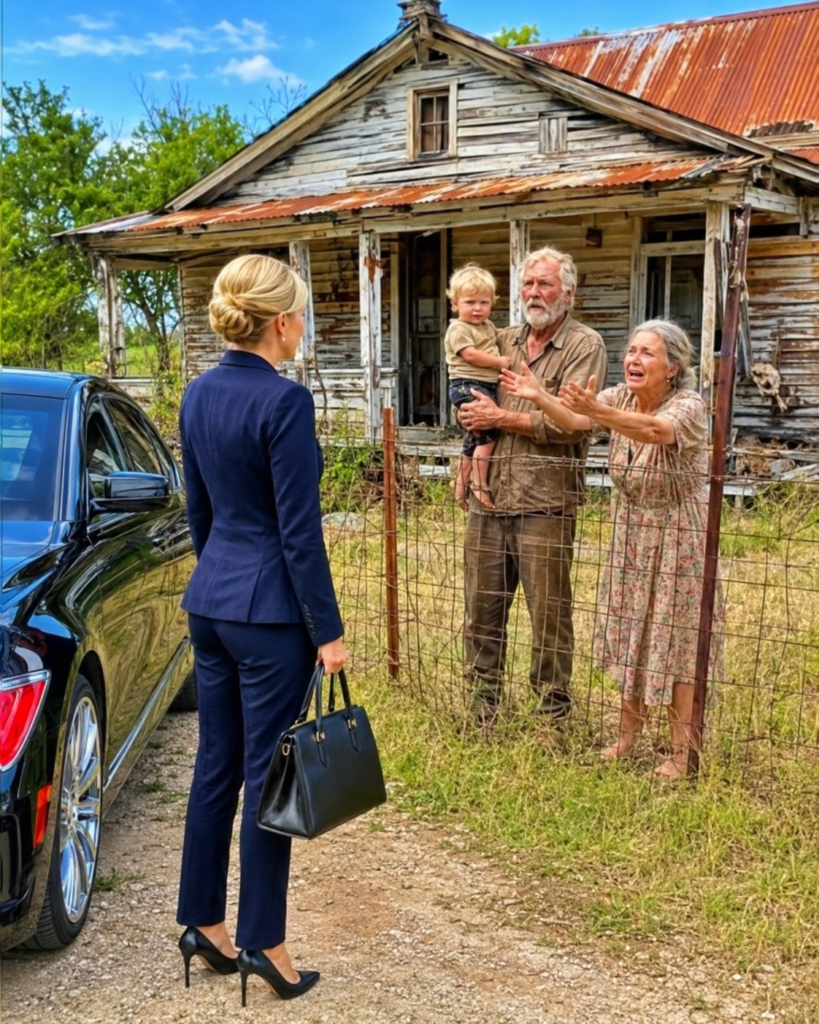
My Mercedes stopped in front of their old house.
For several seconds, I stayed where I was and looked at it.
Time had changed the place.
The gate was rusted.
Paint peeled from the house.
Weeds had spread through the yard.
The home that had seemed enormous when I was a frightened teenager now looked tired and smaller than I remembered.
I had imagined this return many times over the years.
In some versions, my father opened the door and could not speak.
In others, my mother cried immediately.
Sometimes I imagined myself saying something sharp enough to carry twenty years of anger in one sentence.
But standing there, I did not feel powerful.
I felt fifteen again.
My hands were steadier than they had been the night I held the pregnancy test, but my chest felt almost the same.
I got out of the car.
I crossed the yard.
Then I walked to the door and knocked three times.
I expected one of my parents to answer.
Instead, the door opened and a young girl stood in front of me.
She looked about eighteen.
For a second, neither of us said anything.
My first thought was not that I knew her.
It was that something about her felt familiar.
Then I really looked at her face.
And I froze.
She had my eyes.
Not similar eyes.
Mine.
She had the same shape of nose I saw every morning in the mirror.
Even the little frown she made while trying to figure out why a stranger was standing at the door looked painfully familiar.
The years seemed to collapse around me.
I was no longer thinking about the Mercedes behind me.
I was not thinking about stores or houses or money.
I was staring at a young woman who looked so much like the girl I had once been that my mind could not immediately make sense of it.
“Who are you looking for?” she asked.
Her voice pulled me back into the moment.
I opened my mouth, but before I could answer, movement appeared behind her.
My parents stepped outside.
Twenty years had changed them too.
Whatever speech I had imagined giving disappeared from my head.
My mother saw me first.
Her hand flew to her mouth.
Her eyes filled with tears.
My father stood beside her, staring at me.
For years I had wondered what their faces would look like if they ever saw me again.
Now I finally knew.
I could have asked why they had done it.
I could have asked whether they had ever searched for me.
I could have told them about the nights I studied after waiting tables, about every failure, every restart, every time I had looked at my daughter and promised myself I would give her the kind of security they had taken from me.
Instead, I smiled calmly.
“So… now you regret it?”
My mother’s expression tightened.
She looked as if she wanted to say my name, but nothing came out.
Then the young girl beside her reached over and grabbed my mother’s hand.
“Grandma… who is she?”
Grandma.
Everything inside me stopped.
I looked at the girl again.
Eighteen.
Approximately the age I had been when my own life was torn apart.
My mind raced through possibilities, but none of them settled into anything that made sense.
My mother was her grandmother.
The girl looked exactly like me.
And I had been gone for twenty years.
Suddenly, the reunion I had spent so long imagining no longer mattered in the way I had expected.
My anger was still there.
So was the memory of the rain.
So was my father’s voice telling me I was no longer their daughter.
But another question had pushed past all of it.
I looked from my mother to my father.
Neither of them volunteered an explanation.
The young girl kept holding my mother’s hand, watching all three of us with growing confusion.
I could hear my own breathing.
I had come back believing I was finally the one carrying the surprise.
I thought the shocking part of that day would be my parents seeing what became of the daughter they had thrown away.
I thought I understood every important fact about my past.
They had rejected me.
I had survived.
I had raised my daughter.
I had built a life without them.
I had returned twenty years later on my own terms.
That was the story I believed I was walking back into.
But the girl standing in that doorway did not fit inside it.
I studied her face again, looking for some detail that would break the resemblance and reassure me that I was letting old emotions distort what I saw.
There was none.
The eyes were still mine.
The nose was still mine.
That small frown was still mine.
And my mother was still holding her hand.
“Grandma… who is she?” the girl asked again, more quietly this time.
My mother looked at me.
My father looked away.
That tiny movement frightened me more than anger would have.
I had seen shame on my parents’ faces once before.
Twenty years earlier, they had told me the shame belonged to me.
Standing there now, I was no longer certain they had told me the whole truth about anything.
I took one step closer.
The girl did not move away.
Neither did my parents.
I had come to that house prepared to confront an old wound.
Instead, I was suddenly looking at a mystery that seemed to have been living behind that door while I built an entire life somewhere else.
My voice came out barely above a whisper.
“Who is that child?”
No one answered immediately.
And in that moment, everything I believed about the past started falling apart.