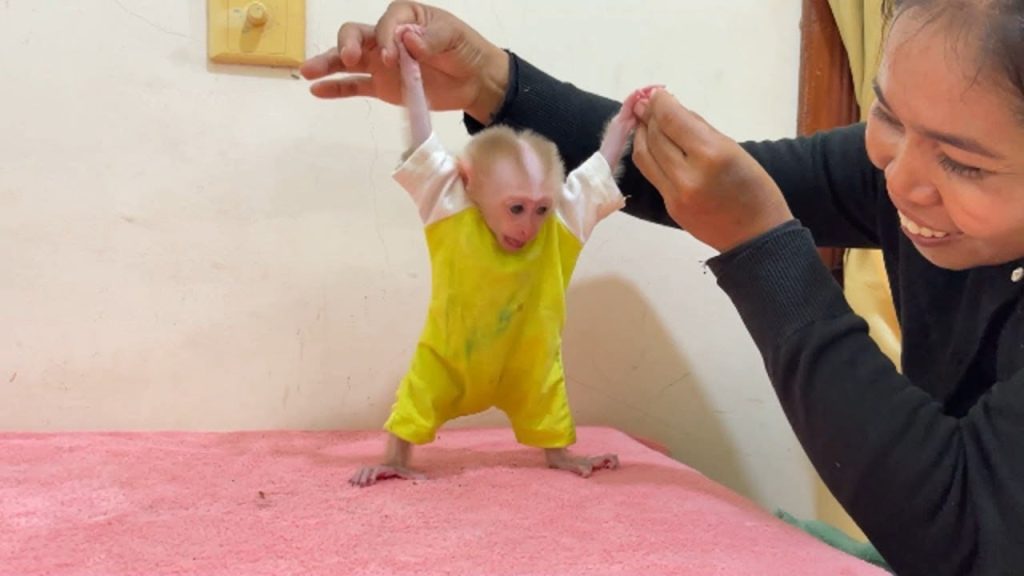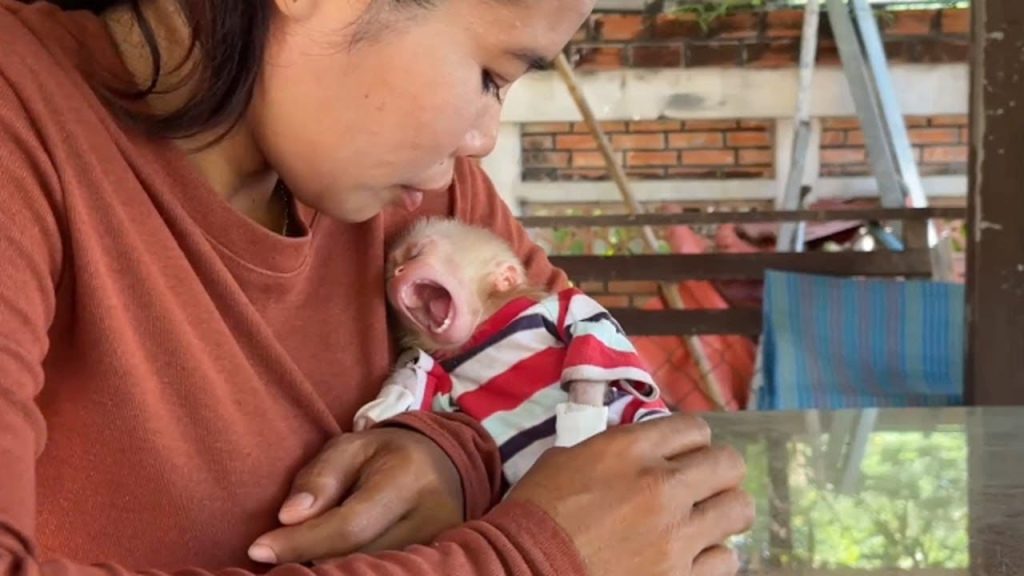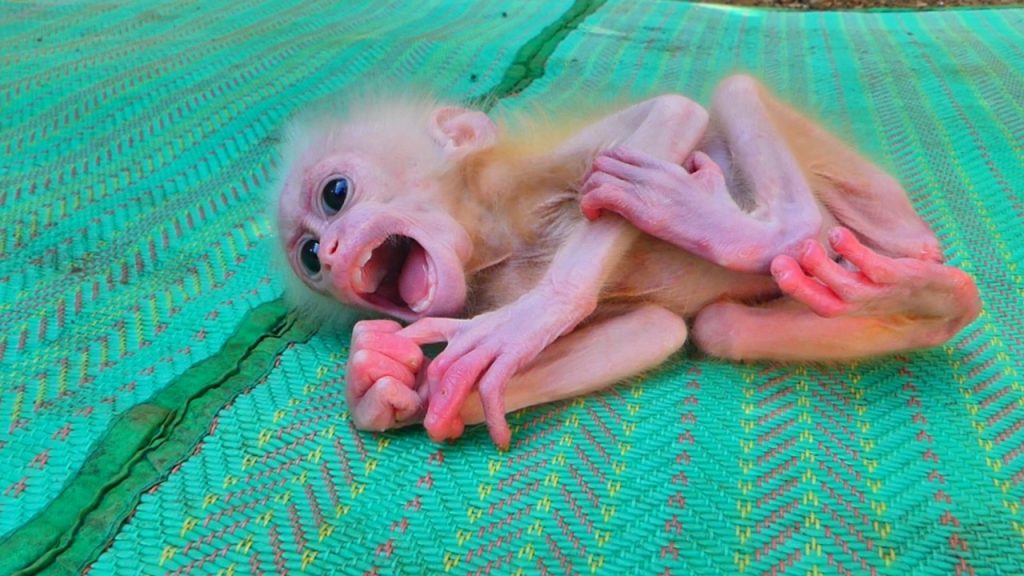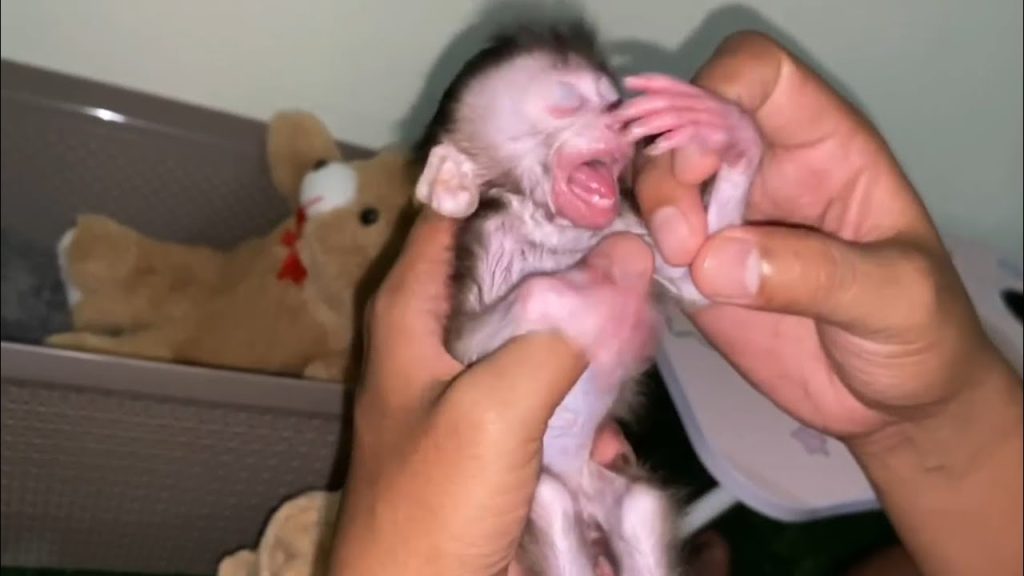
The newborn baby monkey became furious the moment the comforting finger slipped from its mouth. What looked tiny and sweet was actually survival. That finger meant warmth, safety, heartbeat, and the promise of milk. Without it, the world felt loud, empty, and frightening. The baby’s face tightened, eyes squeezed shut, and a sharp cry burst out. Arms flailed, legs kicked, and anger flooded the tiny body. This was not misbehavior. It was instinct. Newborns cling to what keeps them alive, and sudden loss feels like danger. The baby searched blindly, mouth opening wide, crying harder as panic grew. Mom reacted immediately. She understood the meaning behind the rage. She returned her finger gently, letting the baby latch, suck, and breathe. The screaming stopped almost instantly. Breathing slowed, fists relaxed, and the tiny jaw worked rhythmically. Anger melted into relief. Mom didn’t scold. She stayed, holding still, allowing comfort to finish its work. She whispered softly, teaching safety before any lesson. When the finger was removed again, she did it slowly, replacing it with warmth, touch, and voice. This time, the baby fussed but did not panic. Trust had begun. The moment showed how fragile early life is. Big emotions live in tiny bodies. Anger is often fear speaking loudly. With patience, the baby learned that comfort can return. With presence, mom showed that nothing was taken away forever. By night, the newborn rested, finger replaced by milk, warmth, and love. Small lessons formed quietly: waiting is possible, loss can be survived, and closeness comes back. In those tiny cries, a future of trust slowly began, shaped by gentle hands, calm timing, and endless care. This is how security grows first, breath by breath, moment by moment, inside loving arms that never disappear, even when briefly unseen, always returning again soon.