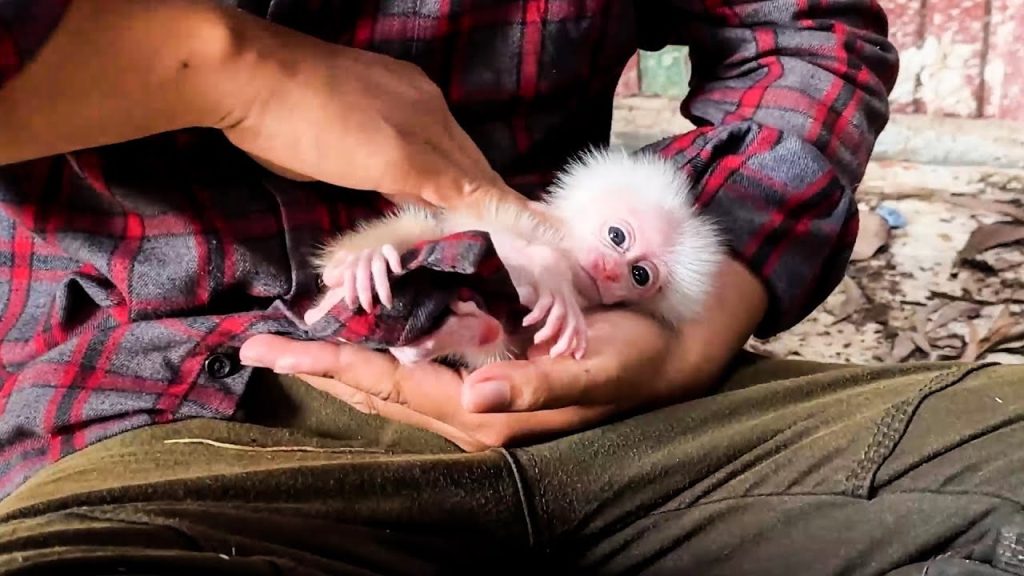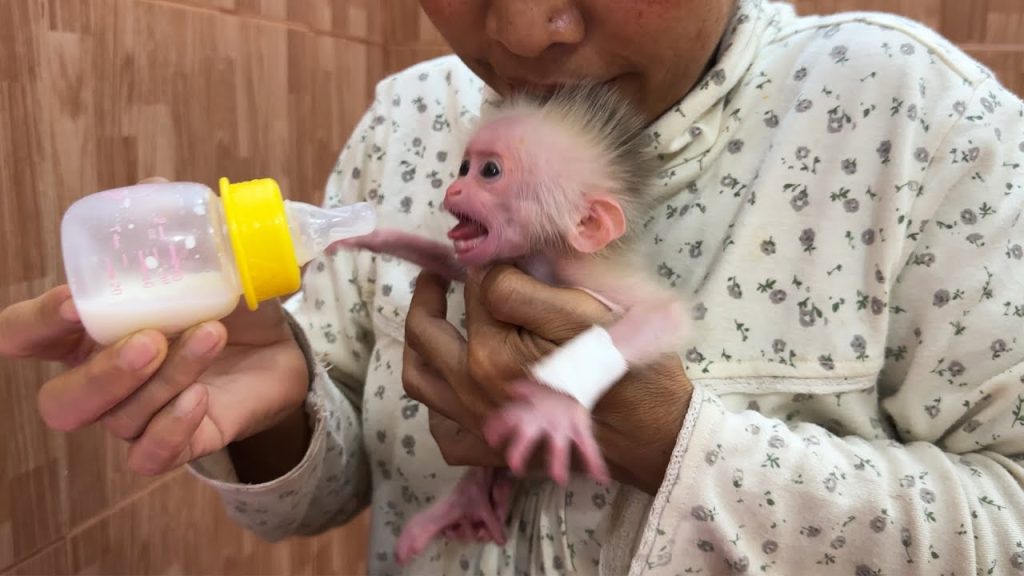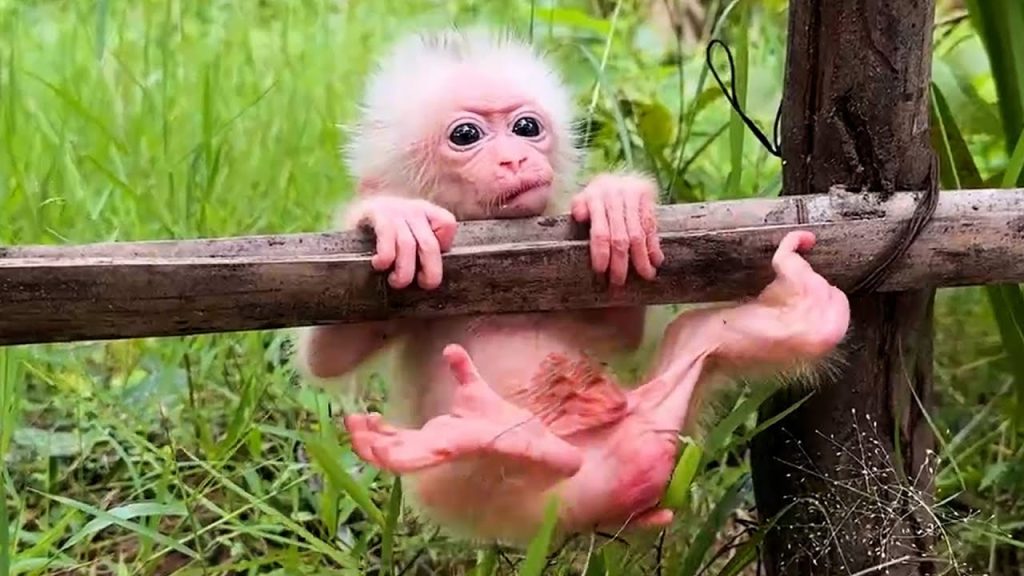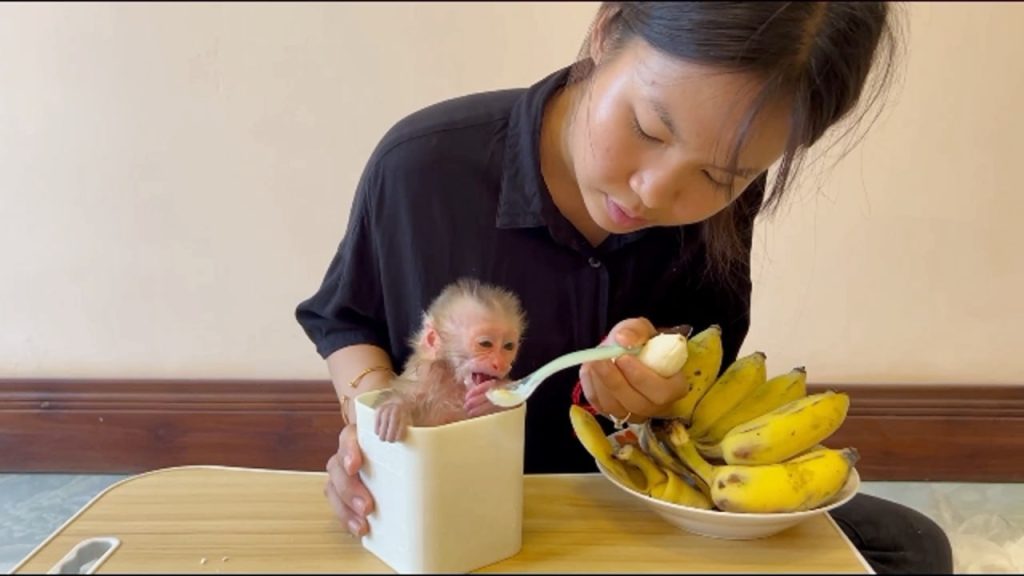
The newborn baby monkey lay weak and quiet, her tiny body barely moving as mom tried to spoon-feed her mashed banana. Usually, the sweet smell would make any baby eager, but today there was no excitement, no reaching hands, no hungry cries. Only soft breathing and tired eyes that struggled to stay open.
Mom’s heart sank. She sat close, supporting the baby’s fragile body against her chest, lifting the spoon slowly. “Just a little,” she whispered. The spoon touched the baby’s lips, but there was no response. The baby turned her head slightly, too weak to protest, too tired to eat. A bit of banana slipped down her chin, untouched.
Mom wiped it gently, fighting panic. This wasn’t stubbornness. This was weakness. The kind that scares a caregiver more than loud crying ever could. She tried again, smaller, softer, waiting longer. Still nothing. The baby’s mouth trembled, but she didn’t open it.
Mom changed her approach. She warmed the banana more, mashed it smoother, spoke softly, rubbed the baby’s back. She rested the spoon and just held her for a moment, letting the baby feel warmth and heartbeat. The newborn sighed faintly, pressing her face weakly into mom’s chest.
Tears filled mom’s eyes. Every second felt heavy with worry. She knew forcing would only make it worse. Love meant patience, not pressure. She tried once more, gently touching the spoon to the baby’s lips. This time, the baby barely tasted it—just a tiny swallow, almost nothing, but enough to give mom hope.
Mom stopped immediately, praising her softly as if she had done something heroic. She cuddled her close, wrapping her carefully to keep her warm. Feeding could wait. Strength came first.
In that quiet moment, mom understood something painful and true. Sometimes love isn’t about filling the stomach. Sometimes it’s about staying close through weakness, fear, and uncertainty—believing that tomorrow, the baby might be strong enough to try again.