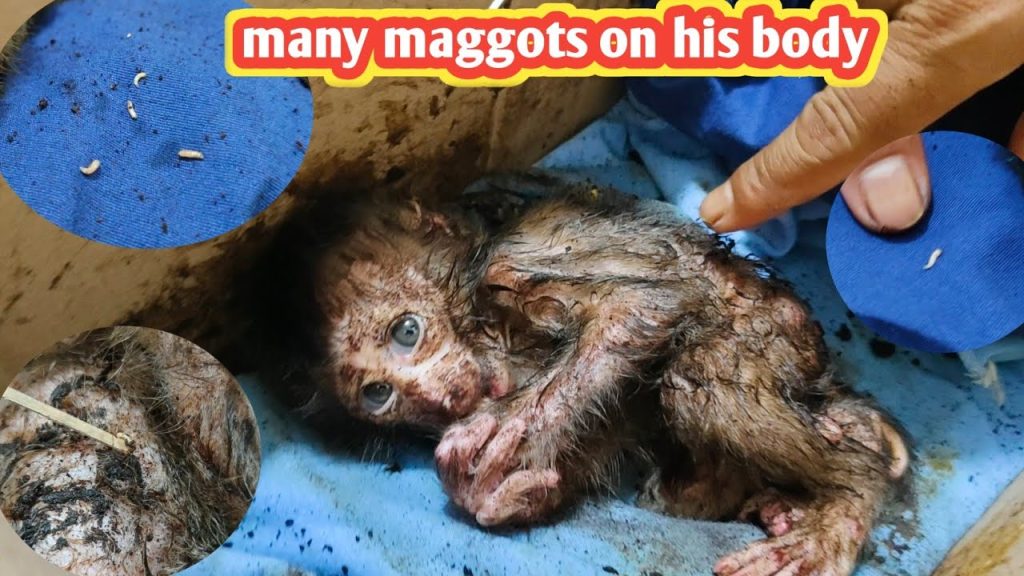
The newborn monkey babies lay helpless, their tiny bodies covered in feces, dirt, and crawling maggots. They were barely breathing, barely moving, too weak to cry. Their eyes were half-open, clouded with fear and exhaustion, as if life had already taught them pain before love. No mother was there to clean them. No warmth surrounded them. Only filth, hunger, and suffering filled their first days alive.
Rescuers began first aid immediately, knowing every second mattered. Warm water gently washed over their fragile skin, carefully removing layers of waste and parasites. The babies flinched weakly, confused by touch that didn’t hurt. Maggots were removed one by one, revealing raw, irritated skin beneath. Each tiny body trembled, not from cold alone, but from shock and trauma too deep for words.
Soft towels wrapped around them, providing warmth they had never known. For the first time, their bodies stopped shaking so violently. One baby released a faint cry, thin but alive. Another clung weakly to a finger, instinctively seeking comfort, as if hoping this time someone would stay.
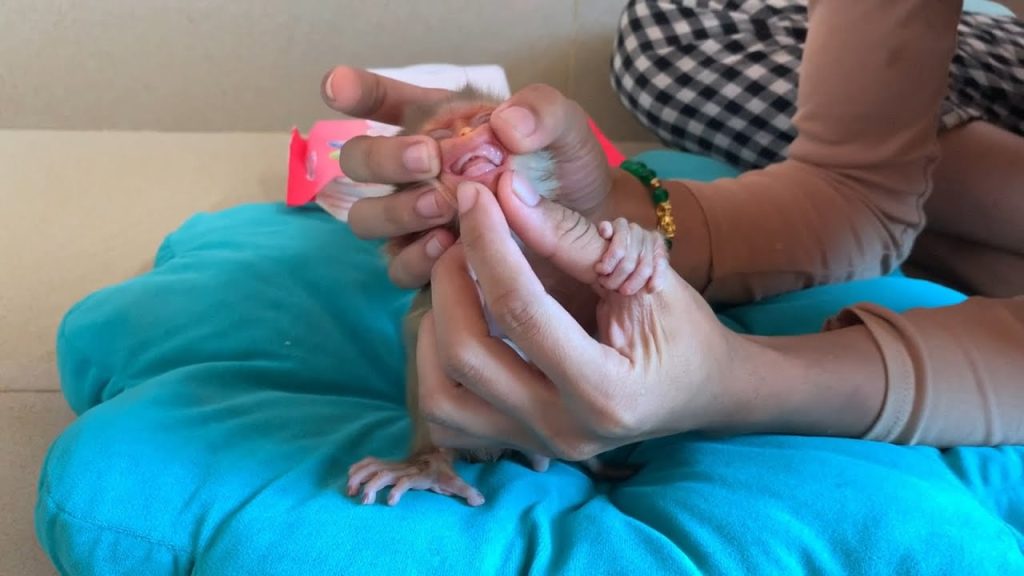
Then came warm milk. Slowly, carefully, drops touched their lips. At first, they hesitated, unsure. Hunger soon took over. Tiny mouths latched on, sucking weakly but desperately. The milk was more than food—it was life returning. With every swallow, their breathing steadied. Their eyes softened. Strength, though small, began to come back.
The room was silent except for gentle breaths and soft encouragement. No rush. No noise. Just patience and care. These babies were not treated like animals from a market, but like lives that mattered.
After feeding, they were placed together, wrapped tightly, sharing warmth and comfort. Exhaustion pulled their eyes closed. Their bodies finally rested, safe for the first time since birth.
This first aid was not just cleaning and feeding. It was the first act of love they had ever known. These newborn monkey babies were given something precious that day—hope.