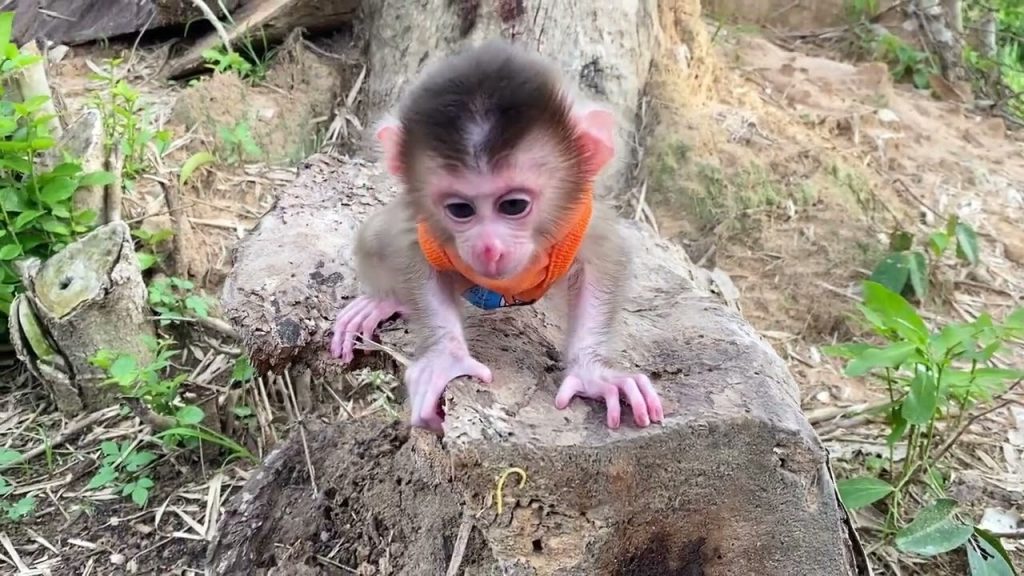
The sound was barely audible at first—a weak, broken moan drifting across the dried loc. The land was cracked and dusty, leaves curled from the heat, silence heavy in the air. Hidden among dry grass and brittle roots, a tiny baby monkey lay trembling, his small body pressed against the hard ground as he searched for his mother.
His cries were not loud. They were tired, fragile, full of fear.
Each soft moan carried a question he could not speak: Where is my mom? Why am I alone? His eyes, still innocent and wide, scanned the empty space around him. No answer came. Only wind and dryness replied. The ground was cold despite the sun, offering no comfort, no warmth.
The baby tried to crawl. His limbs were weak, shaking with every effort. He lifted his head and cried again, louder this time, forcing his tiny lungs to work harder. The sound echoed faintly, as if the land itself was listening. Dust clung to his fur. Hunger gnawed at him, but fear hurt more.
Time passed slowly. His strength faded. The moans softened into breathy whimpers. He curled into himself, tail wrapping around his body, instinctively trying to feel safe. Without his mother’s heartbeat, every second felt dangerous.
Then footsteps approached.
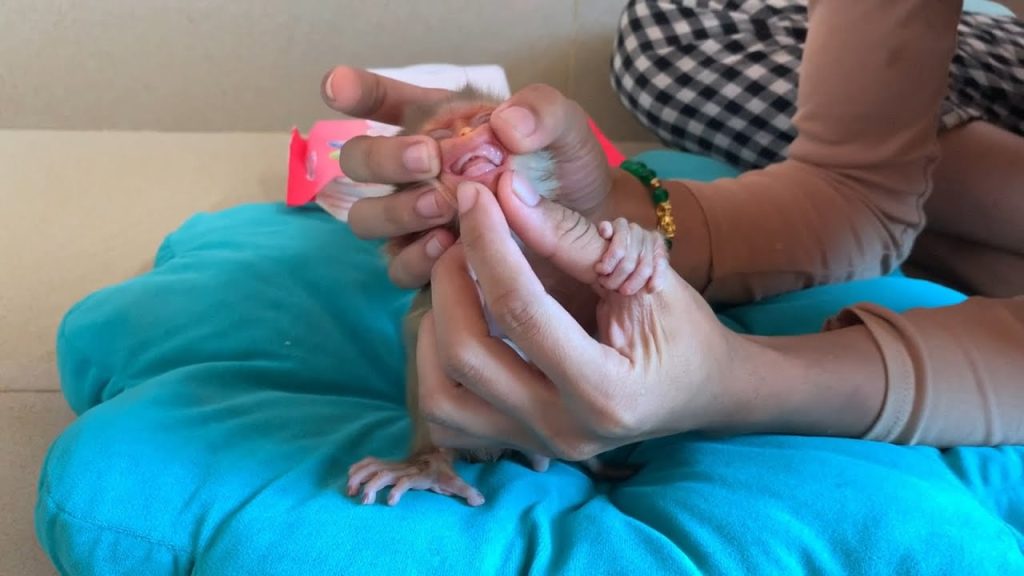
A human voice stopped suddenly. Gentle hands moved the dry grass aside. The baby froze, eyes wide with terror, unsure if this was help or harm. When he was lifted carefully, his body trembled, but his crying slowed. Warmth replaced the cold ground. The moaning turned into quiet sobs.
Wrapped in cloth, he leaned weakly into the warmth, exhausted. His eyes stayed open, still searching, still hoping. His mother was not there—but someone had heard him.
That day, the dried loc witnessed something powerful. A tiny life, almost lost in silence, was answered by compassion. The baby monkey did not find his mom—but he found a chance to live.
His moans faded, replaced by soft breathing. In that fragile calm, hope returned. Even in the driest place, even in loneliness, a small cry was enough to bring help.