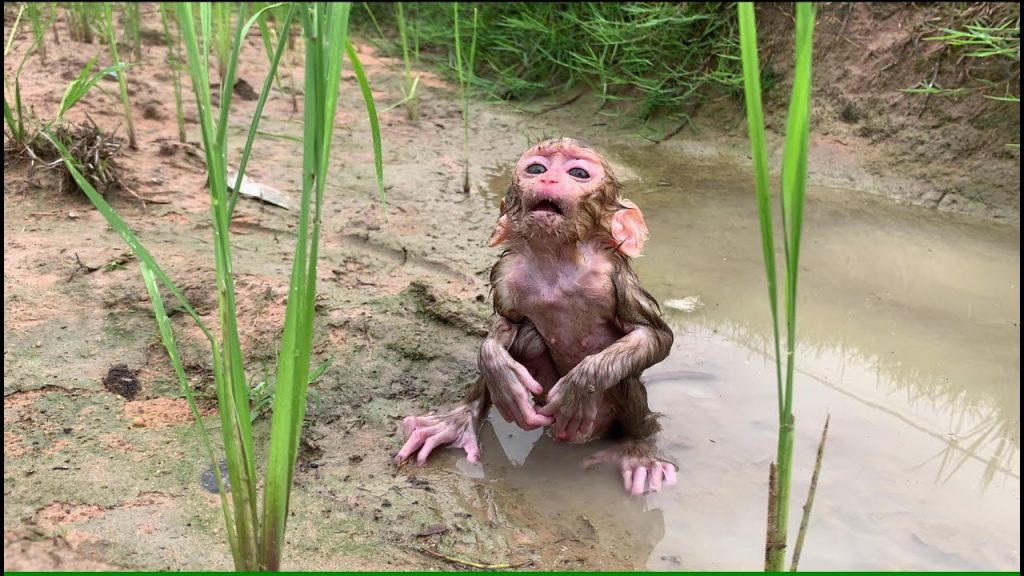
The poor baby monkey looked weak and helpless as he struggled to rise from the shallow water of the rice field. Mud clung to his tiny body, and water dripped from his fur as if the field itself had tried to pull him under. His legs shook badly, barely able to support his weight. For a moment, he stood still, gasping, eyes wide with fear, looking like he had just escaped drowning.
The rice field was silent, stretching endlessly around him. The water reached only his belly, but for a baby so small and exhausted, it was enough to steal his strength. He coughed softly, mouth opening as if trying to breathe away the panic. Each breath came shallow and fast. His chest moved unevenly, and his head drooped forward, heavy with fatigue.
Moments earlier, he had slipped into the water while wandering alone. Too weak to swim properly, he flailed desperately, splashing and crying, fighting against the muddy pull. Somehow, with the last bit of strength left in his tiny body, he managed to crawl back up. But survival had cost him everything he had.
He took one step, then another, before collapsing onto the wet ground. His body trembled uncontrollably. His eyes, dull and tired, searched the empty field, silently begging for help. There was no mother, no warmth, no protection—only cold water and fear.
Then footsteps approached.
Gentle hands lifted him carefully, supporting his fragile head and shaking body. The baby let out a weak cry, then rested, surrendering to the warmth he felt. Wrapped against a chest, his breathing slowly steadied. The danger had passed, but the memory stayed.
This baby monkey did not nearly drown because he was careless. He nearly drowned because he was alone, weak, and too young to survive without care. That day, the rice field showed its danger, but kindness saved a life.
In that fragile moment, weakness met compassion—and life was given another chance to continue.