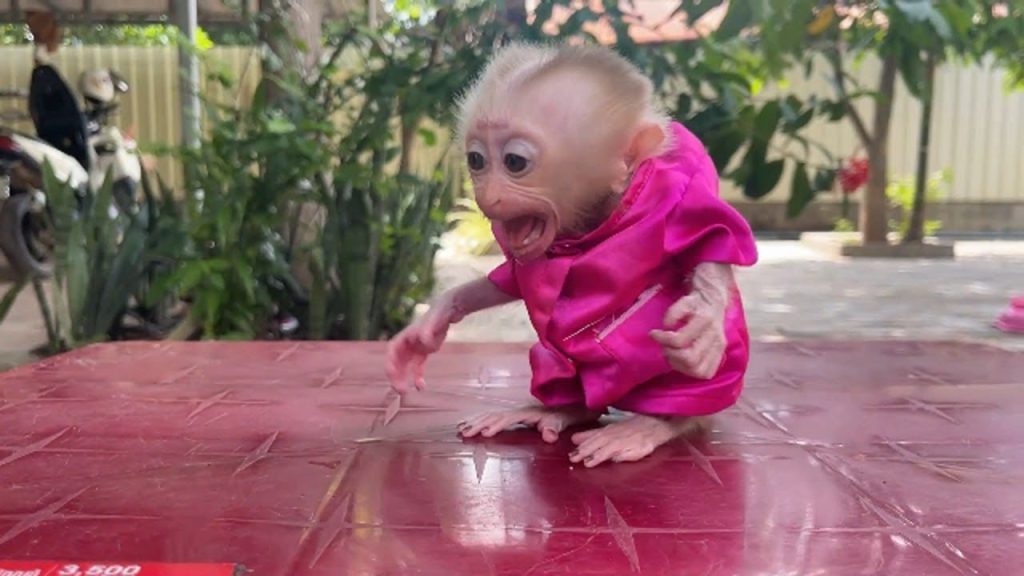
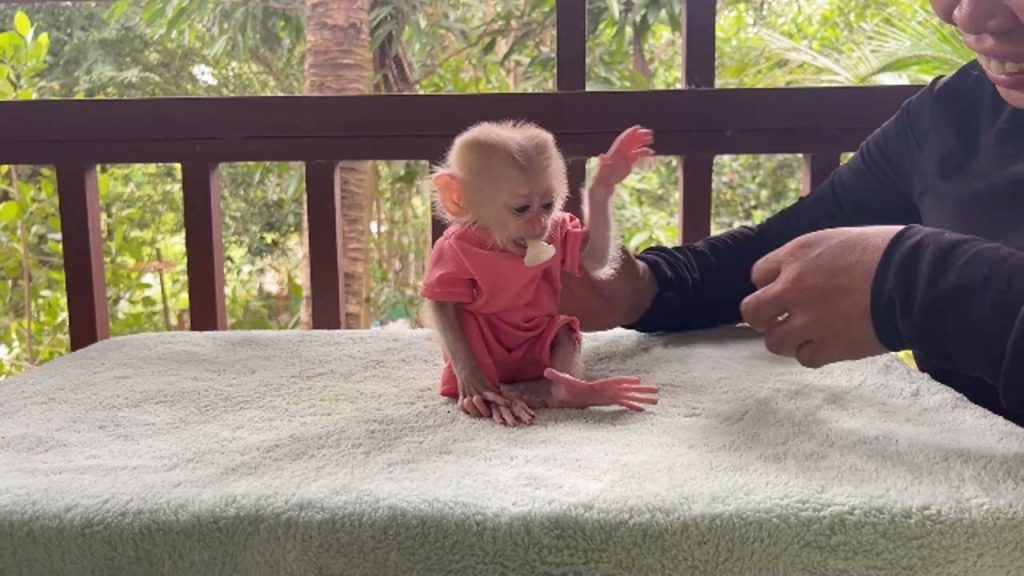
Baby monkeys have big emotions in tiny bodies, and today this little one was a roaring storm. From morning until noon, mom tried everything—milk, cuddles, rocking, soft talking—yet the baby kept crying loudly, voice bursting like thunder in a quiet sky. His tears soaked his cheeks, tiny hands clenched, feet kicking with frustration. No one knew what triggered such sadness, but something inside him felt too heavy, too uncomfortable to hold in alone.
Mom leaned close, her hands gentle yet firm, whispering soothing words. She tried to stroke his head, wipe his tears, but he twisted away, whining louder, body stiff with anger. His little face turned red, mouth wide open in a heartbreaking scream. Mom’s heart ached—she wanted so badly to make him calm, to make him feel safe again. But calming a baby in a storm is never easy.
She tried holding him against her chest. He refused. She tried offering fruit. He pushed it aside. She sat with him on the mat, rubbing circles on his back as he cried, hoping patience would soften his mood. Gradually, minutes passed. His loud screams faded to sobs, then to small whimpers like tiny raindrops after a heavy downpour. Exhaustion began to overtake him—breathing slowing, eyes blinking with sleepy confusion.
Mom didn’t give up. She stayed right beside him, hand on his back, humming a slow lullaby. The familiar rhythm of her voice finally reached his heart. He leaned forward and allowed her to pick him up. His arms wrapped around her neck, small fingers gripping her gently—almost like an apology without words.
Soon he fell asleep in her arms, peaceful at last. Crying doesn’t always mean bad behavior—it’s sometimes the only language a baby has. And through patience and love, storms eventually calm.